Escoural Cave: A Prehistoric Art and Burial Site in Portugal
Site at a Glance
- Popularity
- Medium
- Country
- Portugal
- Primary era
- Stone Age
- Eras represented
- Stone Age
- Civilizations
- Unclassified
- Site type
- Civic
- Remains
- Rock Art
On this page12 sections
History
Escoural Cave is a prehistoric cave near Santiago do Escoural in Portugal, with evidence of human use from about 50,000 BCE and rock art associated with the Upper Paleolithic, a later phase of the Old Stone Age. It was the first site in Portugal where prehistoric art was identified and remains the country’s only site with Paleolithic artwork.
Paleolithic occupation and art
The earliest known occupants were Neanderthal hunter-gatherers, who used the cave as a temporary shelter during hunting trips in the Middle Paleolithic, an earlier phase of the Old Stone Age. Animal bones indicate that they hunted aurochs, deer, and horses nearby.
The cave’s art is associated mainly with the Upper Paleolithic, although some elements have been linked to the final Neolithic, or New Stone Age. Stylistic dating places the depictions in the Middle and Upper Solutrean, a phase of the European Upper Paleolithic identified in part by distinctive stone-tool traditions.
Neolithic and Copper Age use
The cave later served as a burial place during the Neolithic and/or Chalcolithic, or Copper Age, when copper use accompanied stone-tool technologies. A small settlement stood outside the cave from the Neolithic into the Chalcolithic. A settlement within the cave during the Chalcolithic developed into a fortified site by the end of the Copper Age.
Discovery and conservation
Quarry blasting revealed the cave in 1963. That year, the Portuguese state designated it a National Monument, a state heritage classification, and quarrying and other work in the cave’s immediate vicinity ceased. Archaeological investigations led by Portuguese archaeologist Manuel Farinha dos Santos continued from 1963 to 1980. An international team carried out exploratory excavations in 1989, with further investigations afterward; exploration of the cave remains unfinished.
Lighting and leveled paths were introduced when the cave was opened to researchers and visitors. The resulting increases in humidity and light encouraged introduced bacteria, fungi, and moss, threatening the original pigments and cave interior. Conservation planning called for environmental safeguards, including climate monitoring and tighter limits on access.
Remains
Escoural Cave is an irregular karst network, formed as water dissolves rock, extending northwest to southeast. Horizontal halls and galleries occupy several levels beneath a thick mantle of flowstone, mineral deposits formed by water moving over cave surfaces, and the network connects with the exterior at multiple points. The cave lies in a steep cliff described as hard limestone; the wider outcrop is marble embedded in igneous rock. The rural setting is between the Tagus and Sado river basins and the Alentejo plains.
Cave network and art
Entrances and interior
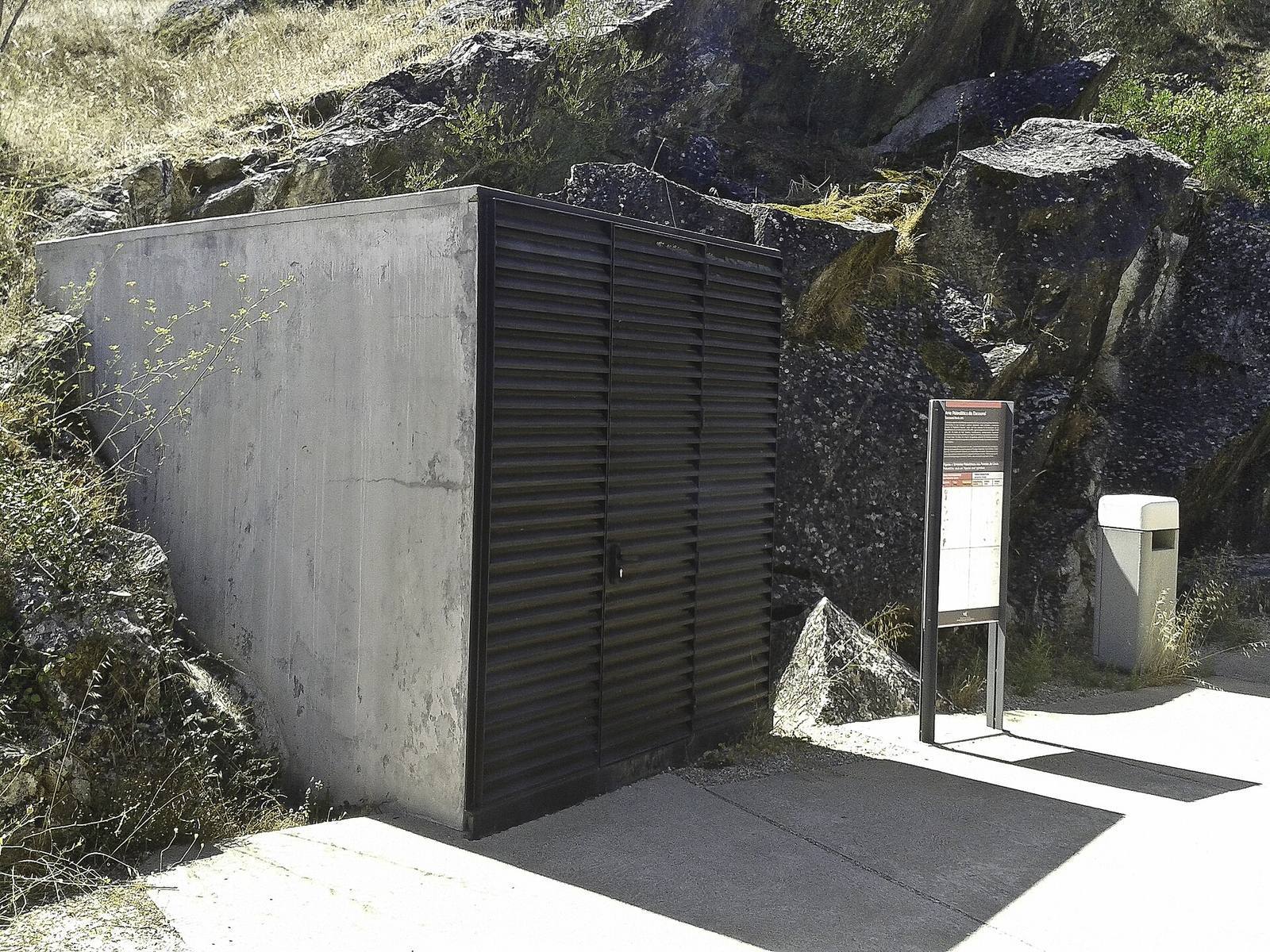
Blasting in 1963 opened the cave’s present entrance at the rear. The original entrance, on the southern slope of the rocks, was buried. The halls and galleries lie at different levels within the complex cave system.
Painted and engraved motifs
Hundreds of painted and engraved motifs include abstract and geometric forms and animal figures, especially horses and cattle. Black and red line drawings are among the paintings. The sequence begins with black figurative drawings, followed by engravings with U- and V-shaped grooves, red drawings, and, latest, fine-line engravings. The cave’s art has also been compared with that at Altamira and Lascaux, well-known European prehistoric cave-art sites.
Burials and settlement remains
Burials
Burials were placed on the cave floor with pottery, stone axes, and blades. Water dripping from the ceiling, rich in dissolved lime, formed a hard calcareous coating over the skeletons and objects. Bone dating from this layer places the burial area in the middle of the third millennium BCE.
Settlement and fortification
Traces of an outdoor settlement dating from the Neolithic through the Chalcolithic extend across an area bounded by the cliff face. On the rock above the cave, remains of a Copper Age fortification associated with the Castro culture, communities and fortified settlements in Iberia, include semicircular bastions, projecting defensive structures. Quarrying destroyed most of the fortification.
Engravings and excavated finds
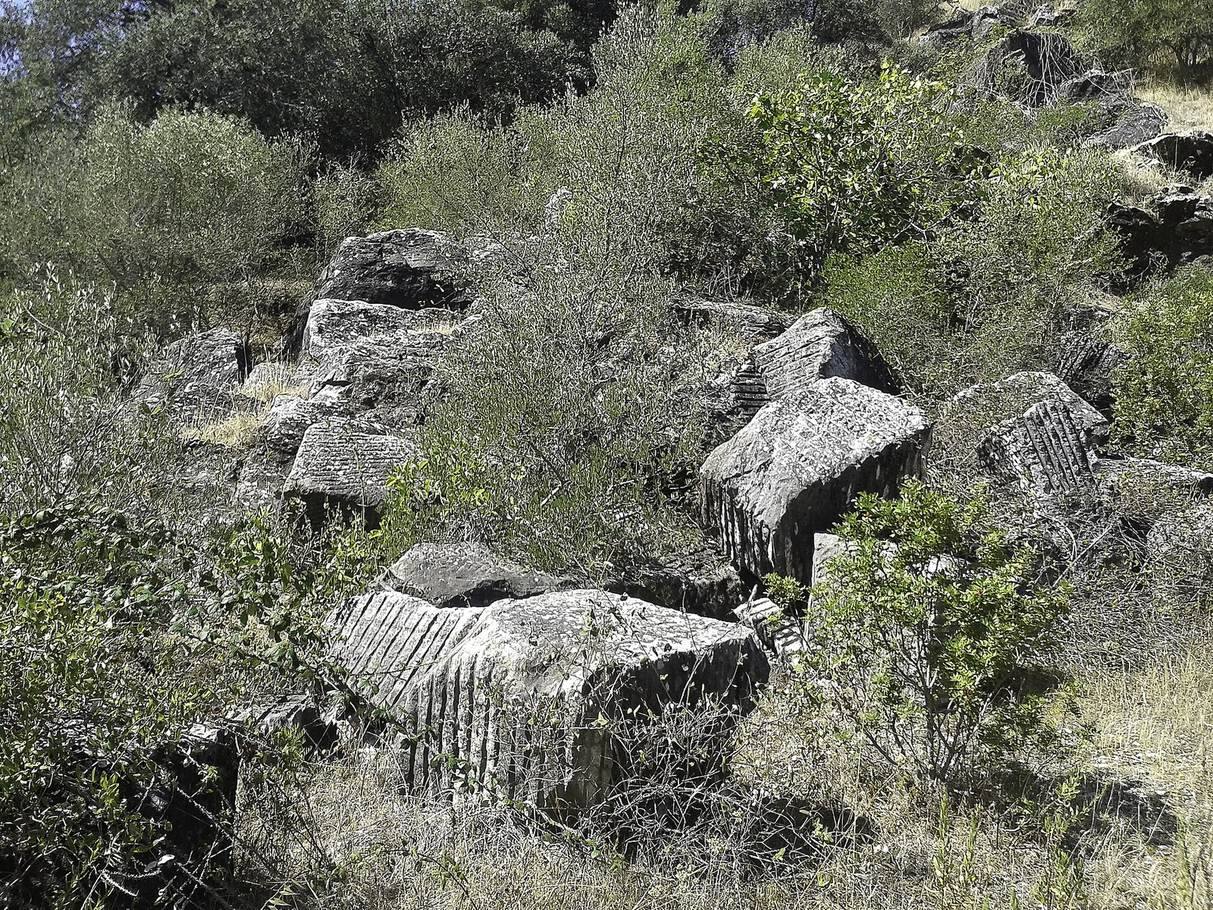
Rocks below the cave carry further engravings, including ox-skull motifs and small cup-shaped hollows cut into the stone. Photographs of the cave and a small selection of finds are displayed at the Montemor-o-Novo Museum. Other finds from the cave are held at the National Archaeological Museum in Lisbon.