Castellum of Rötelsee: A Roman Frontier Fort in Germany
Site at a Glance
- Popularity
- Very Low
- Country
- Germany
- Primary era
- Classical
- Eras represented
- Classical
- Civilizations
- Roman
- Site type
- Military
- Remains
- Fort
On this page8 sections
History
The Castellum of Rötelsee is a Roman frontier fort at Welzheim, Germany, probably built in the late second century AD, although AD 233 is another proposed date. It stood on the Upper Germanic Limes, part of Rome’s fortified frontier system, and was likely intended to watch a stretch of the boundary.
Construction and frontier role
The garrison is estimated to have numbered 10 to 20 soldiers, though its unit is unidentified. The fort had no shrine for military standards, the sacred objects kept by a Roman unit, which has led to the suggestion that it was manned by a detachment, probably sent from Welzheim. Nearby forts there support this possibility. Archaeologist Dieter Planck grouped small forts of comparable size, construction, and distance from the frontier as “Rötelsee-type” field watch posts, which he considered likely to belong to the late second century. Andreas Thiel instead placed the type in the later Limes period. He connected its development with troop reductions and a reorganization of frontier surveillance, as small forts took the place of continuously manned towers.
The Limesfall and the fort’s end
The fort’s final phase is associated with the Limesfall of AD 259/260, when Roman forces abandoned the Agri decumates, a Roman-held territory in southwest Germany, and withdrew from frontier installations that had not already been destroyed. Rötelsee may have suffered violent destruction before the withdrawal, but it is thought to have remained in use until the Limes was abandoned around AD 259/260.
Investigation and protection
In 1895, the Imperial Limes Commission, a German body established to investigate the Roman frontier, examined the fort’s defensive walls under archaeologist Gustav Sixt. During land consolidation in autumn 1974, archaeologist Dieter Planck led an excavation that established the full ground plan. It was the first extensive investigation of this smallest form of garrison on the Upper Germanic-Raetian Limes. The land-consolidation office in Schorndorf and the city of Welzheim then conserved the remains. Since 2005, the fort has formed part of the UNESCO World Heritage property of the Upper Germanic-Raetian Limes. It is also protected as a cultural monument under Baden-Württemberg law.
Remains
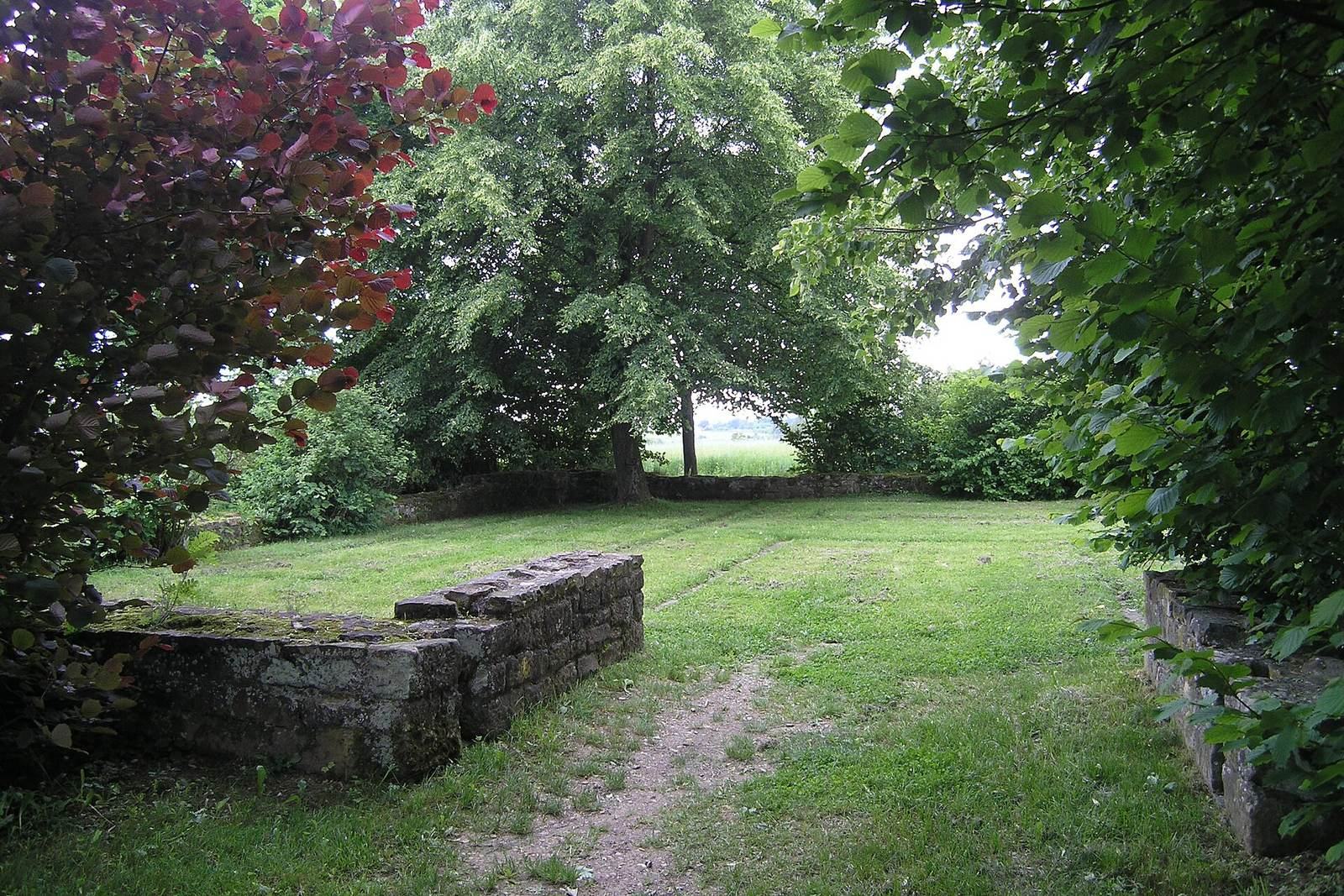
The fort occupied a hill in the Ländlesäcker area, at an elevation of 517 metres. It lies about 1.5 kilometres north of Welzheim’s west fort and roughly 40 metres behind the Roman frontier works. The local stretch of the Limes ran almost exactly north to south for about 80 kilometres. From its elevated position, the fort overlooked the frontier foreland and the timber palisade and towers to the north. The square stone enclosure measured 18.5 metres on each side and covered 324 square metres.
Defences and entrance
Walls about one metre thick enclosed the fort, and a V-shaped ditch up to two metres wide surrounded it, with a gap at the single-lane entrance. Side walls projected inward to form the entrance passage. This arrangement has parallels at entrances to Welzheim’s East Fort, built around AD 115 or 140. Excavators found a pit at each end of the ditch gap; these may have held a barrier that could block the entrance.
Courtyard and buildings
Postholes along the inner face of the wall mark a former defensive walkway. Timber buildings stood along the north, south, and west sides of a paved central courtyard, while the east side was left open for the entrance. The buildings’ front faced the Limes. A covered walkway bordered the courtyard, with a large hearth beneath it at the west end. The buildings were made using horizontal beams laid at ground level and contained two or three rooms of nearly equal size. At the southeast corner, a drainage channel led from the courtyard through the defensive wall and into the ditch.
Surviving fabric and finds
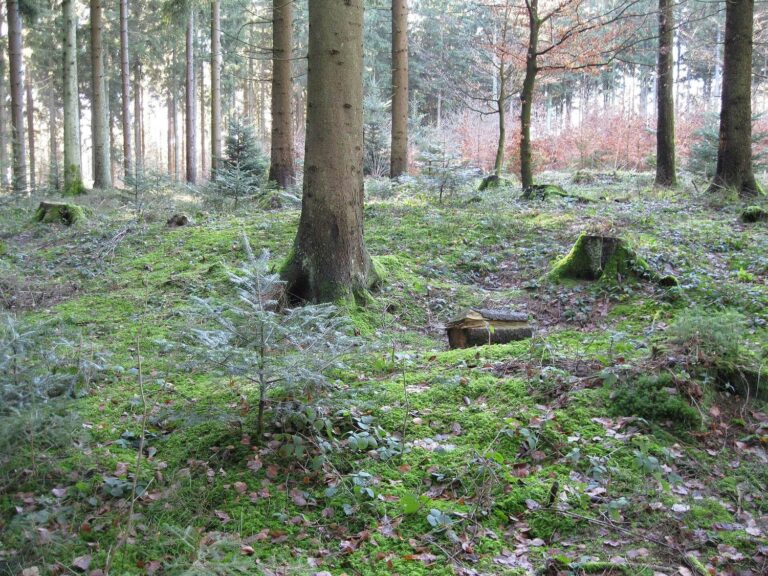
The remains survive as wall stumps; concrete slabs mark the positions of the former interior buildings, and the ditch has been restored. Finds include a brooch, a pendant shaped like a phallus, and coins. One coin was a denarius from the Roman Republic, the period before the emperors, associated with the Eleventh Legion. Mark Antony struck it to win the soldiers’ support. Coins from the reign of Gallienus, emperor from AD 253 to 260, were also found. Dated in this context to AD 253–260, they are among the latest coin finds from the forward section of the Upper Germanic Limes and help place the fort’s final phase.