Kleinkastell Ebnisee: A Roman Frontier Fort in Germany
Site at a Glance
- Popularity
- Very Low
- Country
- Germany
- Primary era
- Classical
- Eras represented
- Classical
- Civilizations
- Roman
- Site type
- Military
- Remains
- Fort
On this page7 sections
History
Kleinkastell Ebnisee is a small Roman fort on the Upper Germanic Limes, the Roman frontier system of boundary works and military installations, near Ebnisee in Kaisersbach, Germany. Its occupation began no earlier than about AD 159/160 and may have started as late as AD 233. The fort belonged to a network of posts guarding Rome’s frontier in southwestern Germany, though its precise use and garrison remain uncertain.
Frontier post and uncertain chronology
Archaeologist Dieter Planck grouped Ebnisee with similar small forts known as Rötelsee-type field watch posts. Finds from comparable installations led him to suggest that this type emerged in the late second century. Archaeologist Andreas Thiel instead placed it in the later period of the Limes and proposed that troop shortages prompted a change in frontier defenses: smaller forts took the place of permanently manned watchtowers. A detachment of perhaps 10 to 20 soldiers from a larger garrison may have watched the frontier from Ebnisee.
Withdrawal and rediscovery
The fort was no longer occupied by AD 259/260, when Roman troops withdrew from the remaining frontier posts as Rome abandoned the Agri Decumates, its territory in southwestern Germany. The fort takes its name from nearby Ebnisee, an artificial lake created in 1745.
Archaeologist Gustav Sixt identified and investigated the fort in 1895 while researching the Roman frontier for the Imperial Limes Commission, a German body established to document it. In 2005, Ebnisee became part of the UNESCO World Heritage listing for the Upper Germanic-Raetian Limes. It is also protected as a cultural monument under Baden-Württemberg law.
Remains
The nearly square stone fort measured 21 by 23 metres and covered about 0.045 hectares. It stood at an elevation of roughly 570 metres, about 25 metres behind the Roman frontier and 30 metres behind the still-visible Limes rampart. The fort occupied the highest point of this section of the frontier, around 400 metres south of a watchtower that served as a surveying point. Kastell Murrhardt lay to the north, and Kleinkastell Rötelsee to the south.
Fort layout and archaeological finds
Enclosure and defenses
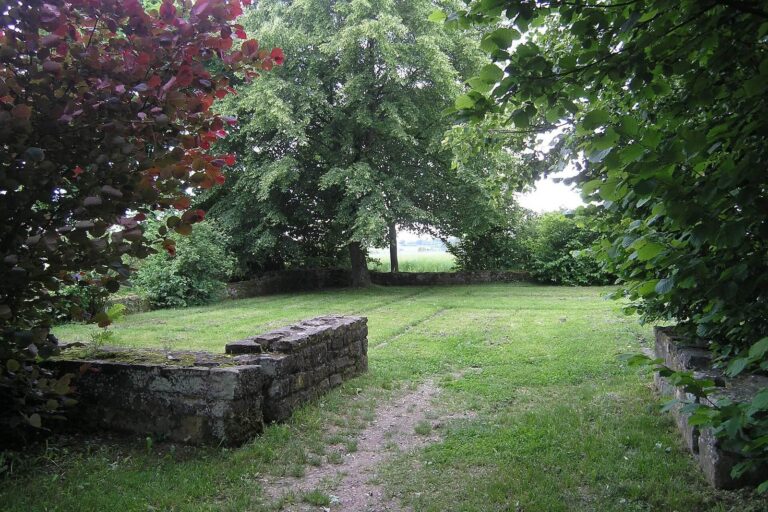
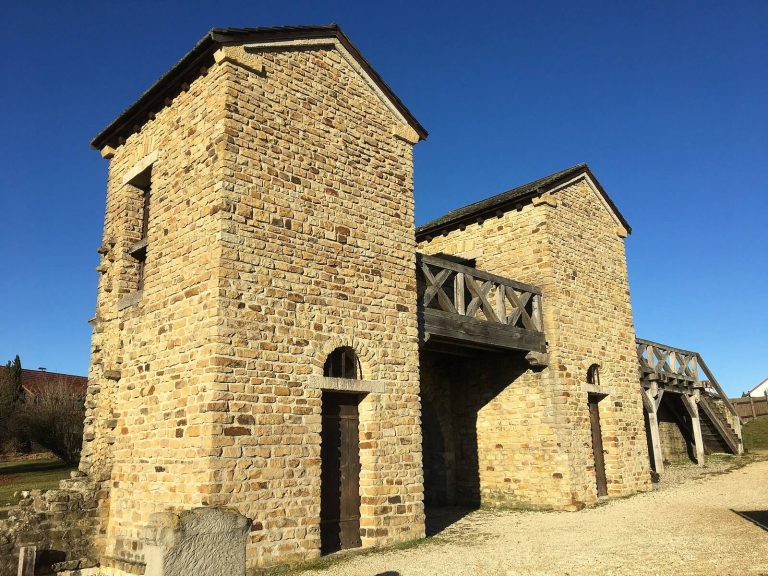
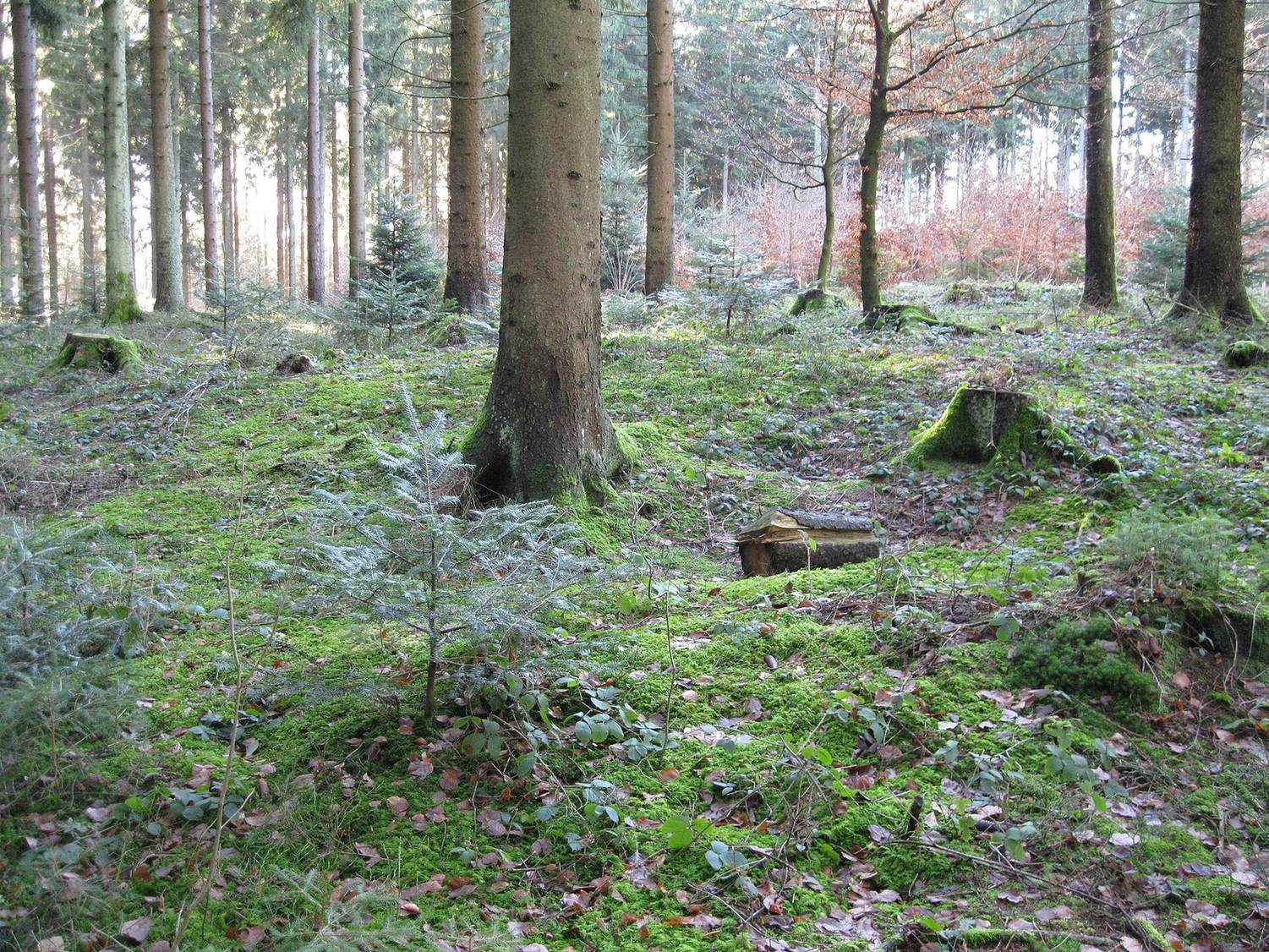
The enclosure survives as a rubble bank on a disturbed terrace among spruce trees, where the remains can be difficult to make out. A single entrance faced east, toward the enemy side of the frontier. Researchers have proposed that a stone defensive tower stood above the gate, though this reconstruction is uncertain. A wooden structure supported a walkway along the wall, while the buildings inside were probably made of timber. Ebnisee had the same ground plan as the southern fort at Rötelsee and was slightly larger; the reconstruction at Rötelsee does not include a stone tower over its gate.
Recovered objects
During his investigations, Sixt recovered a hand mill’s runner stone and the tip of a pilum, a heavy Roman throwing spear. Finds from the fort and nearby watchtowers are held in several collections, including the Landesmuseum Württemberg in Stuttgart.