Suwajinja Kofun: A Sixth-Century Japanese Burial Mound
Site at a Glance
- Popularity
- Very Low
- Country
- Japan
- Primary era
- Medieval
- Eras represented
- Medieval, Modern
- Civilizations
- Japanese, Yamato
- Site type
- Burial
- Remains
- Burial Mound
On this page10 sections
History
Suwajinja Kofun is a Japanese burial mound in Fujioka, Japan. It belongs to the Hongo–Kobayashi burial-mound group and was built in the latter half of the sixth century, during the Kofun period, an era when such mounds were constructed from roughly the third through the seventh centuries. Nearby Suwajinja North Kofun is thought to date to about the same time.
Investigation and alteration
Japanese archaeologist Shibata Tsunee investigated Suwajinja Kofun in 1906, and the grave goods from the investigation were reported in 1910. The North Kofun was examined that year as well; numerous objects from it were transferred to the prefectural office.
The moat once extended along the main mound’s eastern side. That stretch was filled in around 1967.
Remains
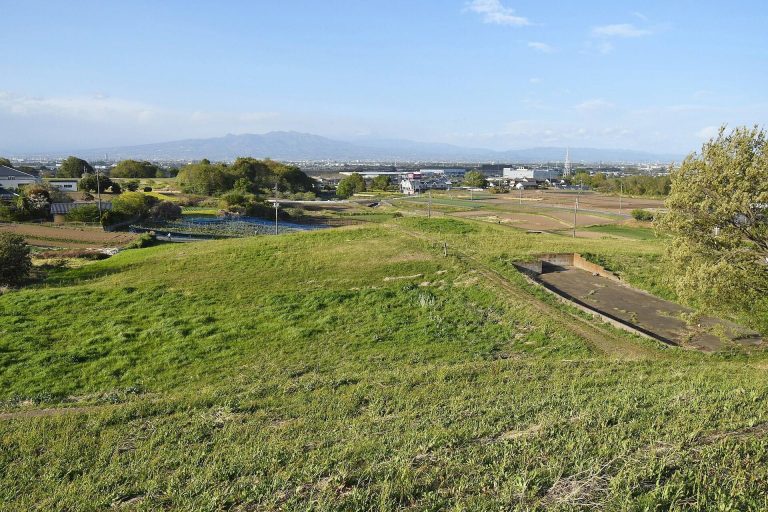
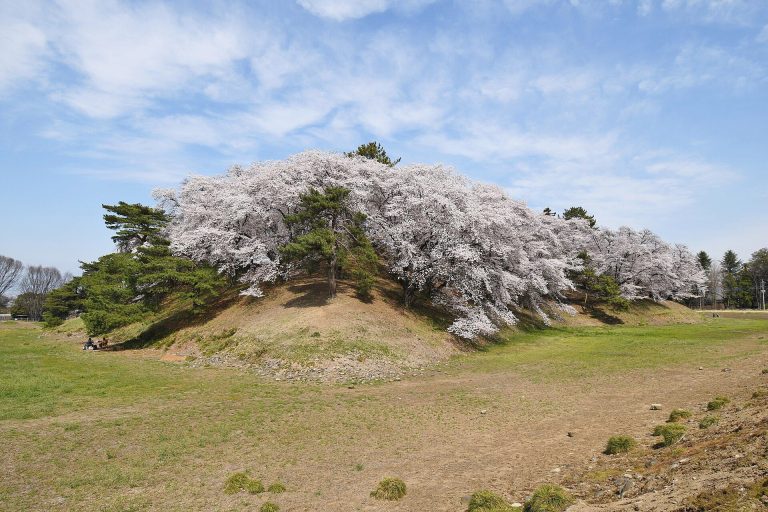
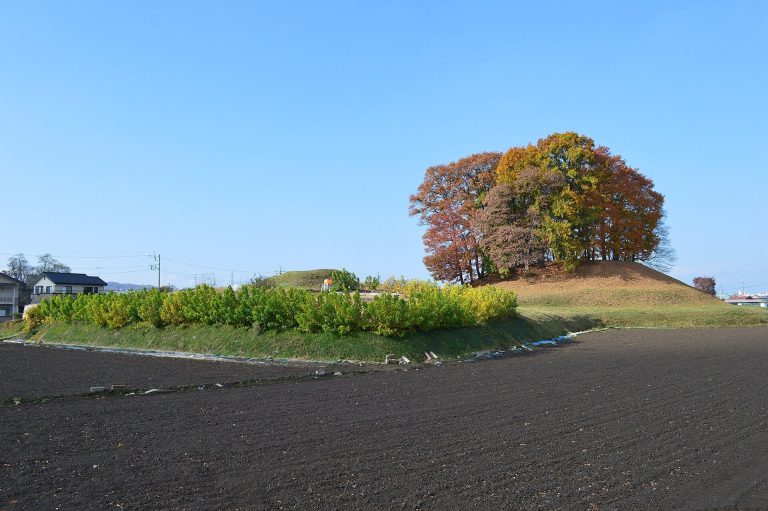
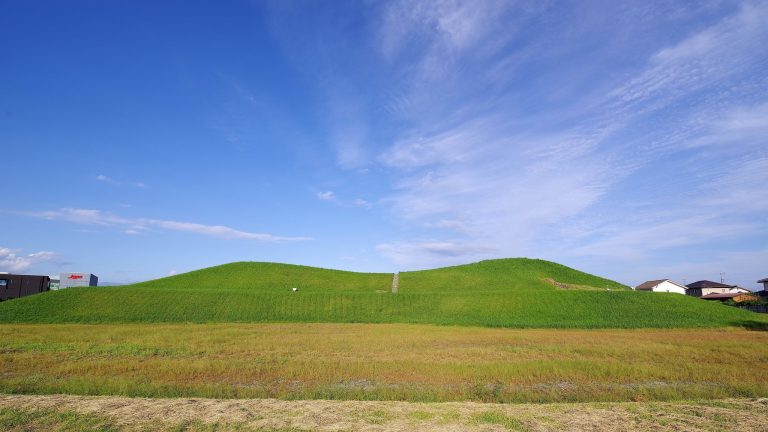
The site lies on the alluvial plain west of the Kanna River. Its main feature is a west-facing, keyhole-shaped mound, with a circular burial mound 30 metres to its northwest. Both mounds contain stone burial chambers entered through passages.
Suwajinja Kofun
Mound and grounds
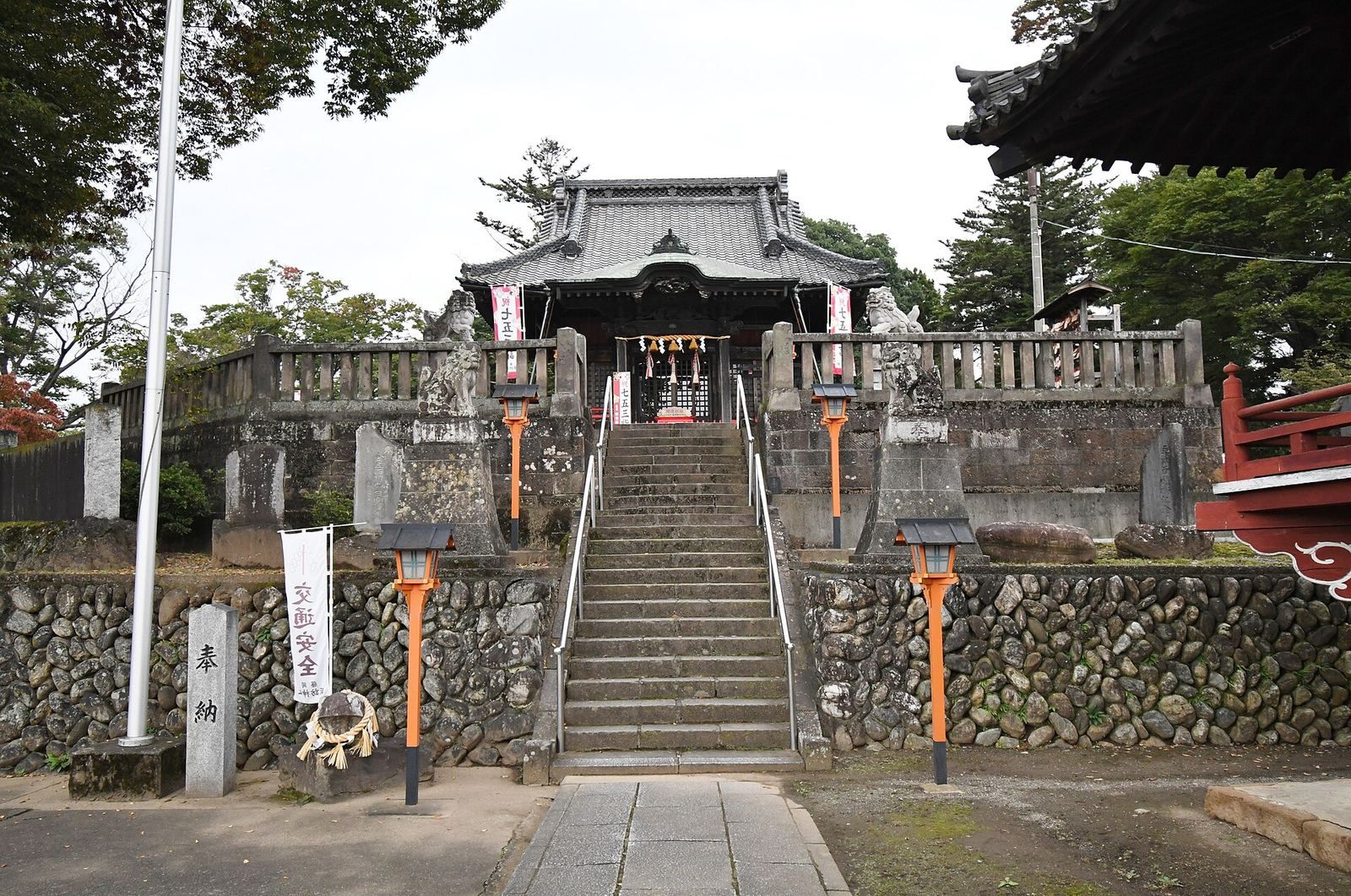
The main mound is 57 metres long and rises 4 metres at its rounded rear. A building of Suwa Shrine, a Shinto place of worship, stands on top. Its exterior features cylindrical haniwa, fired-clay objects placed on or around burial mounds, including morning-glory-shaped examples. Other figures take the forms of quivers, arm guards, and people. A pond on the north side occupies part of the surrounding moat.
A Kagura hall, used for Shinto ritual music and dance, stands west of the mound’s front. When the hall was built in 1906, pine logs were driven into the soft ground for its foundation. This work suggests the moat once reached the hall’s vicinity.
Stone burial chamber
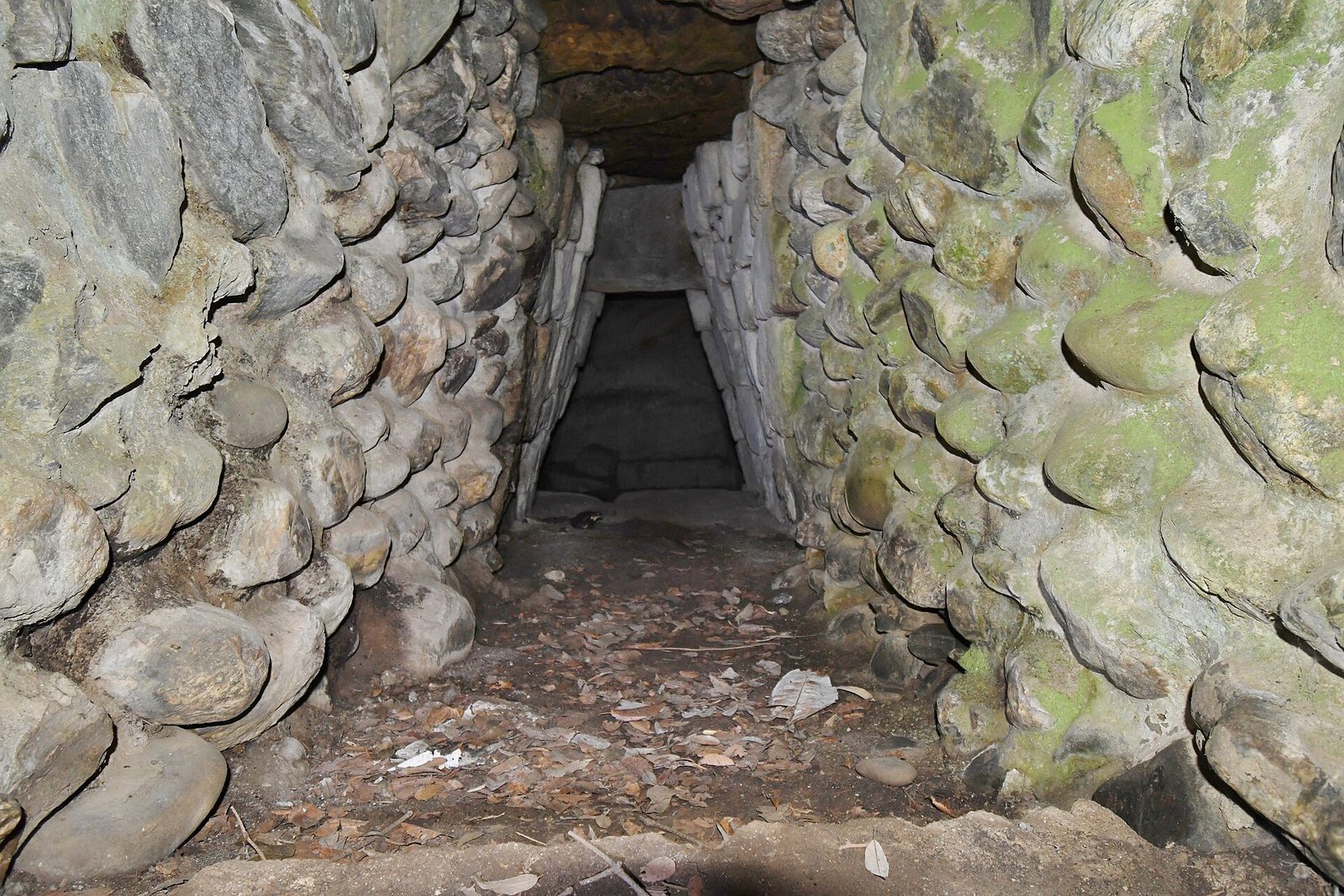
The main burial chamber is entered horizontally through a passage and opens toward the southwest. The full structure is 5.9 metres long. Its rectangular chamber measures 3.1 metres long and 1.9 metres wide, with a height of 2.2 metres at the rear. Cut Ushibuse sandstone blocks form the chamber, whose side walls slope sharply inward. The 2.8 metres of passage nearest the chamber use similar construction, while natural stone forms the section toward the entrance.
A slab partition 0.7 metres from the rear wall marks off a coffin platform. The chamber floor sits 0.42 metres below the passage floor and consists of two courses of river stones covered with sand and small gravel. The platform is 0.20 metres above the chamber floor and has the same surface treatment; two stones form the threshold between chamber and passage. Finds include human remains, a decorated sword, weapons, armor, horse gear, and Sue ware, a type of high-fired Japanese stoneware. The grave goods from the main chamber are held by the University of Tokyo.
Nearby burial remains
Suwajinja North Kofun
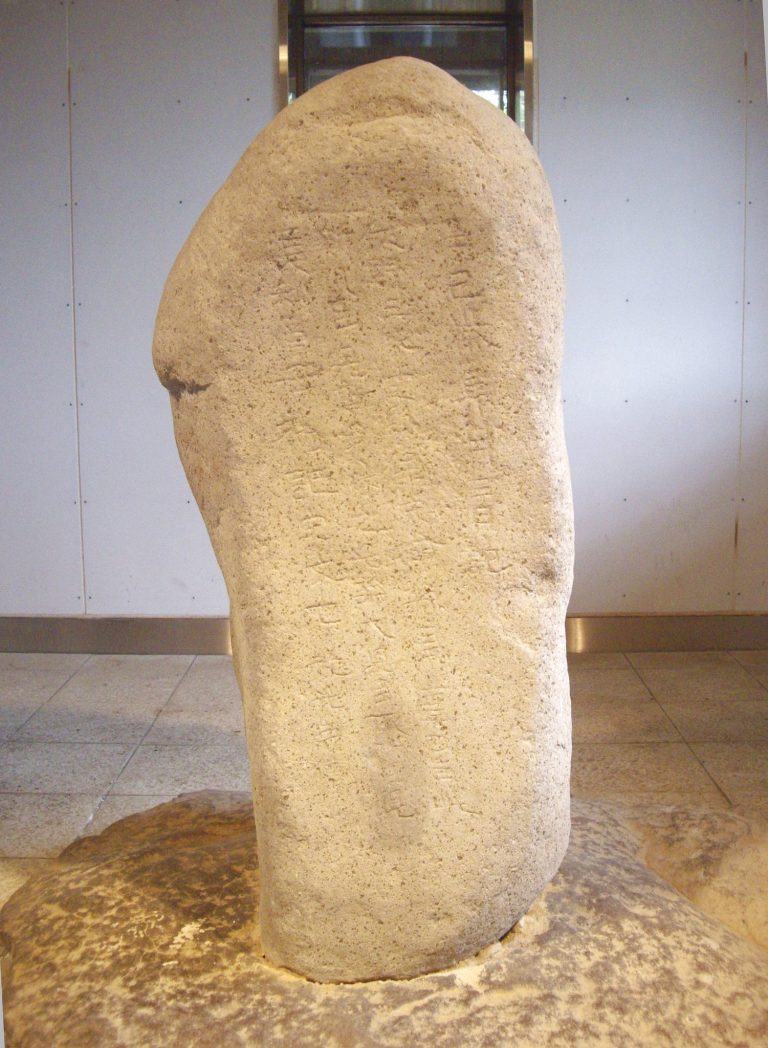
This circular mound lies 30 metres northwest of the main kofun. It is 25 metres in diameter and 2 metres high, with two commemorative monuments on its summit.
North mound burial chamber
The chamber opens toward the south-southwest and measures 3.8 metres overall. Its burial room is 3.4 metres long, 1.7 to 1.8 metres wide, and 1.65 to 1.7 metres high. Cut tuff blocks form the walls; the rear wall is a single slab, and the walls incline inward. Ushibuse sandstone forms the ceiling stones. The floor lies 0.18 metres below the passage floor and consists of river sand over rounded stones about the size of a fist.
Eastern burial mound
A burial mound once stood east of the North Kofun. Finds associated with it include two straight swords, several iron arrowheads, an adze, and a bronze bowl.