Brandval Church: A Norwegian Parish Church Dating to 1651
Site at a Glance
- Popularity
- Very Low
- Country
- Norway
- Primary era
- Early Modern
- Eras represented
- Medieval, Early Modern, Modern
- Civilizations
- Denmark–Norway, Norwegian
- Site type
- Religious
- Remains
- Church
On this page12 sections
History
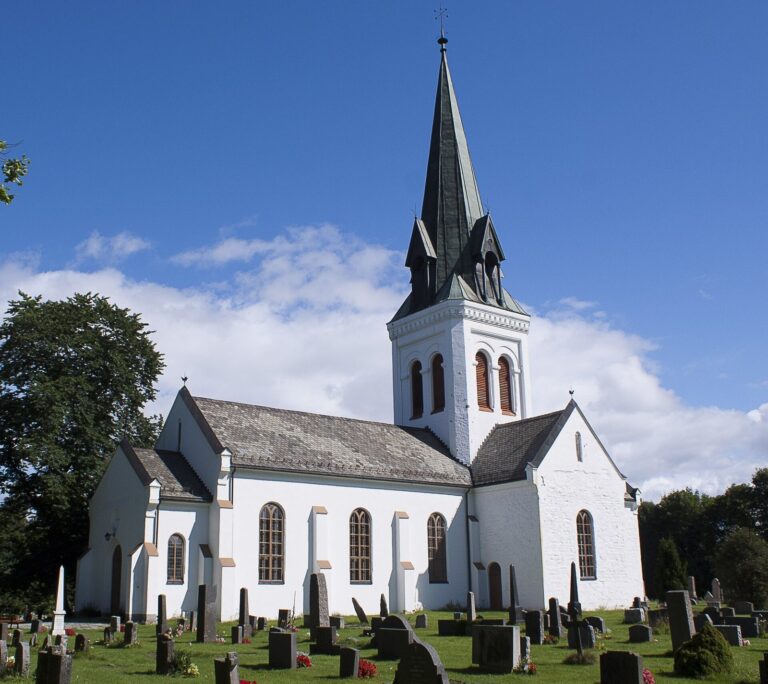
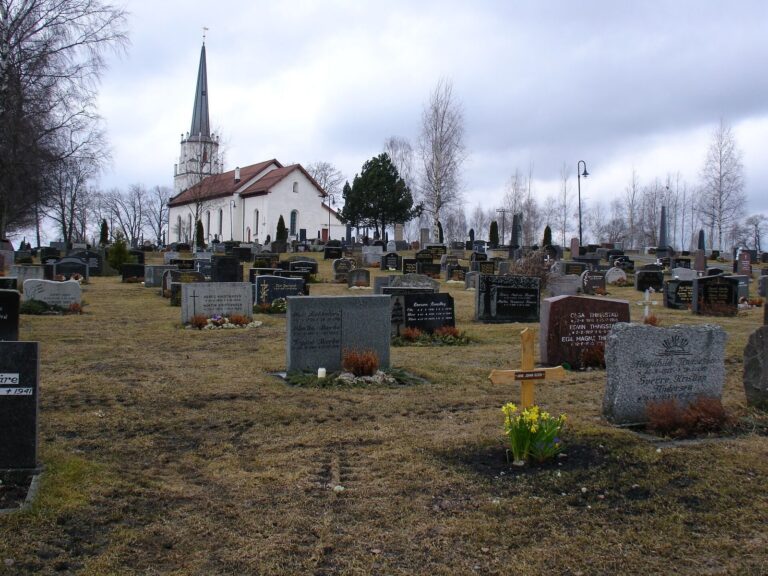
Brandval Church is a wooden parish church in Brandval, Norway, on the east side of the Glomma, Norway’s longest river. Its present building was consecrated in 1651 and, after later remodeling, is described as Neo-Gothic, a revival of medieval Gothic forms.
A medieval predecessor and a new church
The earliest surviving written reference to a church at Brandval dates to 1394, but a church was already there. The first building was probably a fourteenth-century stave church, a medieval timber church built around upright structural posts. It stood at Furulund on the west side of the Glomma.
In 1651, that church was dismantled and a replacement built about 1.2 kilometres to the south, across the river, at Brandval’s present site. The new church was consecrated that year and initially served as an annex church, meaning a secondary church for part of a parish. Lauritz Lauritzen was responsible for its interior carpentry.
Parish development and later changes
Brandval belonged to the Grue parish district until 1863, when it became a separate district. The new district covered the northern part of Kongsvinger and included Roverud and Lundersæter churches. The church was formerly associated with the Catholic Church and is now an Evangelical Lutheran parish church of the Church of Norway. Lutheranism is a Protestant tradition.
Repairs took place in 1839. A major remodeling in 1876-77 altered much of the interior, followed by further changes in 1914 and 1951. A restoration in 1966-67 brought older furnishings back to the church. Brandval remains in use for confirmations and funerals; its cemetery is a main reason funerals continue there, despite larger Roverud having its own church. The church has automatic legal protection as a Norwegian cultural heritage site, a status that does not require a separate individual designation.
Remains
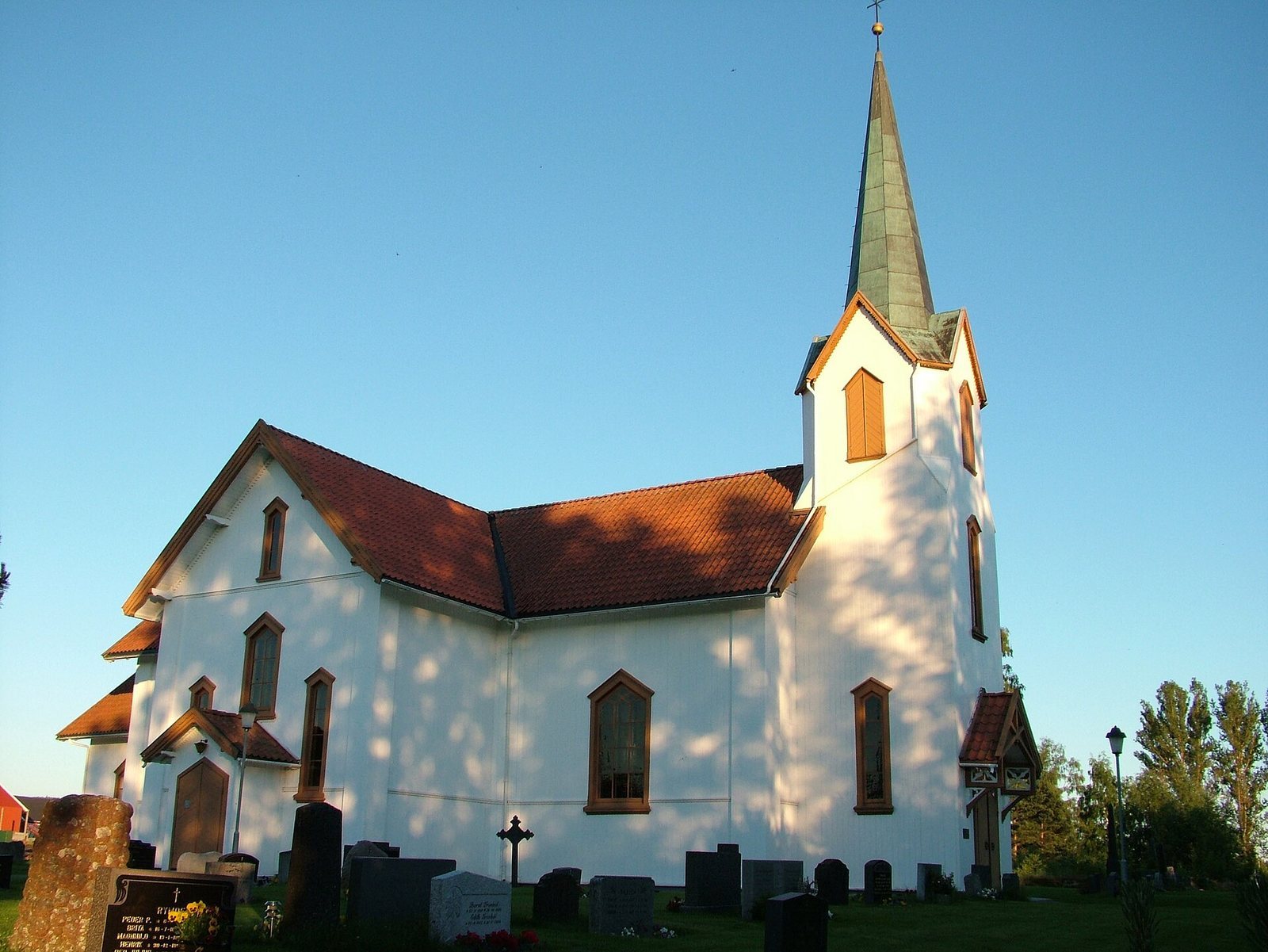
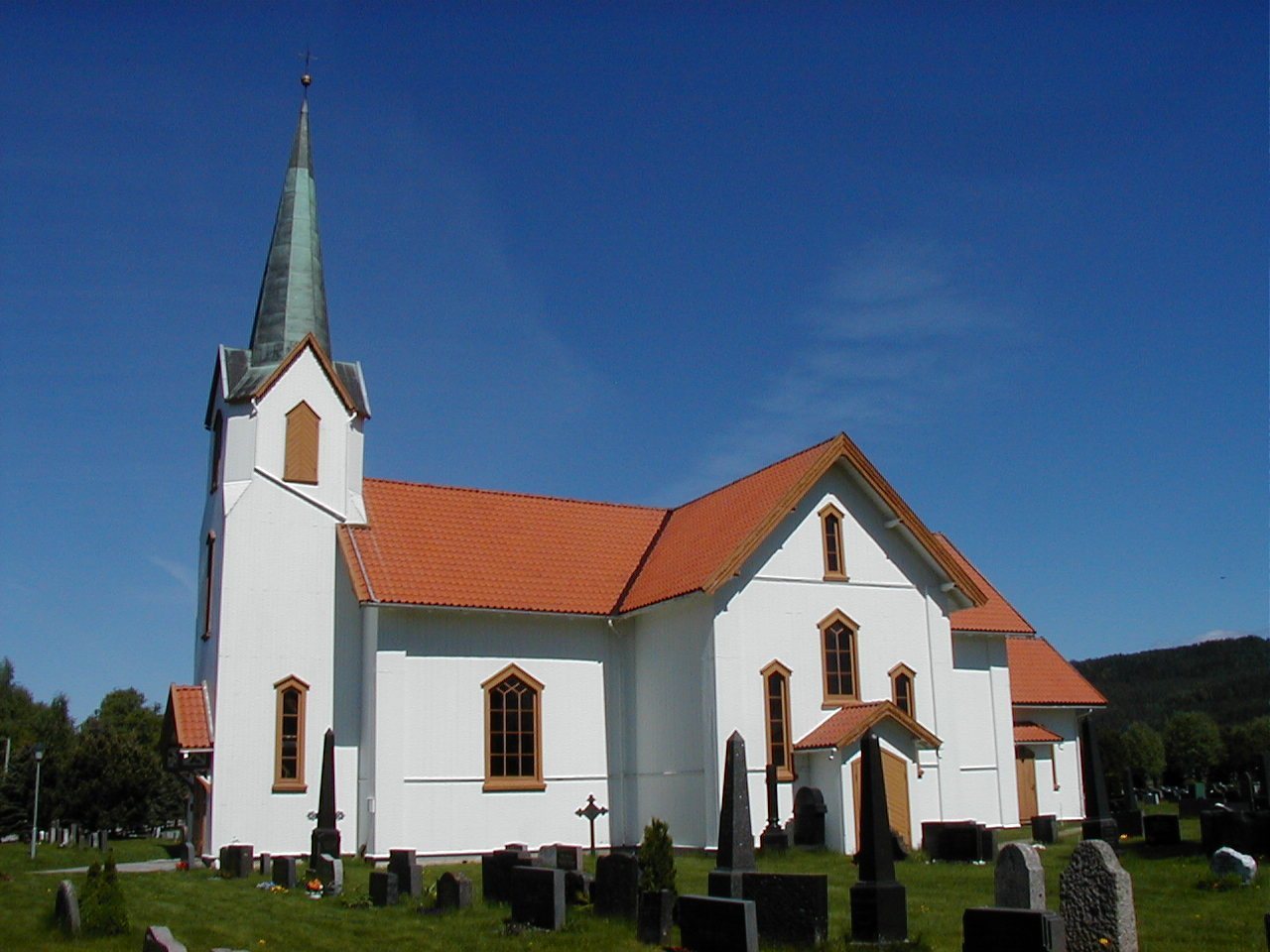
The church is a white timber building beside a cemetery, with seating for about 330 people. Its cruciform plan has relatively short cross-arms. The building’s timber walls are covered with vertical boards on both their exterior and interior faces.
Church building
Plan and exterior
The present church retains its cross-shaped plan and is described as Neo-Gothic. In 1876-77, a west porch and tower and a sacristy, a room for preparing for worship and storing religious objects, were added using a timber frame. A small tower that had stood on the nave roof was removed. The roof was given tile covering during the 1839 restoration.
Vaulted ceilings
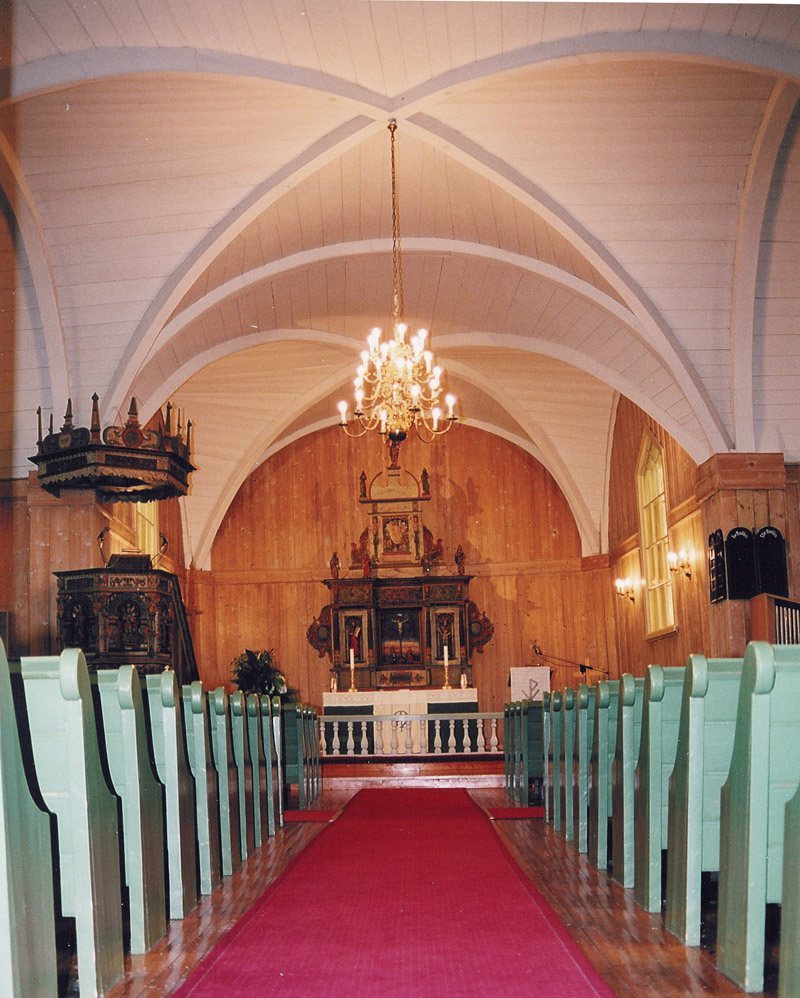
The main worship space has a wooden cross-vault, formed by two tunnel-shaped barrel vaults crossing one another. Wooden ribs and boards make up both this ceiling and the barrel vaults over the side aisles. Brandval is the only church in Norway where a wooden cross-vault from the seventeenth century survives.
Timber from the churches at Berger or Fyrilund may have been reused in the 1651 building. This possibility has not been ruled out, but the reuse remains uncertain.
Furnishings and fittings
Altarpiece
The ornate Baroque altarpiece was carved by Lauritz Lauritzen in 1651 and painted by Thomas Blix in 1728. Its lower scene shows the Crucifixion, followed above by the Resurrection and Ascension, with a triumphant heavenly Lord at the top. When the work returned from the Norwegian Museum of Cultural History, it was in very poor condition. The presumed top figure had lost its face, an arm, and one and a half legs.
A new upper section was made from a drawing by Norway’s Director General of Cultural Heritage. Kongsvinger woodcarver Anton Skyrud and Oslo woodcarver Fridstrøm and his son repaired and carved figures. Fridstrøm also made new figures of Mary, modelled on a photograph from Eidsberg Church, and Moses and Aaron, based on figures borrowed from Stange Church. Two figures remained unused after the restoration. They show Christ holding a globe and raising his right hand with three fingers extended, and closely resemble figures at the top of Hoff Church’s altarpiece in Toten.
Pulpit
The Baroque pulpit was carved by Lauritzen in 1651 and painted by Blix in 1728. Ove Qvale completed restoration work on the pulpit and altarpiece in May and June 1967. Some pulpit panels carry captions that do not match their figures. One labelled “Savior of the World,” a Christian title for Christ often associated with a globe and raised hand, depicts the Evangelist Mark; Luke’s panel has its correct identifying caption. The mismatch may reflect a moved panel or a figure that was displaced, lost, or left unused.
Baptismal fonts
The medieval baptismal font, a vessel for water used in Christian baptism, is made of soapstone and dates to 1175-1250. Its bowl narrows toward a flat underside and has a sawtooth band around the rim. The cylindrical shaft bears interlaced carving at its base and a raised rope pattern around its middle. On the round foot, pointed lobes and a carved leaf pattern decorate the curved upper surface. The font is well preserved.
The font may have come from the medieval churches at Fyrilund or Berger. It had stood in an earlier small church at Brandval and was probably not placed in the present building until 1877. Its forms relate to other fonts from eastern Norway and Swedish border regions: the bowl resembles the font at Frogn, the foot resembles examples at Idd and Hof, and its carved foot decoration is comparable to that at Eidskog.
A wooden baptismal font was probably made for the church in 1651. Some pieces were held at the Norwegian Museum of Cultural History in 1965, but the font could not be reconstructed. Its surviving hexagonal upper section was placed on the medieval stone font.
Bells, organ, and sword
A sword belonging to Colonel Adolph Carl Helm, a senior military officer, is displayed in a case in the church porch. The church’s bells date to 1856 and 1986, made respectively by O. Skierbakk and Olsen Nauen. Its organ was made by Norsk Orgel- og Harmoniumfabrikk in 1962.