Sant’Apollonia: A Camaldolese Women’s Monastery in Florence
Site at a Glance
- Popularity
- Medium
- Country
- Italy
- Primary era
- Medieval
- Eras represented
- Medieval, Early Modern
- Civilizations
- Grand Duchy of Tuscany, Republic of Florence
- Site type
- Religious
- Remains
- Monastery
On this page14 sections
History
Sant’Apollonia is a former Camaldolese women’s monastery in Florence, Italy, founded in 1339 by Piero di Ser Mino, a resident of San Simone. The Camaldolese are a congregation in the Benedictine tradition. The monastery’s refectory became the setting for Andrea del Castagno’s Last Supper, painted in 1447.
Foundation and artistic expansion
In 1440-1441, the abbey of Santa Maria a Mantignano and the Hospital of San Pietro a Porta Pinti were joined to Sant’Apollonia. Abbess Cecilia Donati obtained Pope Eugene IV’s permission to enlarge the complex. The resulting works included the cloister and refectory, while the large building known as the Abbess’s Convent was built in 1442.
Andrea del Castagno painted the refectory’s Last Supper in 1447. The nuns’ restricted enclosure kept the room and its paintings outside early descriptions of Florence. The frescoes emerged from beneath whitewash in 1861.
Suppression and changing uses
Napoleonic governments issued decrees that suppressed religious houses, and Sant’Apollonia was suppressed in 1808. The monastery was re-established in 1824. In 1863 its use was restricted: some buildings were assigned military purposes, and the nuns had less space. The church was taken over in 1864 under an expropriation law for public benefit. The monastery became state property and closed in 1866.
Part of the convent was demolished to open Via XXVII Aprile. During Florence’s years as Italy’s capital, from 1865 to 1871, and in later decades, former monastery buildings housed warehouses, laboratories and offices for the War Department’s warehouse administration. The refectory became a museum in 1891. In 1901 the complex was placed on a list of monumental buildings considered part of Italy’s national artistic heritage.
University use
After the Second World War, the complex passed to the University of Florence. In later years, some rooms were used by the Ministry of Defence and others by the university. These successive uses followed the monastery’s closure and its conversion to public and institutional purposes.
Remains
Complex layout
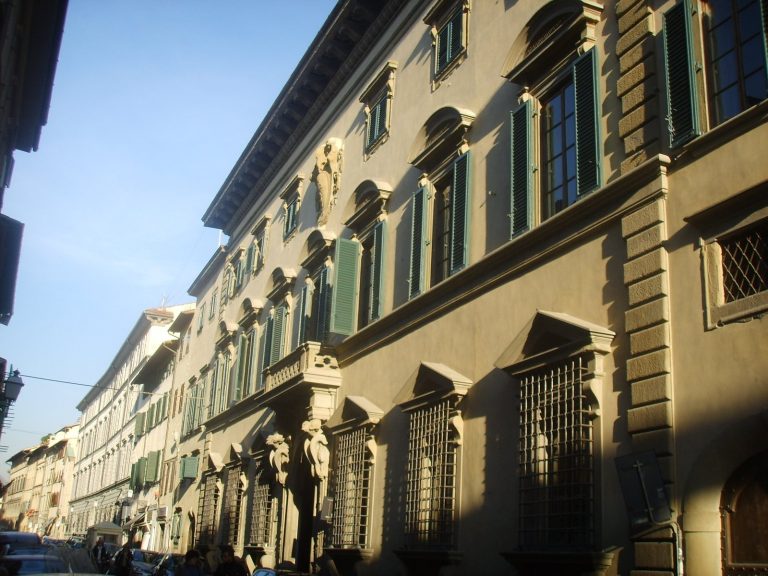
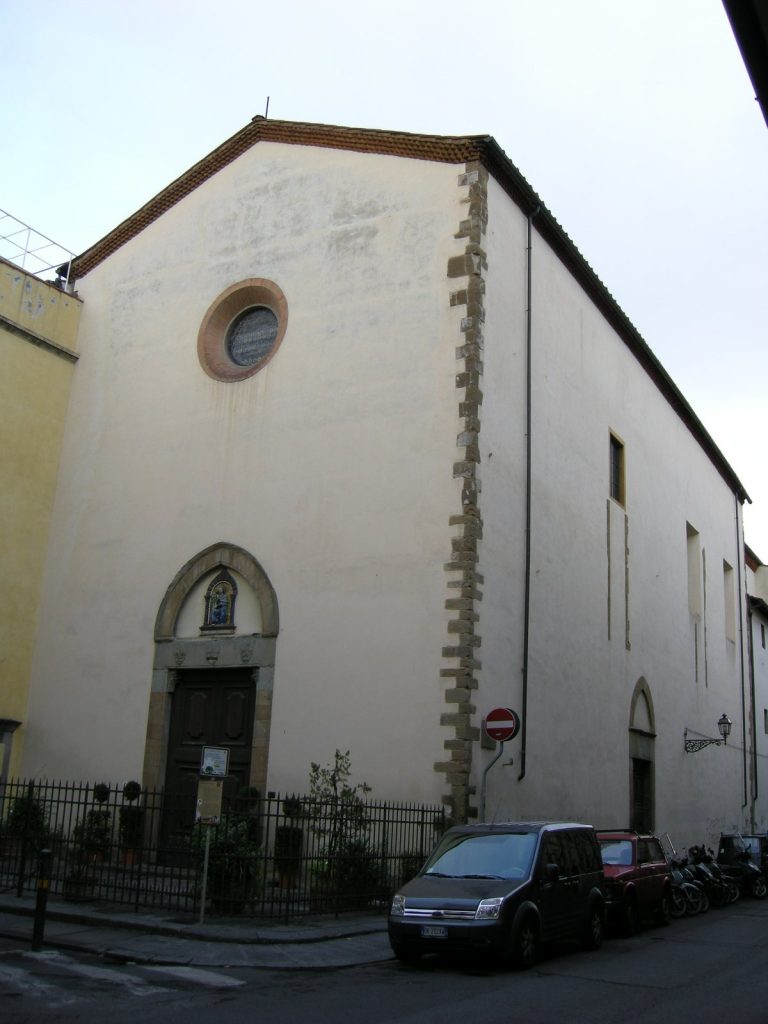
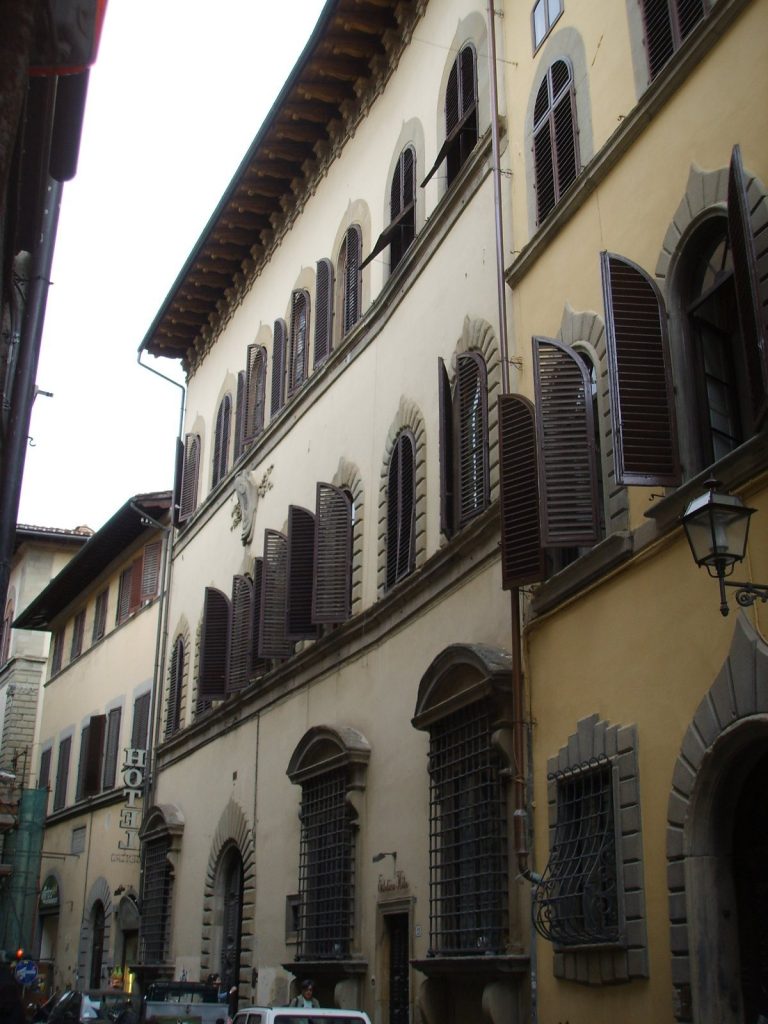
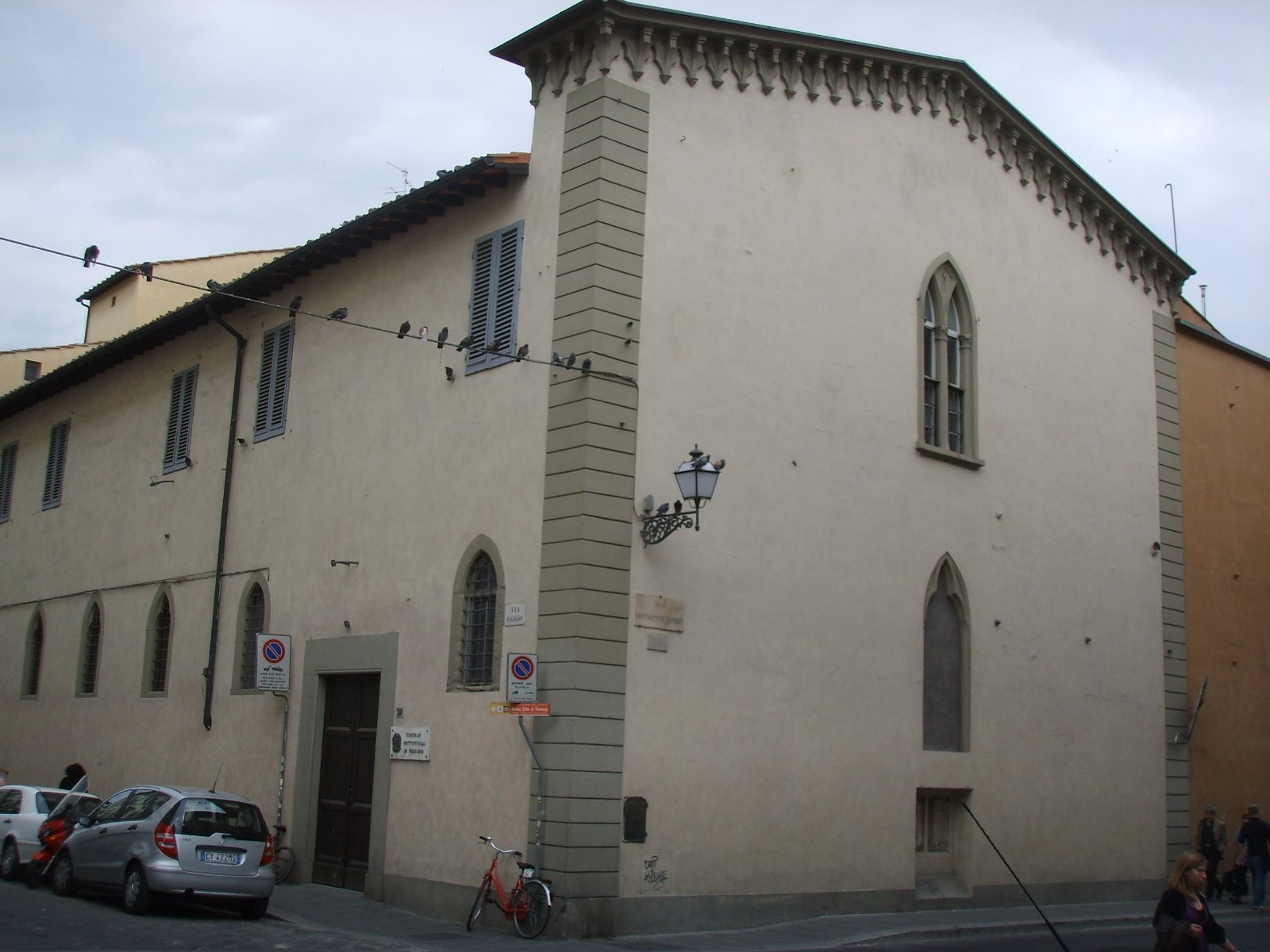
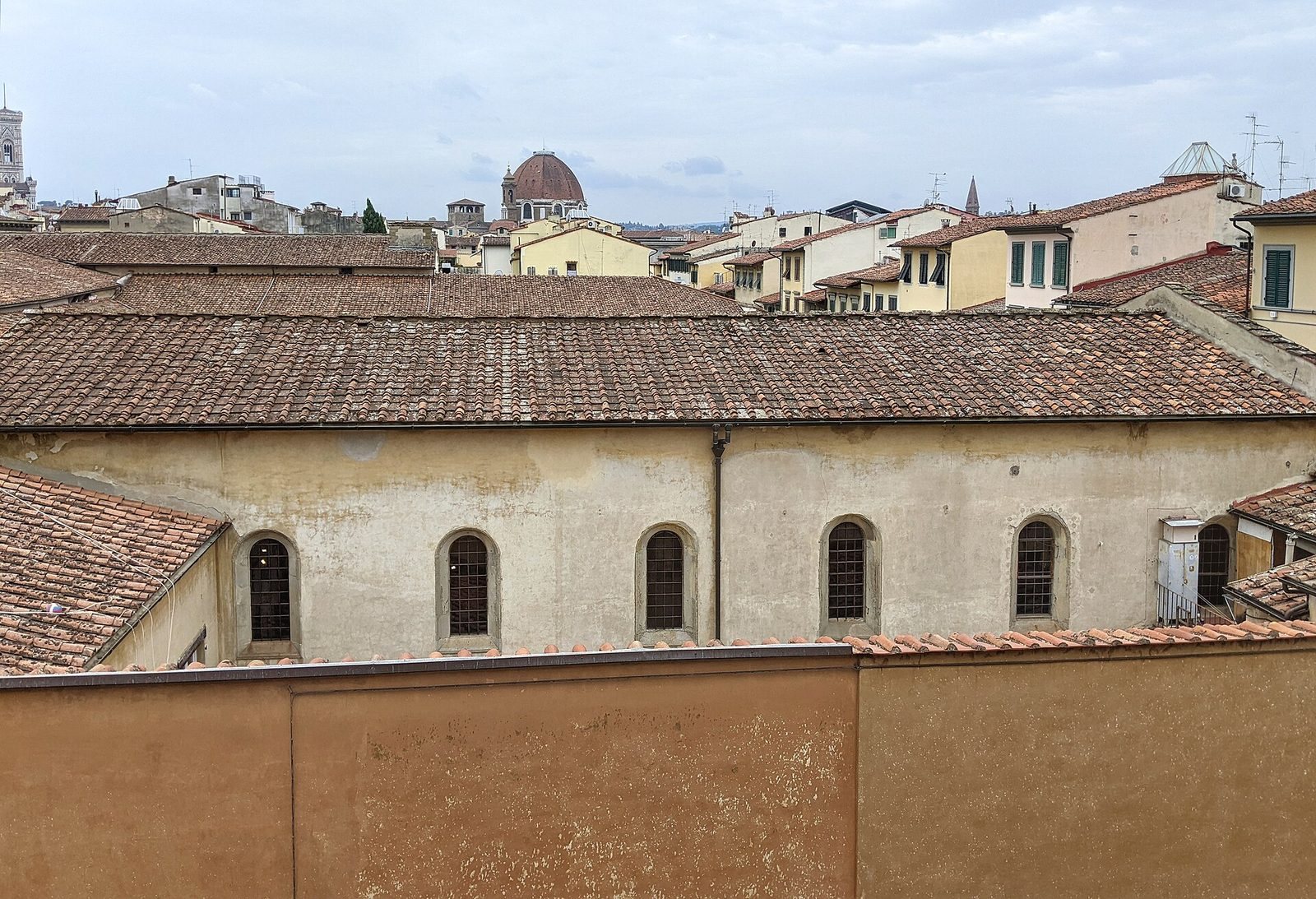
The surviving convent occupies an area bounded on three sides by Via XXVII Aprile, Via Santa Reparata and Via San Gallo. A small former church stands at the corner of Via XXVII Aprile and Via San Gallo, among the buildings that remain from the monastery.
Former church
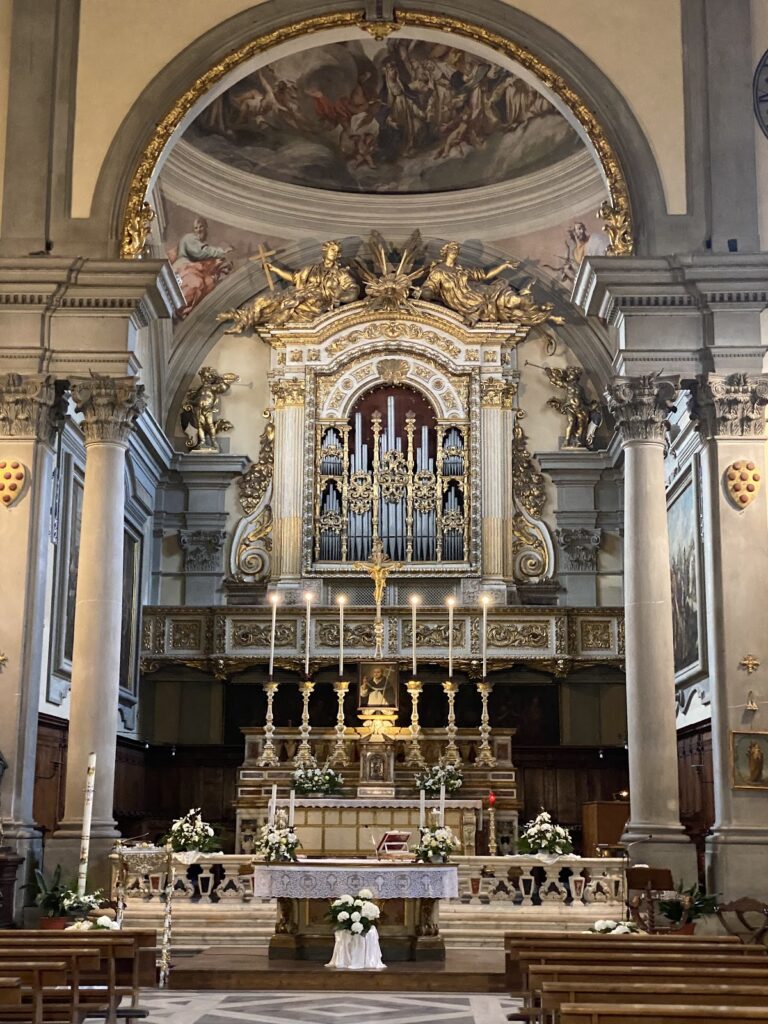
The church’s entrance is on Via San Gallo, and the building is now used as a conference hall. Its single hall has a row of columns supporting the choir. Above is a carved and gilded wooden ceiling bearing the monastery’s large coat of arms. The altar area ends in a square apse, a recess at the end of a church. Bernardino Poccetti painted frescoes there, including a Coronation of the Virgin dated 1611.
The entrance’s design is generally accepted as based on a drawing by Michelangelo, with Giovanni Antonio Dosio credited with developing the project. Archival references to repairs call it Michelangelo’s door, then in poor condition. A granddaughter of Michelangelo lived in the convent.
Convent buildings
The two-storey Abbess’s Convent, built in 1442, has rows of Ionic columns on three sides, with smaller columns on the upper floor. The smaller Silence building and a third structure called the Novitiate also survive. The Abbess’s Convent gives access to a frescoed hall that may once have served as the chapter house, where the monastic community met.
Refectory and frescoes
The Last Supper
The former refectory is a spacious rectangular room with a wooden ceiling divided into recessed panels and a row of windows along its right-hand wall. The central part of the west wall is covered by Andrea del Castagno’s Last Supper. Christ and the apostles sit around a long table covered with white cloth; their seats are draped in patterned fabric. Judas sits apart on a stool across the table, while John sleeps beside Christ. The figures occupy a small room resembling an ancient Roman dining chamber, shown with its front wall left open to reveal the interior. The work’s use of perspective had a precedent in Andrea Orcagna’s refectory at Santo Spirito, painted around 1360-1365.
Upper wall and other refectory works
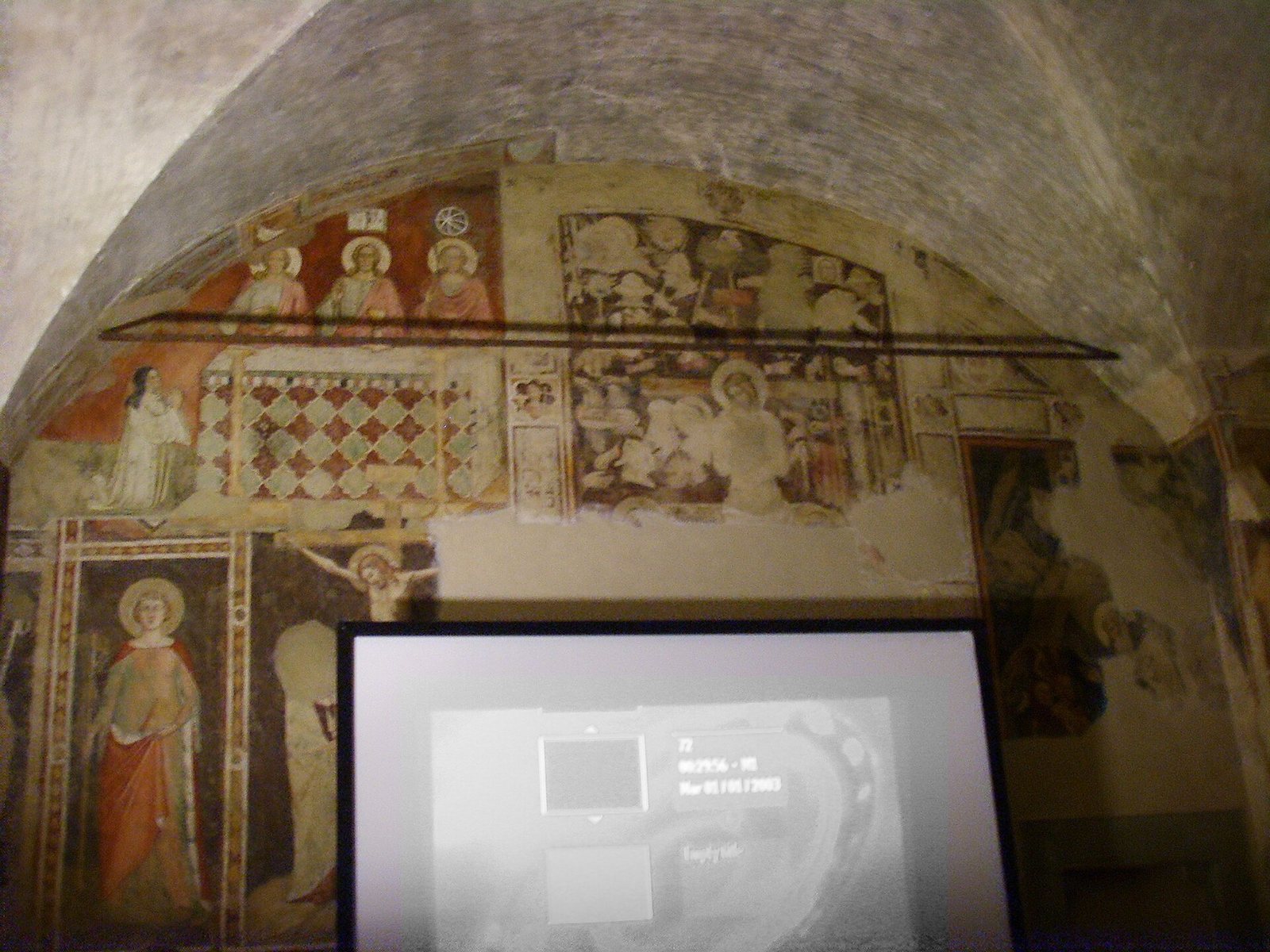
Above the Last Supper are scenes of the Resurrection, Crucifixion and Deposition, divided by two windows. These upper paintings were in poorer condition than the central scene. Moisture damage led to their upper section being detached in 1953. Preparatory drawings found during that work were detached in 1961 and placed on the opposite wall.
A crescent-shaped painting of the Dead Christ Supported by Two Angels by Andrea del Castagno, dated about 1447-1448, was originally above a convent doorway and is now displayed in the refectory. The room also contains his Crucifixion, dated about 1455, and a Crucifixion by Paolo Schiavo, dated 1447-1449. A crucifix on the south wall is attributed to Baccio da Montelupo.
Other works in the collection
Works from the monastery
The former dormitory contains a separate Last Supper painted by Poccetti in 1611, flanked by crescent-shaped paintings by Fabrizio Boschi dated 1613. The collection also includes Paolo Schiavo’s Pietà, showing Mary mourning Christ, and a Crucifixion with its preparatory drawing, both from the monastery. A Madonna and Child with Saints came from the monastery church. Other works include Neri di Bicci’s Coronation of the Virgin and Saints, dated 1473, and a Florentine-school tabernacle, a small shrine for a sacred image, from about 1470.
Works from other churches
The collection preserves traces and sinopias, reddish preparatory drawings used to plan frescoes, from the Stories of the Virgin cycle formerly in the church of Sant’Egidio. Domenico Veneziano, Andrea del Castagno, Alesso Baldovinetti and Piero della Francesca were involved in the cycle, which was lost during the church’s renovation in the sixteenth century. Other works include a sinopia for the lower part of a Trinity and Saints composition from Santissima Annunziata, attributed to Andrea del Castagno, and his Crucifixion from Santa Maria degli Angeli, which came from a Florentine Camaldolese convent. A Crucifixion dated 1537-1540 is attributed to Raffaello da Montelupo.