Cimiez Amphitheatre: A Roman Arena in Nice, France
Site at a Glance
- Popularity
- Medium
- Country
- France
- Primary era
- Classical
- Eras represented
- Classical
- Civilizations
- Roman
- Site type
- Entertainment
- Remains
- Amphitheatre
On this page8 sections
History
Roman construction and use
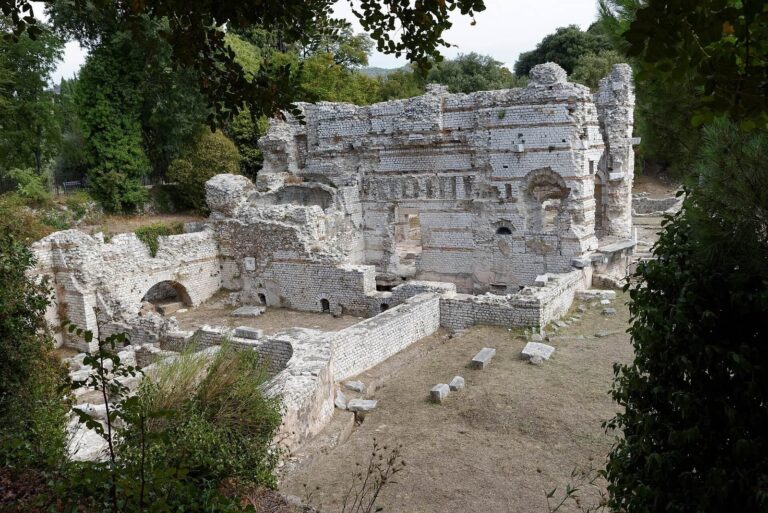
Cimiez Amphitheatre is a Roman amphitheatre in Nice, France, built by the Romans within Cemenelum, capital of the province of Alpes Maritimae in southeastern Gaul. Its first phase dates to AD 70–80. First-century pits preceded the building, which initially comprised an arena and a small seating area.
The amphitheatre was enlarged in the third century. Its modest initial scale once led to the suggestion that it trained cohorts stationed at Cemenelum, a cohort being a standard unit of the Roman army. That interpretation is now questioned, and the building probably hosted games for the city’s inhabitants. The lack of cages and pits points away from animal combats, while the venue’s capacity would have made contests involving many gladiators difficult.
Before AD 350, the entrances on the north and south were altered, perhaps because the building’s use had changed. It appears to have been abandoned around AD 350, and not before the late third century. A coin of Probus, a third-century Roman emperor, came from demolition material.
After antiquity
Gardens and vineyards later occupied the arena. The eastern seating was taken away to make room for a street, which eventually crossed the arena itself. In 1559, Michel de L’Hospital, a French statesman and magistrate, described ruins at Cimiez that included baths, an aqueduct, and a “small theatre,” generally identified as the amphitheatre.
Rediscovery, research, and later use
Architect François Brun drew a plan of the Cimiez ruins in 1866. Excavations continued through 1880, with most attention given to the baths. Architect and archaeologist Jules Formigé described the amphitheatre in work connected with the 1932 session of the French Archaeological Congress. Italian archaeologist Nino Lamboglia excavated ancient sites at Cimiez and Nice in the latter half of the 1930s. French archaeologist and historian Paul-Marie Duval studied Cimiez in 1943; his work on the amphitheatre appeared in 1946 and was reissued in 1989.
Restoration in the late nineteenth and early twentieth centuries helped slow the building’s deterioration. Excavation and study took place in 2007, restoration measures followed in 2008, and further excavations took place in 2009. Later restoration brought the monument closer to its original configuration. It was classified as a historic monument on 13 May 1965. In modern times, it hosted concerts for the Nice Jazz Festival from 1974 to 2010, before the festival moved to the city centre in 2011, and has also held events associated with Nice’s traditional Fête des Mai.
Remains
Setting and plan
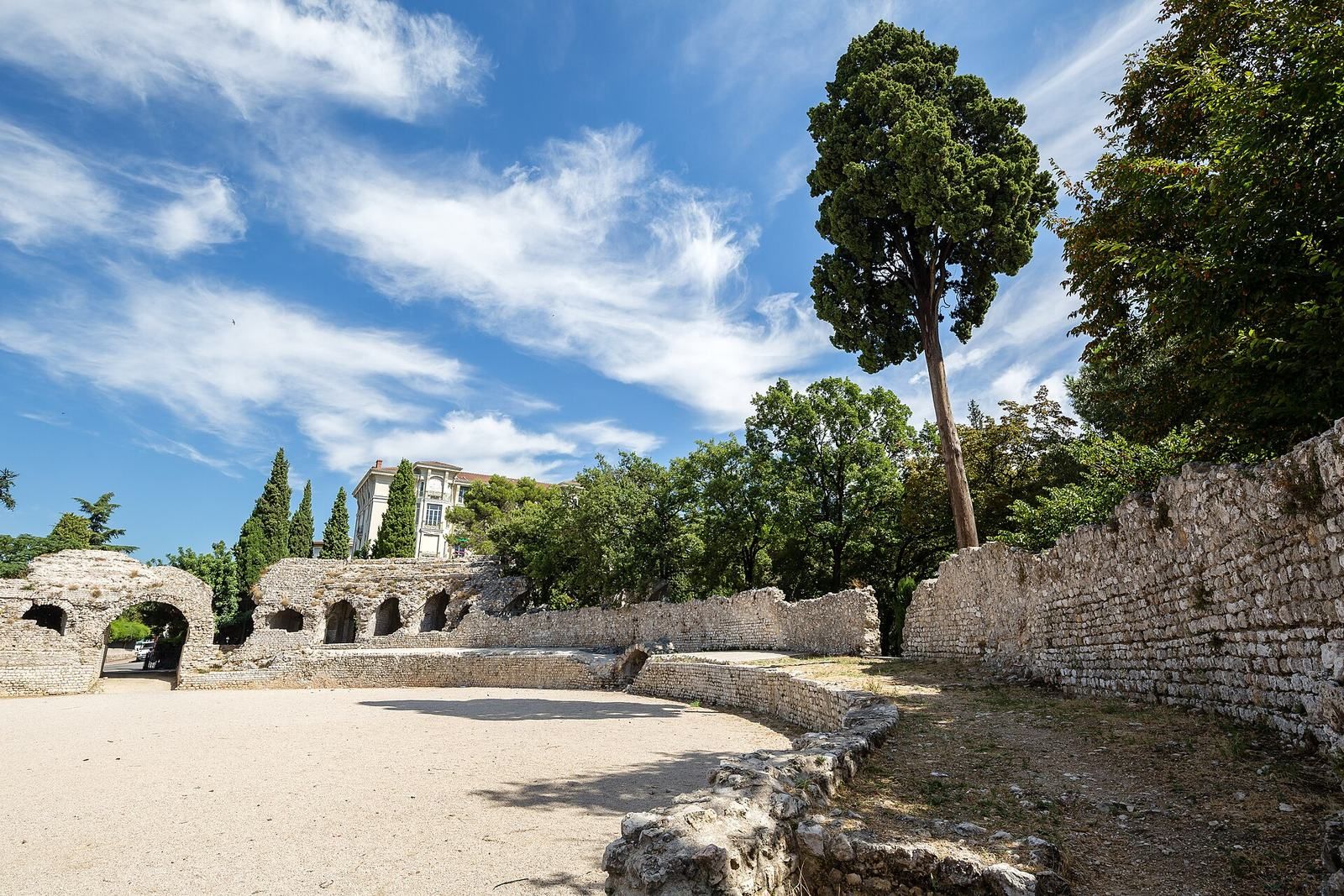
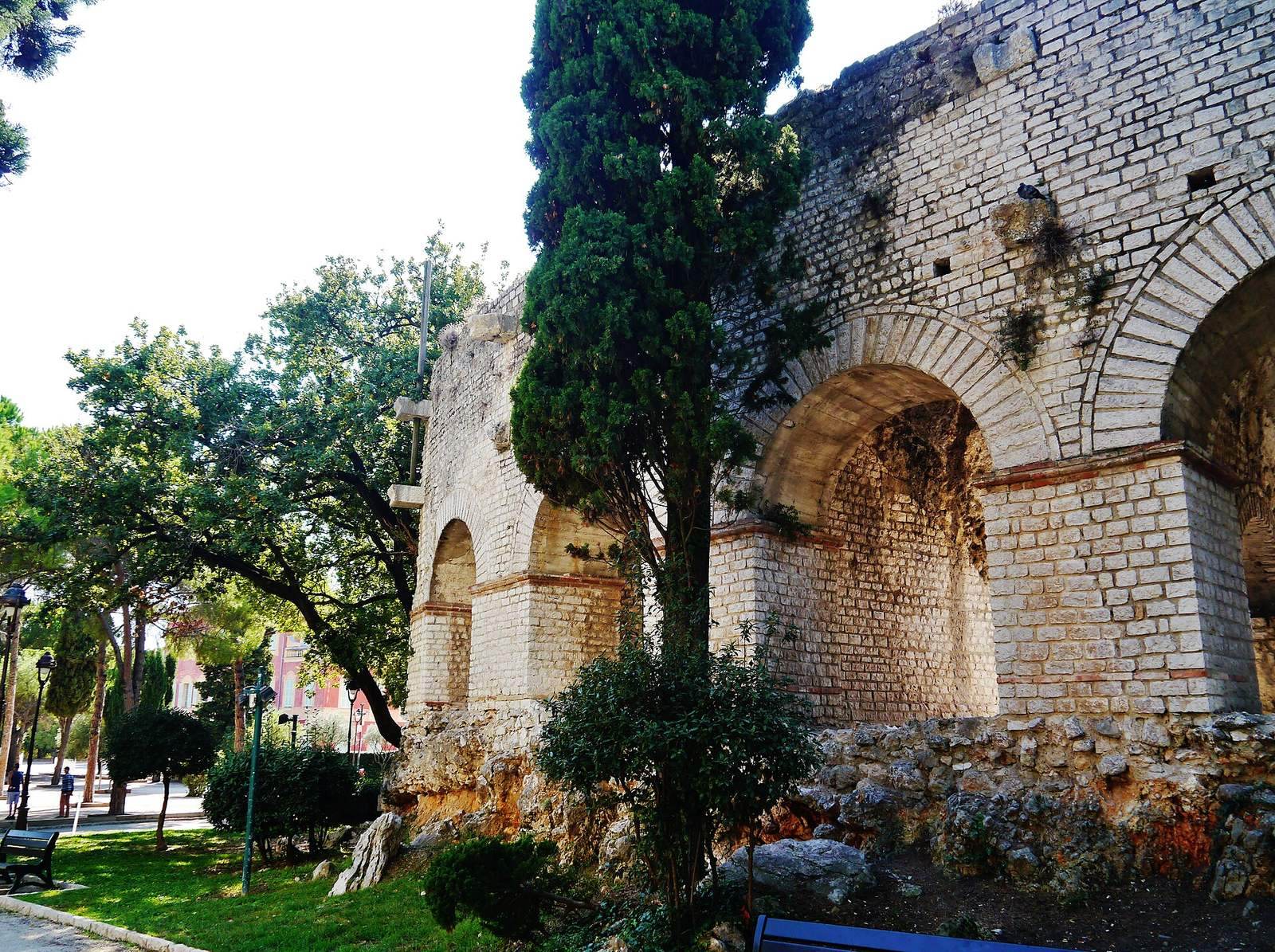
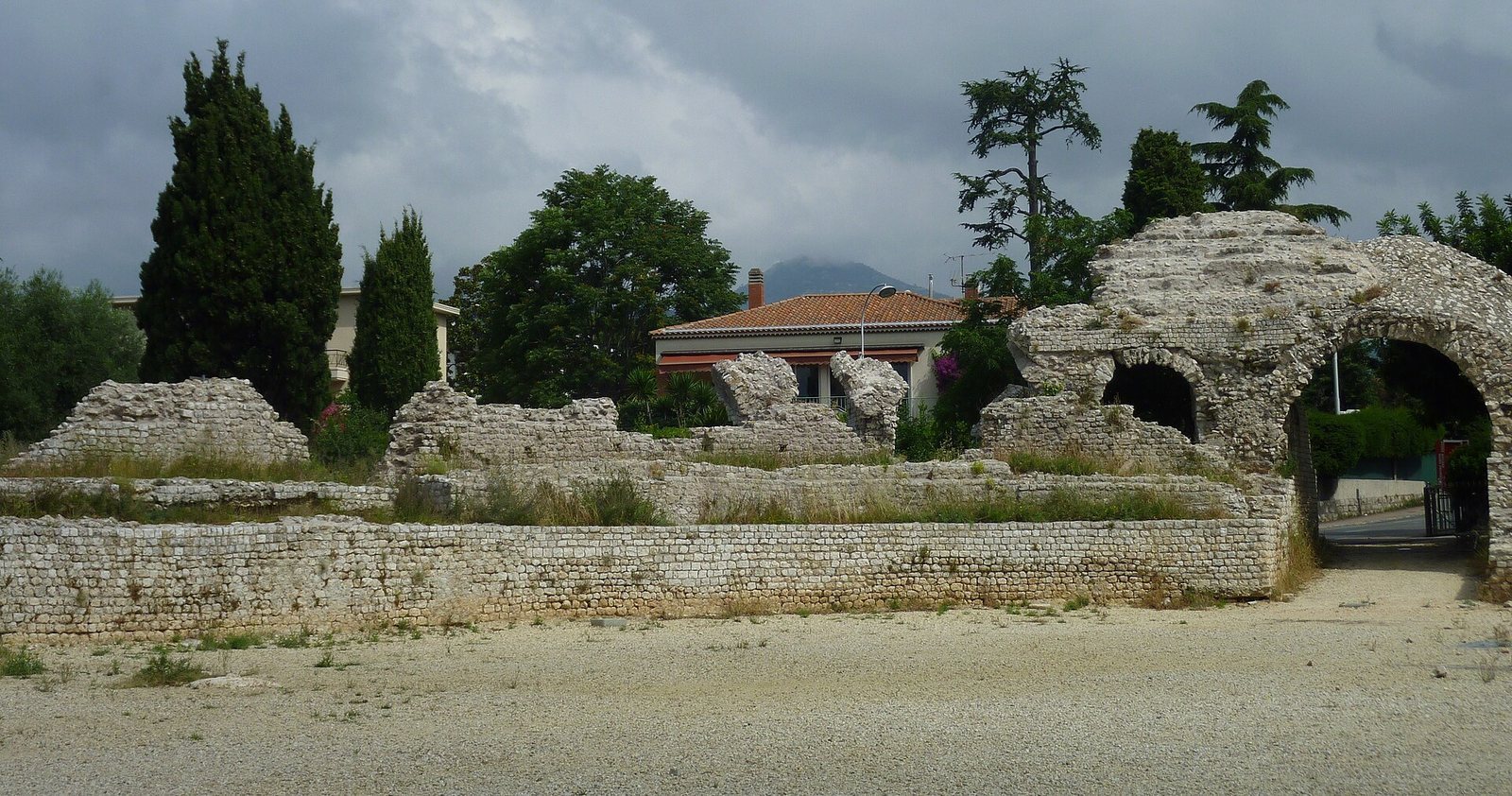
The amphitheatre stood in the northwestern part of Cemenelum, a city covering about 20 hectares. The city’s extent is inferred from burial grounds beyond its urban area. The Roman baths of Cimiez lie southeast of the amphitheatre. The building is elliptical, measuring about 67.2 by 56 metres, with an arena measuring 46 by 34.8 metres. Its estimated capacity was about 4,000 spectators, making it one of the smallest known Roman amphitheatres in France.
Seating and construction
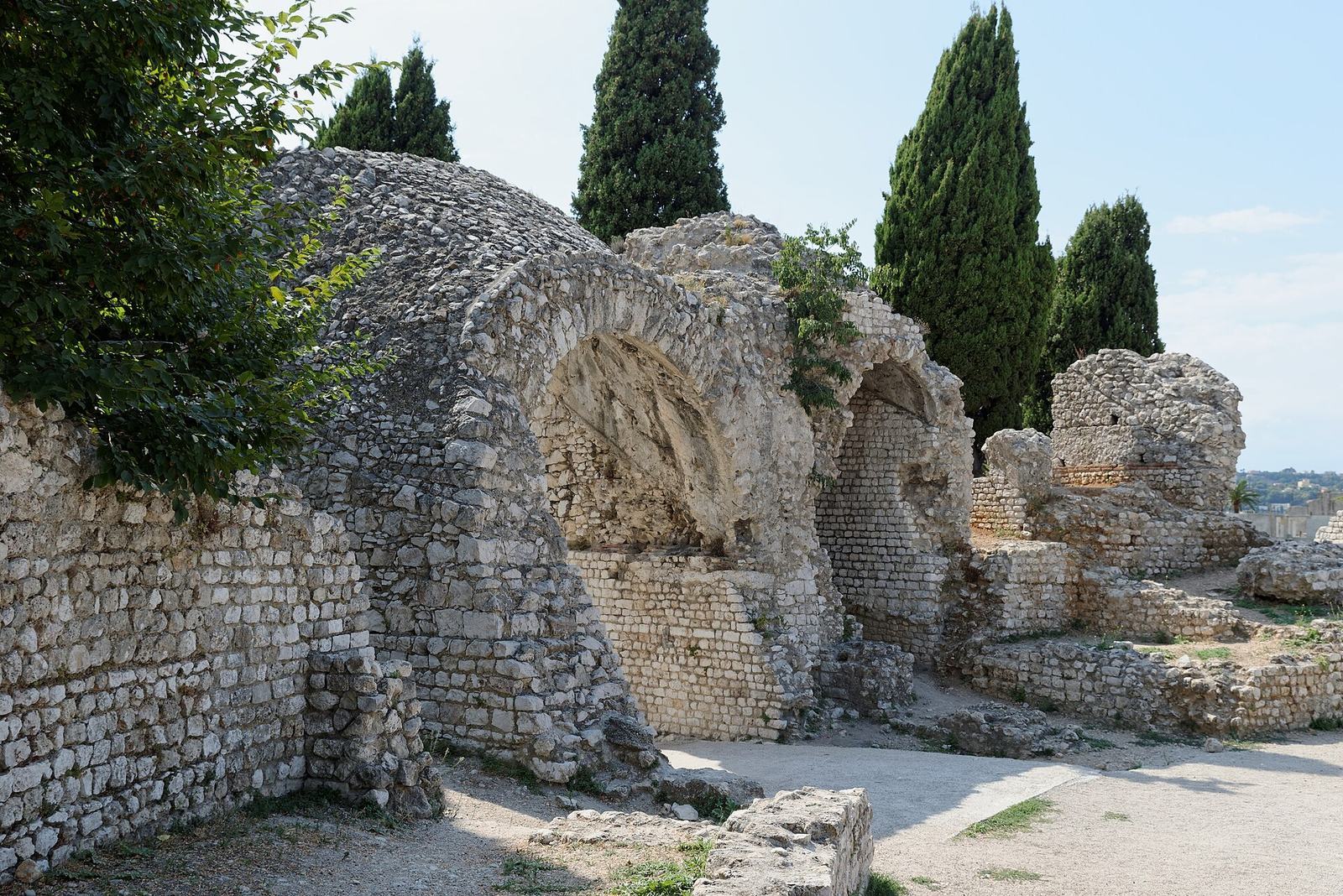
In its first phase, three rows of seating surrounded the arena, set on earth fill made from material removed while levelling the arena. The masonry used small, regularly laid stone blocks and mortar. Enlargement added two more seating rows, reached by stairs and a ring-shaped passage. This work cut through an aqueduct that had run beside the building in its earlier form, and its masonry included courses of fired architectural terracotta.
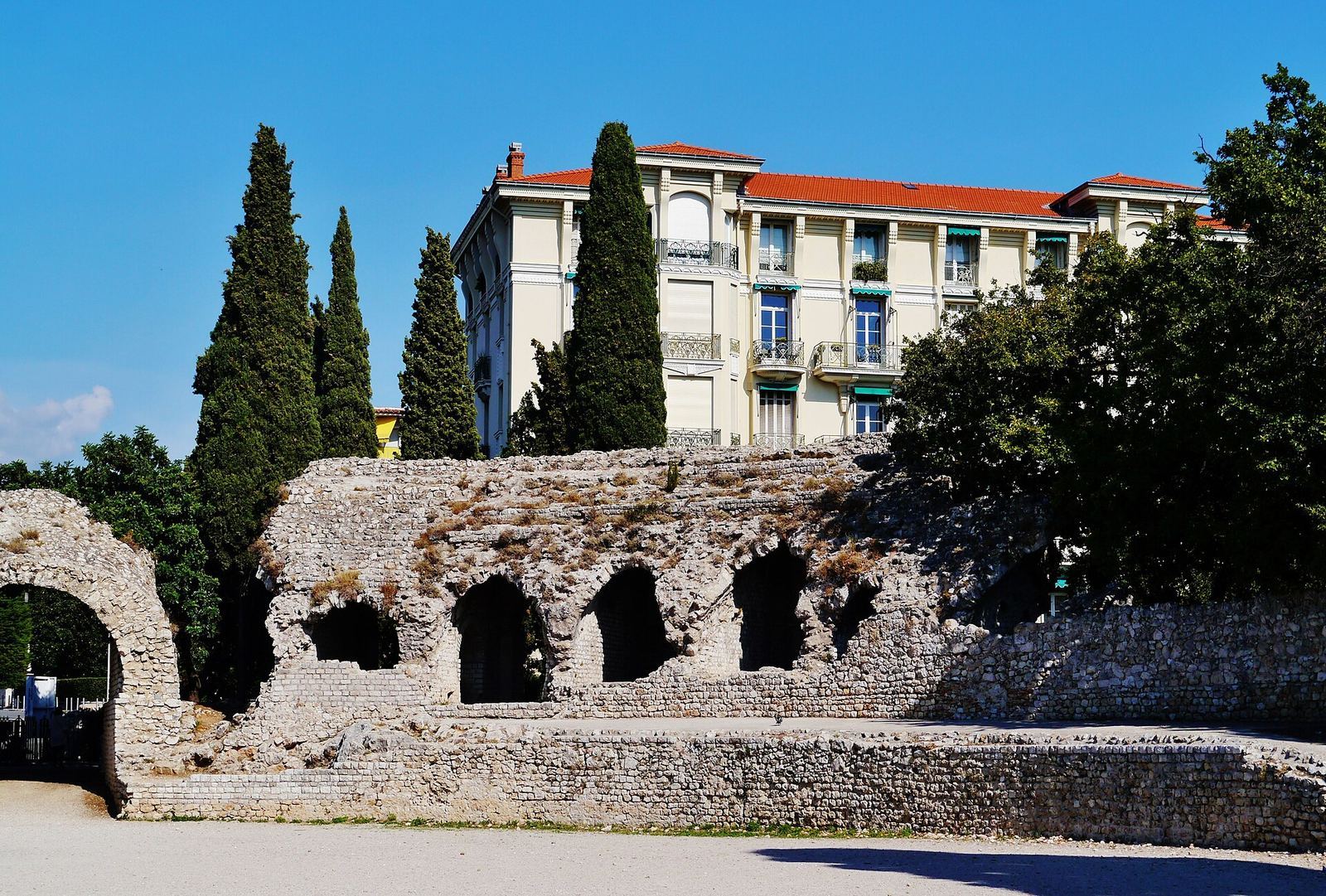
Openings in the outer face were once thought to have held beams for a timber structure supporting extra seating. They are more likely holes for scaffold beams used during construction. The amphitheatre also had an awning to shade spectators, and some of its anchoring points remain visible.
Surviving fabric and finds
Despite substantial deterioration, the low wall around the arena, known as the podium wall, survives along almost its entire perimeter. The north and south passages through the seating remain, along with discernible lower seating rows at the arena’s edge and portions of the upper seating above the vaults. Finds excavated at the amphitheatre are preserved and displayed at the Musée Archéologique de Nice-Cimiez, south of the site.