Château Valrose: A Neo-Gothic Estate and University Campus in Nice


Site at a Glance
- Rating
- 4.1
- Popularity
- Low
- Country
- France
- Primary era
- Modern
- Eras represented
- Modern
- Civilizations
- French
- Site type
- Domestic
- Remains
- Elite Residence
On this page8 sections
History
Château Valrose is a nineteenth-century estate in Nice, France, created by the Russian entrepreneur and financier Baron Paul von Derwies. The main château was built between 1867 and 1870 in the Neo-Gothic style, a nineteenth-century revival of medieval Gothic forms. The estate became one of the Riviera’s major centers of music and social life before later serving educational and scientific purposes.
Creation of the estate
On 21 February 1867, von Derwies acquired extensive parcels in the valley and began developing a lavish estate. David Grimm and Antonio Croci, assisted by the young architect Constantin Scala, designed the main château. Antoine Béranger created the small château, while Mikhaïl Makaroff added the theatre in 1869. The horticulturist Joseph Carlès planned the park. More than 800 workers took part in the three-year construction campaign, which cost several million gold francs.
A musical and social center
From 1870 to 1881, Valrose hosted an active program of music and social events. Von Derwies maintained a daily symphony orchestra of 70 musicians under leading conductors of the period. Guests and performers included the violinist Joseph Joachim, the pianist Francis Planté, and the singer Adelina Patti. A reception for Grand Duke Nicolas, a high-ranking member of the Russian imperial family, on 10 March 1881 marked the height of the estate’s social activity. Von Derwies died of apoplexy on 17 June that year.
In 1881, Sébastien-Marcel Biasini built the monumental entrance gate on the eastern side of the estate. Queen Victoria, the British monarch from 1837 to 1901, stayed at the Excelsior Régina Palace and visited Valrose as a neighbour. She possessed a key to the gate and walked in the park’s upper olive grove.
Changes of ownership and institutional use
The Von Derwies bank became bankrupt in 1899. The property was sold to Poutiloff in 1912 and changed hands again in 1920, when it was acquired by Simón Iturri Patiño, a Bolivian tin magnate. Patiño replaced the inscription “Van Derwies” at the park entrance on Avenue Valrose with “S. Patino,” which remains visible.
In 1950, the City of Nice purchased the entire estate and transferred it to the Ministry of Education. Since 1965, Valrose has housed a university campus, including the presidency of the University of Nice-Sophia-Antipolis and its Faculty of Sciences. The estate also accommodates the university’s science research and training unit. The main château, small château, park, garden folly, and statues were classified as historic monuments by an order dated 22 July 1991. In France, this designation protects buildings, sites, and structures because of their historical or architectural importance.
Remains
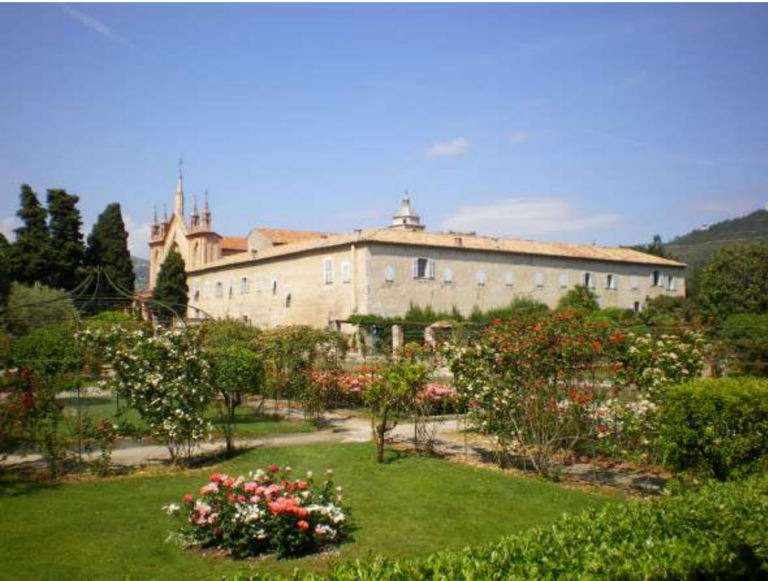
Château Valrose and its park occupy a ten-hectare estate in northern Nice, between Avenue de Brancolar and the Cimiez hill. The property retains its original dimensions, while its buildings, landscaped grounds, entrances, and ornamental features preserve the arrangement of the former private estate.
The châteaux and concert hall
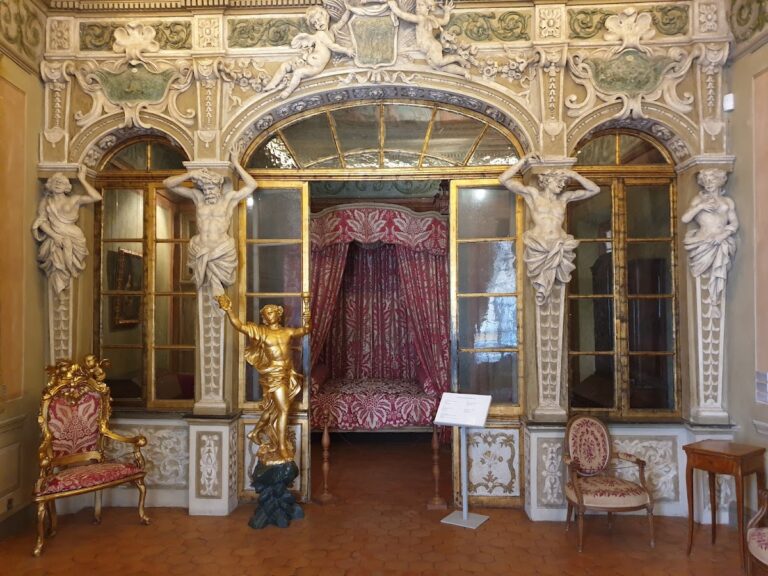
The main château is a Neo-Gothic building with frescoed ceilings, crystal chandeliers, and paintings by master artists. A smaller château forms part of the estate’s surviving architectural group. The former theatre, later converted into a concert hall, can hold up to 400 spectators. Its imposing wooden stage machinery remains visible at the rear of the stage.
The landscaped park
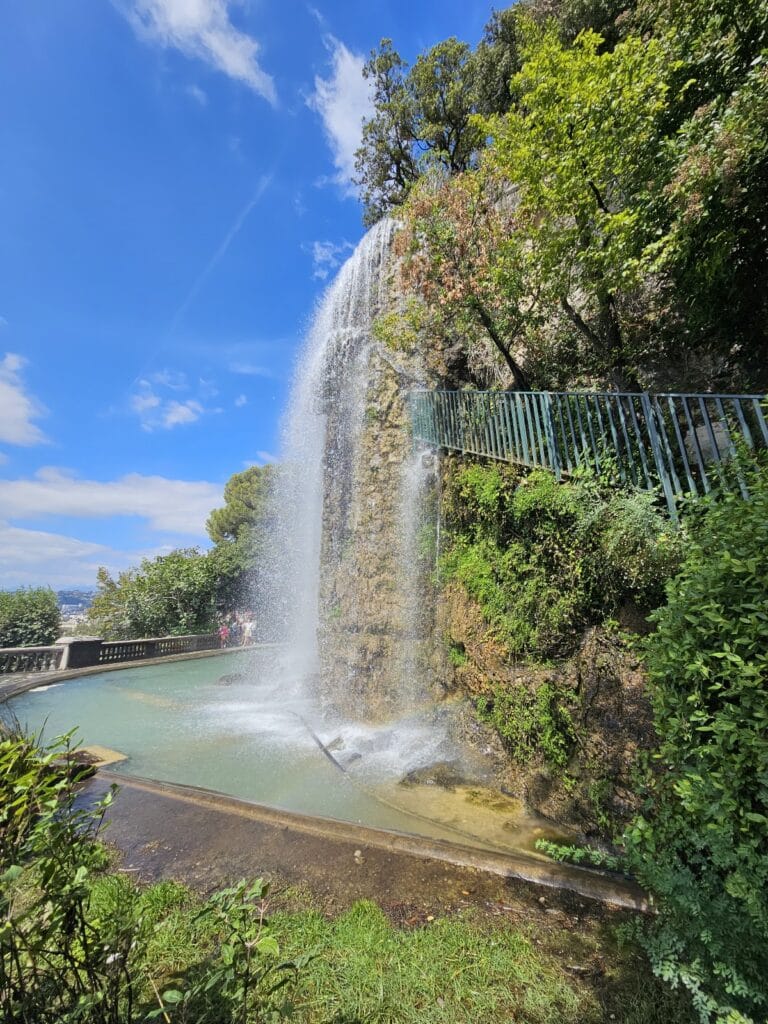
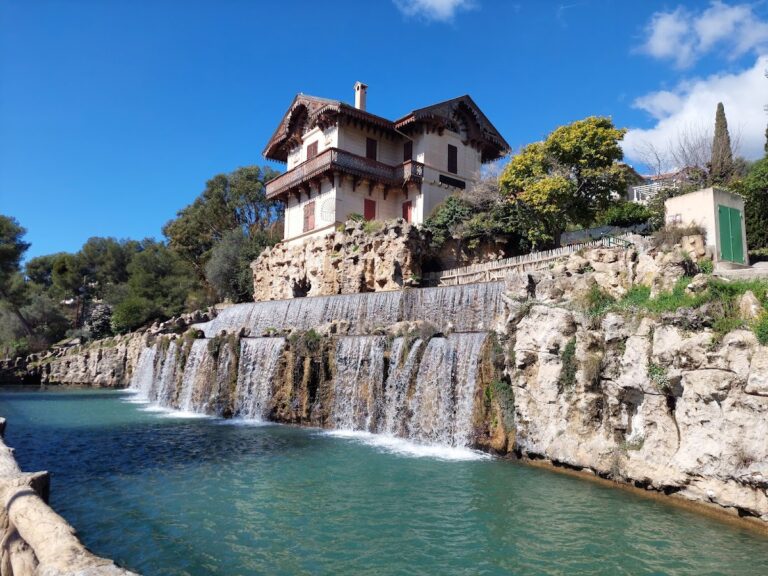
The park contains plants brought mainly from Italy, including palms from Bordighera and other species from Genoa and Florence. Greenhouses and a rose garden form part of the grounds. By 1873, the landscaped setting included kiosks, a Ukrainian isba, a traditional wooden rural house, artificial ruins, grottoes, statues, fountains, cascades, and a pond large enough for boating. Maintaining the lawns required at least seven tonnes of seed each year, while approximately 100 people, including gardeners, cared for the estate.
Entrances and surviving inscriptions
The monumental eastern entrance stands on Avenue Prince de Galles in Cimiez and is flanked by twin towers. A second park entrance on Avenue Valrose preserves the inscription “S. Patino,” installed after Patiño replaced the earlier “Van Derwies” wording. Together, the gates and inscriptions retain evidence of the estate’s successive ownership.
Nearby sites