Staré Zámky: A Slavic Hillfort near Líšeň, Czechia
Site at a Glance
- Popularity
- Medium
- Country
- Czechia
- Primary era
- Medieval
- Eras represented
- Stone Age, Medieval
- Civilizations
- Great Moravia
- Site type
- Military
- Remains
- Fortified Town
On this page8 sections
History
Staré Zámky is an archaeological site and former hillfort on a rocky promontory near Líšeň in Czechia. Occupation extended from the late Neolithic to the beginning of the 11th century, but the site reached its greatest prominence under Slavic settlement during the Hillfort period, a broad phase of early medieval settlement and fortification in Central Europe. In Great Moravia, a major early medieval Slavic polity, Staré Zámky occupied a strategic route linking the realm’s central area with ironworks in the Moravian Karst. It has been regarded as a direct predecessor of Brno.
Prehistoric and later occupations
The earliest activity dates to the late Neolithic and early Eneolithic, or Copper Age, in the fifth to fourth millennia BC. During the Eneolithic, communities identified by Funnel Beaker pottery and later by fluted pottery settled at the site.
People also returned during the Bronze Age, the La Tène period of the later Iron Age, and the beginning of the Migration Period, an era of large-scale population movements in late antiquity and the early Middle Ages.
Slavic hillfort and Great Moravia
Slavic settlement brought Staré Zámky to its height. Fortification began around the settlement in the 8th century, followed by a major building phase in the early 9th century. The hillfort became an important center, and its outer enclosure was also used for burials.
Toward the end of the Great Moravian period, a destructive fire badly damaged the defenses and the residence of a high-ranking noble. Arrowheads from this phase point to an attack by enemy forces. The defenses were rebuilt on a smaller scale. The hillfort remained important for decades after Great Moravia’s fall and continued in use until the end of the 10th century. Occupation at the site extended into the beginning of the 11th century.
Excavation and protection
Agricultural clearance of woodland brought the first finds to light in the 1840s. Count Belcredi, then the landowner, collected them and published them in 1875. Jan Knies investigated the site in the 1880s, Martin Kříž in 1890–1891, and Innocenc Ladislav Červinka also carried out research.
Systematic excavations from 1948 to 1965, led by Josef Poulík, Anna Medunová, and Čeněk Staňa, traced the site’s occupation from the late Neolithic to the beginning of the 11th century. Initial work focused on the outer enclosure and the narrow connection to the hillfort’s central part; excavation of the interior began in 1953. The site became a state archaeological reserve in 1966 under the name Staré Zámky near Líšeň and has held archaeological heritage reserve status since 1989.
Remains
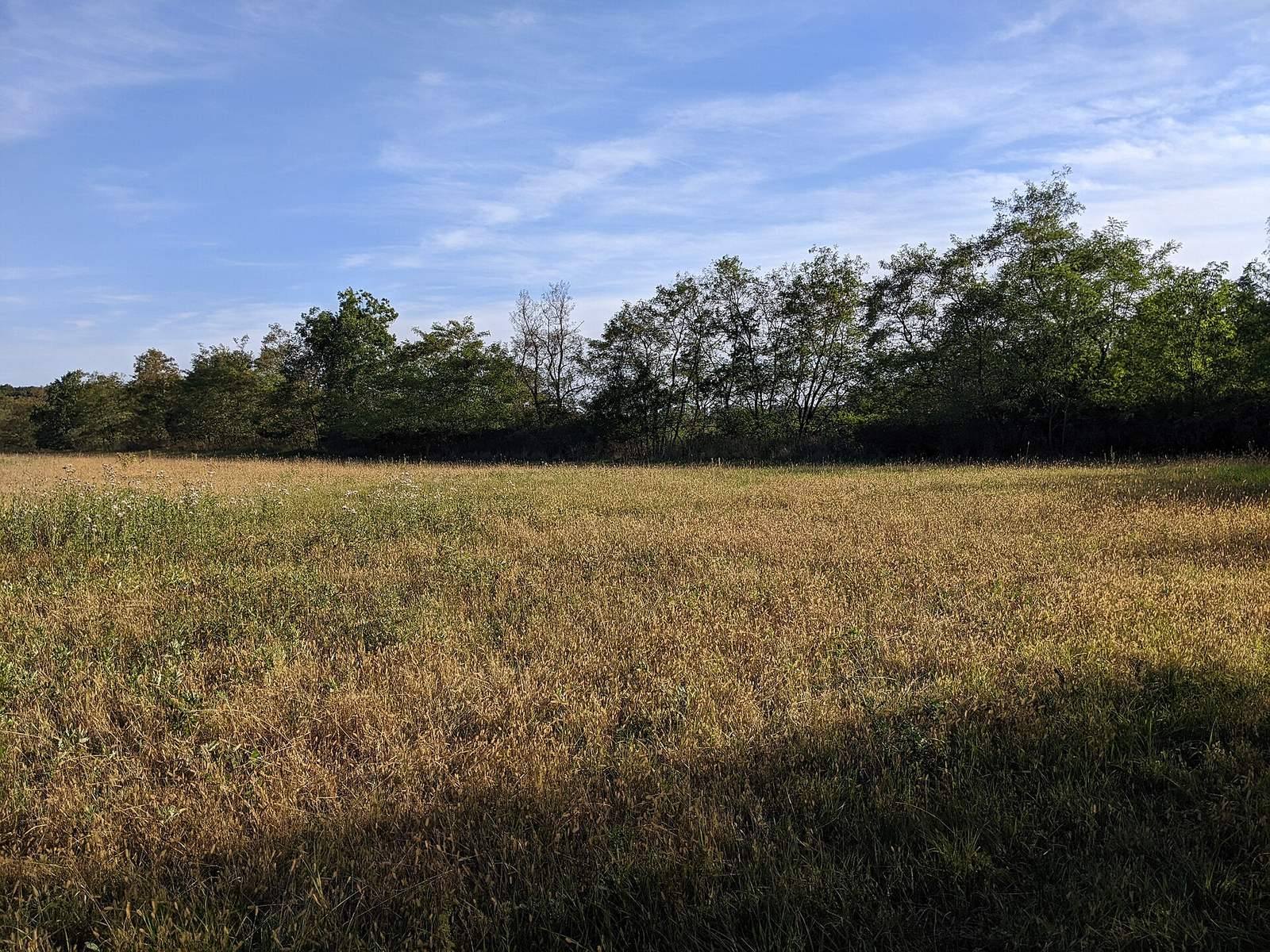
The approximately 13-hectare site occupies a conglomerate-rock promontory that extends northwest to southeast. Its northwestern high point reaches about 325 metres above sea level, while the ground falls steeply toward the Říčka stream, which curves around the northeast, southeast, and southwest sides. The height difference between the summit plateau and the stream is about 60 metres. The hillfort has a central area of about 4.5 hectares and a separate outer enclosure to the northwest.
Enclosures and ramparts
The central area occupies a triangular promontory with sides measuring about 230, 425, and 450 metres. A defensive perimeter enclosed it, with a gate on the northeast that may have given access to the Říčka for water. A crosswise fortification at the narrowest part of the connecting neck separated the outer enclosure from the central area, and another rampart lay about 150 metres farther northwest. Agricultural use has made these two defenses indiscernible in the terrain. A roughly 320-metre stretch of the outer rampart remains visible at the southeastern edge of Haleglétňa forest. It rises 2–2.5 metres above the surrounding ground, with a ditch about 2 metres deep on its outer side. The rampart continues southwest as a low rise toward the Líšeň cemetery.
Eneolithic settlement
Remains of an intensively occupied Eneolithic settlement include foundations of closely spaced buildings, along with a defensive rampart and ditch. Finds from this occupation include copper objects, marble beads, and bone belt fasteners.
Early medieval buildings
The early defenses consisted of an earthen rampart topped by a wooden palisade. The major building phase of the early 9th century included substantial defenses and a residence for a high-ranking noble. Other structures comprised a wooden watchtower about 10 metres high and log buildings; the complex probably also included a church.