San Nicola dei Lorenesi: Rome’s Lorraine National Church
Site at a Glance
- Popularity
- Medium
- Country
- Italy
- Primary era
- Early Modern
- Eras represented
- Medieval, Early Modern
- Civilizations
- Papal States
- Site type
- Religious
- Remains
- Church
On this page14 sections
History
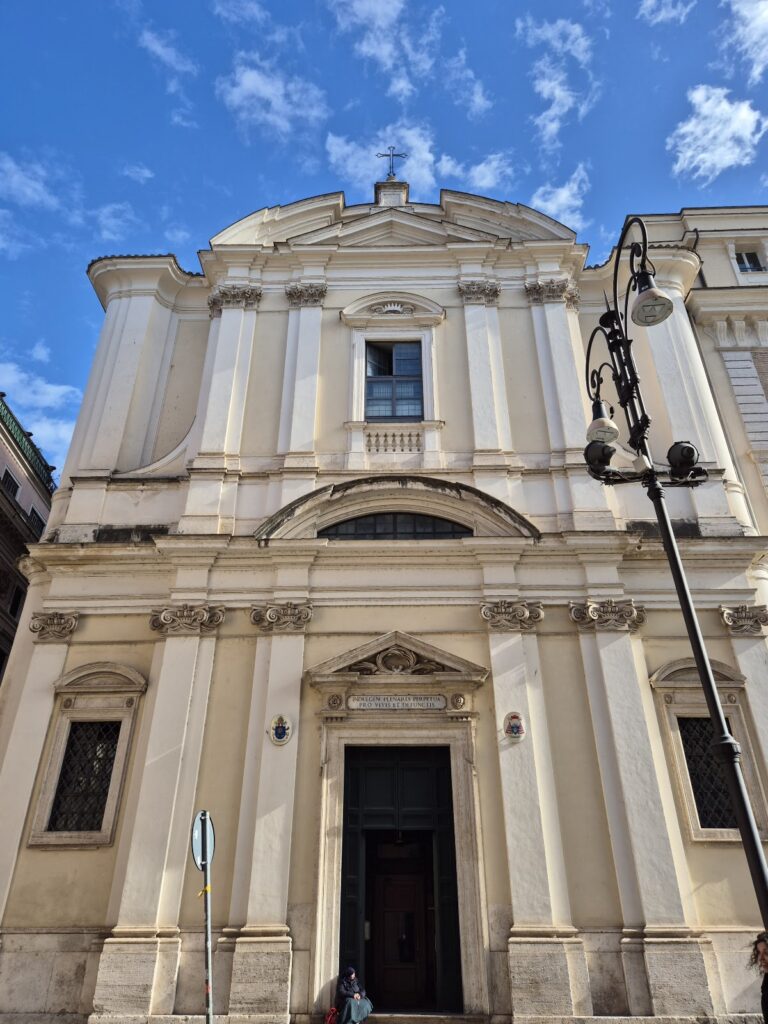
San Nicola dei Lorenesi is a Roman Catholic church in Rome’s Parione district, near Piazza Navona, Italy. Dedicated to Saint Nicholas, it belongs to the Diocese of Rome and the parish of Sant’Agostino in Campo Marzio. Rebuilt in the 17th century for the Lorraine community, it became an independent church for Lorrainers in Rome.
Medieval origins
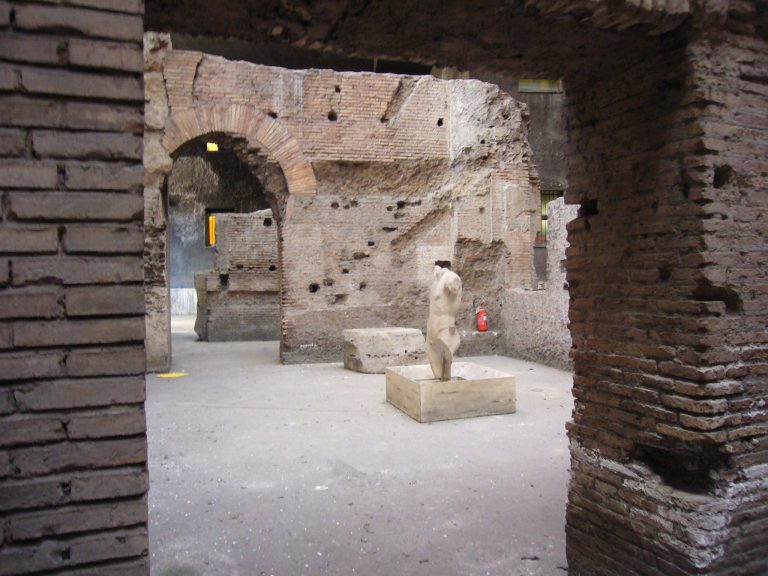
A papal bull issued by Urban III in 1186 lists the church as dependent on San Lorenzo in Damaso. It appears in a catalogue compiled by Cencio Savelli in 1192 and in later lists from around 1230, 1320, and 1425, under names linking Saint Nicholas with Agone and the crypt. The church later known as San Nicola in Agone had earlier been dedicated to Saint Catherine. Mariano Armellini associated the site with the medieval church Santa Caterina de Cryptis Agonis.
The Lorraine community
A Lorraine community had formed in Rome by the late 14th century. In 1473, Pope Sixtus IV gave its members the church of Santo Stefano in the Ponte area. They restored the building and renamed it Santa Maria della Purificazione dei Transalpini.
During the Renaissance, French and Lorraine residents formed the Congregation of Saint Louis, which led to the construction of San Luigi dei Francesi in 1588. Duke Charles III of Lorraine helped fund that church so Lorraine would have representation at the Holy See. In 1587, Lorrainers had also established their own confraternity, a lay religious association, dedicated to Saint Nicholas and Saint Catherine and representing Lorraine and Barrois. It was allowed to maintain a chapel at San Luigi while seeking a church of its own.
Rebuilding and national role
Around 1622–23, Pope Gregory XV granted the confraternity the decayed church of San Nicola in Agone. The Lorrainers undertook its rebuilding under the Lorraine architect François du Jardin, also known as Francesco Giardini. Work began in 1635, and the church was completed and consecrated during the 1630s.
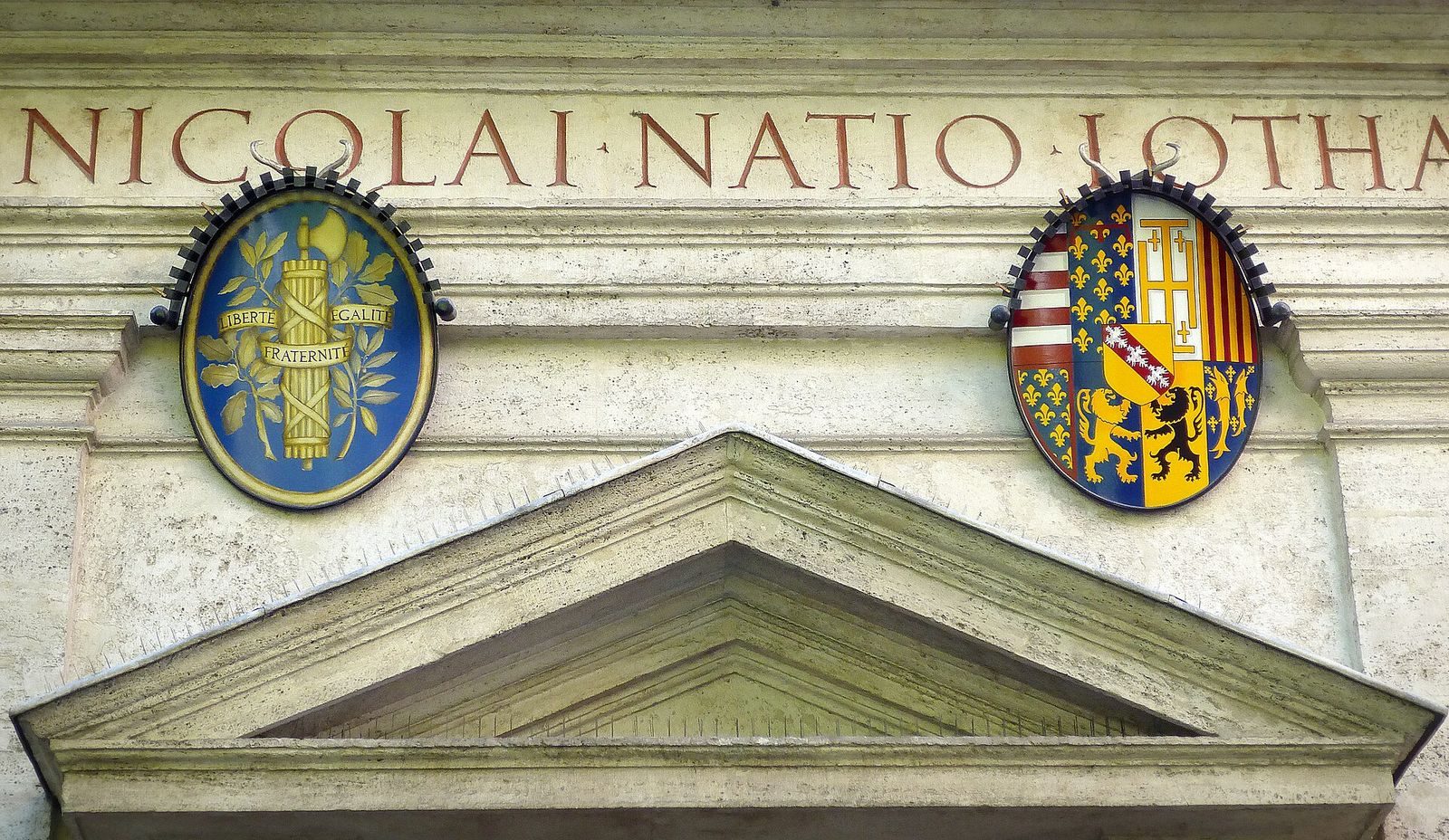
When the Duchies of Lorraine and Bar became part of France in 1766, the church came under the Pieux Établissements de la France à Rome et Lorette, a French institution responsible for religious establishments in Rome and Loreto. San Nicola dei Lorenesi remains one of Rome’s French national churches and has also served as the regional church for Lorraine.
Restoration began in the late 1990s and was completed in 2006.
Remains
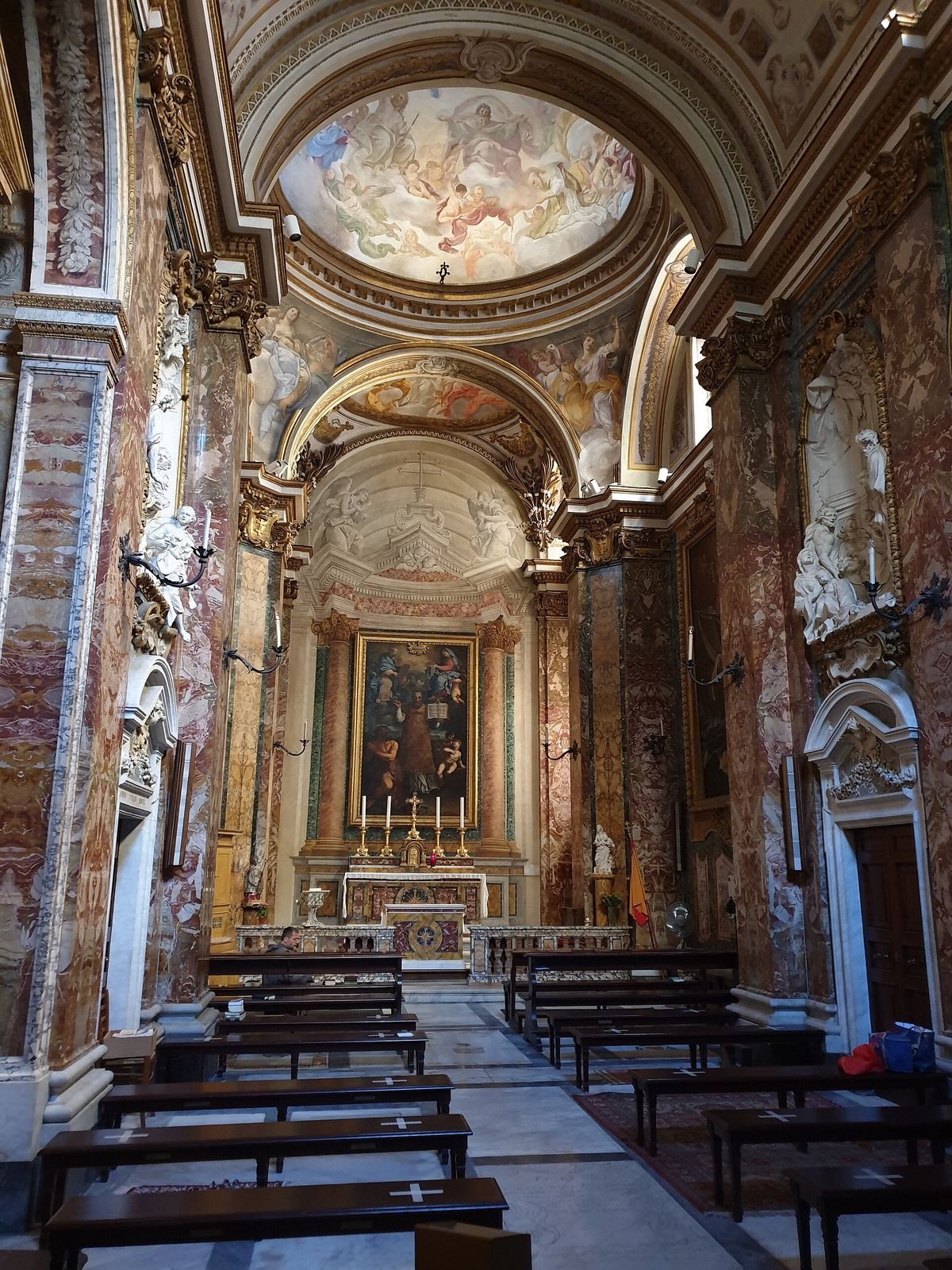
The church combines a restrained Baroque exterior with a compact, rectangular interior organized around a main hall. Its physical arrangement includes side chapels and a shallow crosswise arm.
Plan and facade
Interior plan
The rectangular body has a single main hall beneath a barrel-shaped vault, two side chapels, and a shallow transept, or crosswise arm. Together, these elements suggest the form of a Lorraine cross.
Facade
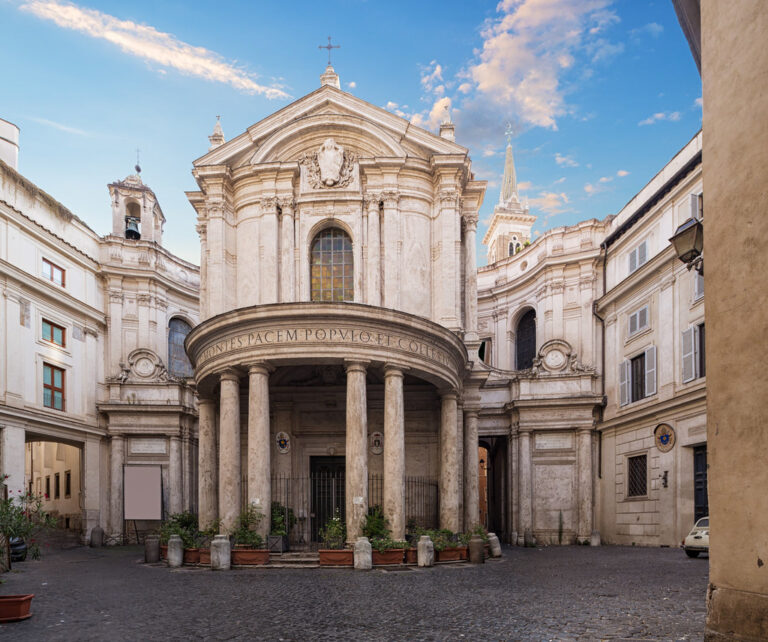
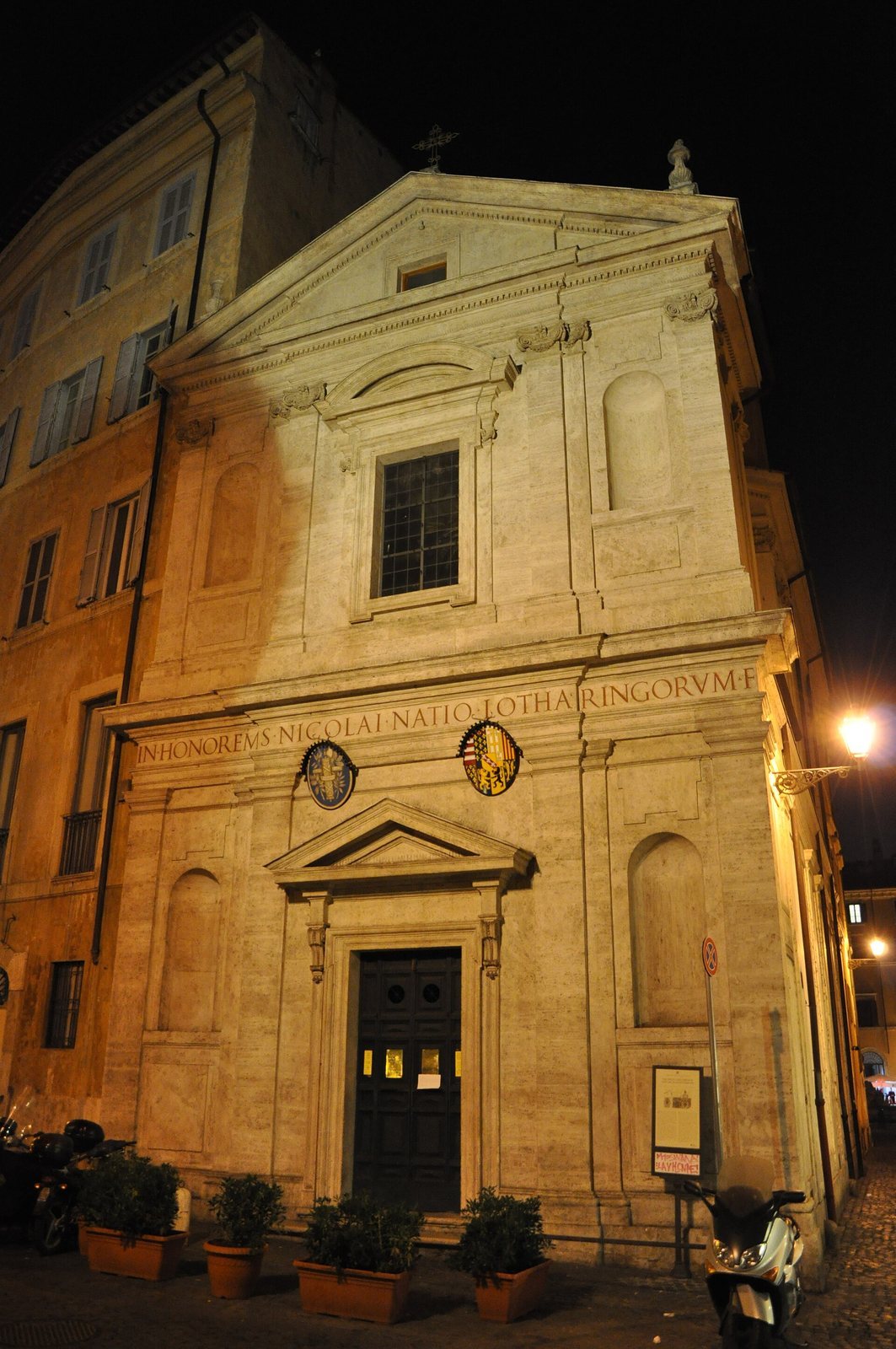
The facade at Largo Febo is built of travertine, a type of limestone. Its lower level has Doric pilasters, flat supports attached to a wall, while Ionic pilasters appear above; both are classical column styles. Marble from the Stadium of Domitian also ornaments the front. The restrained design has been compared with the Church of the Gesù. A Latin dedication states that the Lorrainers built the church in honor of Saint Nicholas.
Interior decoration
Marble and painted architecture
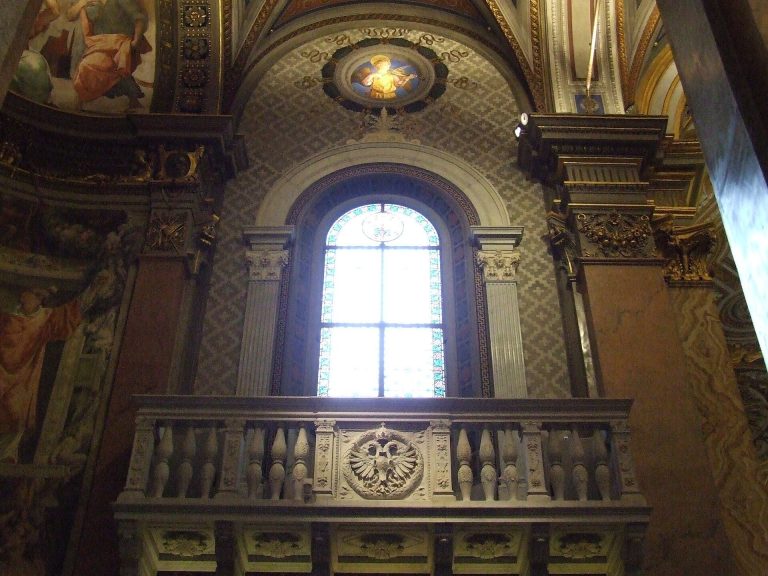
The interior was decorated in stages from about 1730 to 1750. Giovanni Andrea Volpini and Giuseppe Maria Bay completed its polychrome marble work in 1748, using green and pink effects. Stucco also forms part of the decoration. Behind the high altar, a painted illusion creates the appearance of a circular sanctuary end; another gives the cupola, or dome, an illusionistic finish.
Frescoes
Corrado Giaquinto painted a fresco, a wall painting made on wet plaster, of Saint Nicholas bringing water from a rock in 1731. His other frescoes include the theological and cardinal virtues, the Trinity with Saint Nicholas, an angel freeing a prisoner, and Paradise in the dome. The church’s vaults and dome, including the curved triangular supports for the dome over a square space, are also painted.
Side chapels
The chapel on the right is dedicated to Pierre Fourier. In 1730, after Fourier had recently been beatified, it was rededicated to him. Francesco Antonozzi’s painting of Fourier and the Virgin replaced an earlier painting of the Visitation. Fourier was canonized in 1897. The chapel on the left is dedicated to Saint Catherine of Alexandria and has an altarpiece depicting the saint. Paintings associated with Lorraine artists include Nicolas de Bar’s The Mystical Marriage of Saint Catherine of Alexandria, painted between 1660 and 1670, and works titled Saint Catherine and The Visitation.
Altarpieces and sculpture
For the 1750 jubilee, Giaquinto painted two altarpieces, Saint Nicholas and the Officers of Constantine and Saint Nicholas Calming the Storm. A copy replaced the latter in 1827 because the original was in poor condition. Nicolas de Bar’s altarpiece showing Saint Nicholas with three children and a prisoner dates from 1676 to 1686. Behind the high altar is a painting of Saint Nicholas.
In 1749, Giovanni Battista Grossi made four sculpted scenes in high relief, meaning that the figures project strongly from the background. They show Saint Nicholas as a child refusing his mother’s milk on Wednesdays and Fridays, praying in a bath, giving his possessions to the poor, and being chosen as bishop of Myra.
Crypt and burials
The crypt contains the burials of several people from Lorraine, including the Lorraine painter Charles Mellin, who was buried there in 1649.