Floda Church: A Medieval Parish Church in Katrineholm, Sweden
Site at a Glance
- Popularity
- Medium
- Country
- Sweden
- Primary era
- Modern
- Eras represented
- Medieval, Early Modern, Modern
- Civilizations
- Swedish
- Site type
- Religious
- Remains
- Church
On this page10 sections
History
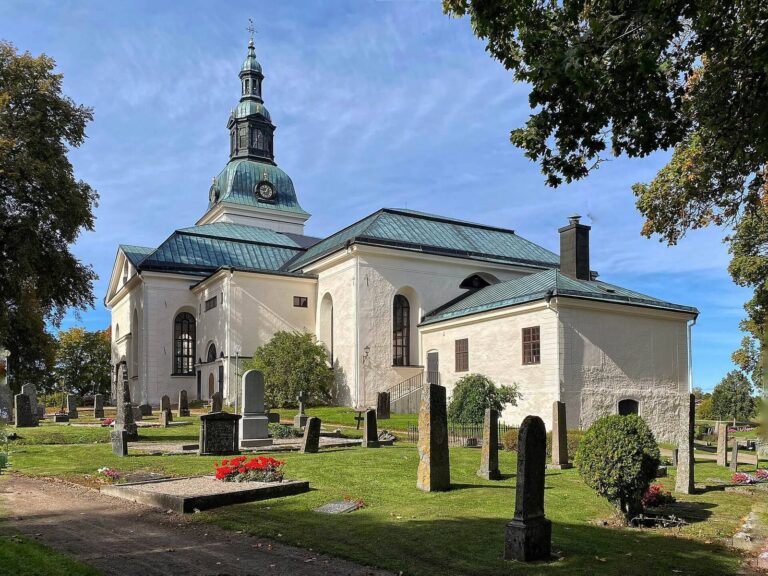
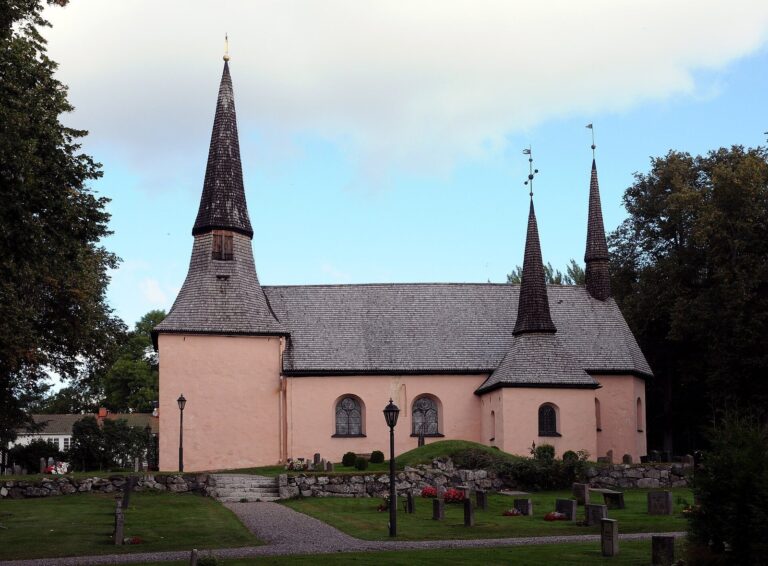
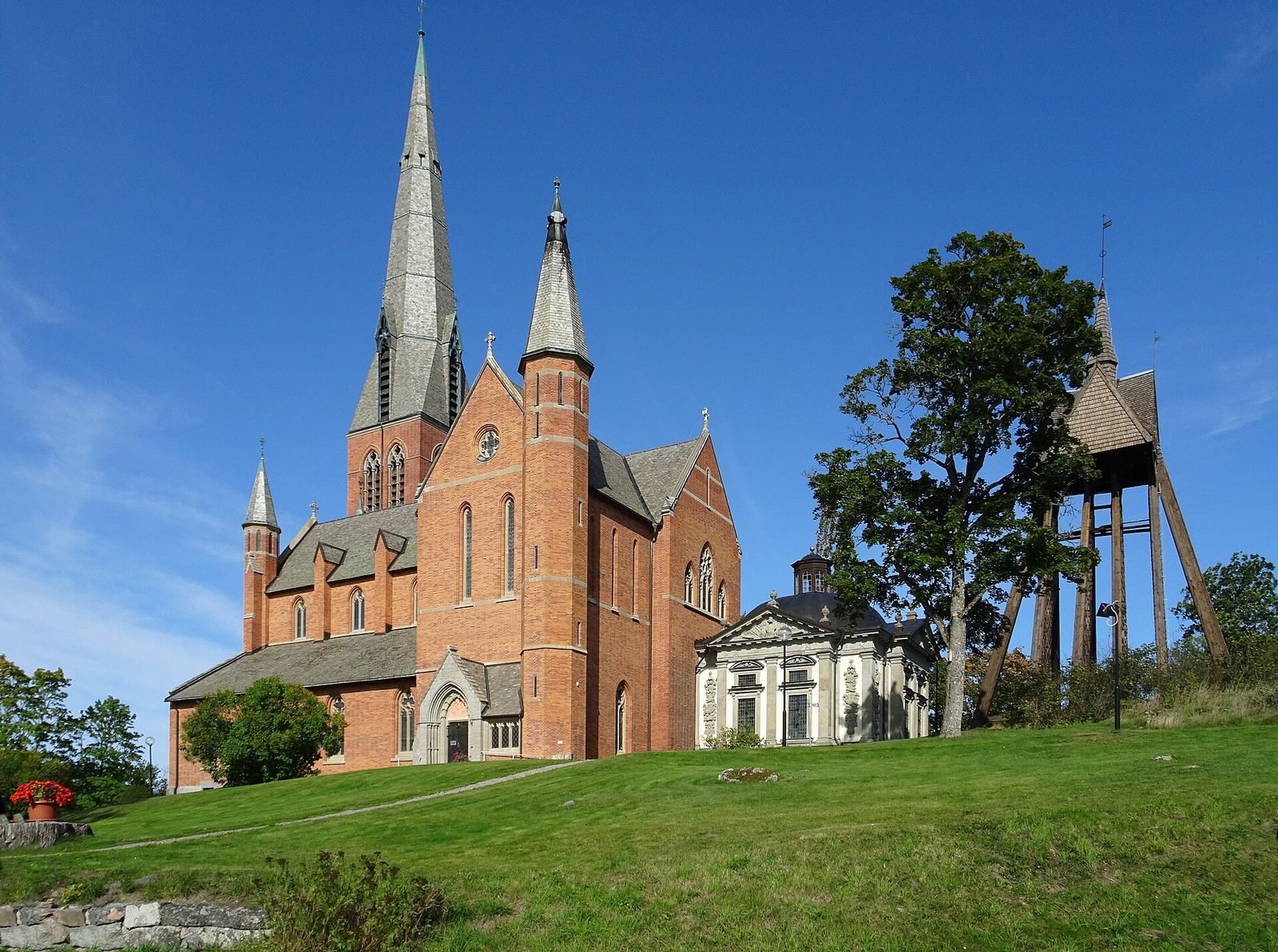
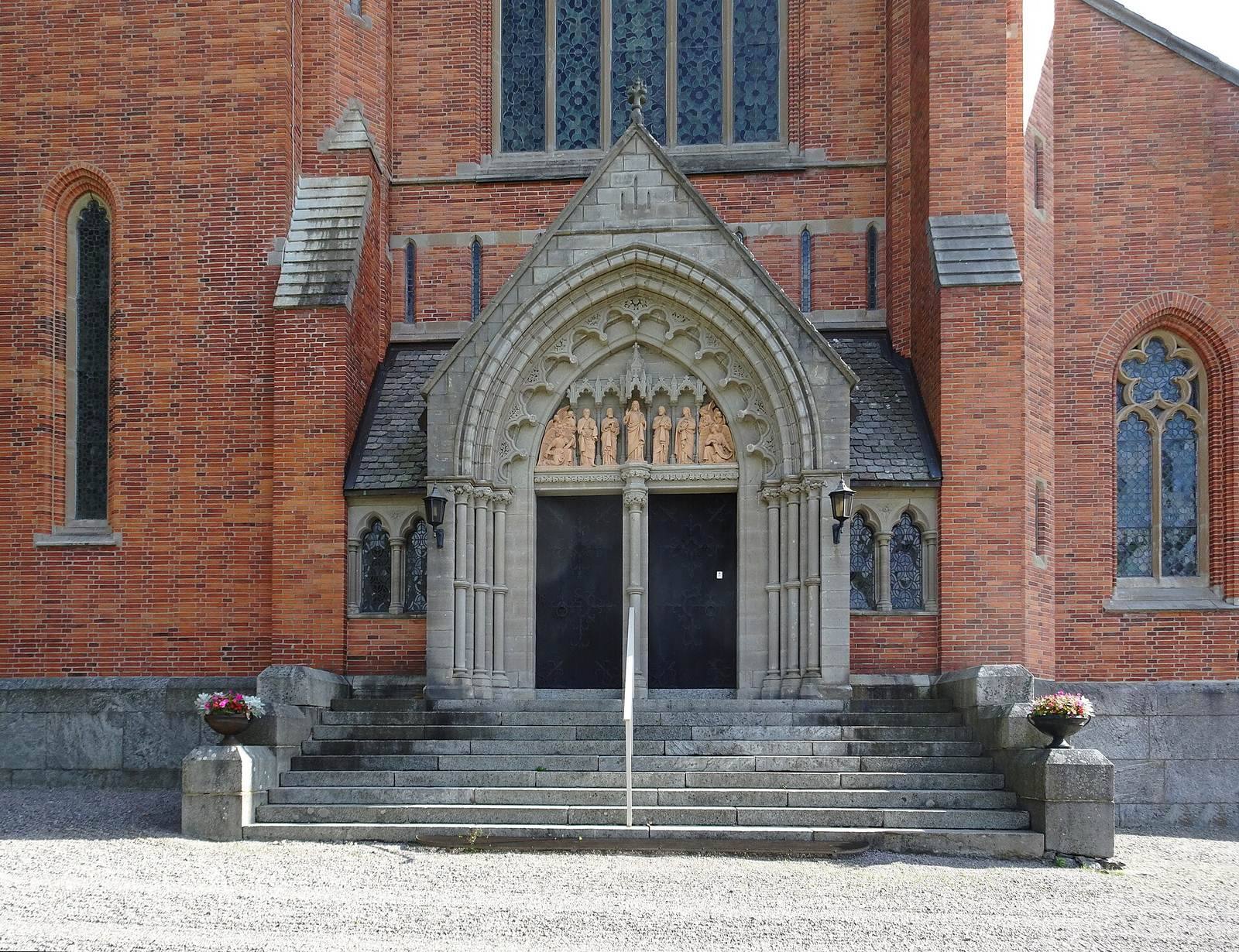
Floda Church is a parish church in Katrineholm, Sweden, built and consecrated in the 12th century. Its present architectural form is a three-aisled Neo-Gothic church, a 19th-century revival of medieval Gothic architecture. It now serves Katrineholmsbygdens Parish in the Church of Sweden, a Lutheran church, within Strängnäs Diocese, a regional church district. It formerly belonged to Floda Parish.
Medieval development
The church was extended eastward during the late medieval period, and vaults were added in the 15th century. Around 1480, the Swedish medieval painter Albertus Pictor decorated its walls and vaults.
The older cemetery, on the slope south of the church, has probably served as a burial ground since the 12th century.
Expansion and rebuilding
Major changes began in the 1630s, when the church was enlarged to the south and given a new sacristy. A burial chapel for Field Marshal Lars Kagg and his family was added at the east end. Kagg’s widow arranged its construction, and its exterior was completed in 1666, five years after his death. Around 1637, Kagg also gave the church seven paintings that had been acquired as war booty.
During the 19th century, the church fell into disrepair. Its original tower collapsed, and the south aisle was demolished. From 1885 to 1888, the building was reconstructed to new plans. Measuring 67 metres, the rebuilt church was regarded as one of Sweden’s largest and most imposing rural churches.
Remains
The church’s earliest sections are stone, while its present three-aisled form is built mainly of brick. A central aisle is flanked by two side aisles. A bell tower is also associated with the church.
Church fabric and wall paintings
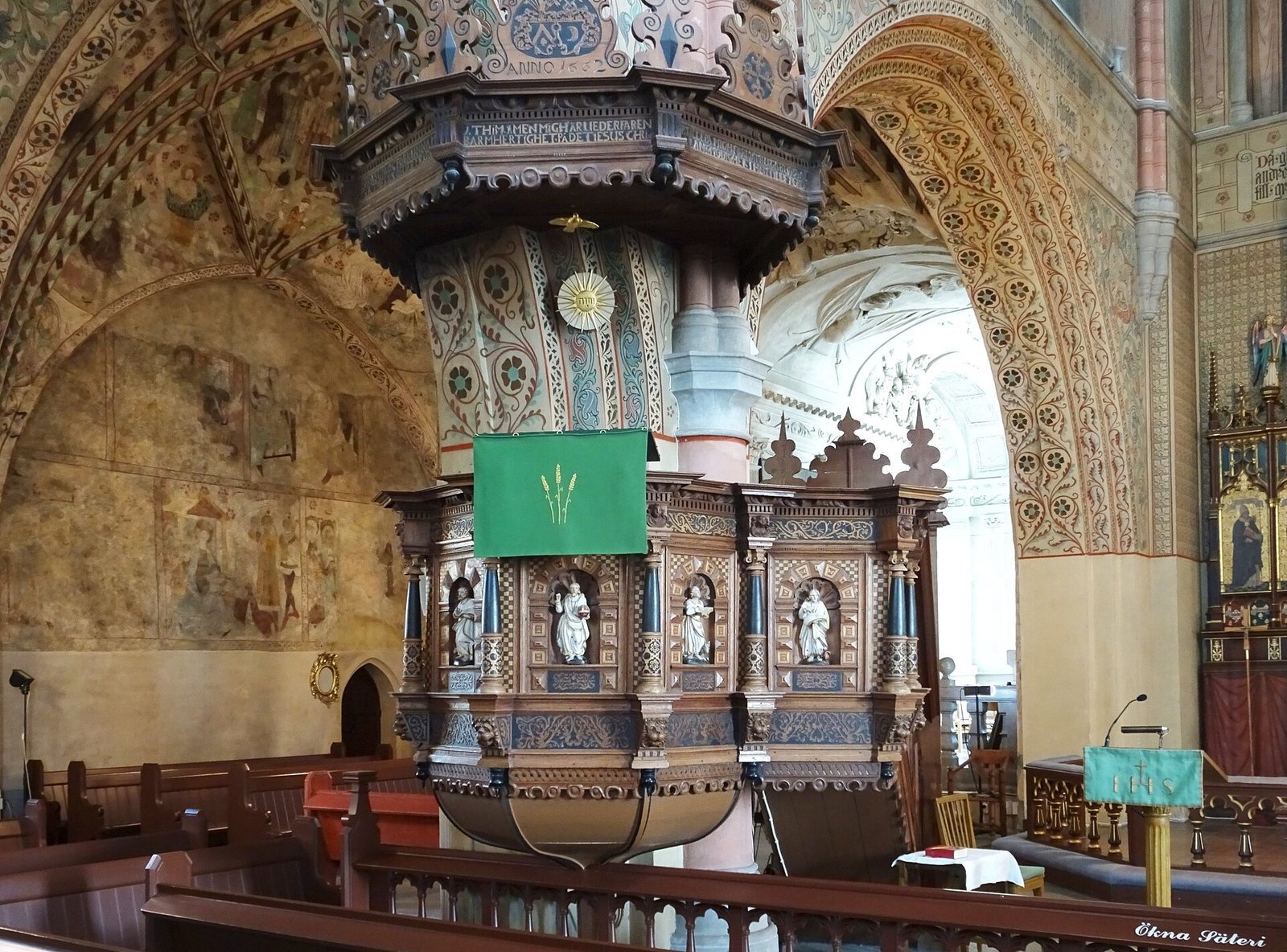
The western part of the north aisle preserves the church’s earliest fabric; other sections of the aisle date to the 14th century. The eastern extension has four bays of vaulting. Pictor’s wall and vault paintings remain well preserved, having never been whitewashed or painted over and receiving only slight retouching. The eastern bay depicts the glorification of Mary, Jesus’s mother; the second shows the glorification of Christ, another name for Jesus; the third contains Old Testament figures; and the fourth features King David and characters from Nordic sagas, Scandinavian legendary literature.
Other painted subjects include Cain and Abel, Saint Olof (Olaf II of Norway, revered as a saint), prophets, and the Archangel Michael weighing souls. Scenes also show John the Baptist, the biblical provision of manna to the Israelites in the wilderness, Moses, and Samson killing a lion. The north wall depicts the Nativity, or birth of Jesus, Solomon and the Queen of Sheba, a biblical monarch associated with him, the Magi, visitors to the infant Jesus, and Jesus’s circumcision as an infant.
Furnishings and music
Furnishings and portraits
The church contains a 15th-century altarpiece and a pulpit from 1662. Seven oil paintings are also part of its furnishings. A portrait by Carl Fredric von Breda depicts Olof Larsson, speaker of the Peasants’ Estate, one of the four estates represented in Sweden’s historical parliament.
Organs
An organ built in 1645 had seven stops, controls that select different tones. Its builder may have been Georg Hermann of Södertälje or M. Herrman of Zespam. Jonas Wistenius built a 12-stop organ in 1751. The present mechanical organ, made by Åkerman & Lund in 1888, stands on a gallery in the choir. It has 15 stops, two hand-played keyboards, and a pedal operated with the feet, and has been regarded as an instrument of very high quality. It was reconfigured in 1963 and restored in 2006. A mechanical choir organ was built by Grönlunds Orgelbyggeri in 1978.
Kagg family burial chapel
The chapel at the church’s eastern end has a Greek-cross plan, with four arms arranged around a central space. Its stucco decoration was made by Carlo Carove, a Baroque stucco artist active in Sweden, and its design draws on Roman Baroque buildings.
Cemetery
The cemetery covers about three hectares. Its older section occupies the slope south of the church, while the newer section lies to the north, with regularly arranged burial plots and a burial chapel built and consecrated in the 1930s. That chapel is no longer in use. The grounds include large family graves with burial chambers, mainly coffin graves, urn-grave plots, and a memorial grove at the easternmost end.