Saint-Yves Chapel in Rennes: Chapel of a Medieval Charitable Hospital
Site at a Glance
- Popularity
- Medium
- Country
- France
- Primary era
- Medieval
- Eras represented
- Medieval, Modern
- Civilizations
- Duchy of Brittany, French
- Site type
- Religious
- Remains
- Chapel
On this page9 sections
History
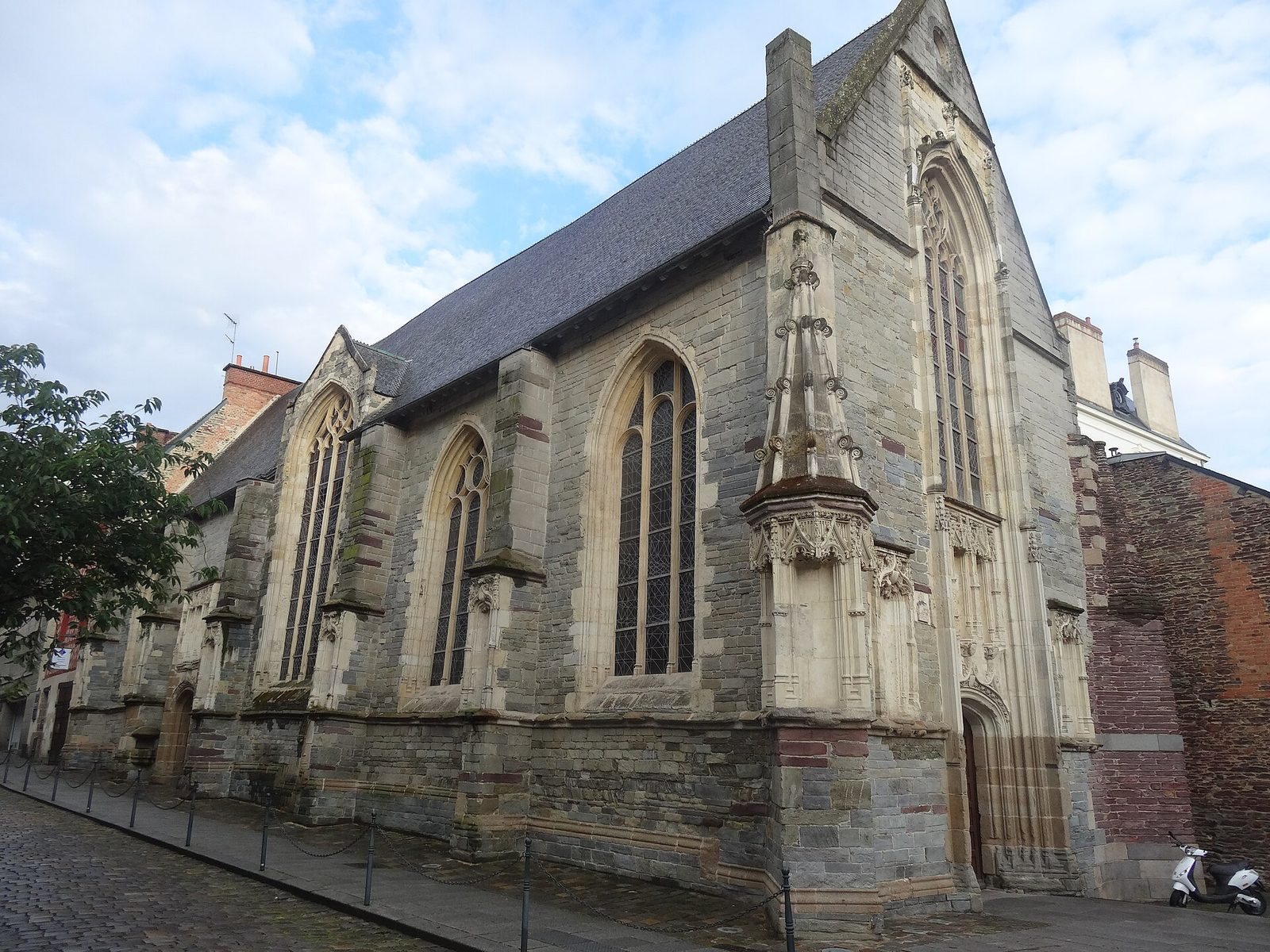
Saint-Yves Chapel is a Flamboyant Gothic chapel in Rennes, France. Its rebuilding began in 1494 on the site of the manor’s former oratory, within a charitable hospital founded in 1358. Flamboyant Gothic is a late Gothic style associated with elaborate, flame-like tracery. The chapel is the only surviving physical testimony to the former hospital.
Hospital foundation
On 8 October 1358, Eudon Le Bouteiller, a priest and canon of the Diocese of Tréguier, established a charitable hospital in his manor and its outbuildings. A canon was a member of a cathedral chapter, the collective body of clergy attached to a cathedral. The hospice was dedicated to the Virgin Mary. Its foundation came during the Breton War of Succession, a conflict over who would inherit the Duchy of Brittany, amid hardship and illness worsened by sieges of Rennes, especially that of 1356–1357.
The hospital stood in the parish of Saint-Étienne, whose priest took part in its foundation. At first, two chaplains chosen by the prior of Saint-Melaine Abbey and two townsmen managed it. As donations and endowments accumulated, responsibility passed to three provosts and a priest appointed by the City Community, Rennes’s governing body, and the cathedral chapter. The hospital soon came under the patronage of Saint Yves, a Breton priest and ecclesiastical judge canonized in 1347.
Chapel and religious use
The rebuilding of the chapel began in 1494, replacing the manor’s former oratory as the hospital’s place of worship. The Augustinian Sisters of Mercy of Dieppe, a community of women religious following the Augustinian tradition, arrived at the Hôtel-Dieu Saint-Yves, a charitable hospital, on 27 June 1644. They cared for the sick until the French Revolution, returned in 1804, and continued their work until 1896.
The chapel served the convent and hospital, and from 1754 to 1790 it also accommodated Rennes Cathedral’s chapter. On 25 February 1754, Bishop Louis-Guy Guérapin de Vauréal placed the old Gothic Cathedral of Saint-Pierre under interdict, an ecclesiastical prohibition restricting religious services or sacraments. He considered the building dangerous and outdated. The chapel’s position near the canons’ quarter helped make it a place of worship for the displaced chapter.
Expansion and later changes
The hospital grew during the seventeenth and eighteenth centuries. As the Vilaine was canalized and buildings and private mansions were developed along Quai Duguay-Trouin, the hospital’s other structures were gradually demolished. In 1858, the Hôtel-Dieu moved to Rue de la Cochardière. The chapel was then converted into an ironmonger’s shop.
The chapel was classified as a French historic monument in 1945. The City of Rennes acquired it in 1981 and arranged for its restoration. Later changes adapted adjoining buildings for offices and a reception area and added an educational route in the nave about Rennes’s history and architecture.
Remains
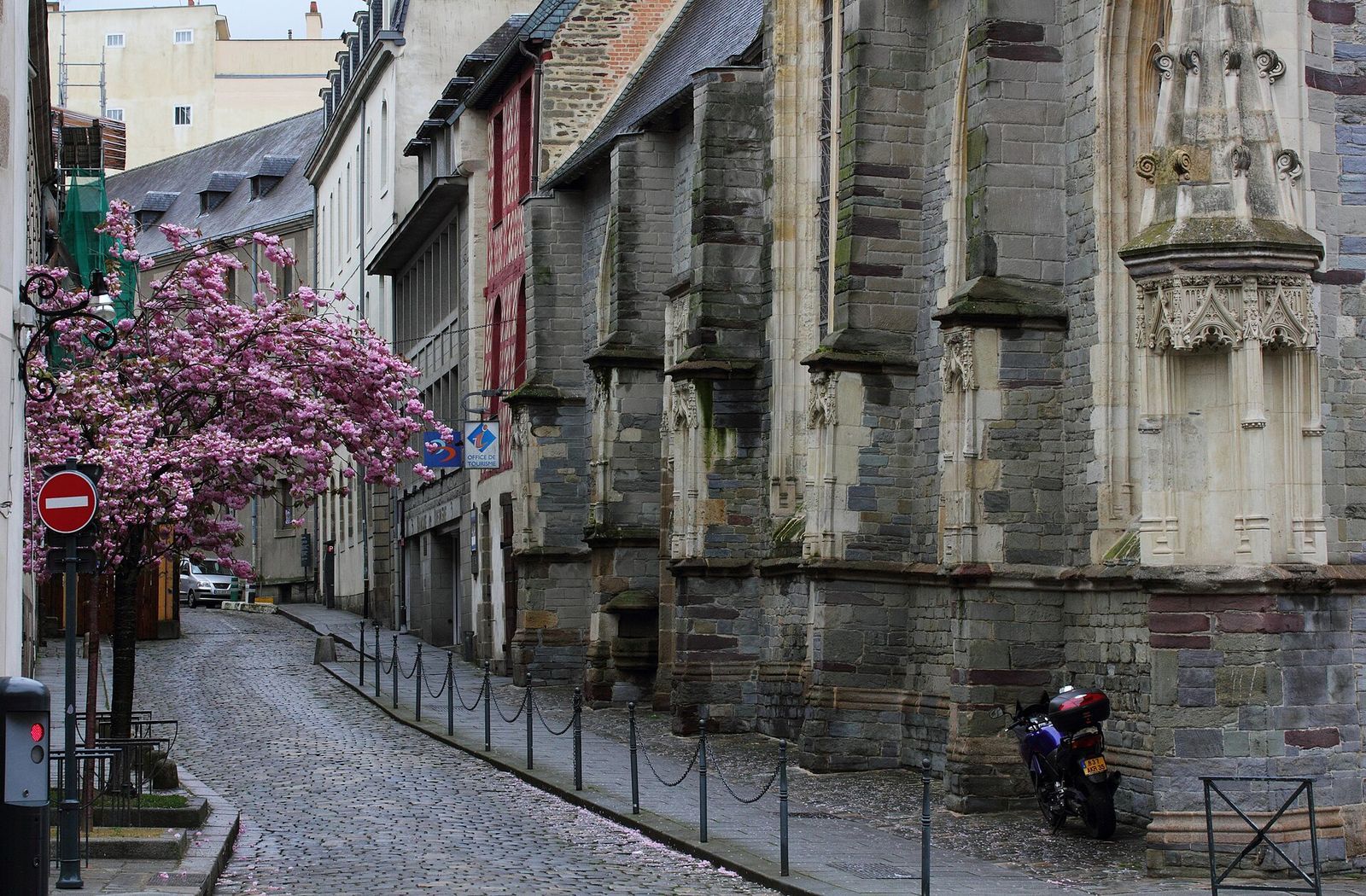
The surviving chapel has a rectangular plan and Flamboyant Gothic features. Its street-facing elevations meet at the corner of Rue Saint-Yves and Rue Le-Bouteiller, while the interior is organized around a rectangular nave.
Street elevations
Rue Le-Bouteiller facade
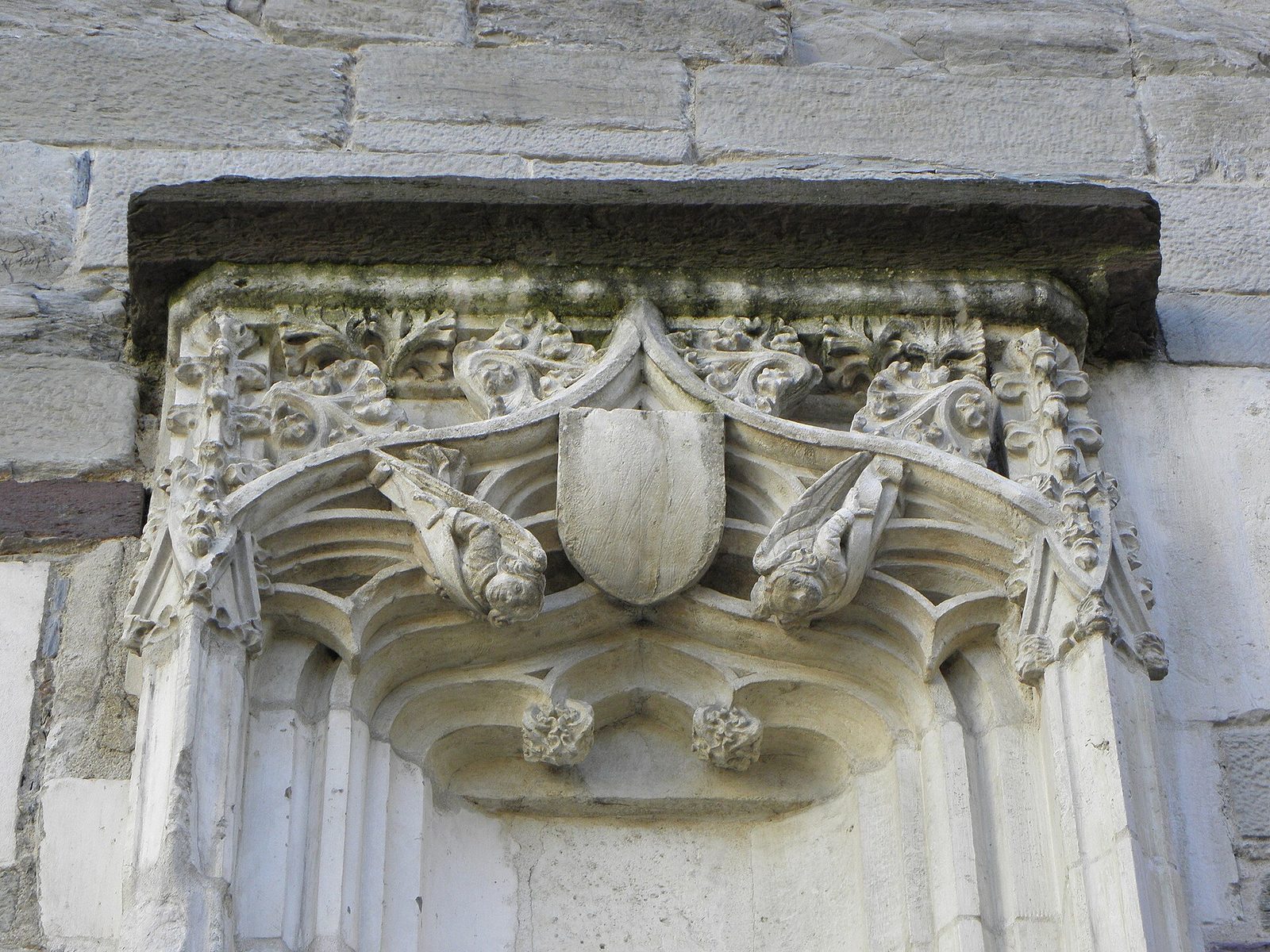
The principal facade faces Rue Le-Bouteiller. Its entrance has a shallow arch, with three niches arranged above it.
Rue Saint-Yves facade
The Rue Saint-Yves elevation has four windows, one much larger than the others, as well as a low doorway topped by niches.
Nave and interior features
The nave has a vaulted ceiling and fifteenth-century carved wall plates, horizontal timbers that support the roof at the tops of the walls. Stained-glass windows created by Gérard Lardeur were installed in 1997. An inventory made in 1793 lists an altarpiece produced by François Gillet in 1673. The nave later gained an educational route on the history and architecture of Rennes, while adjoining buildings were adapted for office and reception use.