St Martin Church in Unterbachern: A Roman Catholic Filial Church
Site at a Glance
- Popularity
- Very Low
- Country
- Germany
- Primary era
- Early Modern
- Eras represented
- Medieval, Early Modern, Modern
- Civilizations
- Duchy of Bavaria, Electorate of Bavaria, German, Holy Roman Empire, Kingdom of Bavaria
- Site type
- Religious
- Remains
- Church
On this page10 sections
History
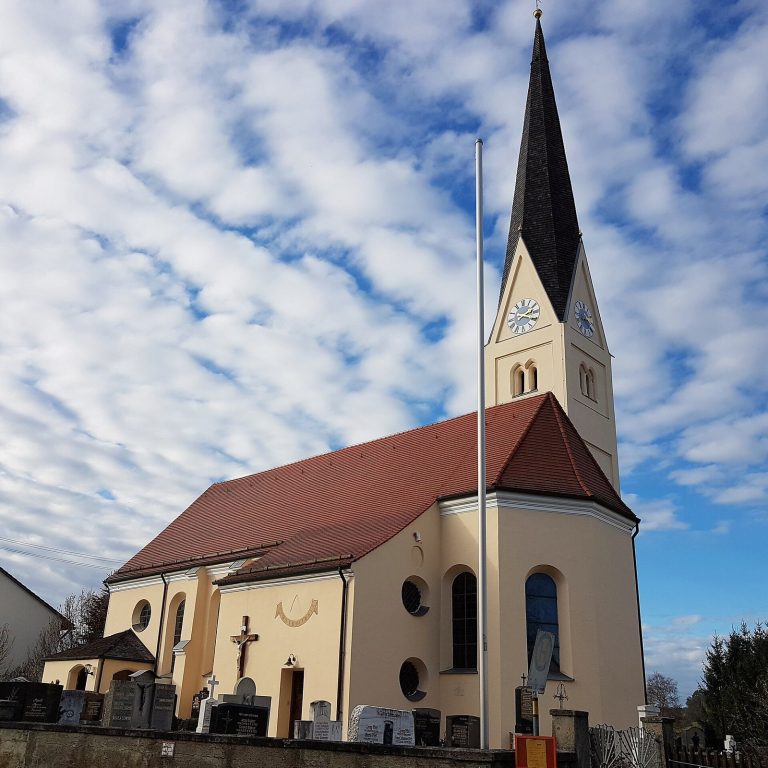
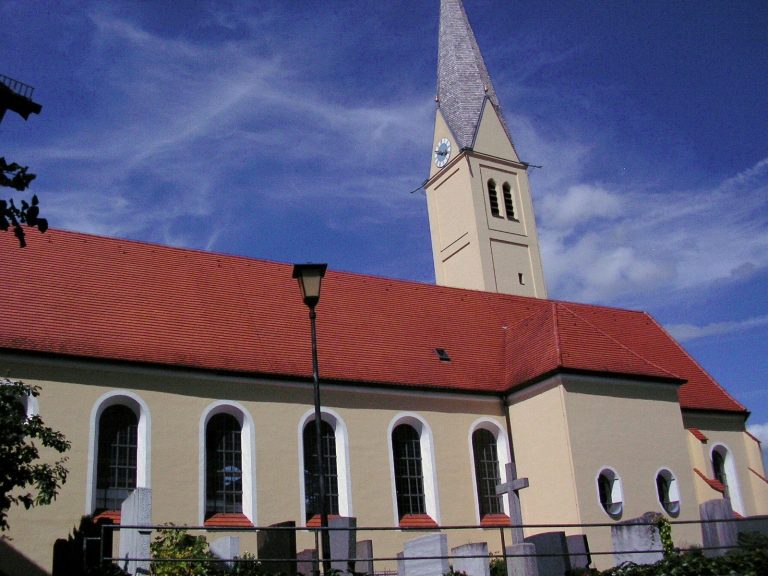
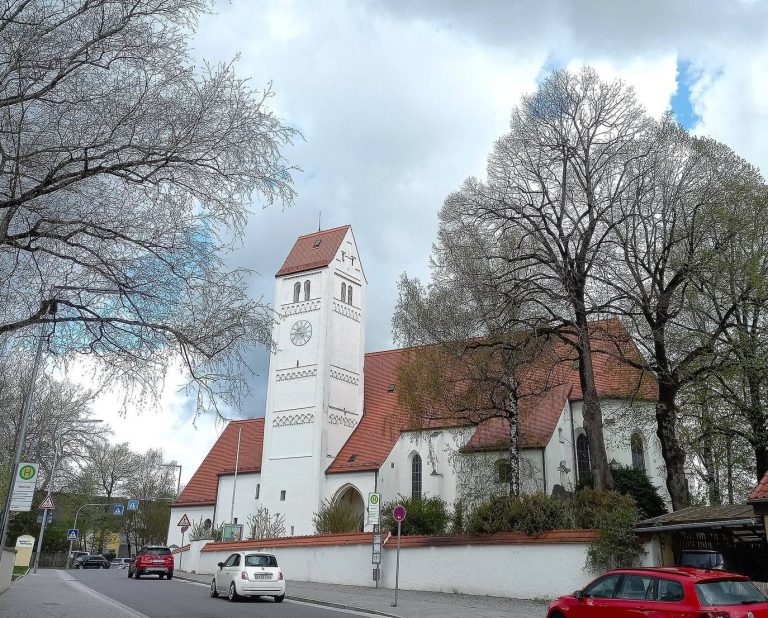
St Martin Church is a Roman Catholic subsidiary church in Unterbachern, a locality of Bergkirchen in the Dachau district of Upper Bavaria, Germany. It belongs to the Dachau deanery, an ecclesiastical district within the Archdiocese of Munich and Freising.
Construction and remodeling
The church was built in the seventeenth century and remodeled during the nineteenth century in the Neo-Romanesque style, a revival of medieval Romanesque forms. In 1899, a tower was erected to replace an earlier roof turret.
Organ
In 1903, the church received an organ case transferred from Heilig Kreuz in Kreuzholzhausen, where a new instrument by Willibald Siemann was being installed. Orgelbau Sandtner built the organ for St Martin in 1960.
Remains
Plan and interior structure
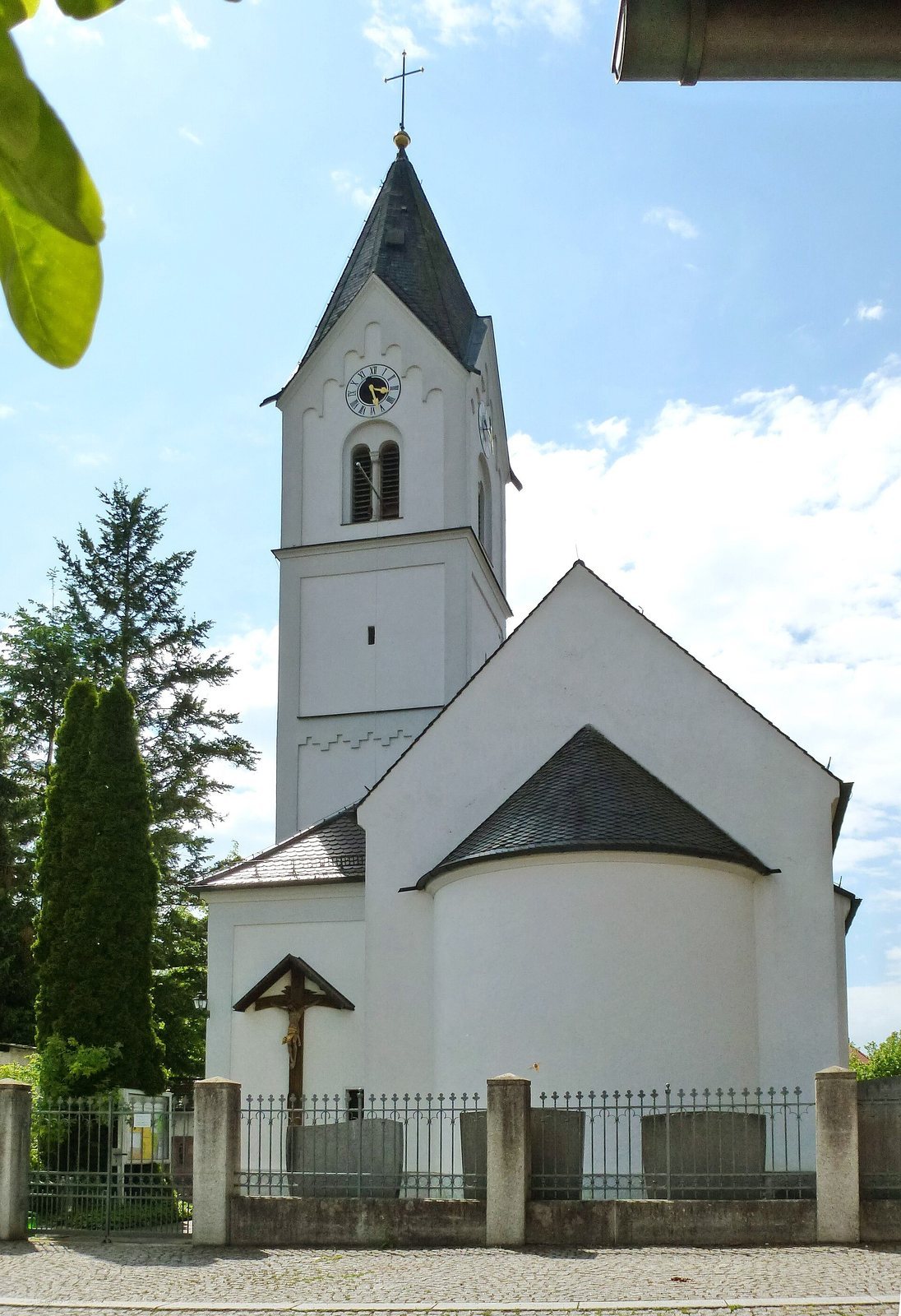
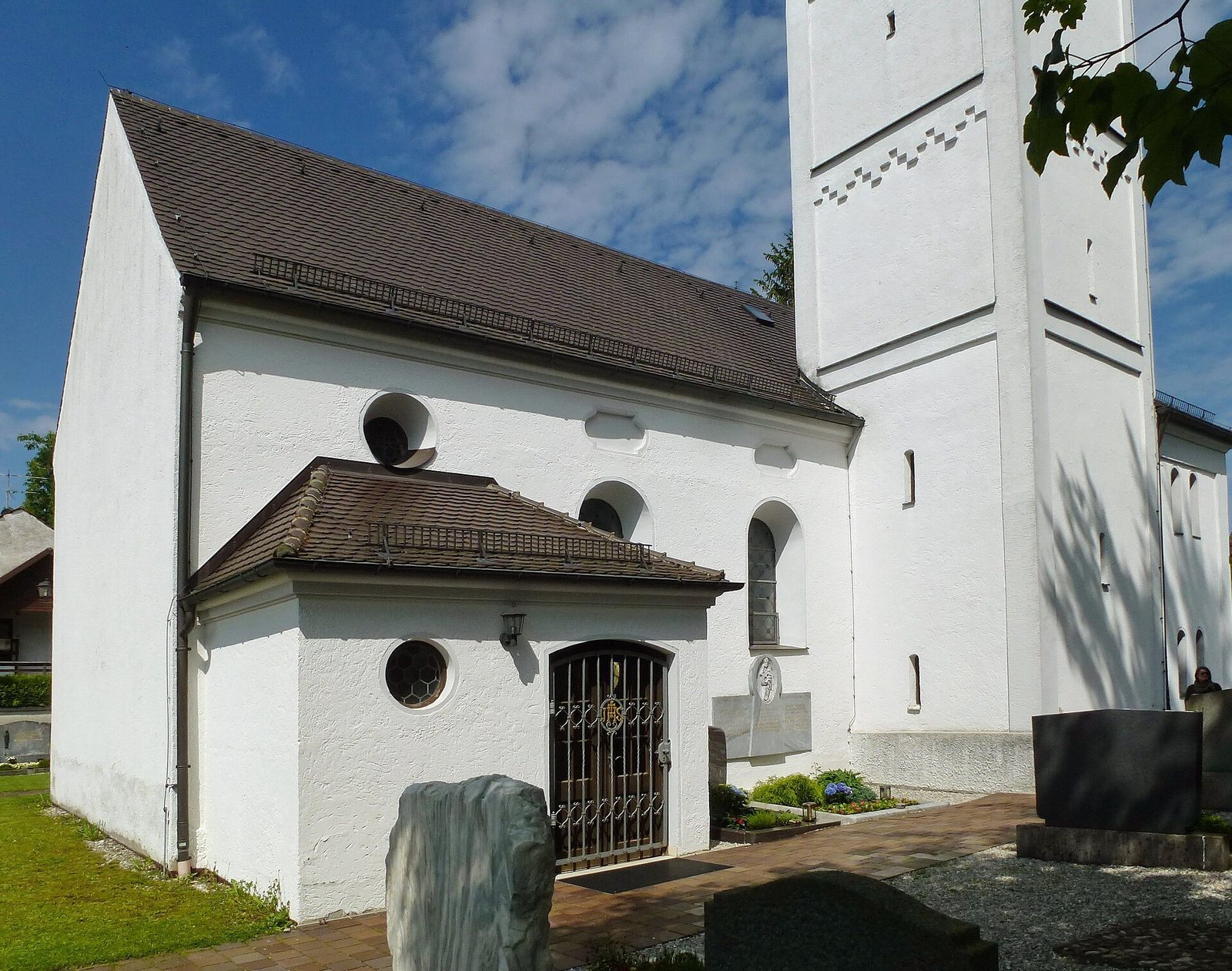
The church is a Baroque building, in an ornate European style, with a single nave, the main body of the church, and a recessed square choir, the liturgical area near the main altar, at the east end. An apse, a projecting end of a church space, from a Romanesque predecessor adjoins the choir; Romanesque is a medieval architectural style associated with rounded arches and substantial masonry. The nave has a flat ceiling. A sacristy, a room for storing vestments and liturgical objects, stands along the choir’s south wall. The tower occupies the southwest corner between the nave and sacristy.
Tower and bells
The tower has a pointed spire, with clock faces set in the gables below. Three bells hang in its upper storey behind sound openings divided into paired arches by central supports. Karl Czudnochowsky of Erding cast two bells in 1946 and 1947. The third, made in 1899, was cast by his predecessor Anton Josef Bachmair, also from Erding.
Altars
High altar
The high altar, dating to around 1670, has twisted columns. Its central image shows St Martin, the church’s patron and a fourth-century Christian bishop, sharing his cloak with a beggar while on horseback. In the associated legend, the beggar later appeared to Martin in a dream as Jesus. Above, God the Father holds a globe among angels and putti, or childlike figures. Statues of St Korbinian, an early medieval missionary bishop associated with Bavaria, and St Sigismund, a sixth-century king of Burgundy venerated as a saint, stand at the sides. Tradition identifies the animal at Korbinian’s feet as the bear that killed his horse and was then made to carry his baggage to Rome.
Side altars
The side altars, made around 1690, have large round-arched niches framed by columns. The left altar holds an eighteenth-century statue of Mary and the infant Jesus, presenting Mary as Queen of Heaven. Its upper section shows the risen Christ as a bust in a circular half-relief. St Andrew is the principal figure on the right altar; he holds an X-shaped cross associated with him, which may have been added later. The upper section depicts St Anne, traditionally identified as Mary’s mother.
Organ
The organ has 13 stops, two manuals, or hand-played keyboards, and a pedal, a foot-operated keyboard. It is a pneumatic cone-chest instrument, using cone-shaped valves to admit air to the pipes. Its reused case dates to around 1735 and is in the Régence style, a transition between Baroque and Rococo. A modern addition behind the case accommodates the larger instrument and forms a façade of exposed pipes. The couplers link the manuals and pedal, with connections II/I, I/P, and II/P; additional super-octave and sub-octave couplers on II/I shift notes by an octave.