MegaMuseo: A Prehistoric Site and Archaeological Museum in Aosta
Site at a Glance
- Popularity
- Medium
- Country
- Italy
- Primary era
- Bronze Age
- Eras represented
- Stone Age, Bronze Age, Modern
- Civilizations
- Italian
- Site type
- Burial
- Remains
- Necropolis
On this page15 sections
History
Prehistoric use and changing functions
MegaMuseo, formerly the Saint-Martin-de-Corléans Megalithic Area, is an archaeological site and museum in Aosta, Italy, centered on a prehistoric complex used for more than 6,000 years. Its monuments were built in four phases between 3000 and 1900 BC. The area first served as an open-air sacred place for agricultural rituals and cults connected with the living. From the last centuries of the third millennium BC, it also became a burial ground with monumental tombs.
Around 2200 BC, cult activity began to decline for reasons that remain unclear, while funerary use continued. From the Late Bronze Age, the area was used for agriculture for more than a millennium. After a period of abandonment lasting about 700 years, it was used again between 1200 and 800 BC. The broader sequence of activity extends through the Iron Age, Roman period, Middle Ages, and modern times. The Copper Age, also called the Chalcolithic, is the period between the Neolithic and Bronze Age.
Later history and local traditions
The site’s long ritual and funerary use has prompted the suggestion that an important settlement stood nearby, probably to the northwest. A local antiquarian tradition instead links the area to ritual burials for Cordela, a city said to have been founded by Cordelo, also known as Cordelus. The story identifies him as a legendary ancestor of the Salassi, an ancient people of the western Alps, but the tradition remains unverified.
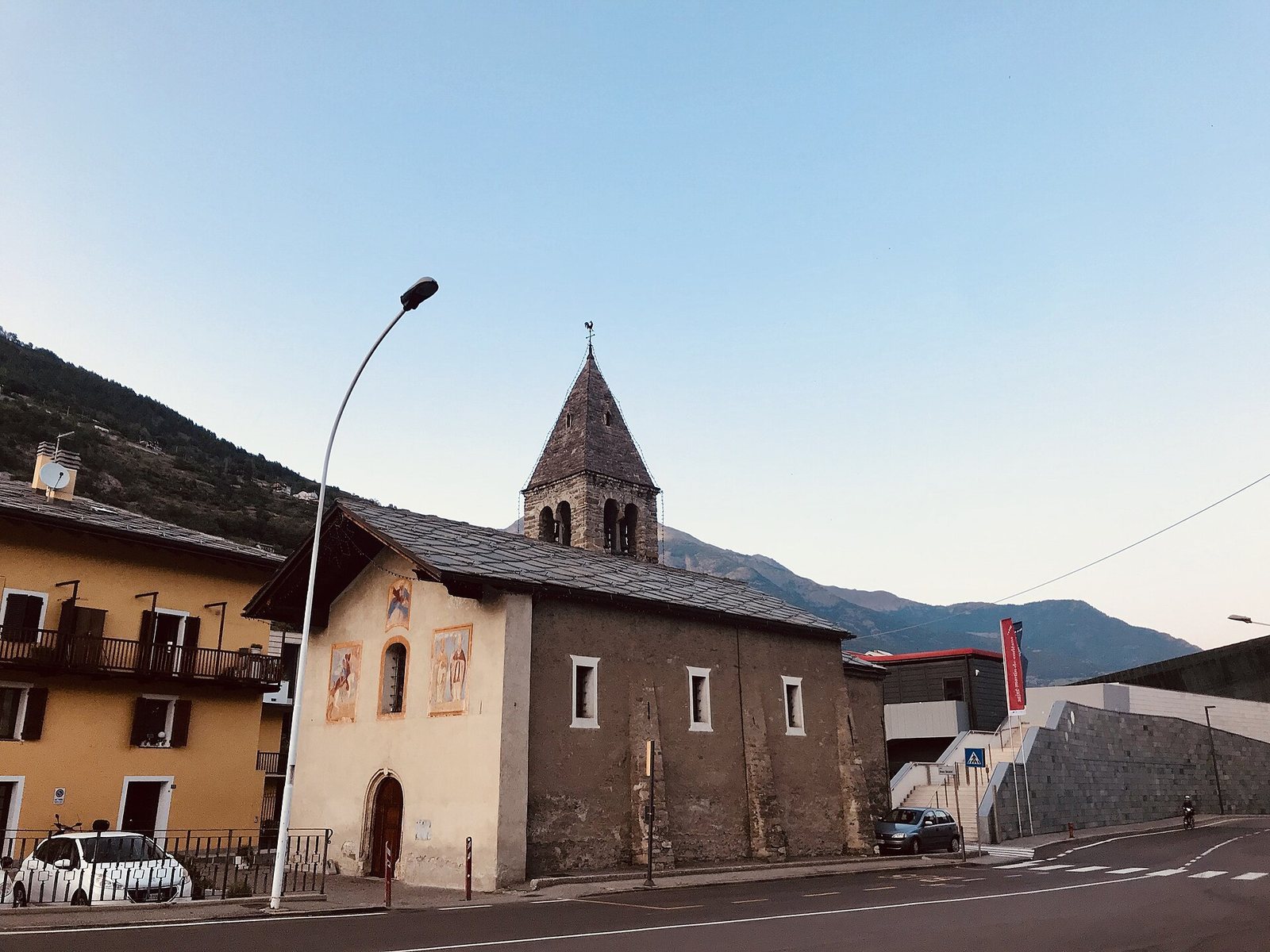
The site lies beside a medieval church dedicated to Saint Martin of Tours, a fourth-century bishop later revered as a saint. The church was first documented in 1176.
Discovery and museum development
The archaeological area came to light in June 1969 during construction work for homes near the church. Construction equipment struck the top of a decorated stone slab. Archaeologists Franco Mezzena and Rosanna Mollo Mezzena recognized it, and work stopped immediately. The regional government of Valle d’Aosta acquired the land to protect it and allow archaeological investigation.
Annual excavations continued for more than twenty years, with further investigations in 2001 and from 2006 to 2008; micro-excavation surveys have continued as well. The discovery led Franco Mezzena to use the term “megalithic area” for a place containing different kinds of monumental structures made from large stones.
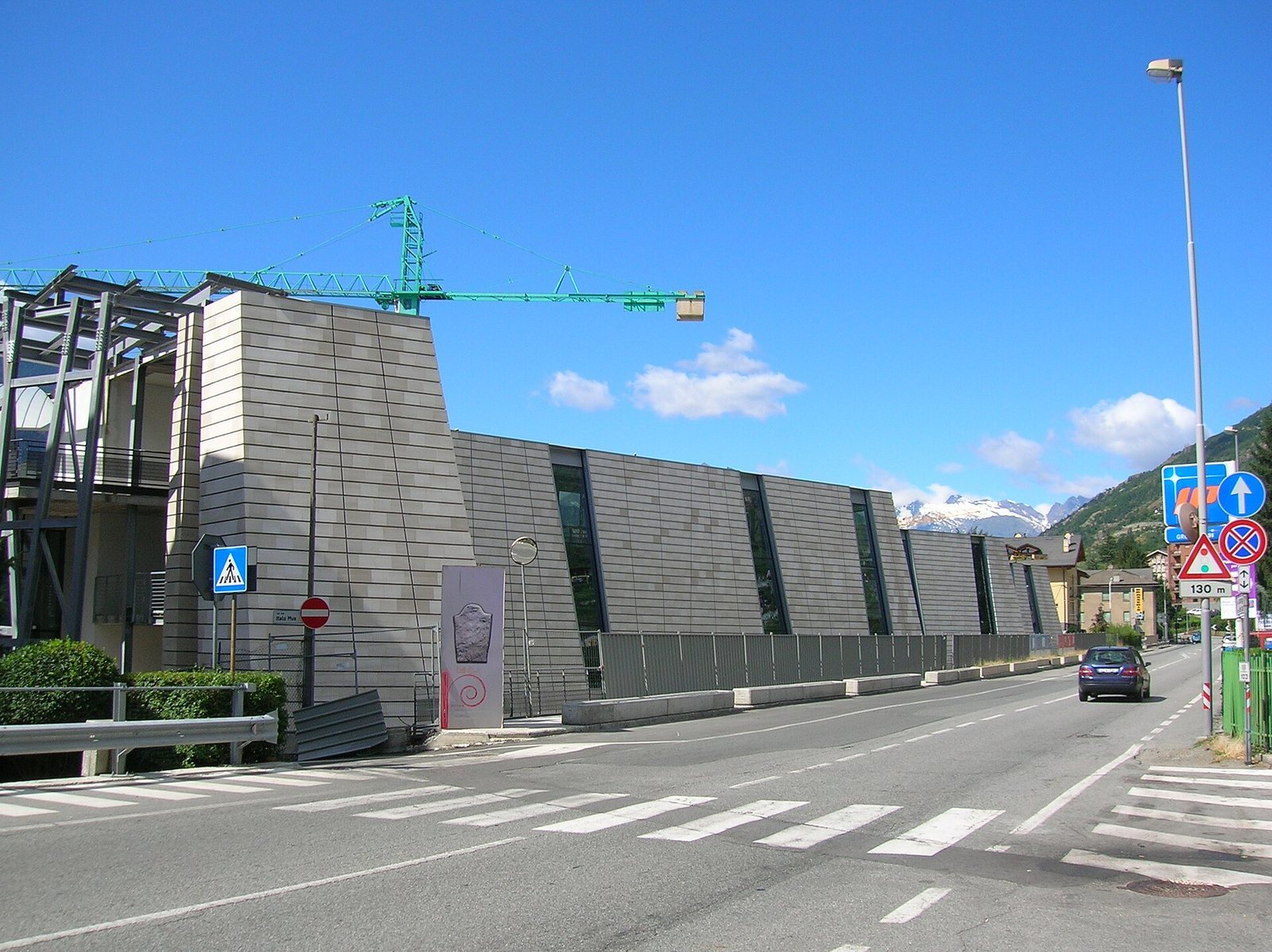
A museum building was first designed in the late 1980s, and a museum-development project began in 2007. In the early twenty-first century, the archaeological area was enclosed and incorporated into a museum complex. The exhibition was renewed in the 2020s, and the site took the name MegaMuseo in February 2025.
Remains
Layout and museum complex
Archaeological area
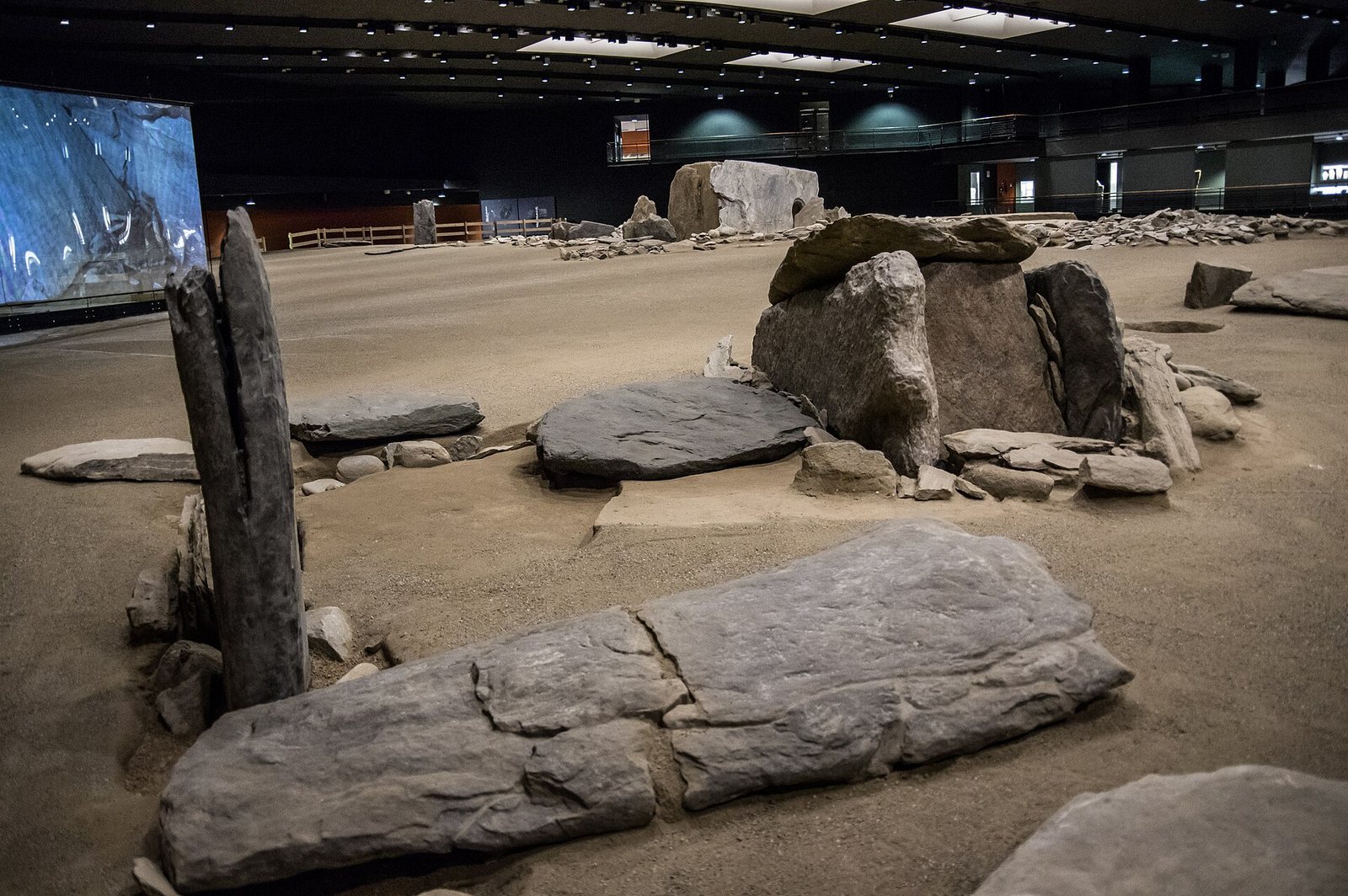
The archaeological area covers about 10,000 square metres, with excavations extending roughly six metres below the present urban ground level. The work exposed 22 layers of archaeological deposits. The site lies near two Alpine passes and several metal deposits.
Museum buildings and connections
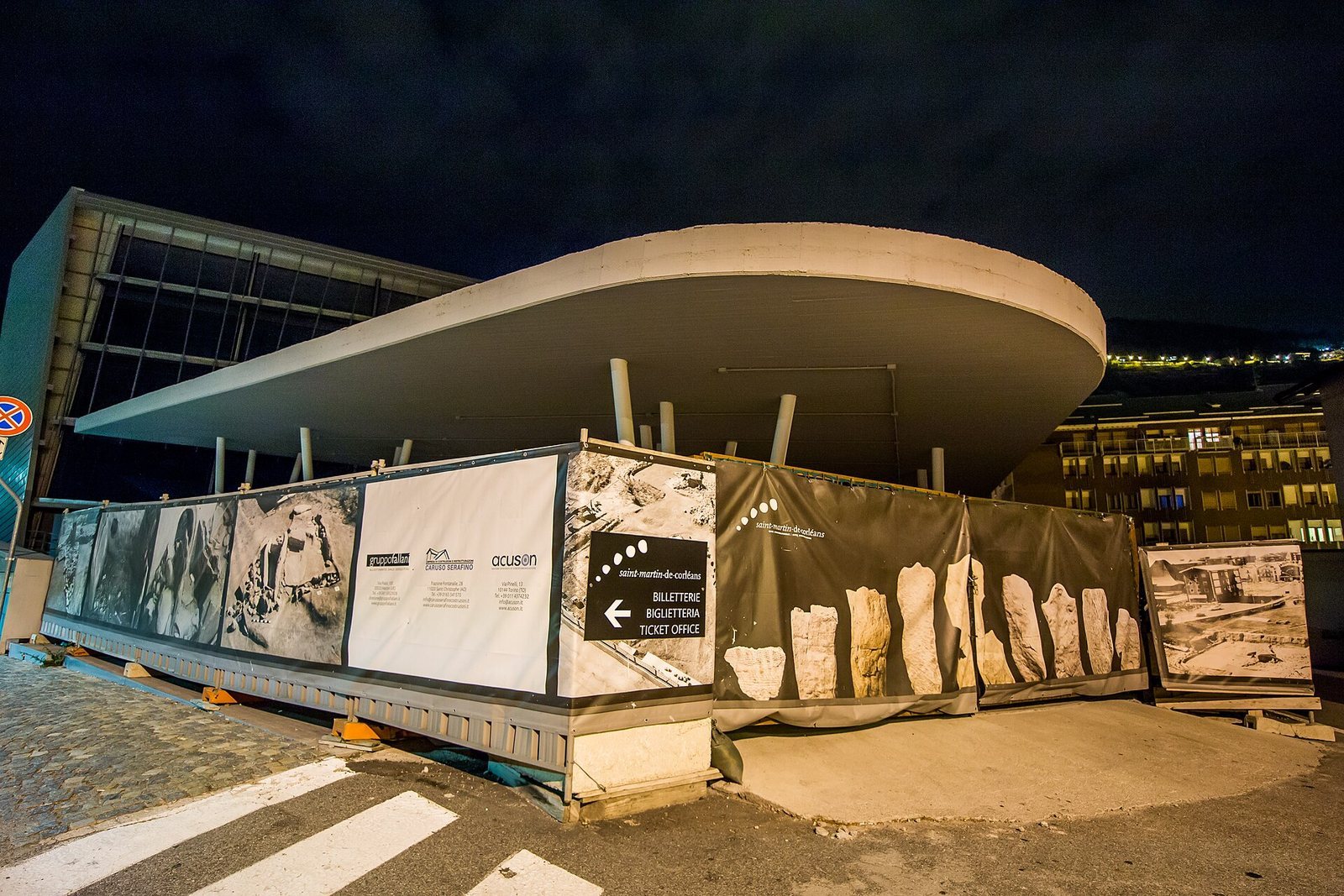
The museum complex has four levels and covers about 9,820 square metres. Its northern and southern sections lie on opposite sides of Avenue Saint-Martin-de-Corléans. Two buildings along the avenue are joined by a bridge, which restores the road connection. At the raised square, the building rises roughly seven metres above ground.
A central hall is roofed by steel lattice trusses, each three metres high, that span 46.5 metres without intermediate supports. A horizontal lantern made of steel and glass visually connects the northern and southern parts of the archaeological area.
Exhibition spaces
The museum’s first section presents occupation from the final centuries of the fifth millennium BC through the final centuries of the third millennium BC. Its six sections trace the site’s discovery and lead to a large hall above the excavation. Five hundred points of light illuminate the hall, representing parts of the day.
Ritual installations
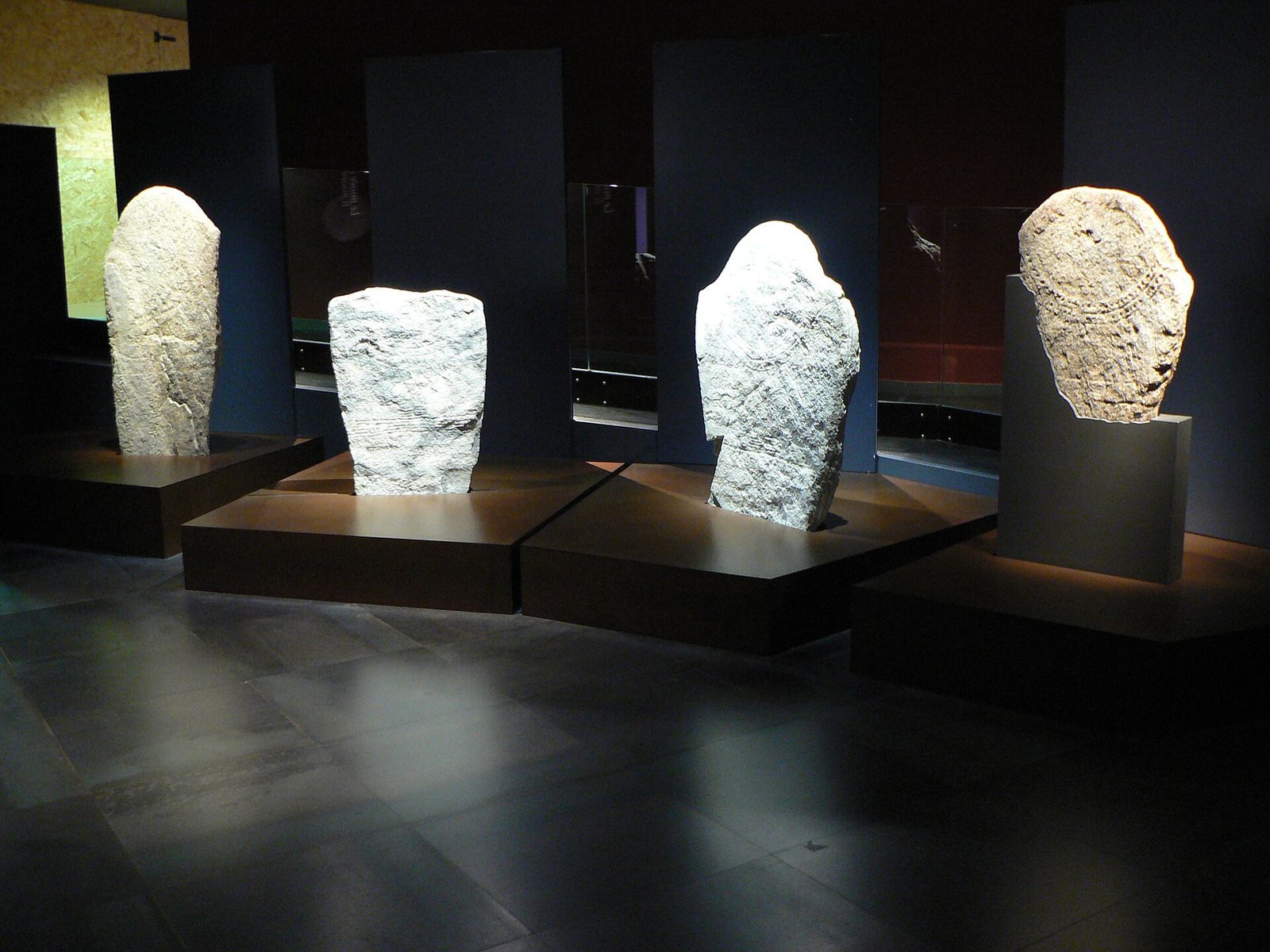
The earliest construction phase, around 3000 to 2750 BC, placed 22 wooden posts in a row aligned toward a local rock. Ash from burnt ram skulls had been spread at the bottoms of the postholes before the posts were set. In the next phase, around 2750 to 2400 BC, plough furrows ran parallel to the row. Many human teeth came from the ploughed ground and appear to have been treated like seeds. Installations from this phase also included 40 statue-menhirs, standing stones shaped or carved as human figures. Some aligned with the posts and others stood at right angles to them. Additional standing stones, human-shaped carved slabs, stone platforms, and at least seven ritual pits formed part of the complex.
Tombs and burials
Tomb II
Built around 2400 to 2100 BC, Tomb II is a dolmen, a prehistoric tomb built from stone slabs. It measures 2.5 by 2.2 metres and has an entrance in one side. Its triangular stone platform is 15 metres long and resembles the platform of Dolmen M XII at Petit-Chasseur in Switzerland. One corner of the platform lies over Tomb III, an earlier small burial chamber made from stone slabs.
Tombs IV and V
Tomb IV is a dolmen with a circular enclosure. Tomb V is a covered passage tomb, a burial structure with a roofed passage leading into it.
Later graves and reused stelae
Smaller graves belong to the final construction phase, around 2100 to 1900 BC. Earlier carved standing stones were also reused in tombs. At MegaMuseo and the necropolis at Sion in Switzerland, stelae were repositioned, often as parts of stone-cist burials, and were frequently broken or reshaped for reuse.
Carved stones and finds
Decorated human-shaped stelae bear images of daggers with triangular blades, bows with strings and arrows, and pendants with paired spiral designs. Finds from the area include late Neolithic human remains, arrowheads, pottery fragments, and ornaments. Engraved stelae and glass and ceramic objects from the site are preserved at the Regional Archaeological Museum. The remains form one of Italy’s largest concentrations of large-stone monuments and have direct parallels with Petit-Chasseur at Sion. MegaMuseo’s archaeological area and the Little Saint Bernard stone circle are the only megalithic sites in northwestern Italy.