Entrevaux Cathedral: A Catholic Church and Former Cathedral of Glandèves
Site at a Glance
- Popularity
- Medium
- Country
- France
- Primary era
- Early Modern
- Eras represented
- Early Modern
- Civilizations
- French
- Site type
- Religious
- Remains
- Cathedral
On this page13 sections
History
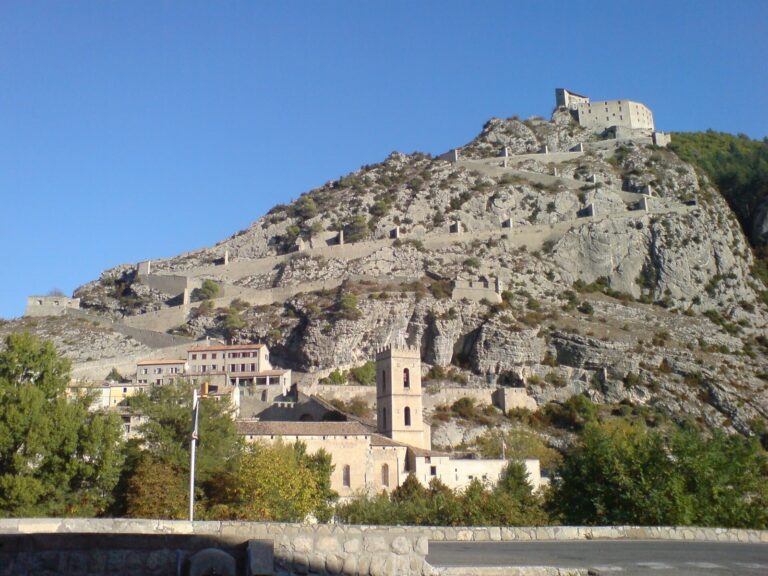
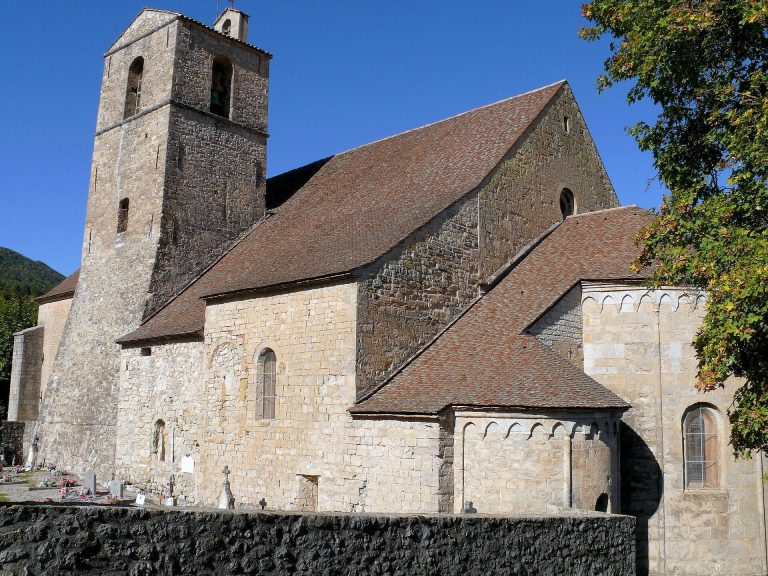
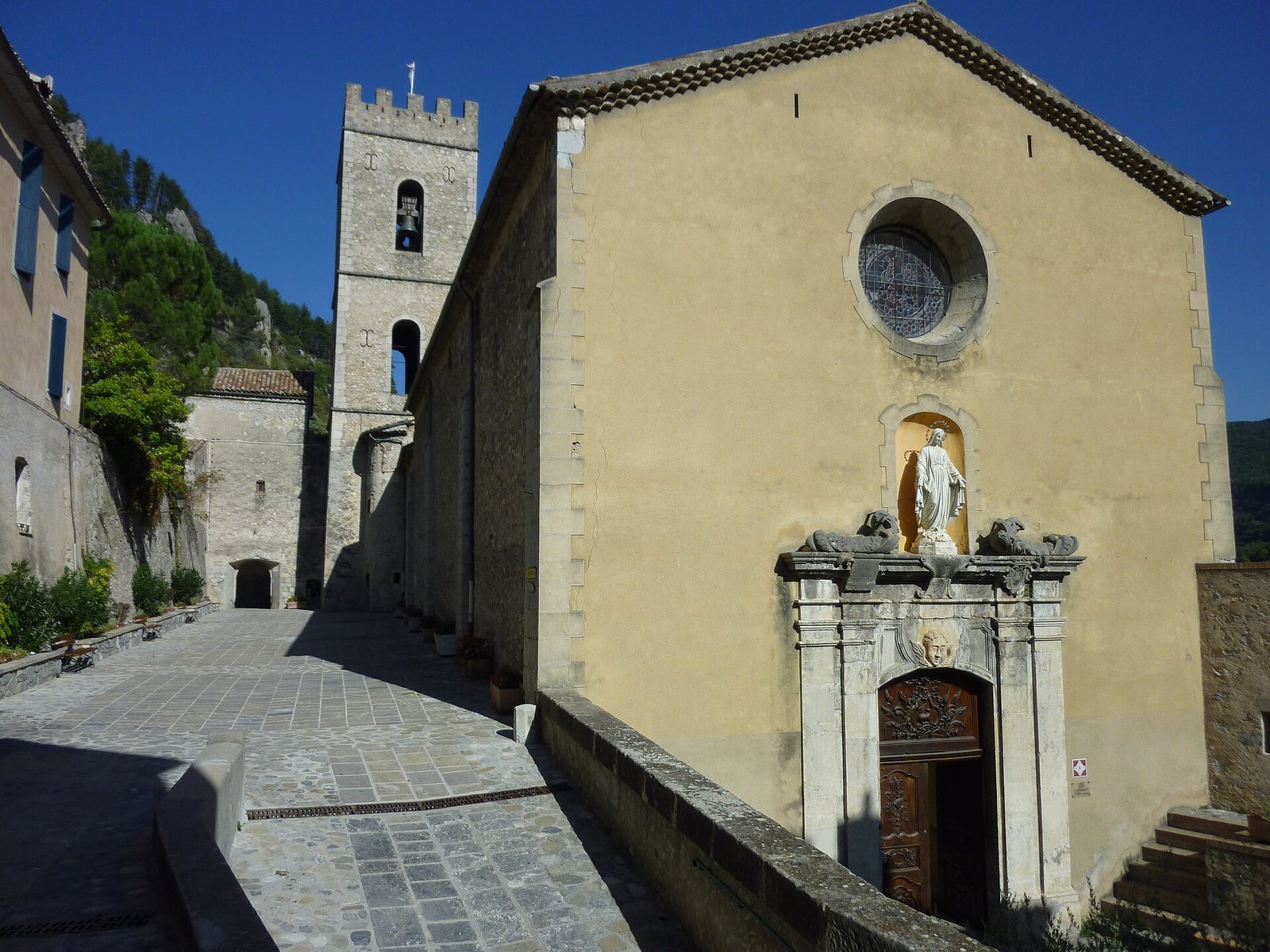
Entrevaux Cathedral is a Catholic church in Entrevaux, France, constructed in the early 17th century in the Classical style. Its creation followed the relocation of the episcopal establishment from Glandèves to the more defensible town of Entrevaux.
The transfer from Glandèves
The episcopal seat at Glandèves had been established by the end of the Roman Empire. As the settlement became insecure, its population moved to Entrevaux in the 11th century. The cathedral and the bishop’s establishment, however, remained at Glandèves until 1603, when the cathedral chapter transferred. The bishops moved their principal residence to Entrevaux in the early 17th century.
Construction and cathedral use
In 1604, Bishop Octave Isnard decided to build a cathedral at Entrevaux. Construction took place from 1609 to 1630, and the church was probably consecrated in 1627. Its decoration was completed in the 1650s, followed by the bell tower in the 1660s. The new cathedral took the place of an earlier Romanesque cathedral at Glandèves. Romanesque is a medieval European architectural style.
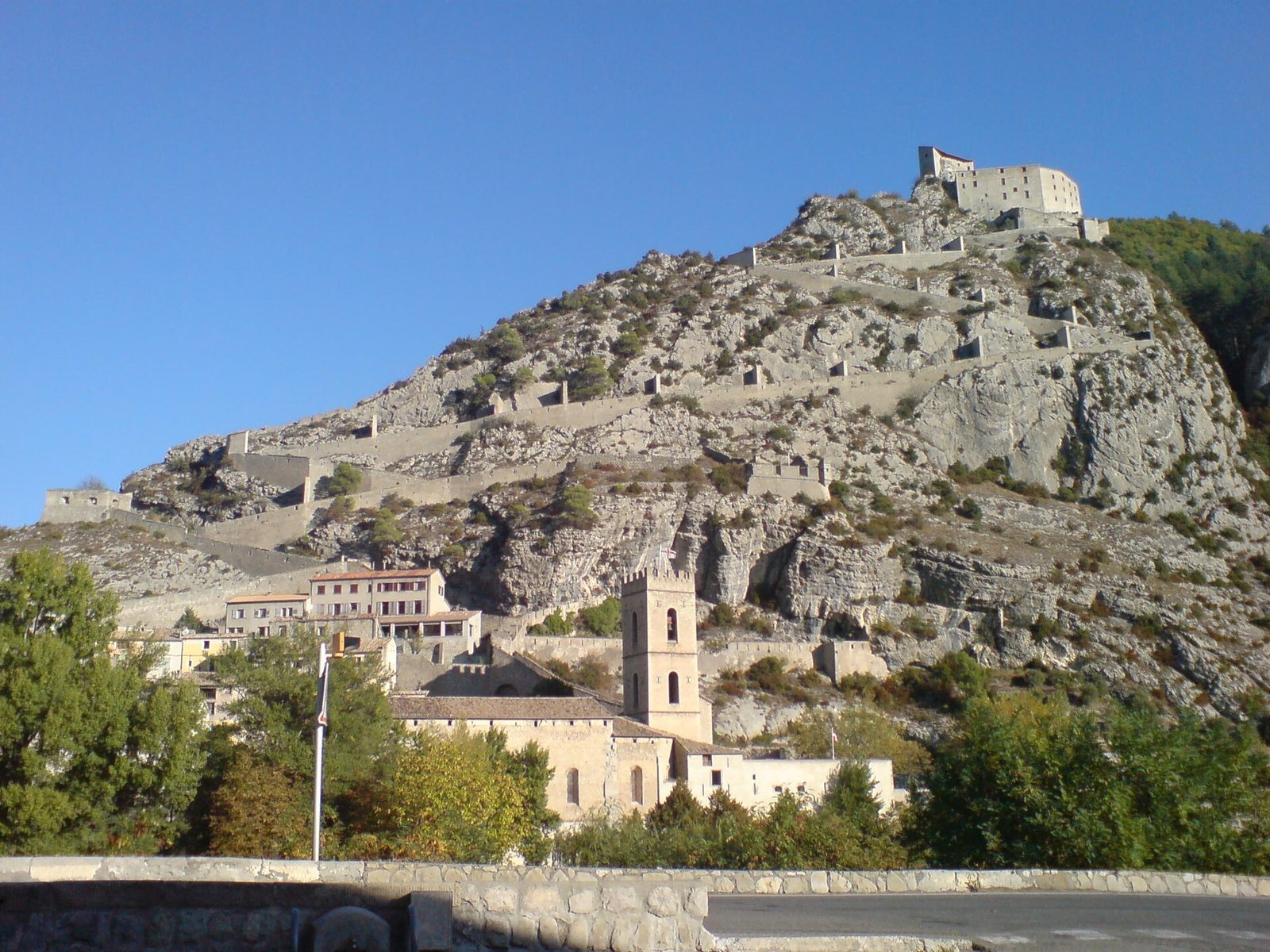
The church served as the cathedral of the Diocese of Glandèves from 1624 until 1790, when it became a parish church. In 1692, it was incorporated into Entrevaux’s fortifications, and a bastion was built.
Later role and status
The church is dedicated to Mary under the Catholic title of the Assumption, the belief that she was taken into heaven at the end of her earthly life. It is affiliated with the Diocese of Digne, Riez and Sisteron. Since 2009, it has also been the seat of the titular bishop of Entrevaux, who holds the title of a historic see that is not a current territorial diocese. The cathedral was designated a French Historic Monument on 27 June 1996.
Remains
Plan and defensive setting
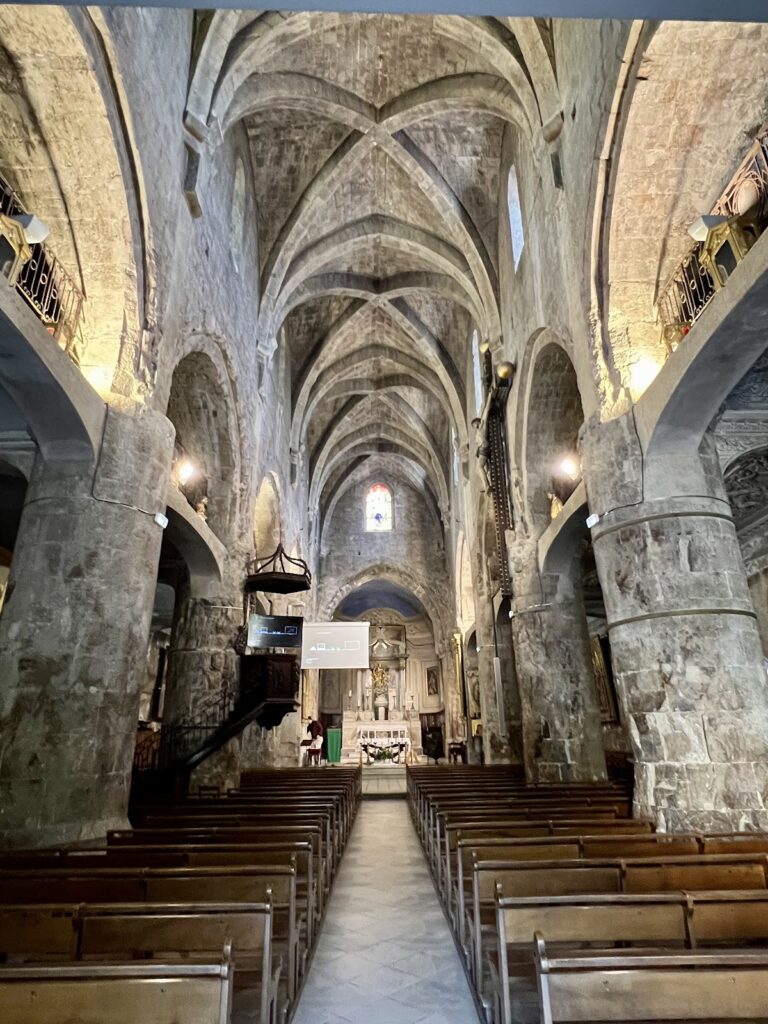
The cathedral faces northeast, an orientation shaped by its restricted site and the town’s defensive needs. It measures 40 metres long and 10 metres wide, with a height of 14 metres to the top of its vaulted ceiling. Its single nave, the main body of the church, is divided into three bays, or structural sections along its length. The building joins the surrounding fortification wall. Three stained-glass windows are set in the south façade, and the bell tower has a crenellated parapet, a battlemented top with alternating raised sections and openings.
Interior furnishings
Choir stalls and pulpit
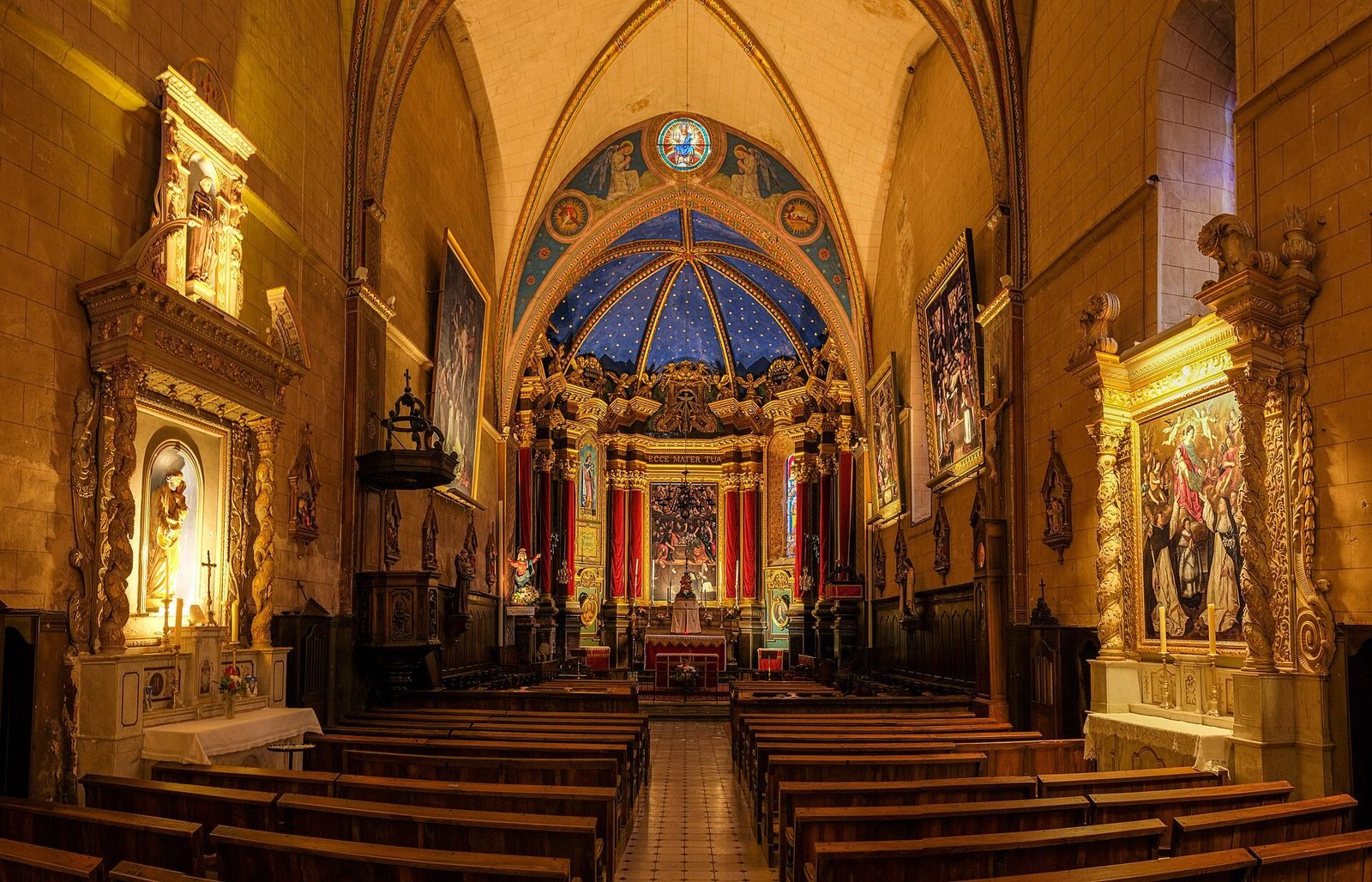
The richly decorated choir contains 53 walnut stalls dating from the 17th century. The pulpit, from the late 17th or early 18th century, has low-relief carvings of the Four Evangelists: Matthew, Mark, Luke and John, traditionally credited with the canonical Gospels.
Altars and paintings
An 18th-century altar ensemble includes an altarpiece, a decorated structure behind an altar, and a painting of the Baptism of Christ. A separate altarpiece dates to 1716 and is associated with a 1631 painting of Our Lady of the Rosary by François Mimault, a French painter active in the early 17th century. Mimault also painted an image of the Assumption around 1630.
Doors
The main entrance door bears priestly and episcopal insignia, along with the Paschal Lamb, a Christian symbol of Christ as a sacrificial lamb. A walnut door leading to the bell tower dates from the 17th or 18th century.
Organ
The organ dates from 1717, and its instrumental section was made by Jean Eustache, an organ builder from Marseille. The instrument was restored in 1864 and again in 1948.
Processional reliquary
A silvered-copper bust of Saint John the Baptist dates from the 18th century. This reliquary bust, a container for sacred remains shaped as a head and upper torso, is used in processions held in August.
Notre-Dame-de-la-Sed
The remains of Entrevaux’s second cathedral, Notre-Dame-de-la-Sed, lie a short distance downstream from the town.