The Sister Churches: Two Medieval Churches in Norway
Site at a Glance
- Popularity
- High
- Country
- Norway
- Primary era
- Medieval
- Eras represented
- Medieval, Modern
- Civilizations
- Norwegian
- Site type
- Religious
- Remains
- Church
On this page11 sections
History
Origins and early purposes
The Sister Churches are two adjacent medieval churches at Granavollen in Gran Municipality, Norway. Both were consecrated during the 12th century. Mariakirken, the Church of St Mary, was built before 1150, while stylistic evidence places Nikolaikirken, the Church of St Nicholas, around 1150–1200. Later rebuilding makes Nikolaikirken’s precise construction date difficult to establish, but it is thought to be the newer church. St Nicholas of Myra was an early Christian bishop venerated as a saint; Mary is the mother of Jesus in Christian tradition.
Local folklore says that two sisters who quarrelled built the churches so they would not have to worship together. A more likely explanation is that the buildings served separate communities or purposes. Mariakirken may have been a monastery church or served Gran parish, while Nikolaikirken probably served the rural Hadeland parish.
Religious change, damage, and reuse
Both churches were Catholic before the Reformation, the movement that established Protestant churches, including Lutheran churches, across much of northern Europe. Mariakirken was thereafter used only a few times each year. In 1799, a fire destroyed Nikolaikirken’s high spire. Lightning struck Mariakirken in 1813 and caused a fire that gutted the building, leaving it in ruins until repairs allowed it to be used again in 1859.
Nikolaikirken served as an election church in 1814, one of more than 300 Norwegian parish churches used as local polling stations for the country’s first national elections. Each parish chose electors, who met at county level to select representatives for the Constituent Assembly at Eidsvoll Manor. That assembly drafted Norway’s constitution.
When Nikolaikirken closed for modernization in the 1860s, Mariakirken served in its place. Fires and rebuilding had already removed much of Nikolaikirken’s original interior, and the modernization took away further medieval material. Mariakirken was restored in 1912–1915 for use as a burial chapel, then restored and renovated again in 1990–1992 before returning to use as a parish church.
The churches, once Catholic, are now Evangelical Lutheran churches of the Church of Norway. They belong to Gran/Tingelstad parish, within Hadeland og Land deanery, a church subdivision in the Diocese of Hamar. The Sister Churches are listed as Norwegian cultural heritage and are automatically protected.
Remains
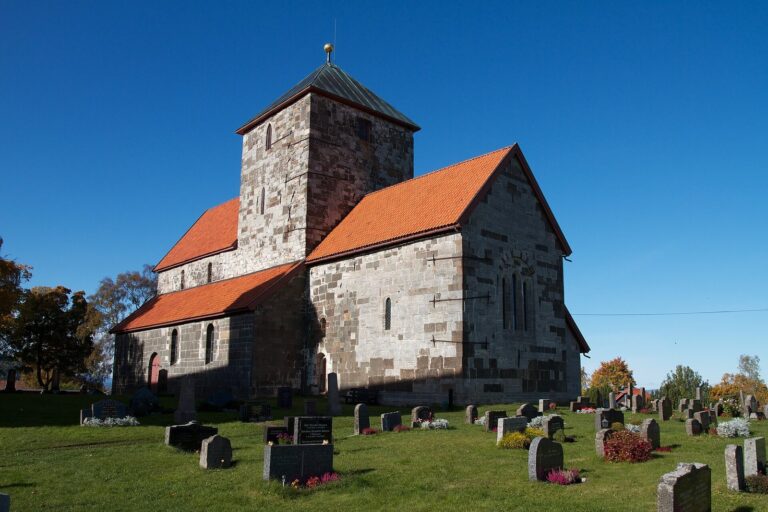
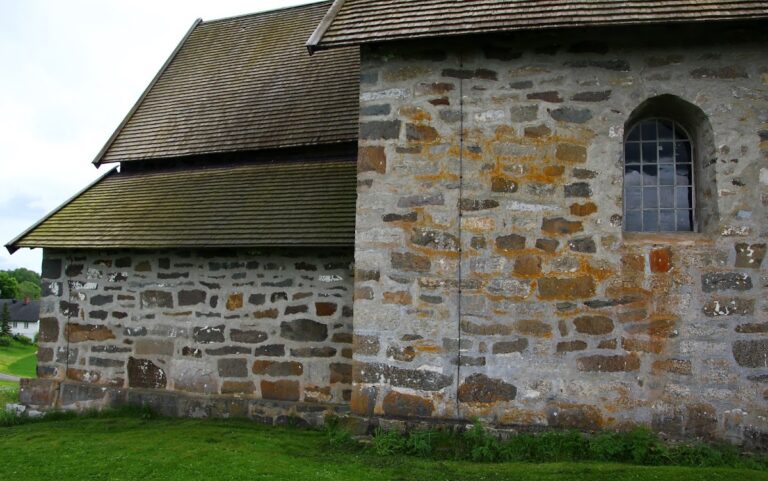
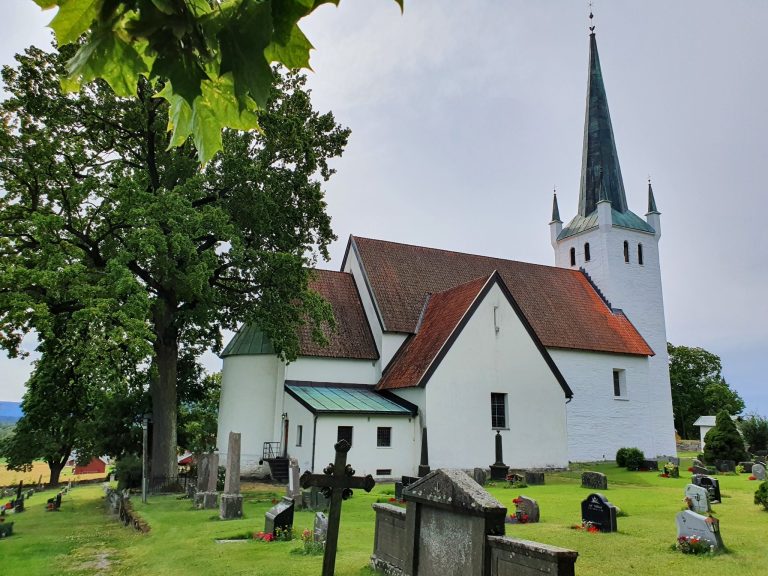
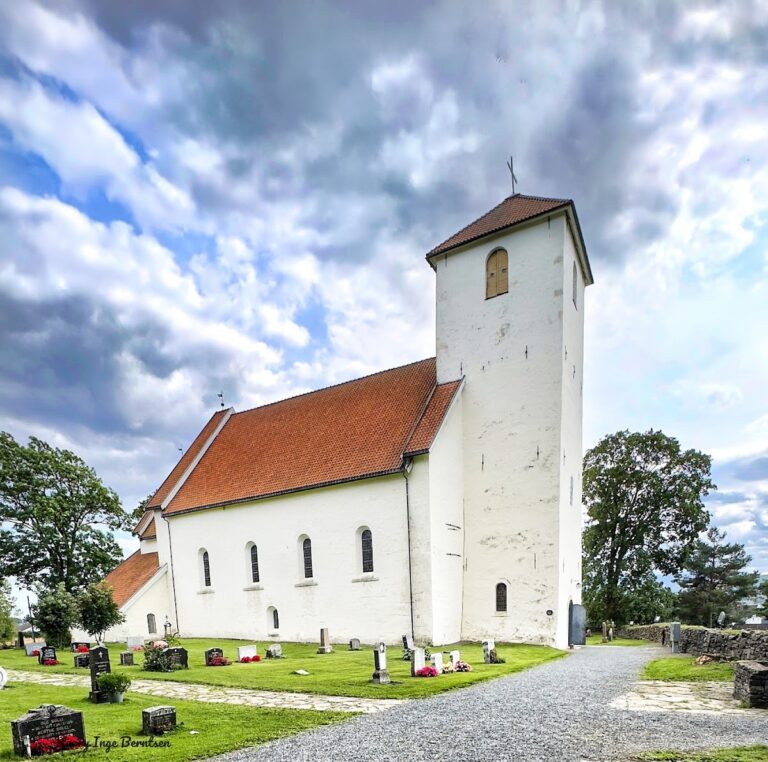
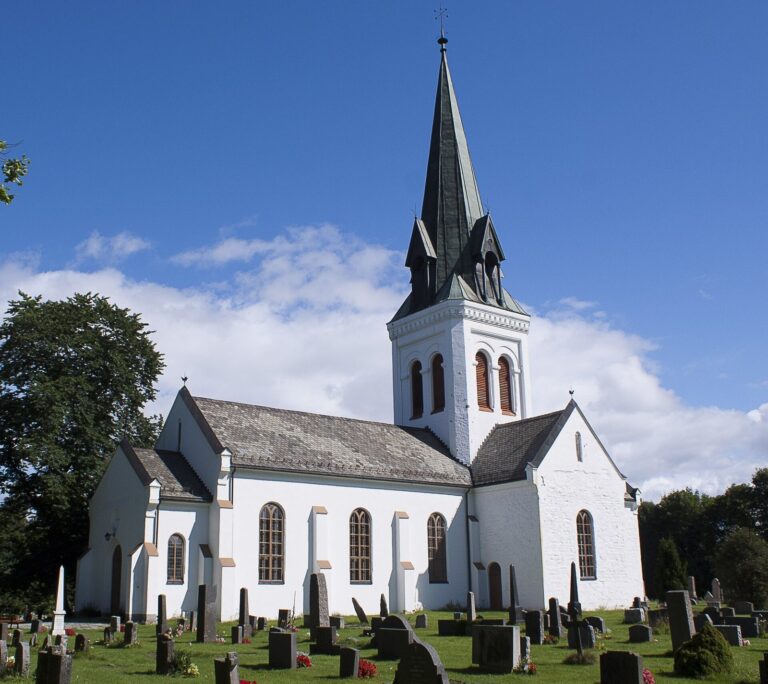
The two gray-stone churches stand side by side in the churchyard, Nikolaikirken to the north and Mariakirken to the south. Both have long-church plans, meaning elongated layouts, but differ in size and architectural form.
Church buildings
Nikolaikirken
Nikolaikirken is the larger building. Its basilica plan has a central nave flanked by aisles. Inside, massive Roman-style columns and plastered walls define the church’s appearance, and it can seat about 250 people. Its choir was altered and its tower built during the 13th century. The towers of the two churches also provide the basis for Gran Municipality’s coat of arms.
Mariakirken
Mariakirken is a smaller, single-nave church that can seat about 150 people. It combines Romanesque and Gothic styles, medieval traditions commonly associated with rounded and pointed arches. Repairs in 1859 gave it a new roof, windows, and tower.
Churchyard features
Medieval stone tower
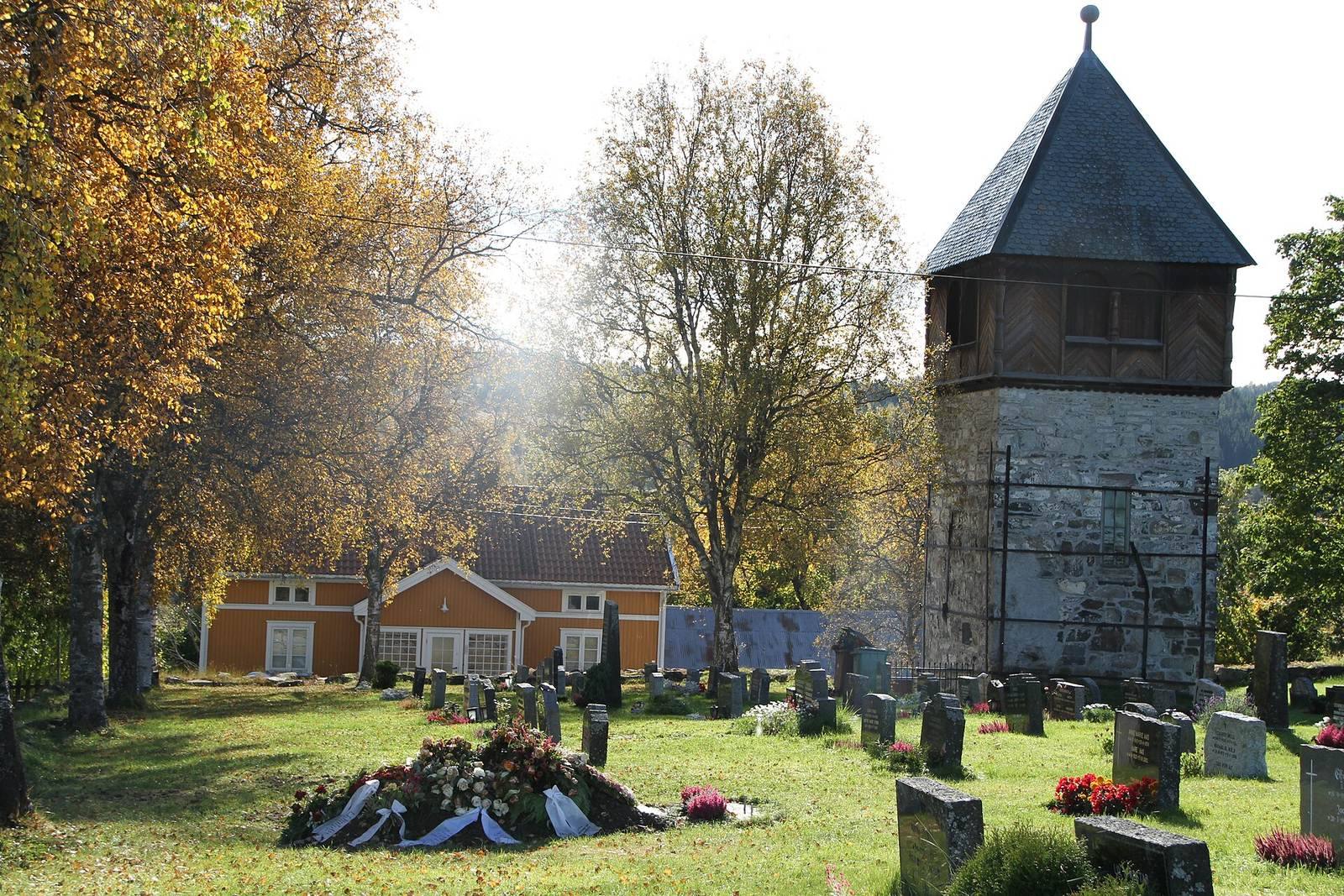
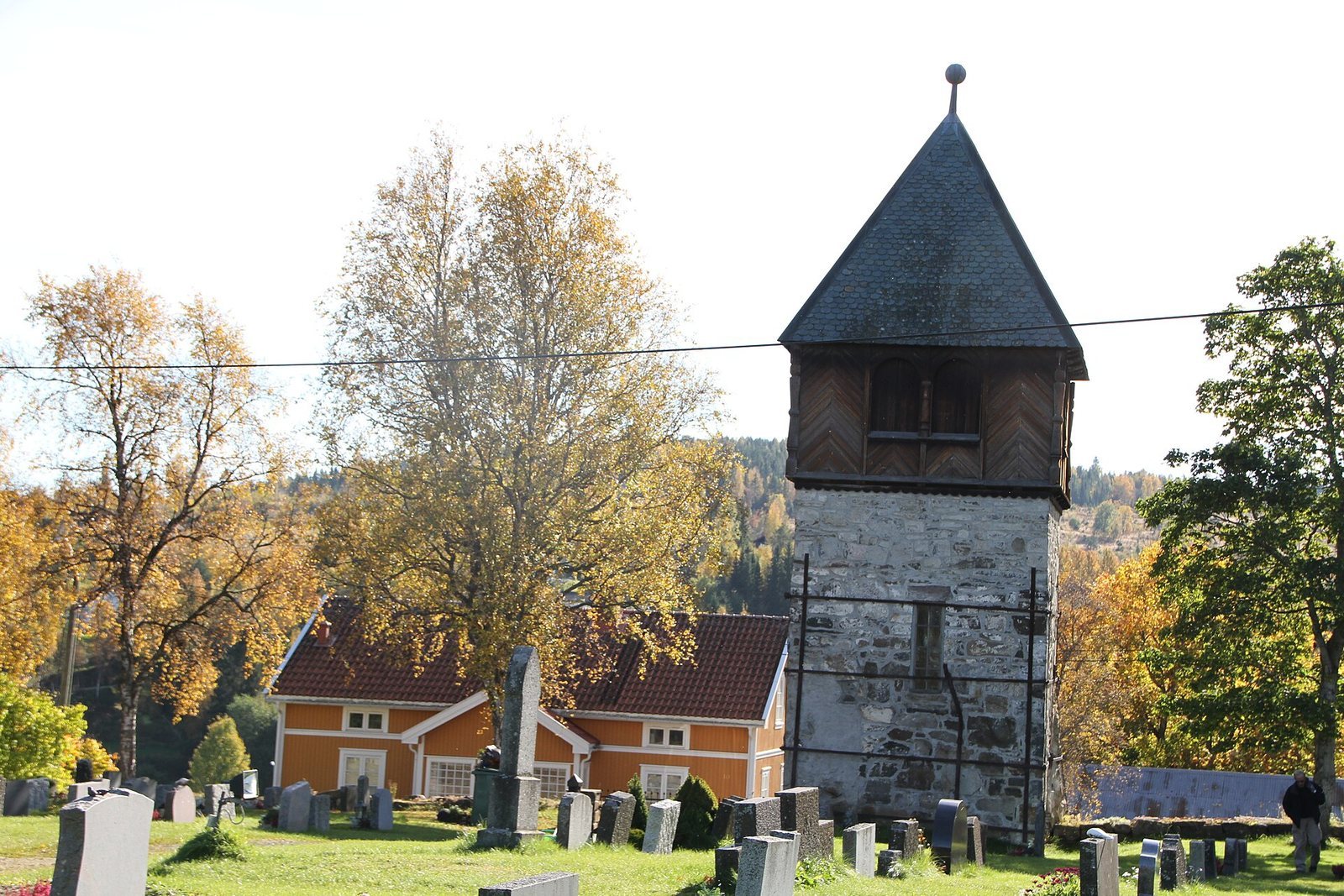
Klokketårnet, whose name means “the bell tower,” stands in the southeastern part of the churchyard. This medieval stone structure served as a bell tower from the mid-19th century. Its original purpose is uncertain, though it may earlier have functioned as a defensive tower or refuge.
Runestone
An 11th-century runestone, a stone bearing a runic inscription, stands behind Nikolaikirken.
Vinje monument
A monument in the cemetery includes a bust of Aasmund Olafsson Vinje, a Norwegian poet and journalist. Norwegian sculptor Brynjulf Bergslien made the bust; Vinje is buried in the cemetery.