Drie Tommen: Gallo-Roman Burial Mounds in Tienen, Belgium
Site at a Glance
- Popularity
- Low
- Country
- Belgium
- Primary era
- Classical
- Eras represented
- Classical, Modern
- Civilizations
- Belgian, Roman
- Site type
- Burial
- Remains
- Burial Mound
On this page11 sections
History
Roman foundation and early records
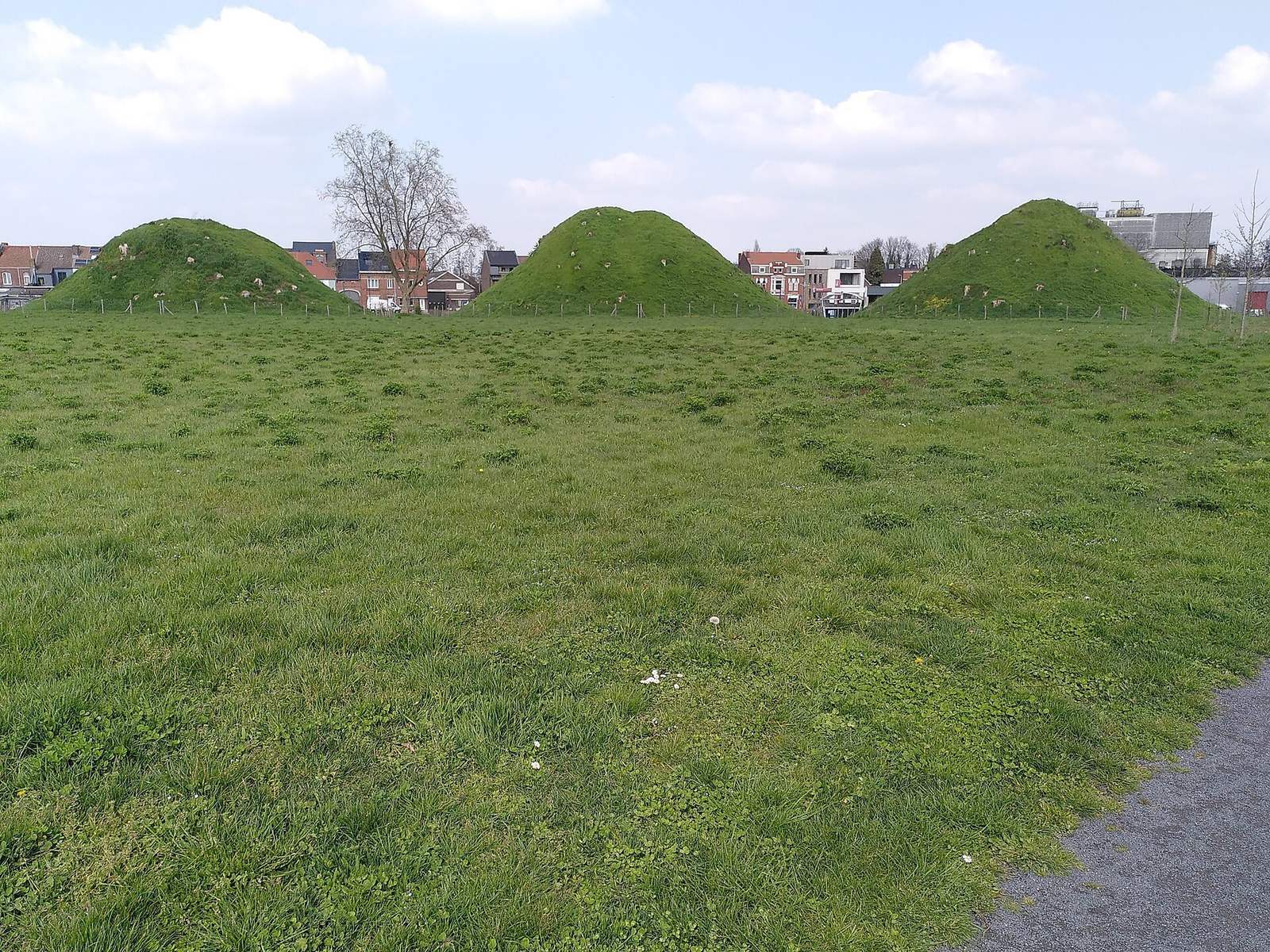
Drie Tommen is a group of three Gallo-Roman burial mounds in Tienen, Belgium, raised in the later 2nd century CE as a funerary monument for Marcus Probius Burrus, a prominent figure in the Roman administrative community of the Tungri. The term Gallo-Roman describes a culture shaped by interaction between Roman and local traditions in Gaul.
The mounds stand beside an old Roman road that linked Boulogne, Cassel, and Cologne. A record from 1340 refers to them as being behind the tombs of Tienen. A rent register from around 1700 mentions two nearby plots opposite the common road from Tienen to Goetsenhoven. Maps made between about 1771 and 1778 label the mounds the Tombs of Grunde, using an older name for Grimde.
Excavations and later transformations
In 1748, during the War of the Austrian Succession, a European conflict fought from 1740 to 1748, the French engineer Franquet had horizontal and vertical passages cut into one mound. The work uncovered an urn containing chicken bones, which may instead have held human cremation remains. In June 1813, city architect Philippe Robbiet excavated at the request of Count François de Neufchâteau. The work produced no finds and partly collapsed the central mound.
Baron Alfred de Loë excavated the site on 10 October 1892. Tienen’s poor-relief office put the recovered objects up for public sale on 27 September 1897. The Jubelpark Museum in Brussels acquired most of them, while Baron Edmond de Rothschild bought a cameo and a ring for 30,000 and 1,500 Belgian francs respectively. Replicas were made for the Brussels museum.
During the Second World War, Hermann Göring, a leading Nazi official and German military commander, claimed objects confiscated from the French Rothschild family for his private collection. After the war, many looted objects were found in Austrian salt mines. The cameo and ring were returned to their owners at Waddesdon Manor. City-archive historian Lutgart Vrancken later traced their connection to the mounds through archives, auction houses, and museums. Still in their original box and marked with Nazi inventory numbers beginning with “R,” the jewels were examined by British Museum experts at the National Trust’s request and dated to the 1st or 2nd century CE. Dorothy, James de Rothschild’s widow, kept them in private possession until transferring them to the National Trust in 1971. Waddesdon Manor had been part of the Trust, a British organization that manages historic properties, since 1957.
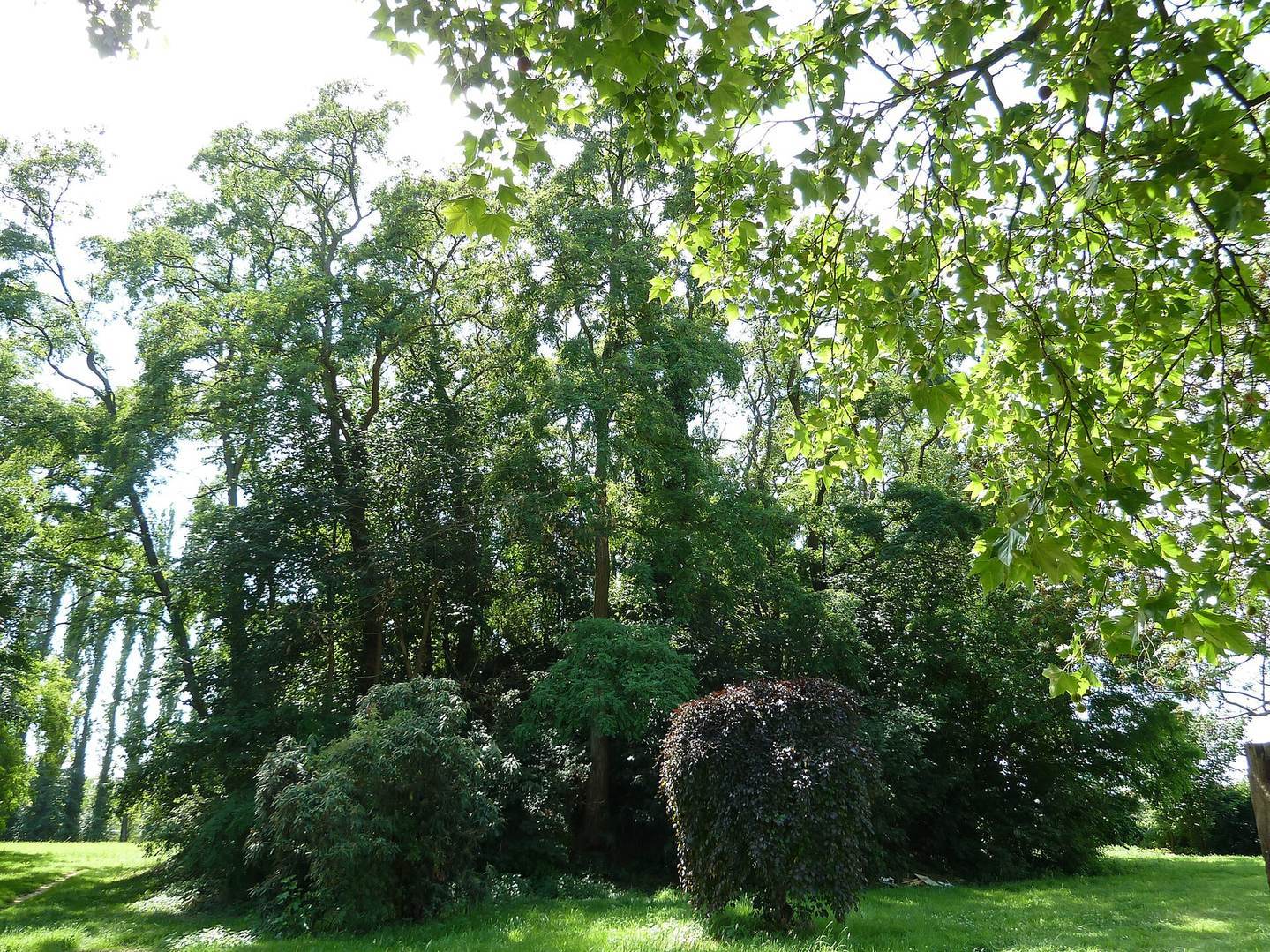
Tienen’s municipality removed trees and shrubs from the site in 2012–2013. After 2016, it reshaped the mounds and surrounding land as an open park, adding paths and a native wildflower meadow to improve views of the ancient burial mounds.
Remains
The site consists of three large earth mounds, each about 30 metres across and between 8 and 12.5 metres high. Each covers 7 ares and 20 centiares, or about 720 square metres. They are among the larger burial mounds in the region.
The burial mounds
Each of the two outer mounds held a wooden burial chamber. A wooden post stood in the central mound and may have supported a statue of Burrus. The western mound is believed to have contained the burial of his wife.
The burial garden
A low wall of Gobertange stone, a local Belgian building stone, enclosed the mounds within a burial garden. The garden included flower beds and trees and provided a place for relatives to gather for memorial observances.
Objects from the mounds
The inscribed gold bar
A small gold bar from the eastern mound bears the engraved name “MPRO BIVS BVR RVS,” identifying Marcus Probius Burrus, also known as Marcus Probius the Red-haired.
The cameo
A cameo, or carved gem, from the western mound is cut from oval, three-layer sardonyx, a layered form of onyx used for carved gems. Its worked gold frame has a bronze pin on the reverse. The carving shows a young man in pale raised relief against a dark red background. Once thought to portray Augustus, Rome’s first emperor, it is now considered more likely to depict his grandson Gaius Vipsanius Agrippa. The gem may have been made by Dioscorides, an ancient Greek gem engraver associated with Roman-era carvings.
The gold ring
The gold ring from the western mound has openwork, a pierced decorative design, arranged as two rows of Amazon shields. In Greek mythology, the Amazons were a people of female warriors. The inscription “CONCORDI COMMVN” may abbreviate Concordiae communi, meaning “in harmonious community,” and apparently refers to a happy marriage. The ring may have been intended as an engagement ring or used much like a wedding ring.
Other finds
Other objects from the mounds include fragments of bronze, iron, ivory, glass, and ceramics, as well as a silver vase and a circular bronze brooch.