Rižinice: A Roman Estate and Early Christian Church Site in Croatia
Site at a Glance
- Popularity
- Medium
- Country
- Croatia
- Primary era
- Medieval
- Eras represented
- Classical, Medieval
- Civilizations
- Roman
- Site type
- Religious
- Remains
- Monastery
On this page13 sections
History
Roman estate and early medieval church
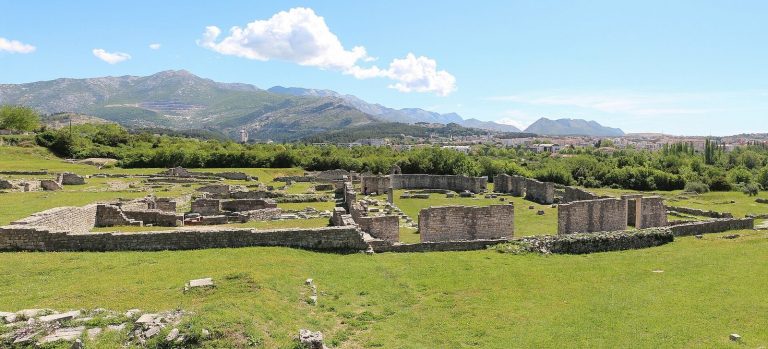
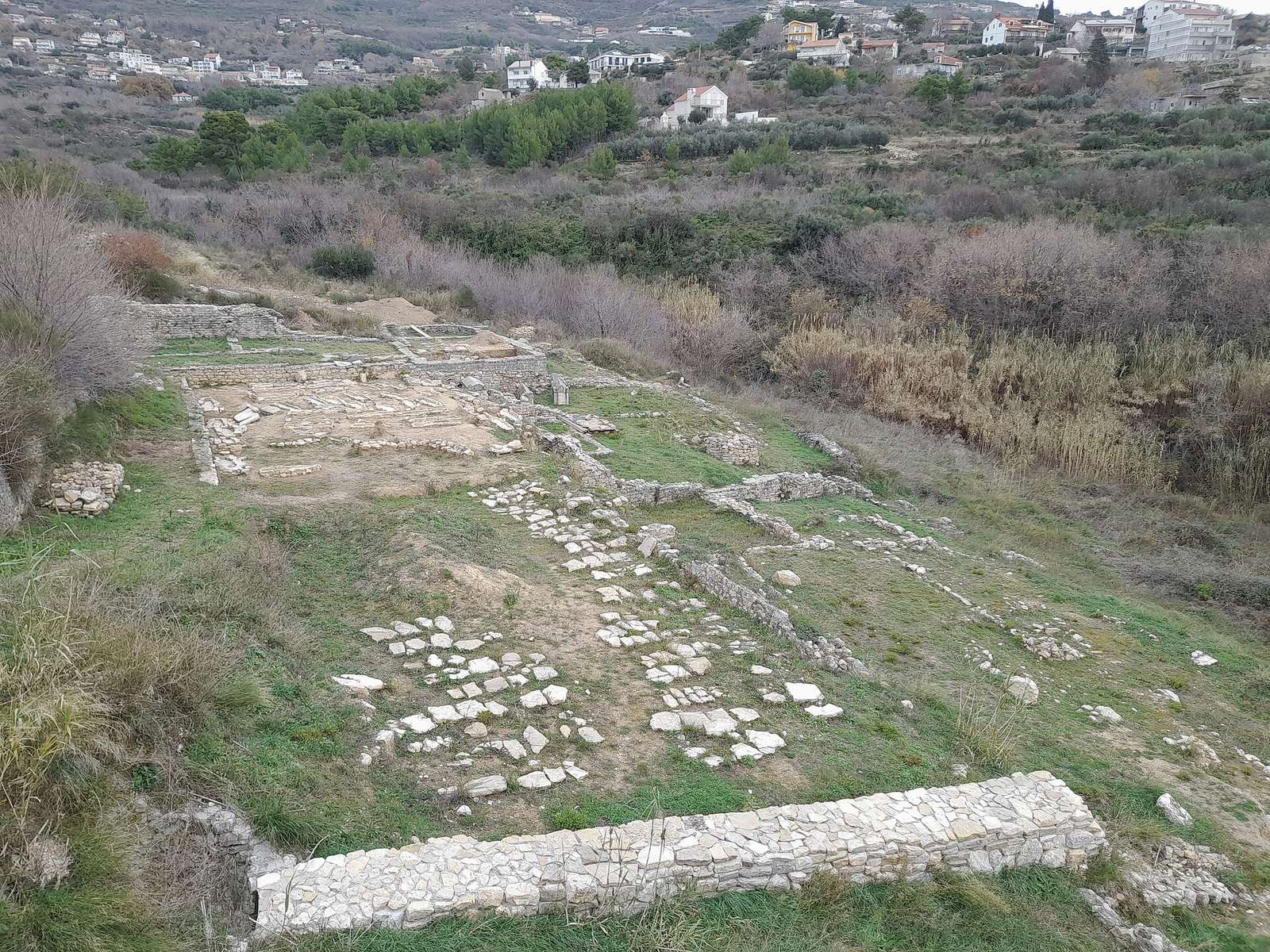
Rižinice is an archaeological complex northeast of Solin in Croatia, on the east-facing slope of Mount Mali Kozjak. It developed from a Roman villa rustica, a rural estate commonly connected with agriculture, into an early Christian church during Late Antiquity, the transition from the classical Roman world to the medieval period.
The site is thought to have remained in relatively good condition until the ninth century. Tradition says that Duke Trpimir of Croatia restored it and adapted it for worship, brought Benedictine monks, members of a Christian monastic order whose communities follow the Rule of Saint Benedict, and gave the monastery to them. Whether Rižinice was the monastery named in the Grant of Trpimir, the document associated with the duke’s donation, remains uncertain.
Archaeologist Frane Bulić connected the site with that monastery, drawing on an inscribed fragment found there and information preserved by ecclesiastical historian Daniele Farlati. Archaeologist Ljubo Gudelj Velaga said the identification could neither be confirmed nor ruled out. The inscription’s association with Trpimir has made Rižinice important to the study of early medieval Croatia, while later discoveries have also revealed its value for understanding antiquity.
Discovery and archaeological work
Rižinice came to attention in 1891, when local people removing masonry during a property-boundary survey found part of an inscribed arch from an altar screen. Bulić obtained the fragment for the Archaeological Museum and investigated the site in 1895, 1896 and 1908. The Bihać Society, a Croatian historical and archaeological association, also began work there in 1895. In the 1930s, art historian Ljubo Karaman and architect and archaeologist Ejnar Dyggve undertook further investigations. Dyggve concluded that the complex extended beyond the area previously understood and proposed that an early Christian church had later become part of a medieval monastery.
Construction of the Solin–Klis road in 1952 damaged the western part of the complex and destroyed graves. The Museum of Croatian Archaeological Monuments acquired the site in 1989 and continued its investigation. A collapse of the road above the ruins in 2006 exposed another section of the building. Gudelj Velaga suggested that it might have been a temple. Although conservators proposed a bridge to permit investigation, local authorities ordered the exposed area reburied. Further archaeological work took place in 2011.
Remains
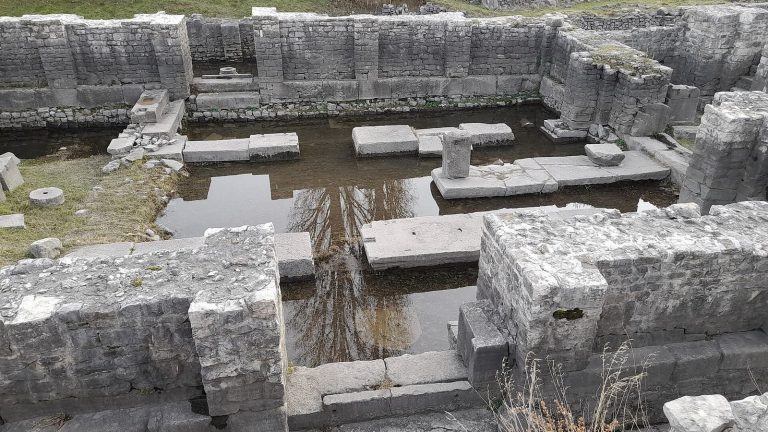
The ruined complex brings together ancient and medieval remains. Its documented layout includes a north–south church, rooms immediately to its west, other surrounding buildings, and several burial areas. Monumental ancient architecture also survives at the site.
Church and surrounding buildings
Church
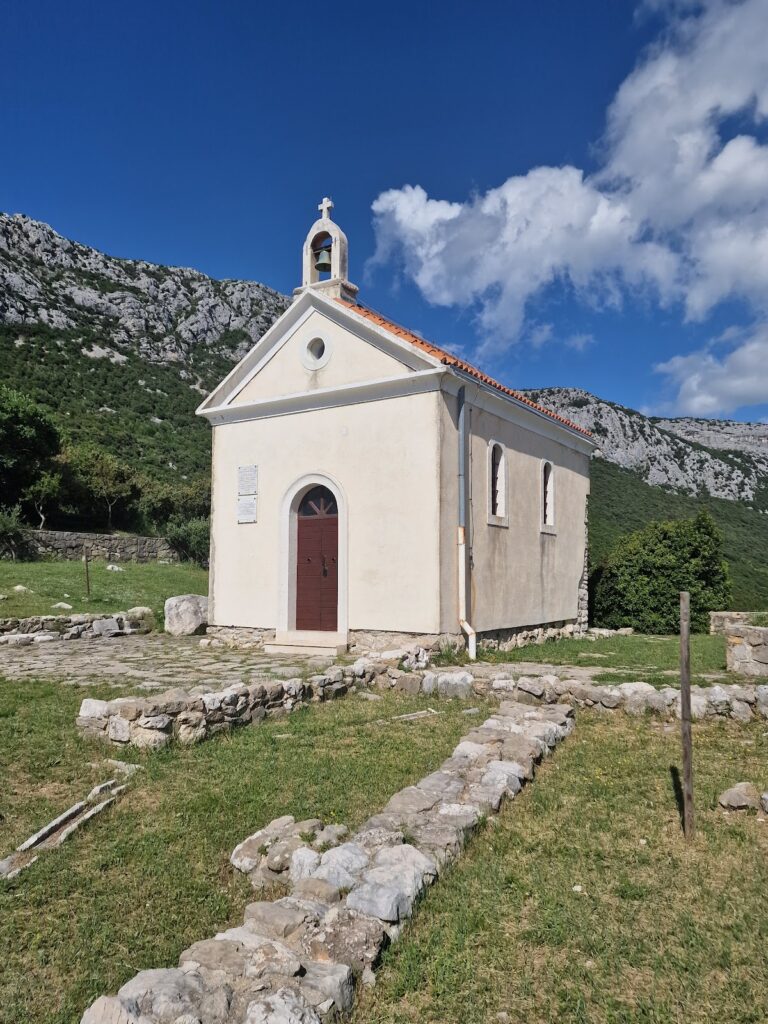
The church was a single-hall building measuring 16 m long and 7.4 m wide. Its broad semicircular apse, a recess at the end of the building, was separated by a partition from the area around the altar. The church’s comparatively modest dimensions have been interpreted as suiting a monastery’s religious services.
Western rooms
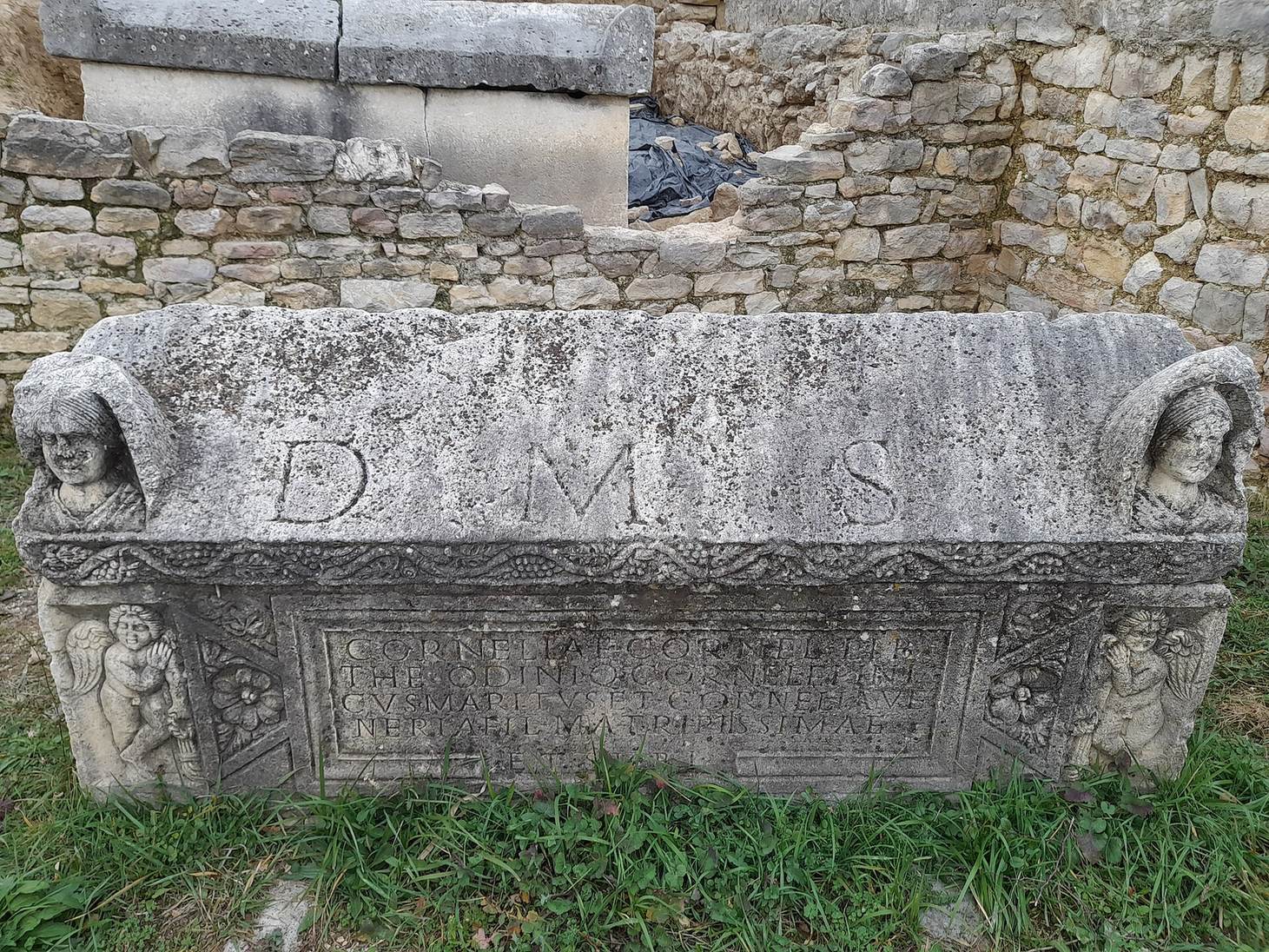
Two rooms stood directly west of the church. Medieval pottery, charcoal and broken dishes containing salted olives suggest that one may have served as a kitchen. The other may have been a funerary chapel. It held two built tombs covered with slabs fashioned from broken Roman sarcophagi.
Possible enclosure and tower
One interpretation of the complex proposes a walled medieval monastery and a defensive tower facing a nearby creek. These features belong to a reconstruction of the site’s arrangement rather than a settled identification.
Burial grounds
Roman-period burials
A pagan burial area dates from the first to third centuries AD. Its finds include glass, stone and clay urns, small perfume vessels and a cosmetics plate. One child had been buried in a partly preserved amphora.
Early medieval graves
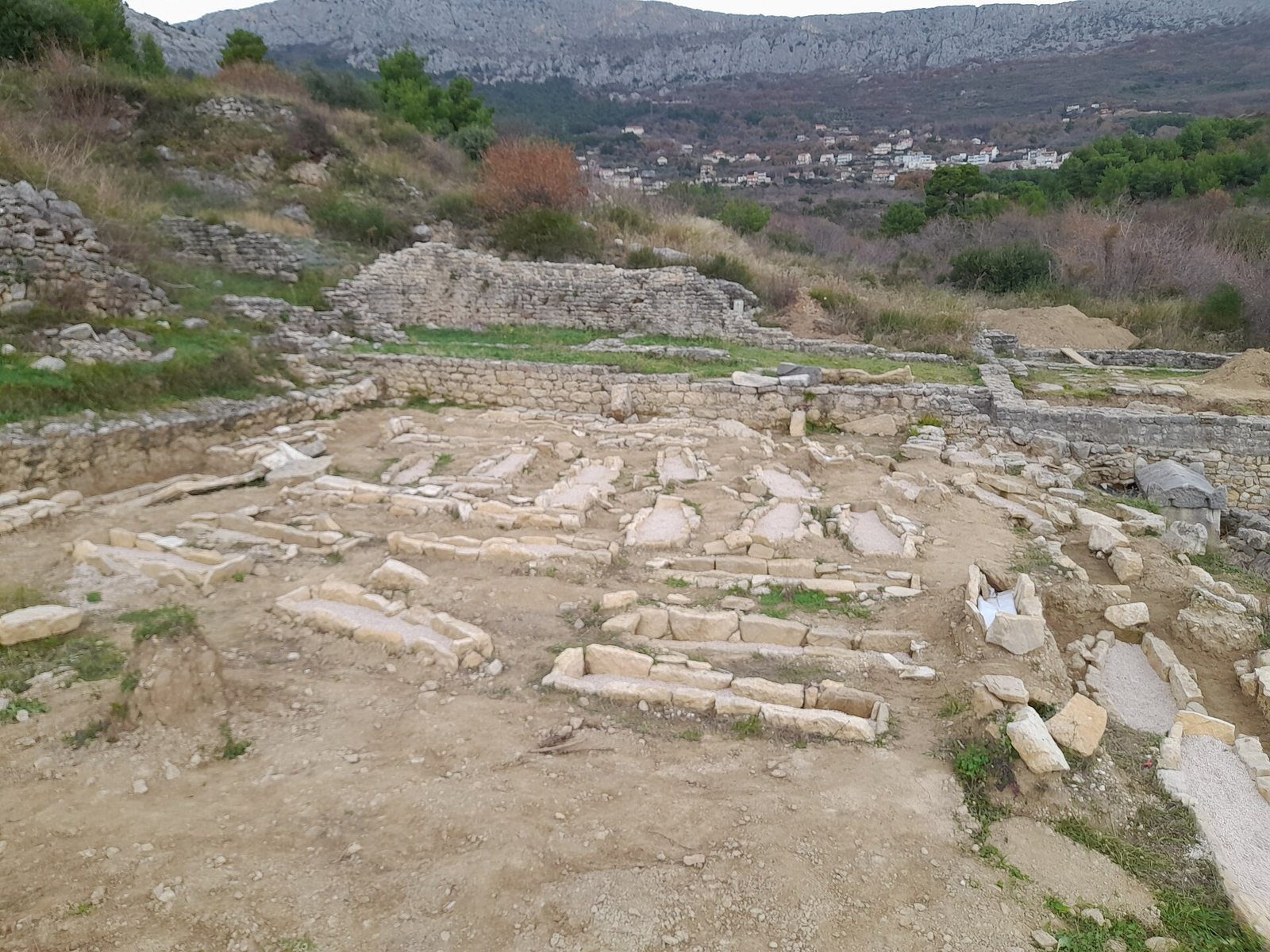
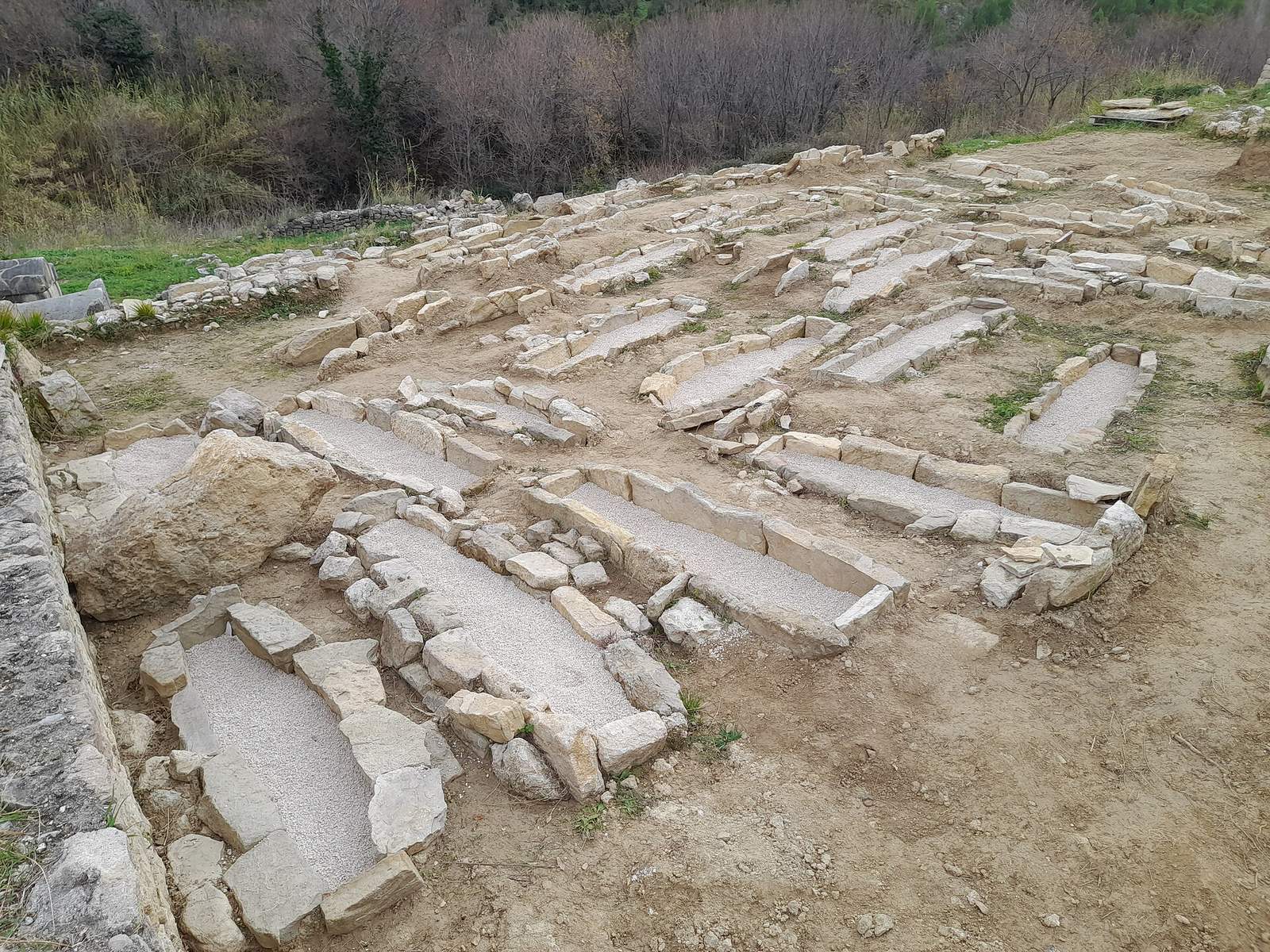
An early group of graves contained human bones and jewelry, including rings and earrings. Ten oval graves from the early medieval period were covered with stone slabs.
Tenth-century burial
A grave associated with a woman known by the nickname Joza also held the remains of a man thought to have been about 50 years old, buried roughly a century earlier. Joza was estimated to have been 23–30, well nourished, and to have given birth at least once. Her teeth were well preserved, and examination found no signs of physical injury. Earrings and rings helped date her burial to the tenth century. Her skeleton was sent to Penn State University for CT scanning.
Burials at Rižinice indicate that the area continued to be used for burial from antiquity through the early medieval period and into the era when Venice governed the region.
Inscribed fragment and other excavated features
The inscribed find is a fragment of a gable-shaped arch from an altar screen, the barrier separating the altar area from the rest of a church. Dated to the ninth century, it bears the words PRO DUCE TREPIME(ro). Investigations in 2011 also revealed a swimming pool, altar canopies and early medieval finds associated with Trpimir’s period. They uncovered numerous ancient sarcophagi that had later received medieval burials.