Government Palace: Seat of the Finnish Government in Helsinki
Site at a Glance
- Rating
- 4.4
- Popularity
- Low
- Country
- Finland
- Primary era
- Modern
- External website
- Open
- Eras represented
- Modern
- Civilizations
- Grand Duchy of Finland, Russian
- Site type
- Civic
- Remains
- Palace
On this page7 sections
History
Construction and public offices
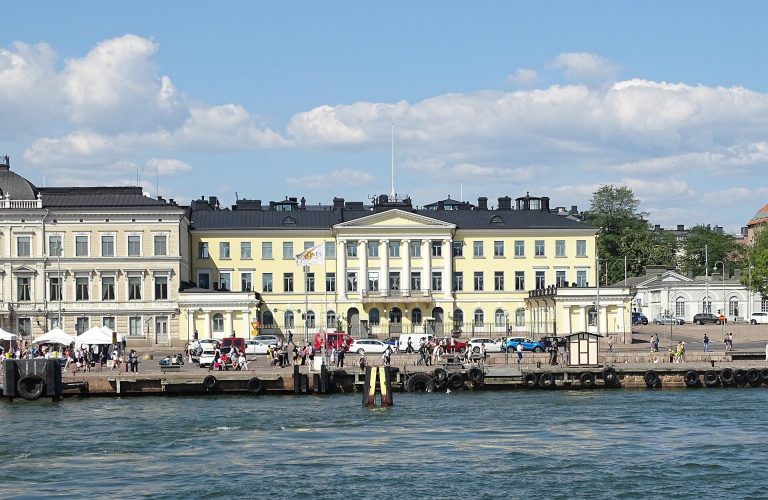
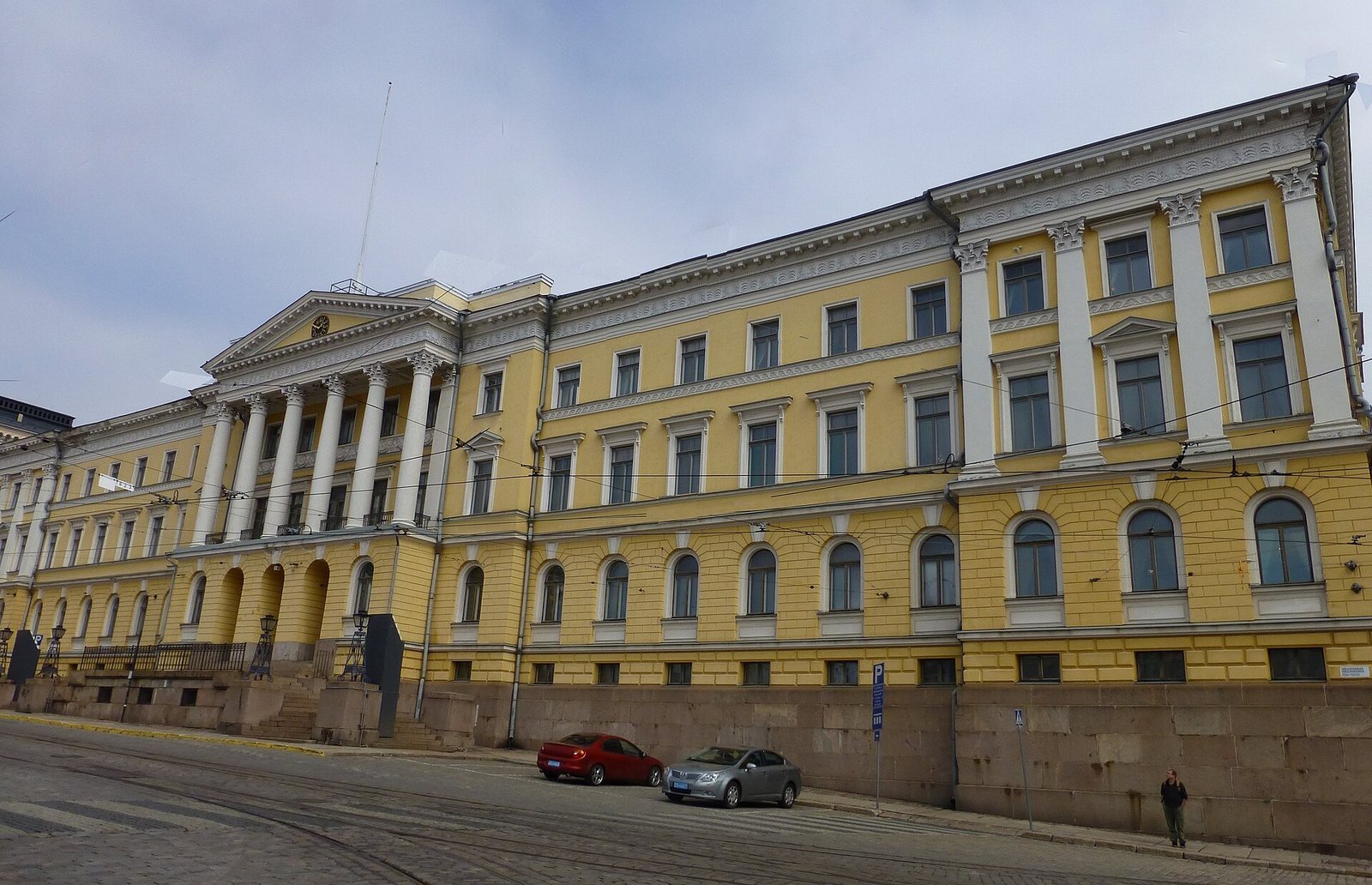
The Government Palace is a Neoclassical government building overlooking Senate Square in Helsinki, Finland. Designed by Carl Ludvig Engel, a German-born architect who worked in Finland, it was begun in 1818 for the Finnish Senate, the governing and administrative body of Finland when it was an autonomous grand duchy under Russian rule. The main wing was finished in 1821, and the Senate moved in the following year.
As the building grew, it accommodated public institutions alongside the Senate. The Office of Exchange, Lending and Deposits became the Bank of Finland in 1840 and remained there until moving to a nearby purpose-built facility in 1883. The Imperial Alexander Pharmacy also operated in the building before relocating in 1832 to a newly completed building across Senate Square. Further wings and additions were made over the following decades.
Political change
In 1904, Finnish activist Eugen Schauman shot Nikolai Bobrikov, the Russian general serving as Governor-General of Finland, on a second-floor staircase landing. The assassination was a protest against the Russian Empire’s policy of Russification in Finland. After Finland declared independence on 6 December 1917, the Senate became the government, and the palace served as the seat of the Council of Ministers.
Government offices
Alterations in 1916–17 gave the palace its present appearance, and a major renovation followed between 1974 and 1996. Today, it is an executive office building for the Finnish Government, housing the Prime Minister’s Office, the Office of the Chancellor of Justice and most departments of the Ministry of Finance.
Remains
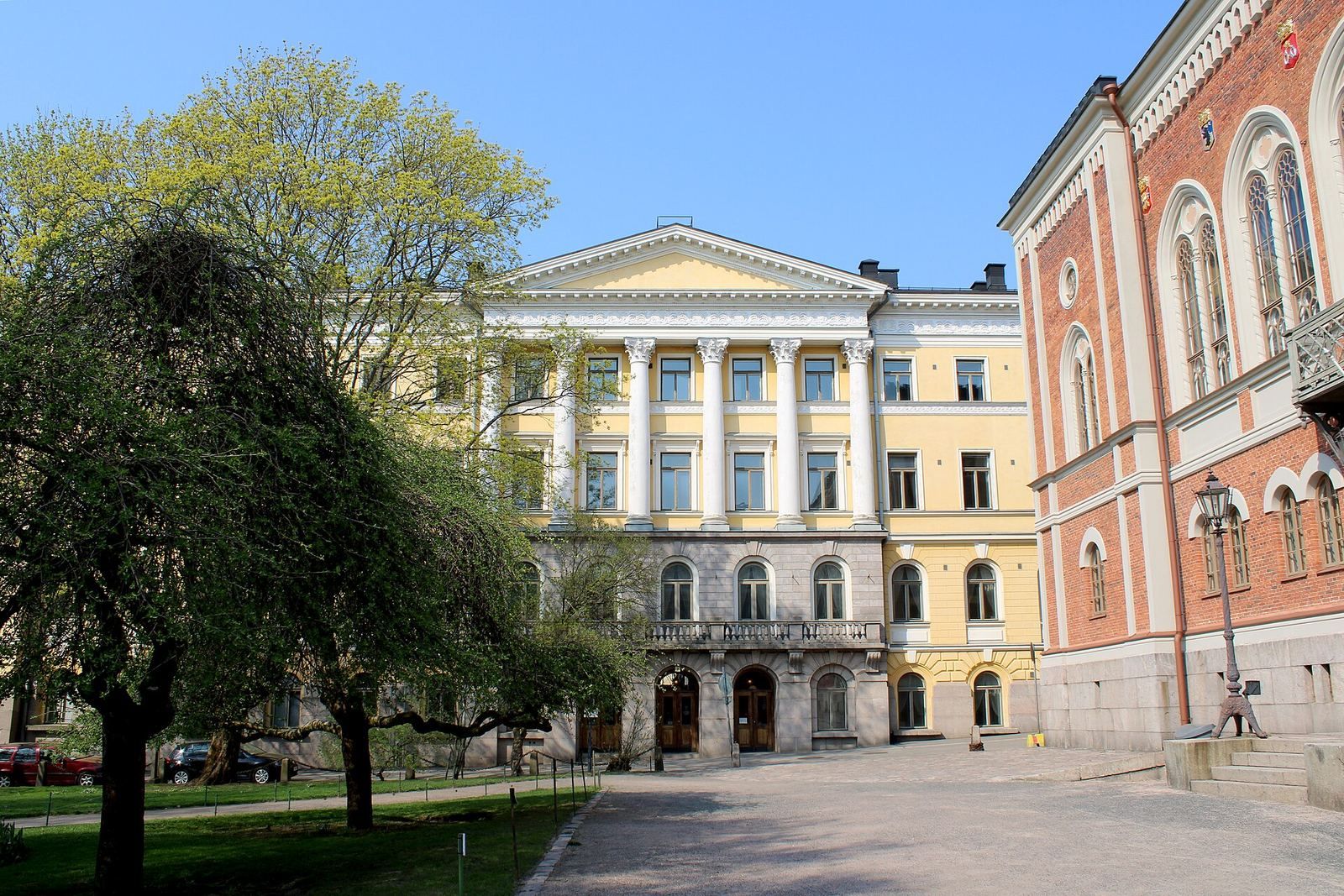
The palace is a Neoclassical complex whose wings developed around Senate Square and the surrounding streets. Its south wing runs along Aleksanterinkatu, the east wing along Ritarikatu, and the north side along Hallituskatu. A courtyard annex forms part of the north-side complex.
Wings and courtyard annex
The south wing was completed in 1824, followed by the east wing in 1828. The north side was completed in 1860, with a courtyard annex built for the Senate printing press. The Ritarikatu and Hallituskatu wings were later altered and renovated; the Ritarikatu wing was heightened in 1916–17.
Interior features
A plaque installed in 1933 on the second-floor staircase wall bears an inscription meaning “He gave himself for his country.” Portraits of former Finnish presidents are displayed in the palace’s representative hall.