Monsummano Castle: A Medieval Hilltop Fortification in Tuscany
Site at a Glance
- Popularity
- Medium
- Country
- Italy
- Primary era
- Medieval
- Eras represented
- Medieval
- Civilizations
- Unclassified
- Site type
- Military
- Remains
- Fortified Town
On this page11 sections
History
Origins and early ownership
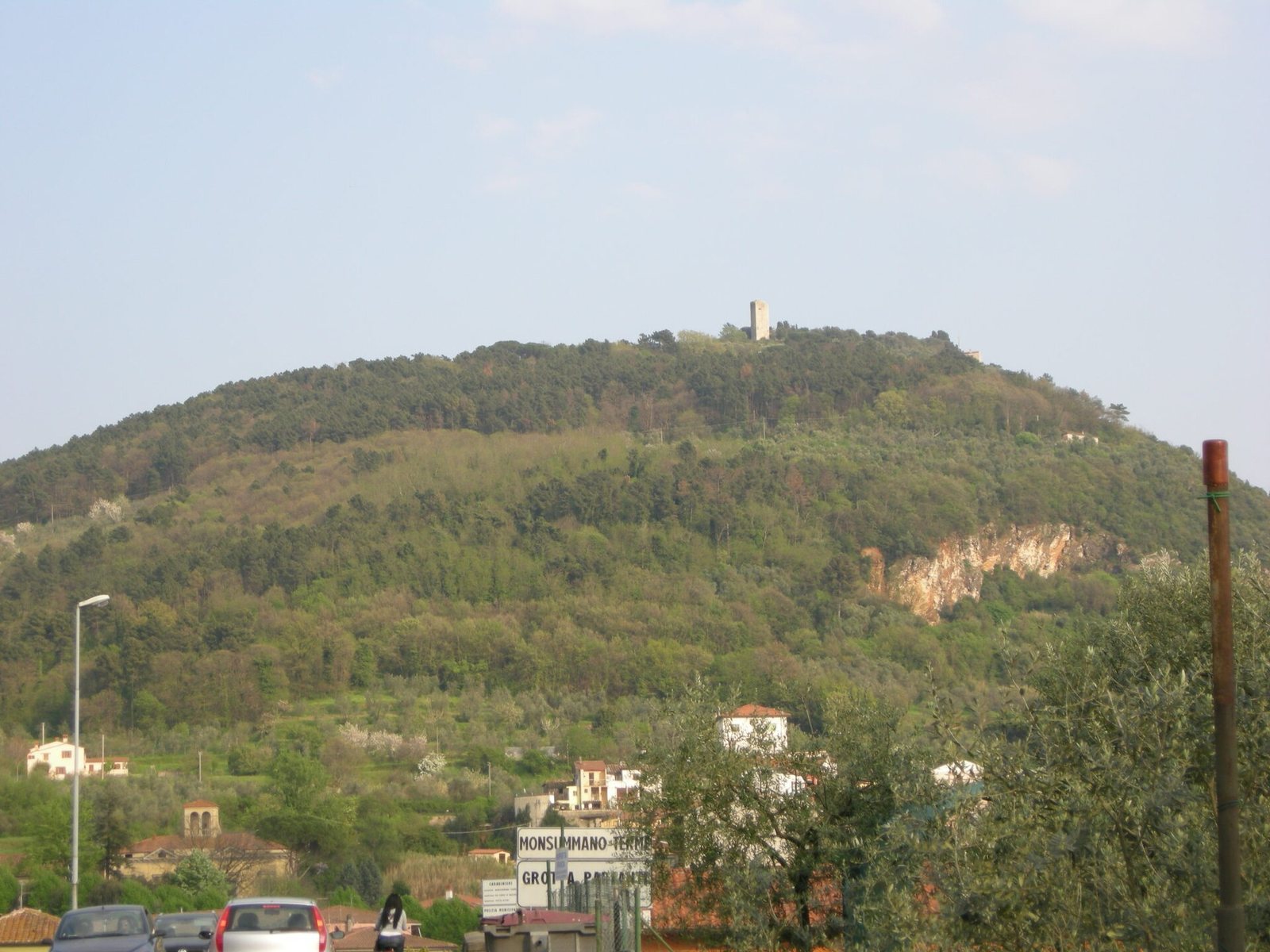
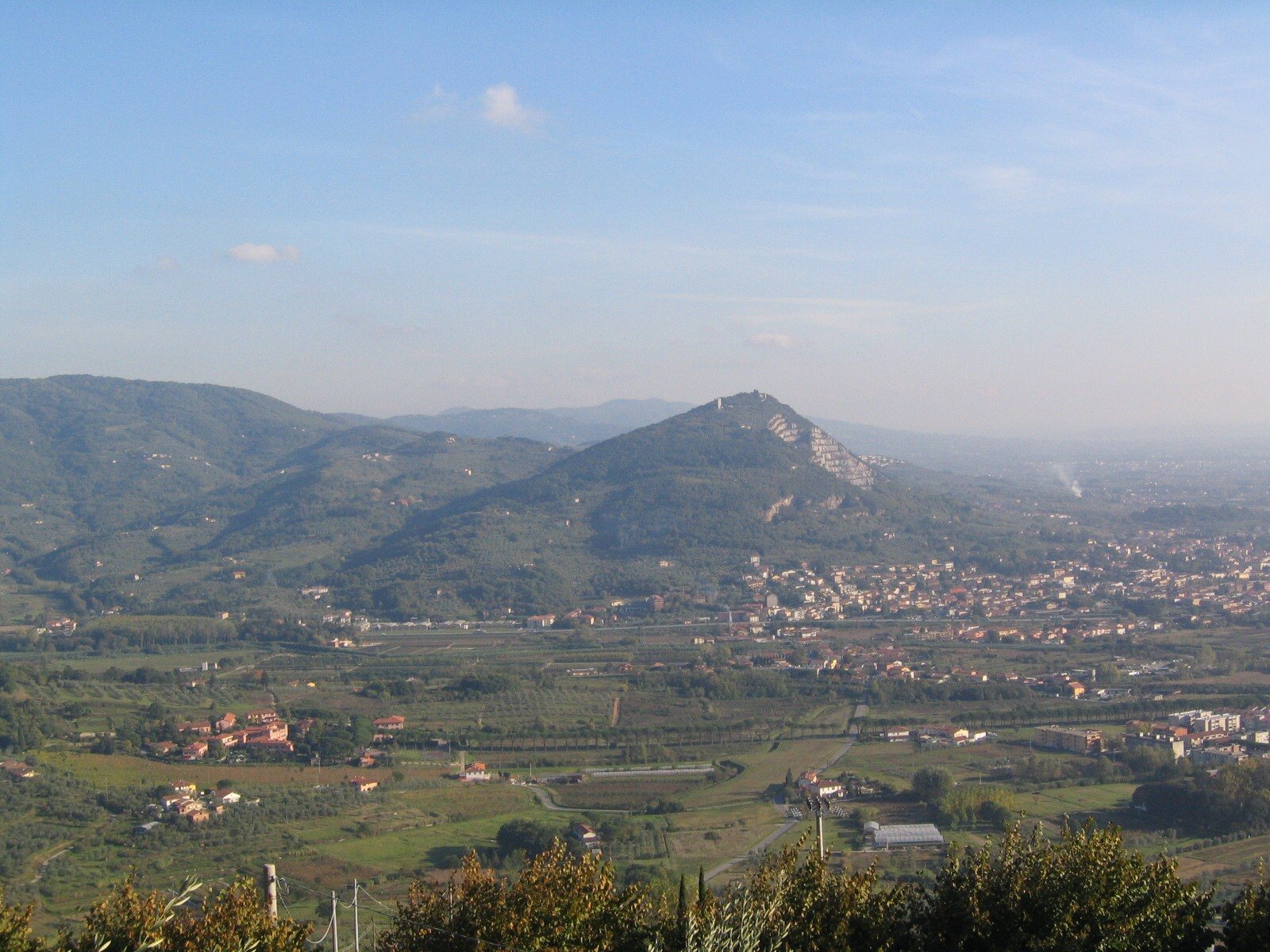
Monsummano Castle is a hilltop fortification at Monsummano Alto, in Monsummano Terme, Tuscany, Italy. It formed the oldest nucleus of Monsummano and corresponds to the settlement of Monsummano Alto. Construction is placed in the twelfth century, although the castle’s form and hilltop position have also prompted a proposed Lombard origin, referring to the early medieval kingdom of the Germanic Lombards in much of Italy.
A small settlement may have existed here in antiquity or the early Middle Ages, upstream of the road between Fucecchio and the bridge over the Nievole. The valley floor, where most housing is now concentrated, remained nearly uninhabited through the Middle Ages because of flooding and marsh formation. The earliest possible written reference to a castle dates to 1005, when Abbot Boso of Sant’Antimo sold half of a castle in the district of the former Church of San Vito on the Nievole to Count Ildebrando di Rodolfo degli Aldobrandeschi. The castle may later have passed among local noble families, including those of Maona, Montecatini, and Capraia. By 1128, land in the area belonged to the Bishop of Lucca.
In the early thirteenth century, as the Alberti family weakened, Abbot Ugone of Sant’Antimo regained control of the castle. In 1218, he sold it and its dependencies to the Commune of Lucca, a self-governing political community. Monsummano had already formed a free rural commune; following the sale, it came under the authority of Lucca’s magistrates.
Wars and Florentine rule
Florentine forces occupied the castle in 1314 during the war against Florence. On 29 August 1315, Castruccio Castracani, a Lucchese military commander and ruler, recaptured it after defeating the Florentines at the Battle of Montecatini.
After Castruccio’s death, Monsummano joined the League of Valdinievole, a local political alliance formed against Florence. The Florentine Republic retook the fortification in 1331. An attempted rebellion in 1368 did not end Florentine rule, which continued until Italian unification.
Remains
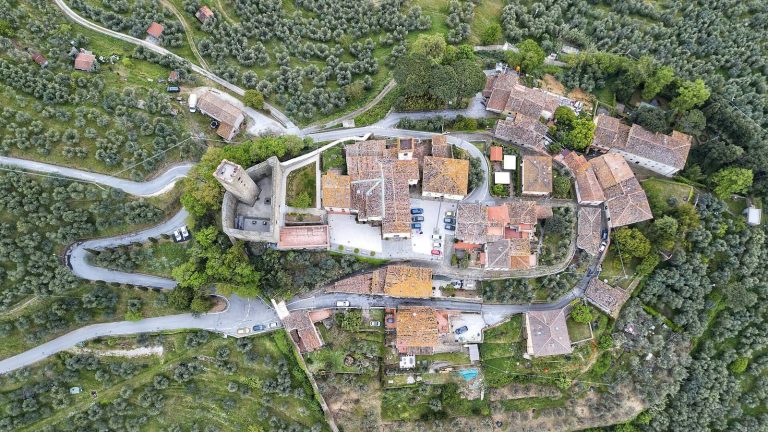
The castle occupies a hilltop about 340 metres above sea level and has an elliptical layout. Its fortifications can be seen across the Valdinievole, with views extending to the Fucecchio marshes.
Enclosing fortifications
Circuit wall
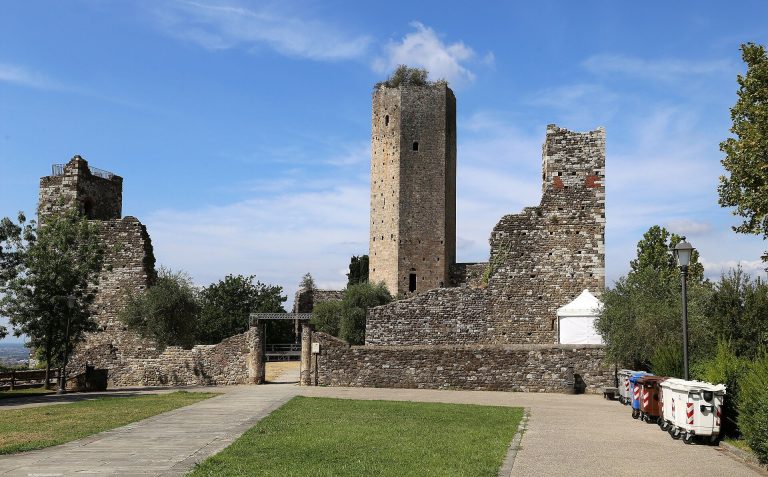
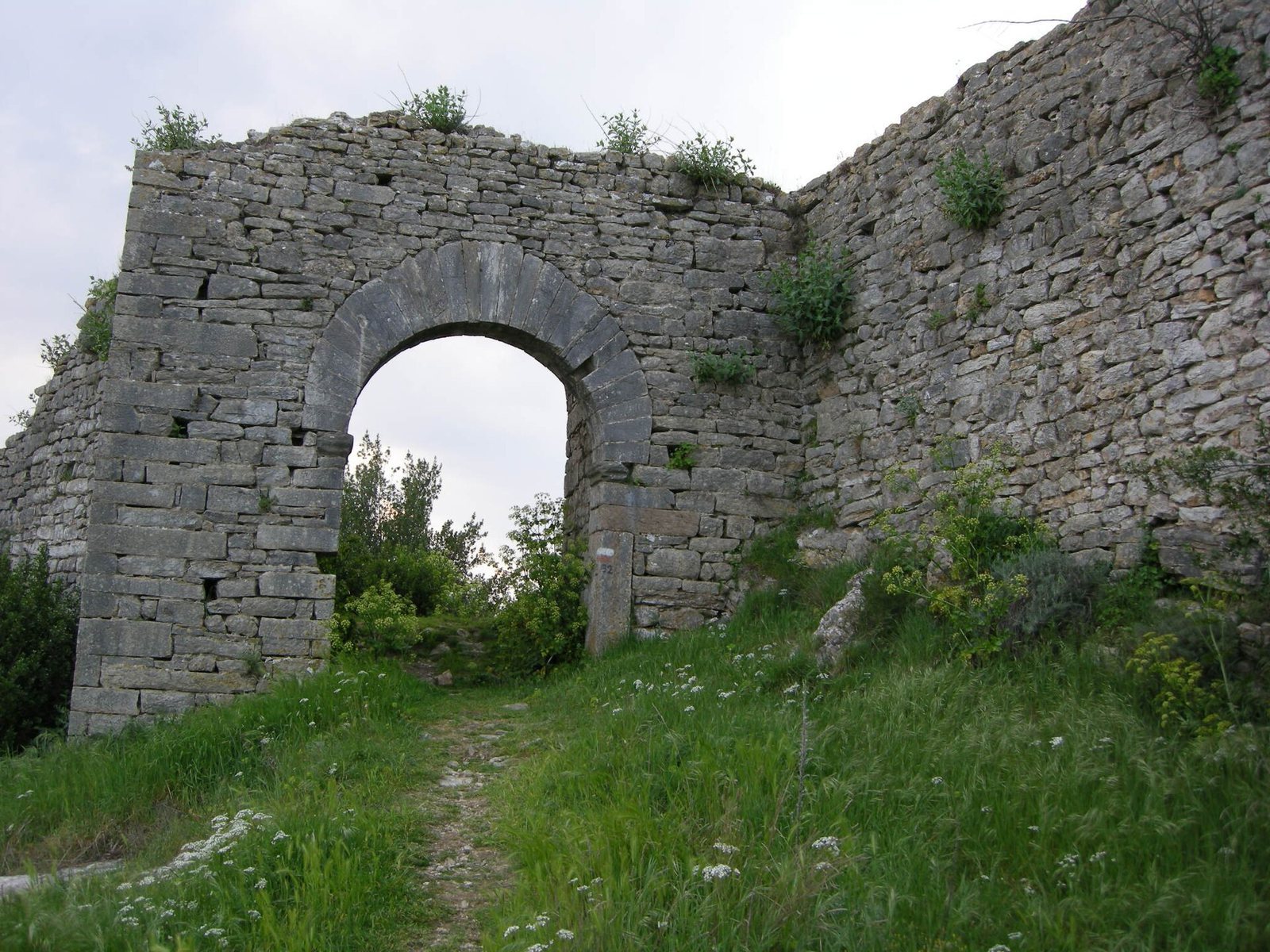
Substantial stretches of the circuit wall survive. The wall originally extended for about two kilometres, and vegetation now conceals parts of it.
Original gates
Two original gates are identified in the enclosure: Porta di Nostra Donna on the northwest and Porta del Mercato, or Market Gate, on the northeast.
Pentagonal tower
A surviving tower has a pentagonal plan and an entrance raised about seven metres above ground. The tower has undergone recent restoration.
Buildings within the walls
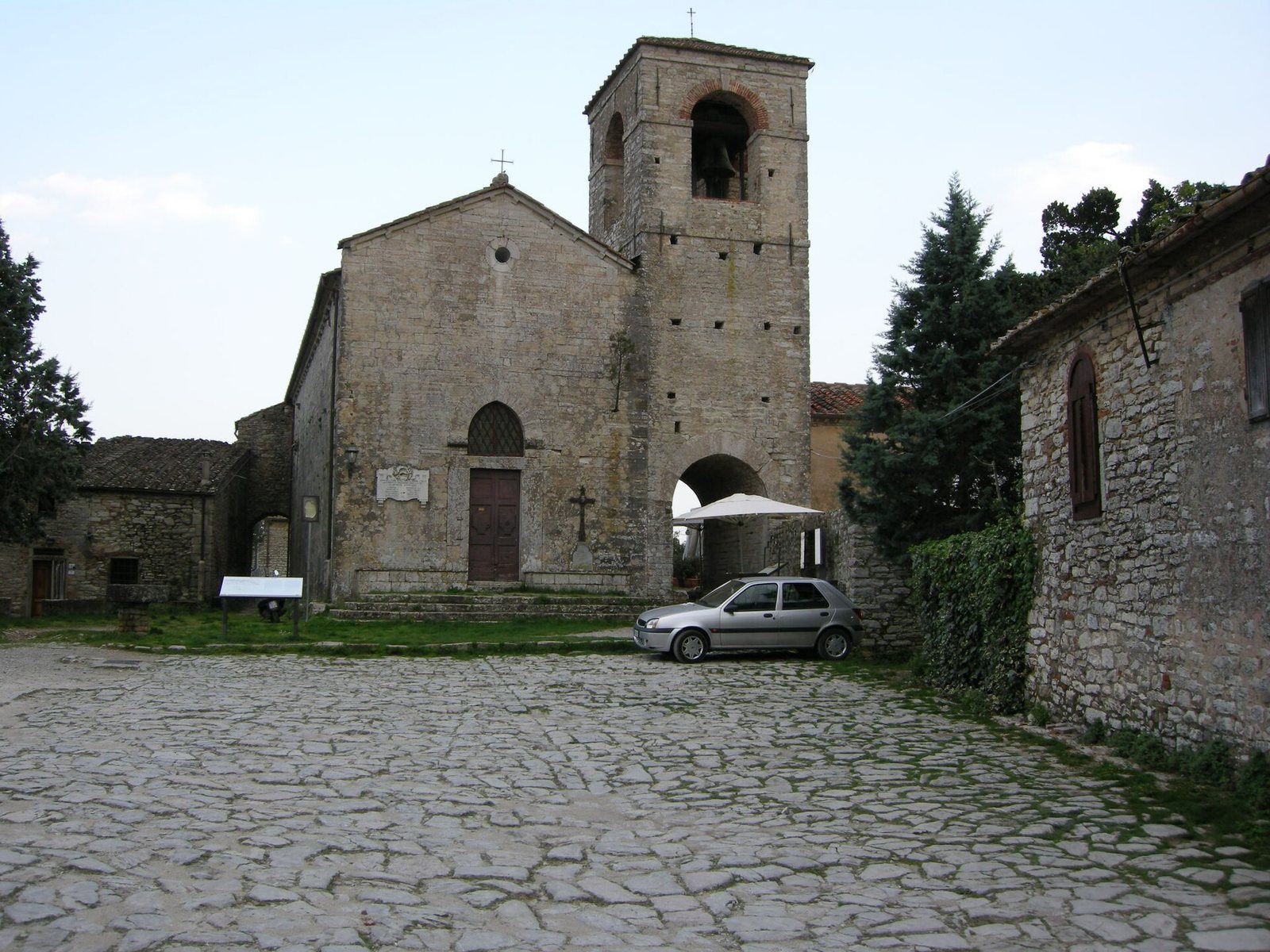
Church of San Nicolao
The Church of San Nicolao is Romanesque-Gothic, combining features associated with two successive medieval architectural styles. It has undergone later renovation.
Homes, chapels, and cemetery
The enclosed settlement also contains several houses, an attached chapel now used as a restaurant, and a small cemetery with its own chapel, alongside the ruins of several buildings. The original homes and the chief magistrate’s residence were probably concentrated in the central area now occupied by the church. The strip around the walls was probably used to grow vegetables.