Frischenberg Castle: Medieval Ruins in Switzerland
Site at a Glance
- Popularity
- Very Low
- Country
- Switzerland
- Primary era
- Medieval
- Eras represented
- Medieval
- Civilizations
- Holy Roman Empire
- Site type
- Military
- Remains
- Castle
On this page5 sections
History
Foundation and changing lordship
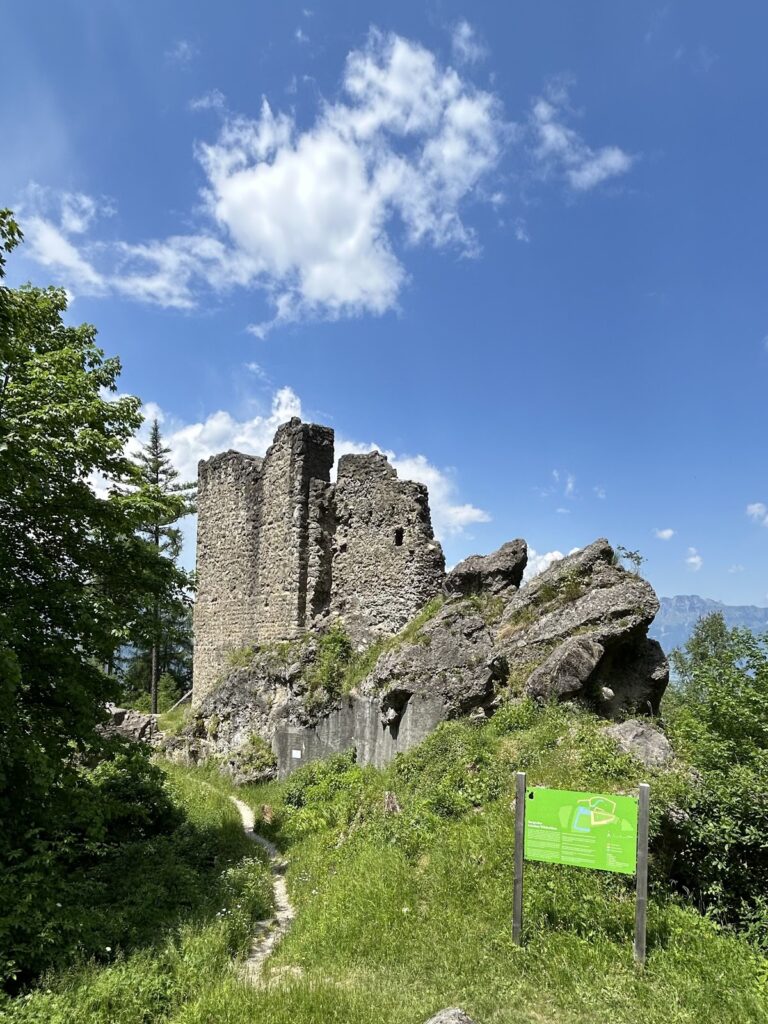
Frischenberg Castle is a medieval castle ruin on a rocky ridge above Sax in Sennwald, Switzerland. The barons of Hohensax built it after 1313, probably under Ulrich III von Hohensax, following his sale of Wildenburg Castle to the Toggenburgs. It is first mentioned in a document from 1320.
Frischenberg began as an outlying castle of Hohensax, about 400 metres away on the same ridge. It later became the center of a separate lordship and sometimes had different owners from Hohensax Castle.
In 1393, Habsburg Duke Leopold IV of Austria bought Frischenberg, Hohensax, and their associated territories during a feud between Ulrich Eberhard III von Hohensax and his nephew. The castles and lordships were later returned to Ulrich Eberhard IV as security. His alliance with Appenzell helped Frischenberg escape destruction in the Appenzell Wars, early-fifteenth-century conflicts involving Appenzell. Through Elisabeth von Hohensax, Frischenberg and Hohensax passed to Kaspar von Bonstetten.
Appenzell and Hohensax rule
Appenzell occupied the lordship in 1405 and held territorial authority over Frischenberg and the villages of Sax and Frümsen, which together formed the lordship of Frischenberg. Gams and Hohensax remained with the Bonstettens as the lordship of Hohensax. Appenzell granted Hans von Sax property rights and authority over lesser legal cases in Frischenberg. These rights passed by inheritance to his brother-in-law, Lutz von Schönstein, while Appenzell retained territorial authority. In 1440, Ulrich von Hohensax bought the castle and lordship from Schönstein.
War, transfer, and abandonment
Appenzell forces captured and burned Frischenberg in 1446 during the Old Zürich War, a mid-fifteenth-century conflict in Switzerland. In 1454, Albrecht V von Hohensax bought the lordship from Ulrich, then pledged it to Lütfried Mötteli of St. Gallen because he was short of money.
After the St. Gallen War of 1489–90, territorial authority over Frischenberg passed to the Old Swiss Confederacy, an alliance of Swiss cantons. In 1499, the Confederacy granted the castle and lordship to Ulrich IX von Hohensax in recognition of his service on its side in the Swabian War. In 1517, he received all territorial rights over the area, which was incorporated into the lordship of Sax-Forstegg. The castle was probably still habitable in 1517, but had been abandoned by 1551 at the latest. That year, Ulrich Philipp von Hohensax built a new residence in Sax, now known as Schlössli Sax.
Remains
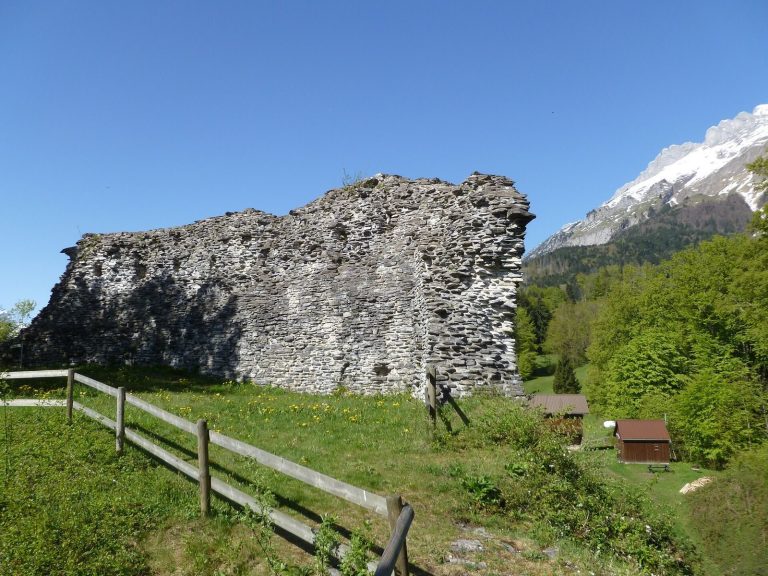
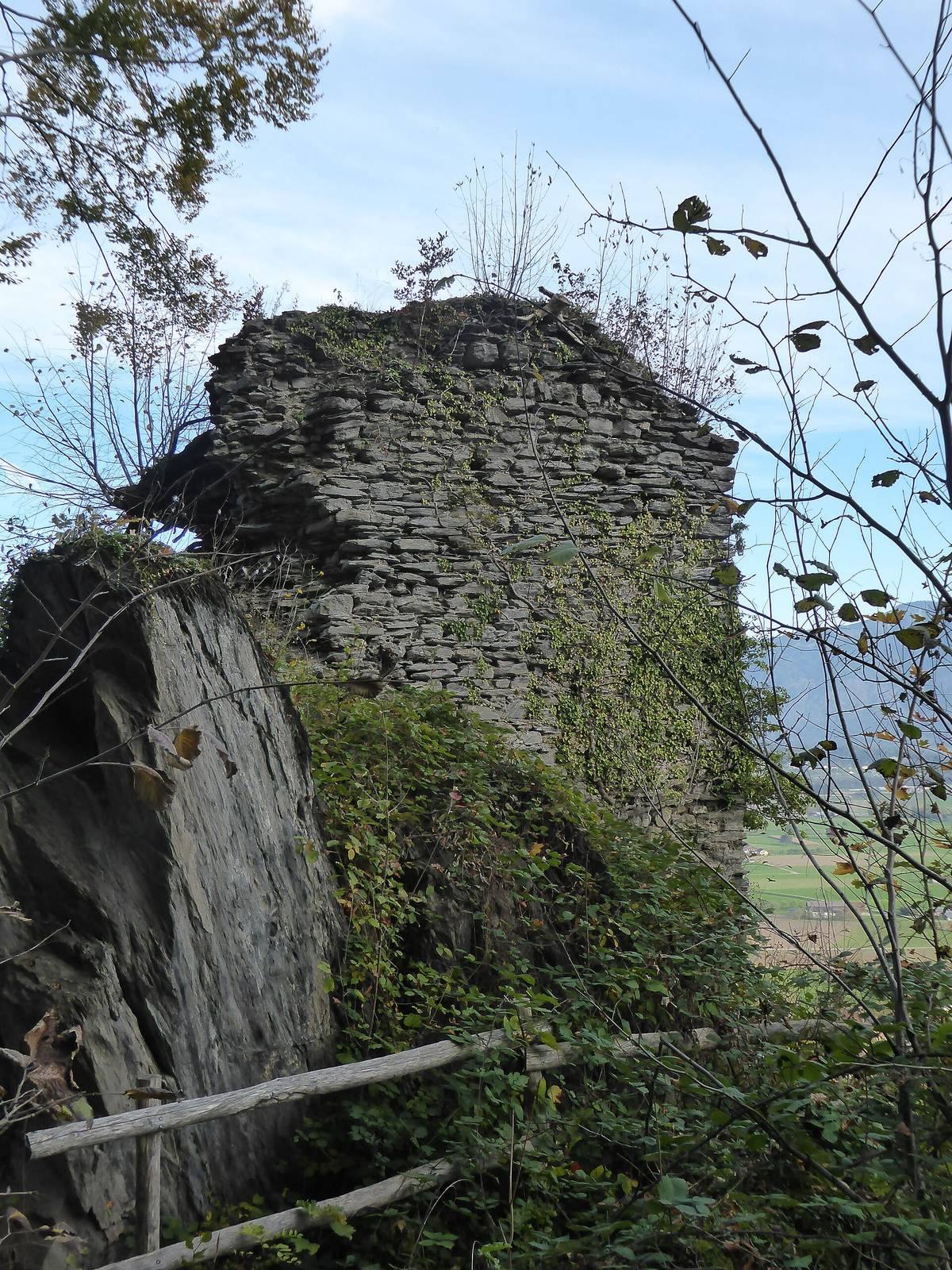
The castle originally covered an area of about 90 by 40 metres on a rocky ridge. The ridge rises to 585 metres, about 130 metres above the St. Gallen Rhine Valley, and the rock drops steeply on three sides.
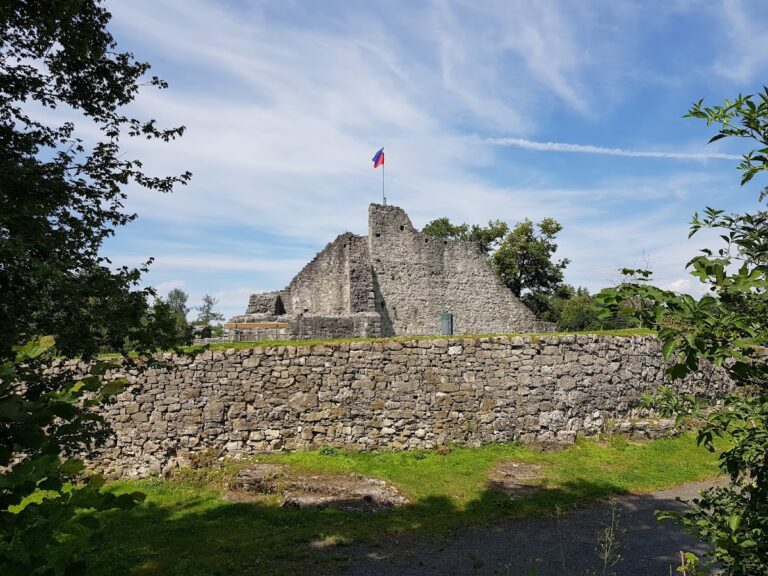
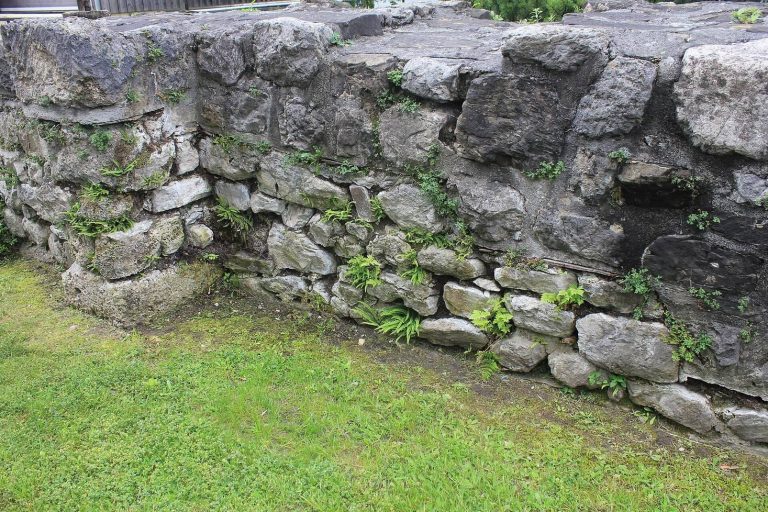
The surviving remains indicate an elongated building with walls about 1.5 metres thick. A tower or residential hall probably stood on its uphill side, while ancillary buildings probably occupied the ground below the rock. Quarrying later destroyed part of the ruin. Since the 1990s, the Ruins of Hohensax and Frischenberg Foundation has worked to secure it.