St. John’s Church, Poppenbüll: A Medieval Parish Church
Site at a Glance
- Popularity
- Very Low
- Country
- Germany
- Primary era
- Medieval
- Eras represented
- Medieval, Early Modern, Modern
- Civilizations
- Danish, German
- Site type
- Religious
- Remains
- Church
On this page16 sections
History
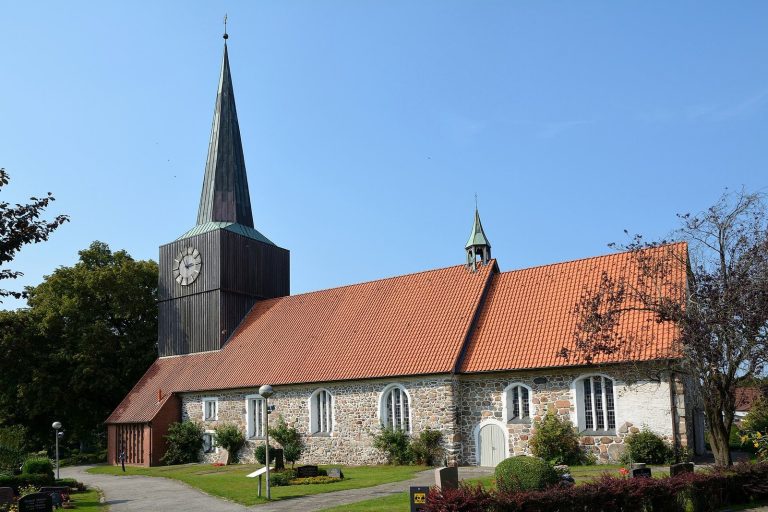
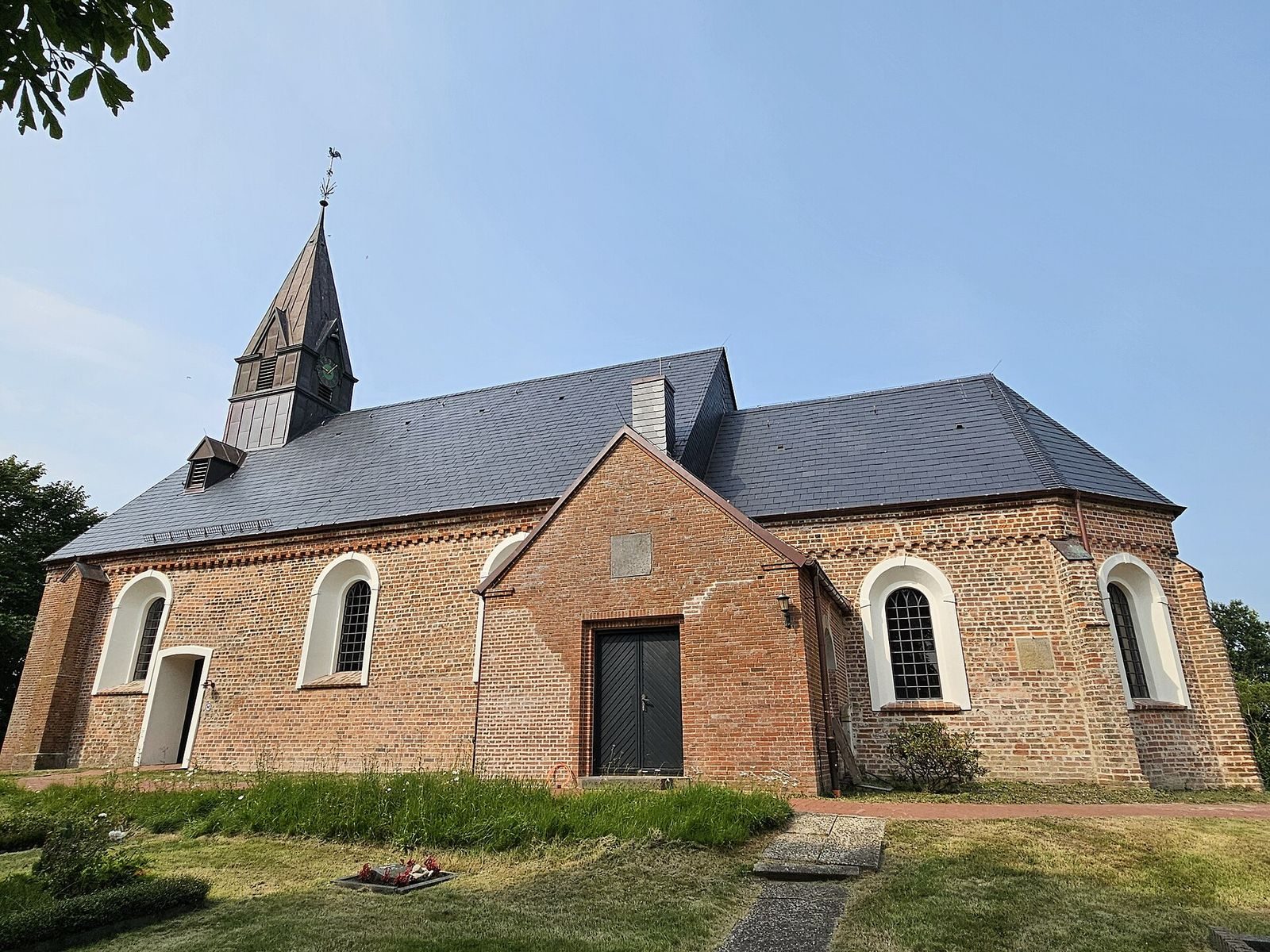
St. John’s Church, Poppenbüll, is a brick parish church in Germany, founded in 1113 as the successor to a chapel dating to the 10th century. Its late Romanesque nave and Gothic choir reflect its medieval development. The church is among the oldest in the Eiderstedt region, where its foundation accompanied the spread of Christianity and settlement.
Foundation and parish
The Eiderstedt chronicle Chronicon Eiderostadense volgare connects the year 1113 with a dispute at Garding. Men of the Boyens family killed Harmen Lütke, a church official, and consequently lost the right to appoint the parish priest. The main church on the higher sandy ridge then established additional chapels, including the one at Poppenbüll, which became St. John’s.
Reformation and later changes
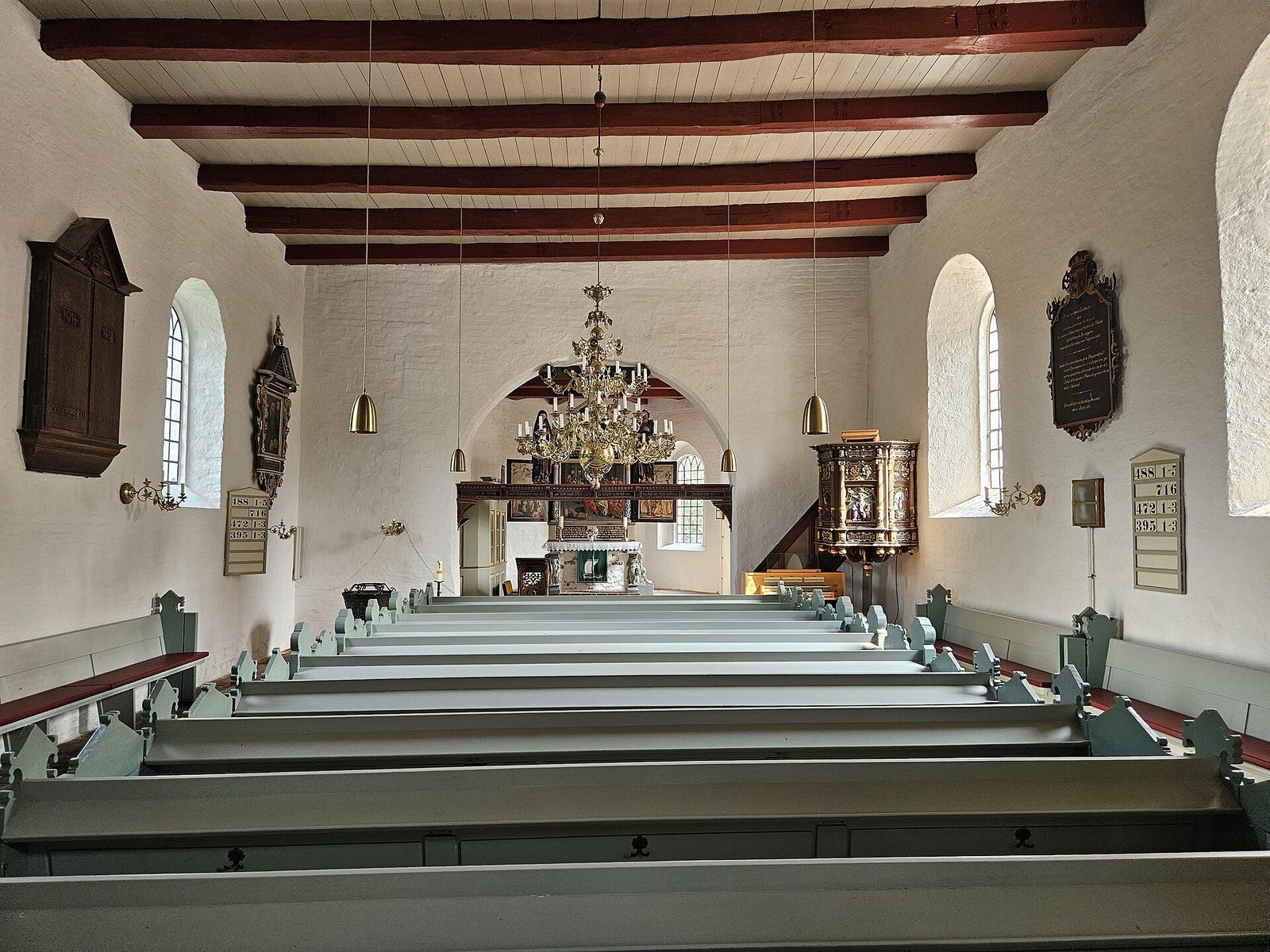
The congregation became Protestant during the Reformation, the 16th-century religious movement that led to the formation of Protestant churches. Furnishings made during the 16th and 17th centuries reflect a period of prosperity for the congregation. The building was altered and enlarged repeatedly over the centuries. In the 19th century, new seating replaced the earlier arrangement, while parts of the Renaissance furnishings were incorporated into it.
Renovation and parish changes
Renovations continued during the 20th century, including a comprehensive project in 1984. In 2023, extensive work addressed the roof, beams, exterior walls and interior, with an emphasis on preserving historic material while improving the building’s condition. St. John’s originally belonged to the Heverbund parish with St. Martin’s in Osterhever and St. Stephanus’s in Westerhever. In early 2022, Heverbund joined the Katharinenheerd-Tetenbüll, Welt-Vollerwiek and Garding congregations to form Eiderstedt-Mitte. The new congregation brought together eight medieval churches, six dating from 1113, to support administration and cooperation among the regional churches. St. John’s belongs to the Evangelical Lutheran Church in Northern Germany.
Remains
Building and medieval fabric
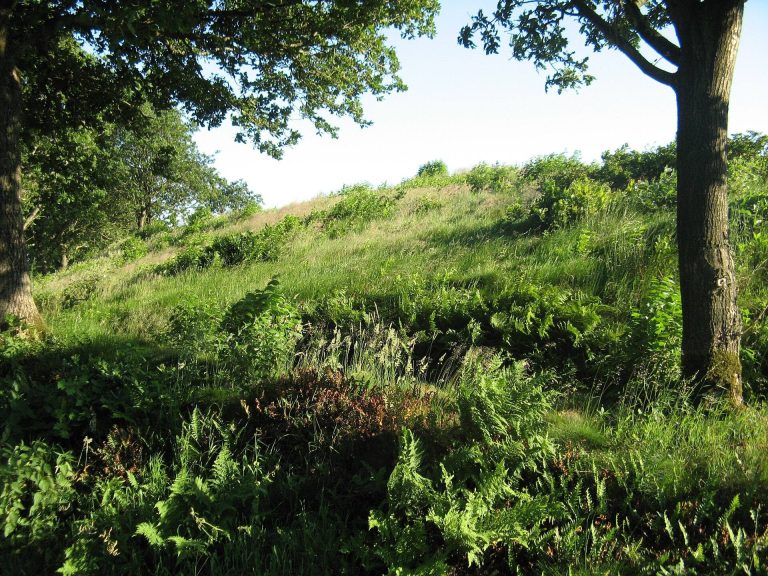
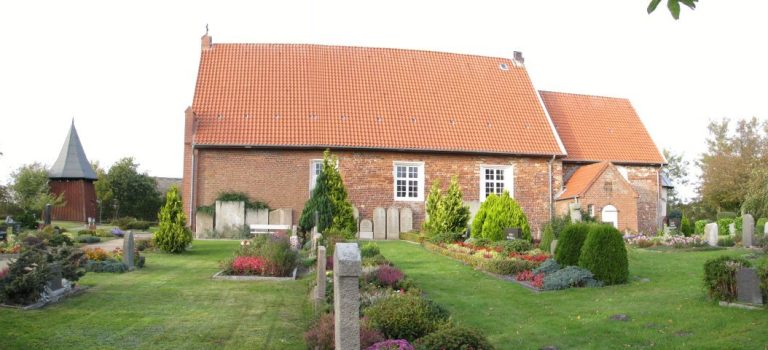
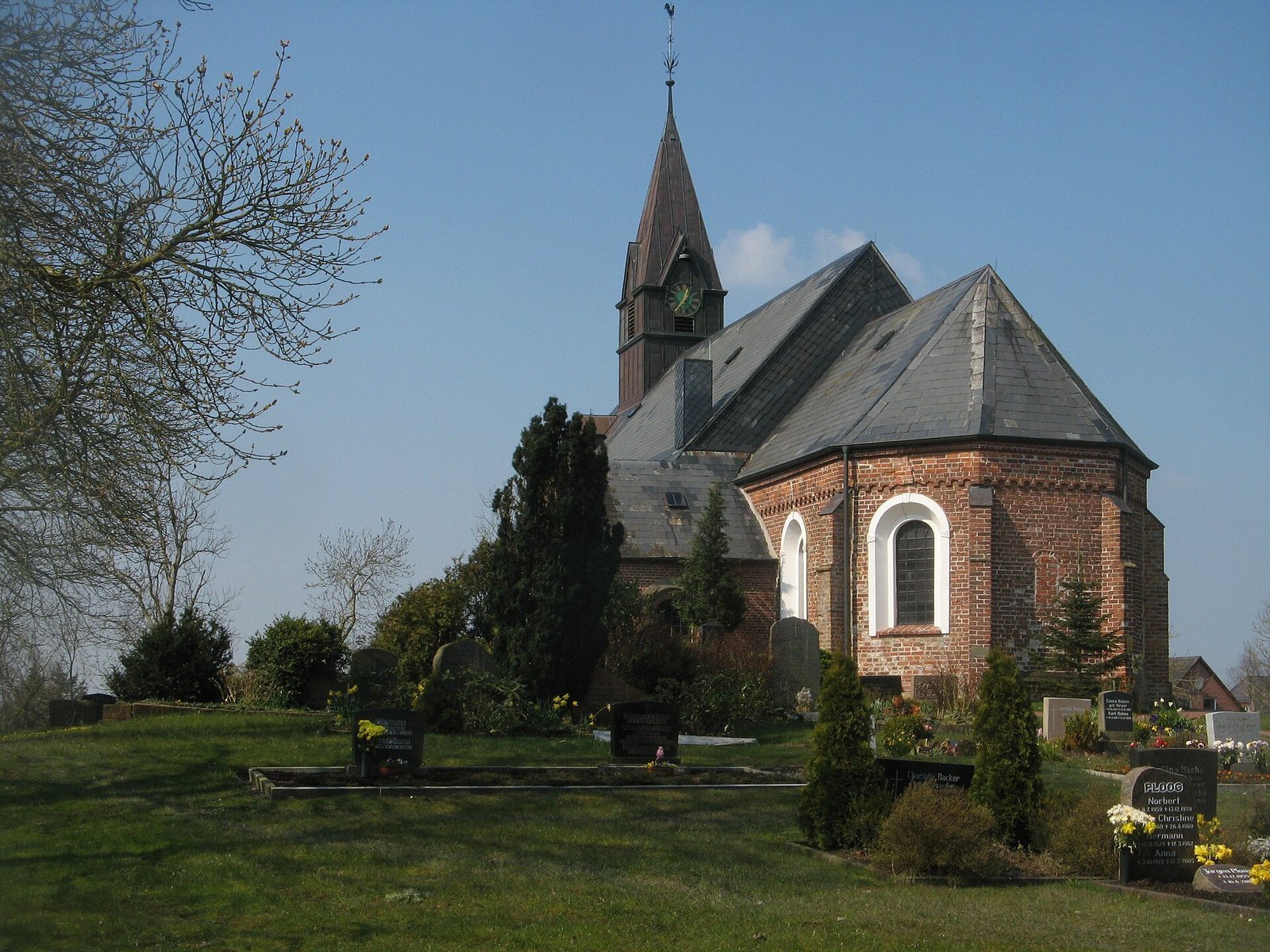
The brick church stands on a raised mound, or warft, built in low-lying coastal terrain to help protect it from flooding. Its late Romanesque nave is joined to a choir added in the Gothic period, bringing together two medieval architectural styles in the surviving building.
Interior furnishings
Baptismal font
Melchior Lucas of Husum cast the bronze baptismal font in 1590. Its late Gothic design has a cup-shaped basin supported by figures of the four Evangelists. Bands of inscription, reliefs of the apostles and medallions showing Christian scenes decorate the basin. The font is described as unique on Eiderstedt.
Seating and communion tables
Doors and side panels from the earlier congregational seating survive within the replacement seating installed in the 19th century. Made between 1598 and 1650, these pieces are painted Frisian blue. The communion benches date to 1759 and carry scroll-shaped ornaments and leafy decoration. Small tables are held by childlike decorative figures, or putti, bearing sheaves and grapes, symbols of the bread and wine used in communion.
Altarpiece
Marten van Achten made the painted Renaissance altarpiece in 1601. It rests on an old brick altar base. The central panel shows the Last Supper; the two undivided wings depict the Baptism and Crucifixion, while their outer faces show the Brazen Serpent and the Circumcision. Columns frame the paintings, and an inscription appears on the lower panel, or predella. A painting of the Resurrection sits beneath a triangular top flanked by putti. A nearly identical altarpiece stands in the church at Welt.
Pulpit
The pulpit follows a regional Eiderstedt design, with a four-sided preaching enclosure dating to 1579. Paired columns divide its surfaces, and relief coats of arms sit beside the column capitals. Further reliefs beneath them depict the Baptism, the scene at the Mount of Olives, the Crucifixion and the Resurrection.
Cross group
A cross group is attached to a beam dating to around 1600. The Gothic-inspired figure of Christ is fixed to a board cross with four-lobed ends and symbols of the Evangelists. Figures of Mary and John flank Christ.
Memorials
A memorial to pastor Conradus Gentzel, dated 1617, has a late Renaissance frame with herm pilasters, supports ending in carved human figures, and a waist-length portrait of the pastor. Its other features include a hanging lower element with a woman’s head, a triangular pediment and scrollwork. A later Neo-Renaissance memorial commemorates church benefactor Friedrich Wilhelm Rieve, who died in 1867. Made in 1888, it includes a half-length portrait.
Sacrament cupboard
A 17th-century cupboard for storing the Eucharist is set into the choir’s north wall and has been repainted gray. Its door has a frame of pilasters and Baroque scrolls, with interlaced strap-like ornament on the cornice pediment. An offering box attached at the left is connected to a violin-shaped wooden board.
Organ
The present organ was built by Klaus Becker in 1985, reusing components from earlier instruments. Its case comes from an organ given to the church by Friedrich Wilhelm Rieve in 1847. The instrument has 13 stops, which select groups of pipes, across two hand-operated keyboards and a foot-operated pedal. Mechanical connections operate the keys and stops; sliding controls in the air-distributing windchests regulate which pipes receive air. Reused historic components include seven stops, the bellows assembly and the windchests.
Bell
Lucas also cast the bronze bell in 1590. It hangs in the roof turret, measures 92 centimetres in diameter and 87 centimetres high, and weighs 490 kilograms. A steel yoke supports it as it swings to sound; its stated pitch notation is g1 + 1. The bell has a crown with six loops, several bands of decoration, a Gothic-inspired band around its shoulder, and a band of tritons and vases. One inscription names Lucas, while another on the strike band gives the casting year and names prominent members of the congregation, including pastor Conradus Gentselius. Four medallions on the bell’s side depict the Trinity and the Crucifixion.