Dörnberg Castle: A Late-Gothic Castle and District Seat in Neustadt
Site at a Glance
- Popularity
- Low
- Country
- Germany
- Primary era
- Medieval
- Eras represented
- Medieval
- Civilizations
- Holy Roman Empire
- Site type
- Military
- Remains
- Castle
On this page8 sections
History
Foundation and Mainz rule
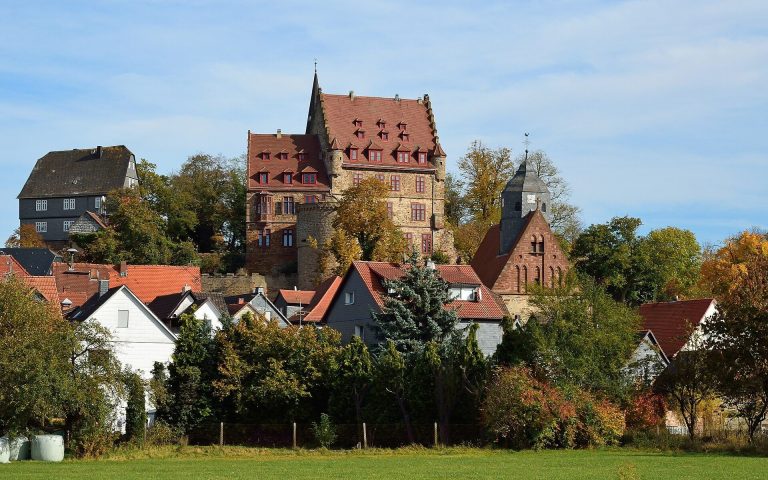
Dörnberg Castle stands in the southern part of Neustadt’s old town in Hesse, Germany. Count Ludwig II of Ziegenhain founded the castle and the town around 1270 as new foundations. Landgrave Henry I of Hesse probably destroyed the castle in 1273.
On 12 March 1294, Count Engelbert I of Ziegenhain sold the castle, town, and Neustadt administrative district to the Archbishopric of Mainz, an ecclesiastical principality ruled by an archbishop. Neustadt became a Mainz enclave surrounded by Hessian and Ziegenhain territories.
Conflict and Dörnberg rule
During the Mainz Diocesan Feud of 1461–62, a dispute over leadership of the archbishopric, Neustadt was pledged to Landgrave Henry III of Hesse-Marburg. The townspeople barred him from entering and surrendered only after a siege. Hans von Dörnberg helped bring about the Peace of Zeilsheim, after which Neustadt passed to the Landgrave of Upper Hesse. The old castle was demolished around 1470.
In 1477, Henry III pledged Neustadt to Hans von Dörnberg, who commissioned a new castle on the old site. After Upper and Lower Hesse were united following the death of Landgrave William III in a hunting accident in 1500, Hans fell out of favor with Landgrave William II of Lower Hesse. He fled to Friedberg in 1505 and died there in 1506, aged 79; his nephews inherited his estate. The Dörnberg family’s rule in Neustadt ended in 1549, when Mainz redeemed the pledge.
Administrative use and later changes
From 1549 to 1802, the castle was the residence of the Mainz official who administered the district. Under the imperial reorganization settlement of 1802–03, which redistributed territories in the Holy Roman Empire, Neustadt passed to the Landgraviate of Hesse-Kassel and was joined with other former Mainz enclaves in the nominal Principality of Fritzlar. From 1806 to 1813 it belonged to the Kingdom of Westphalia, a satellite kingdom established under Napoleon, and served as the administrative seat of the Canton of Neustadt. It then returned to Hesse-Kassel and became part of Prussia in 1866.
The castle housed Neustadt’s district court from 1802 to 1943. After temporary use as refugee accommodation following the Second World War, it became the town hall in 1952. Comprehensive restoration followed in 1987–88.
Remains
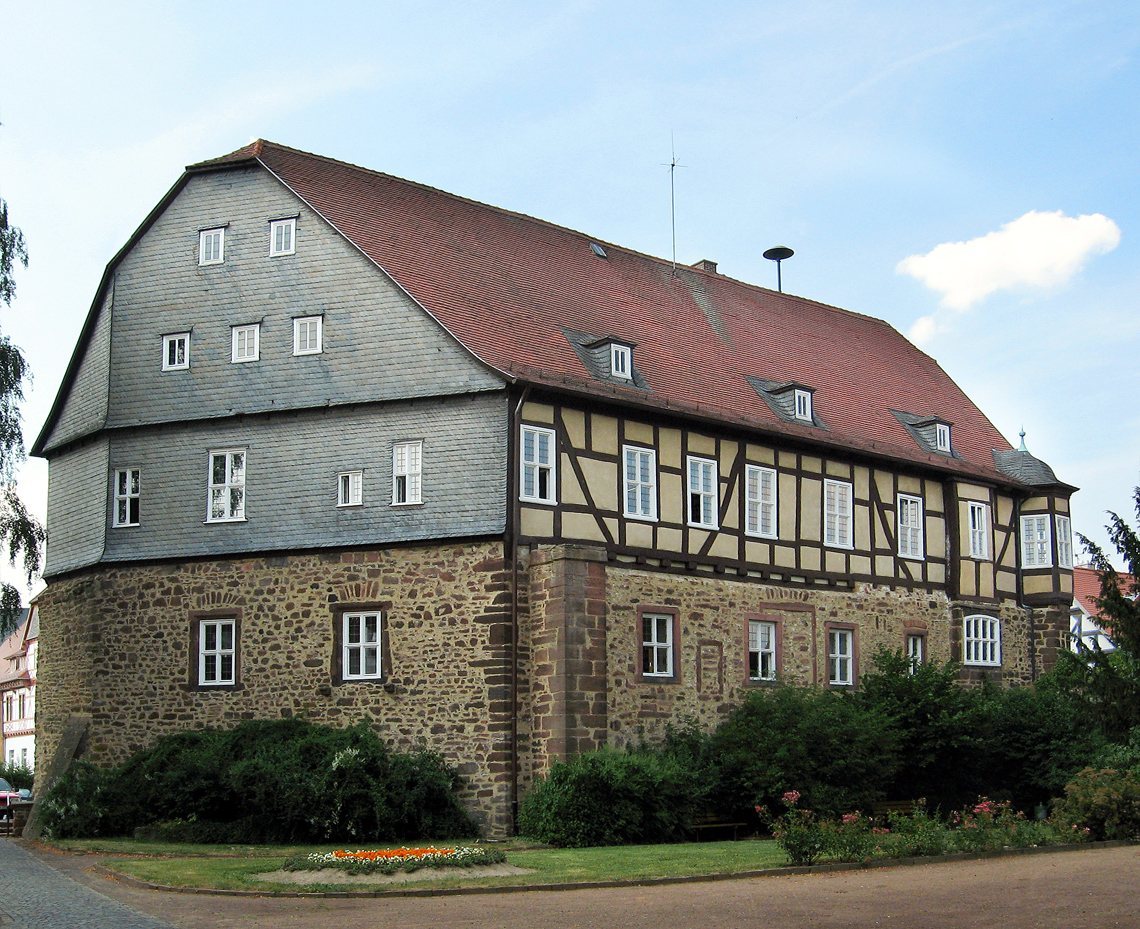
In the southern part of Neustadt’s old town, the castle developed from a medieval water castle into a late-Gothic complex in the late fifteenth century. Its surviving architectural form combines the site of the earlier castle with features of the later building.
Late-Gothic complex
Main castle
The new castle was built from 1477 to 1489 on the stone substructure of the earlier castle, following plans by court architect Hans Jakob von Ettlingen. The building’s late-Gothic form reflects the major rebuilding of the site.
Junker-Hansen Tower
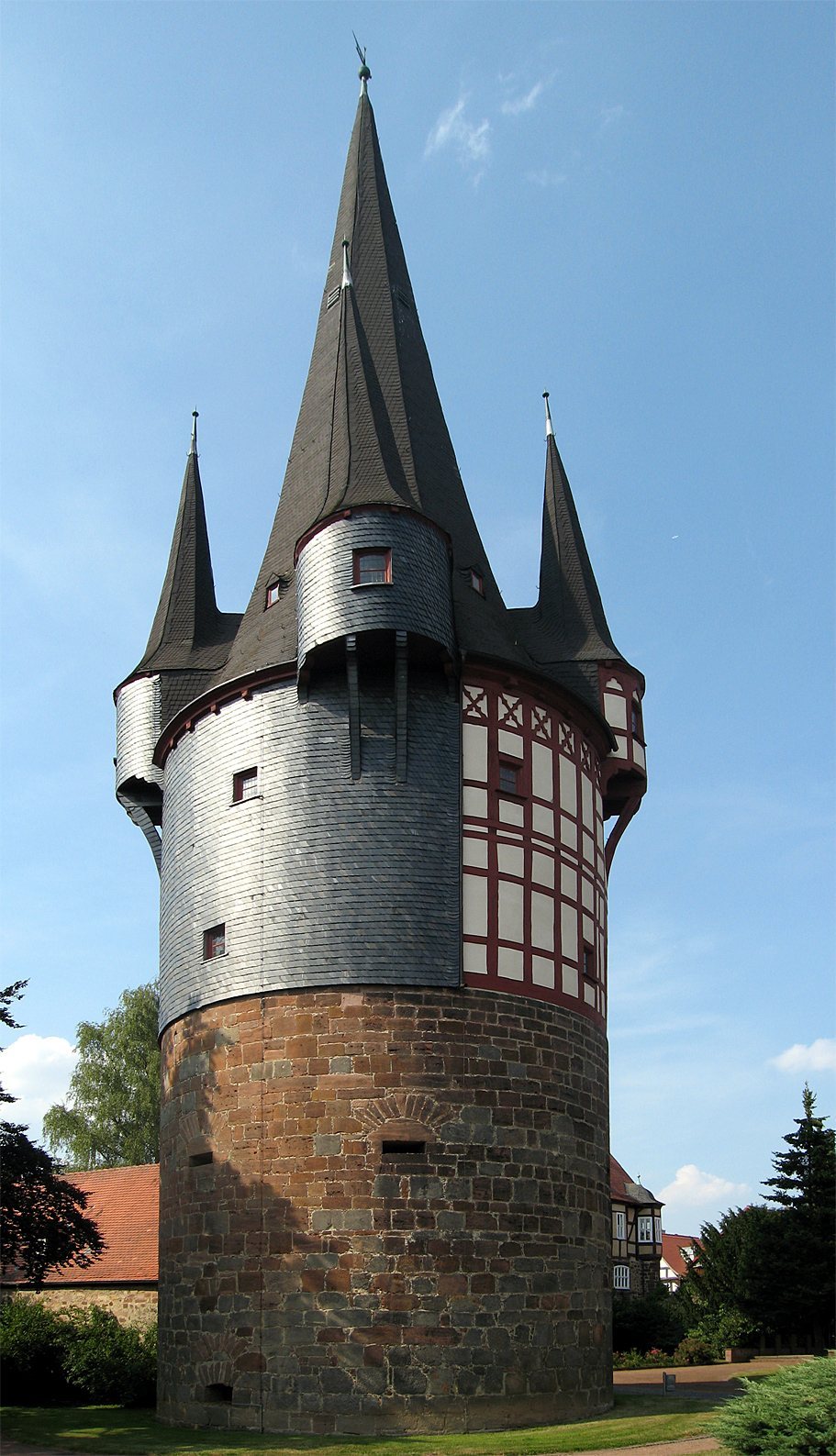
At Hans von Dörnberg’s direction, the Junker-Hansen Tower was incorporated as a projecting structure at the front of the castle. Hans Jakob von Ettlingen built it in 1480, though 1477 is also given as its date. Before its incorporation, the tower formed part of the town fortifications.