Fort of Nossa Senhora das Mercês de Catalazete: A Coastal Artillery Fort in Portugal
Site at a Glance
- Popularity
- Very Low
- Country
- Portugal
- Primary era
- Early Modern
- Eras represented
- Early Modern
- Civilizations
- Portuguese
- Site type
- Military
- Remains
- Fort
On this page6 sections
History
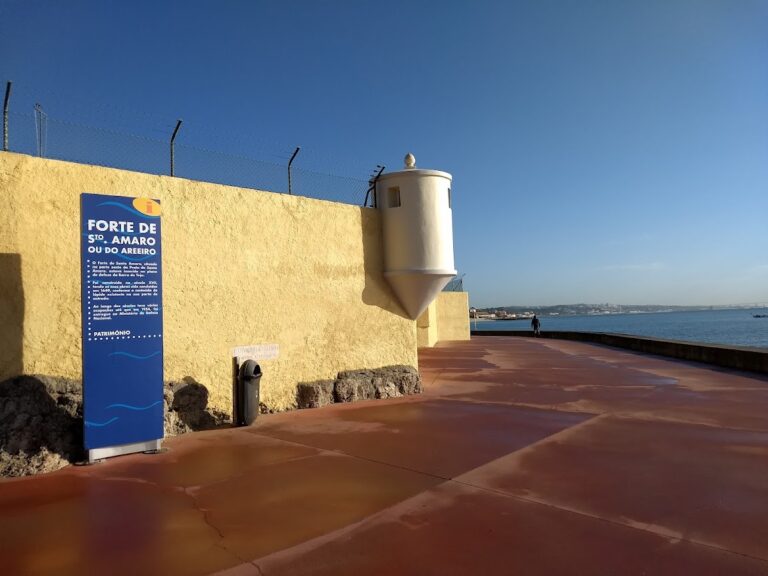
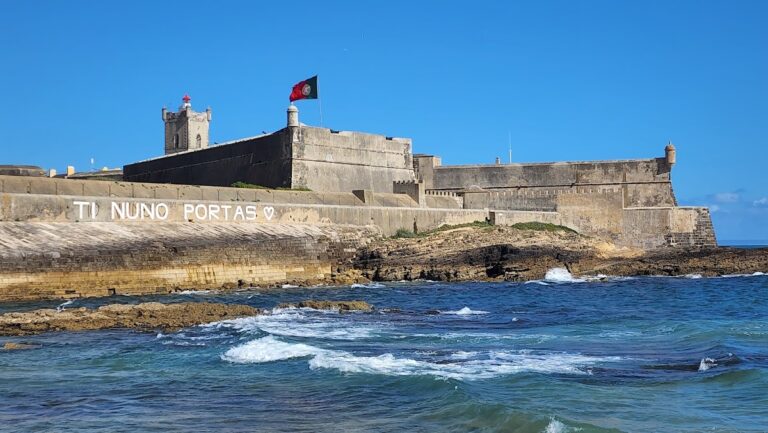
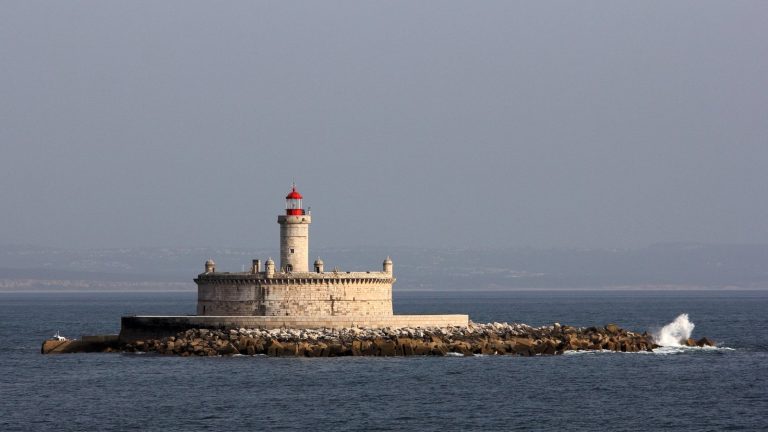
The Fort of Nossa Senhora das Mercês de Catalazete stands in Oeiras, Portugal. It began in 1762 as an artillery battery intended to reinforce the defenses provided by the forts of São Julião da Barra and Santo Amaro do Areeiro.
Foundation and Eighteenth-Century Service
The battery’s initial masonry parapet, a protective wall, was completed by 1763. Its construction took place during the Spanish-Portuguese War (1762-1763), a conflict between Spain and Portugal within the wider Seven Years’ War, which involved major European powers. In 1763, the fort had nine guns: two bronze pieces of 40 gauge (a measure used to classify artillery size) and seven iron pieces of 24 gauge.
In 1777, responsibility for guarding and maintaining the fort passed to a farming family, while its artillery and ammunition remained in place. Conservation work followed in 1793. The fort was equipped with ten 24-gauge guns in 1796.
Early Nineteenth-Century Service
In 1804, the garrison comprised two corporals and thirteen soldiers. The fort remained garrisoned and equipped after the Peninsular War, part of the Napoleonic Wars fought in the Iberian Peninsula, ended in 1814.
During the Portuguese Civil War (1828-1834), a dynastic and constitutional conflict over the throne, the fort was guarded by a sergeant, a corporal, and twenty artillery soldiers. In 1831, as a French fleet commanded by Admiral Roussin entered the Tagus, the fort’s 36-caliber guns (classified by a different measure of artillery size) fired 17 shots in response to the fleet’s fire. The fleet anchored in Lisbon, captured eight ships, and compelled King Miguel I to surrender.
Deactivation and Private Use
The fort was deactivated in the mid-nineteenth century and occupied by a single veteran soldier. In 1888, it was leased for nine years to a private resident. The tenant was evicted in 1897 for failing to pay rent, and another tenant was identified.
Twentieth-Century Reuse
Under the Estado Novo, Portugal’s authoritarian regime from 1933 to 1974, families of military officials used the fort. A powerful windstorm struck Lisbon on February 15-16, 1941, and waves badly damaged the site. Repairs were carried out in 1942 as part of landscaping for the new Lisbon-Cascais road, the Marginal.
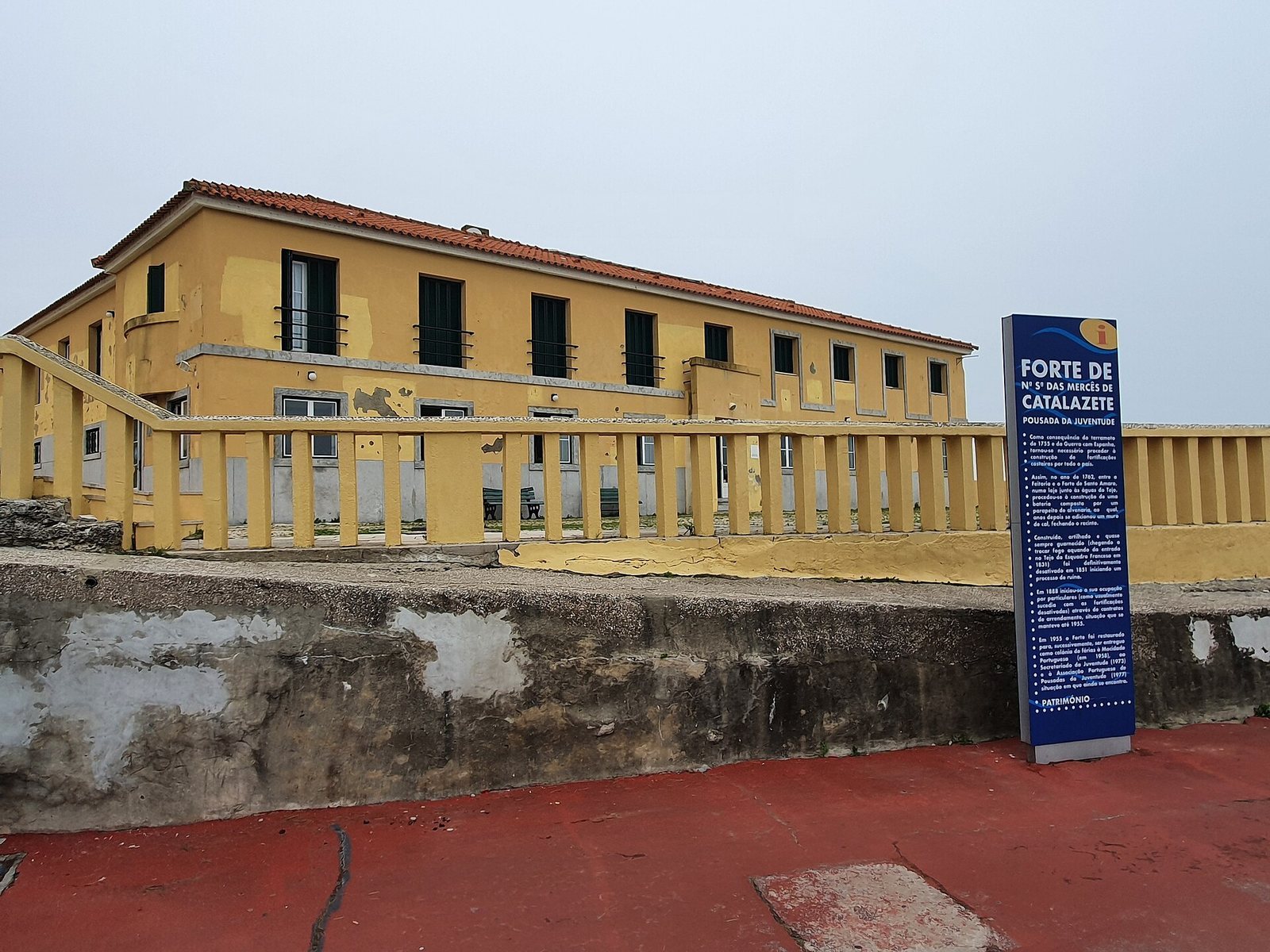
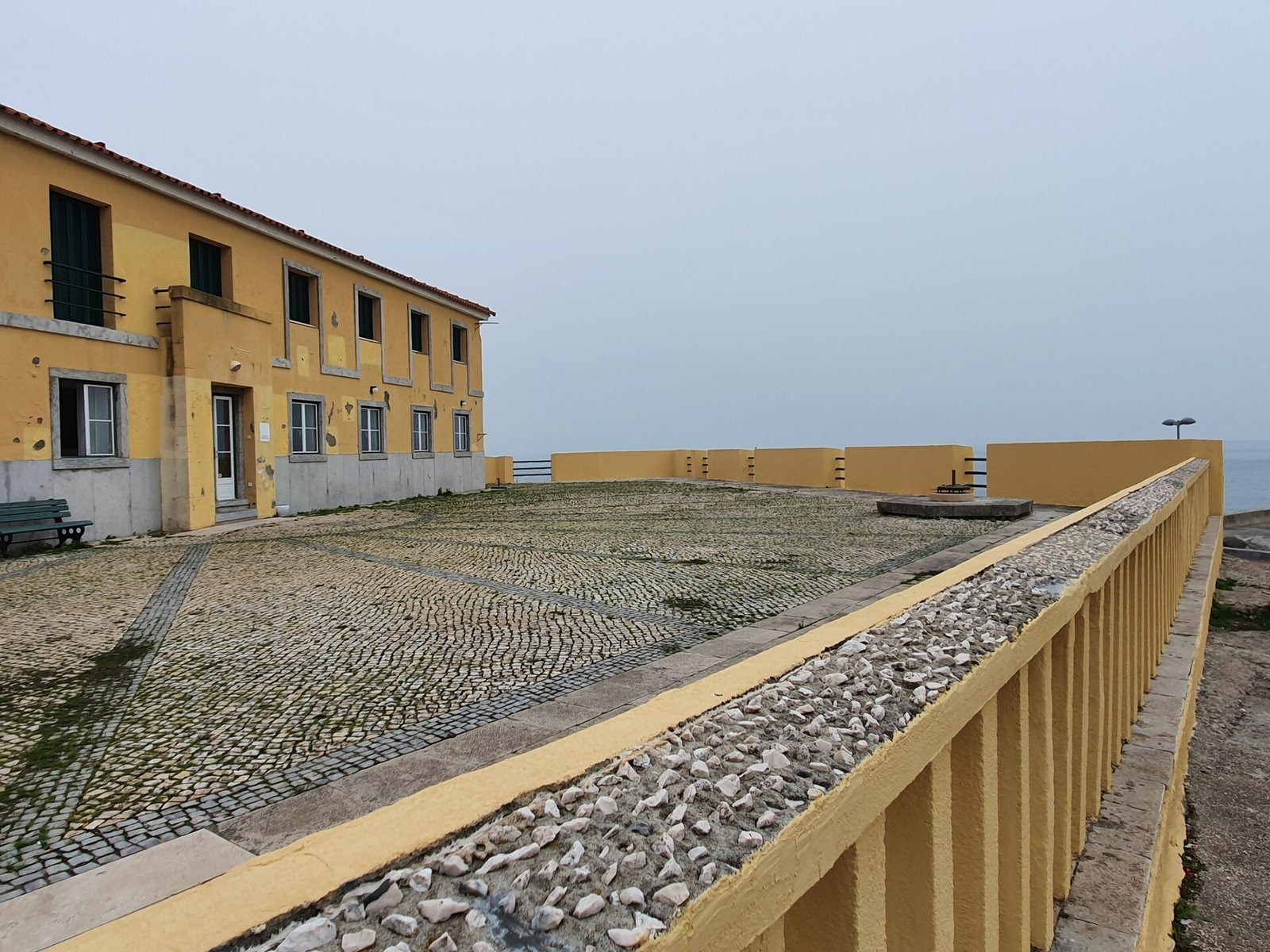
After debate about its future use during the 1950s, the fort became a holiday camp for Mocidade Portuguesa in 1959. This state-established youth organization was associated with the Estado Novo. It was converted into a youth hostel in 1962, and the Portuguese Association of Youth Hostels has occupied it since 1977.
Remains
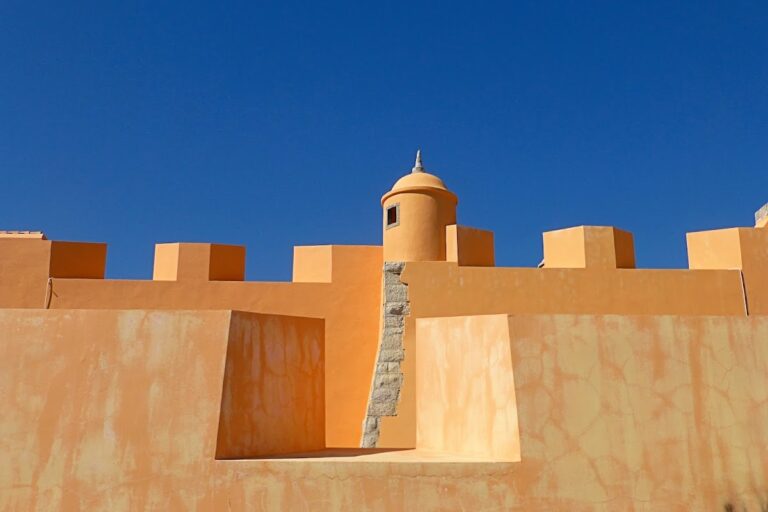
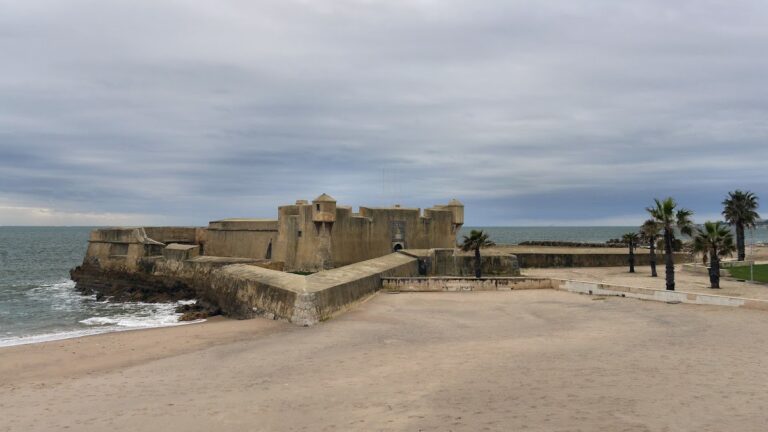
The fort stands on the right bank of the Tagus estuary in Oeiras, between the forts of São Julião da Barra and Santo Amaro do Areeiro. Its plan is an irregular pentagon, and it is built of basalt.
The earliest form consisted of a masonry parapet. An inspection in 1777 found that the northwest, landward side of the fort remained open.