Corsendonk Priory: An Augustinian House of Study in Belgium
Site at a Glance
- Popularity
- Medium
- Country
- Belgium
- Primary era
- Early Modern
- Eras represented
- Early Modern
- Civilizations
- Duchy of Brabant, Holy Roman Empire, Spanish
- Site type
- Religious
- Remains
- Monastery
On this page7 sections
History
Foundation and intellectual life
Corsendonk Priory is a former Augustinian house of study in Oud-Turnhout, Belgium, founded in the 1390s by canons who followed the Rule of St Augustine. The Catholic community belonged to the Windesheim congregation, a reform movement among Augustinian canons in the Low Countries. In 1393, Mary of Guelders, also known as Mary of Brabant, donated 600 hectares of marshland at Corsendonk for the canons to establish their house.
The community grew within a period of spiritual renewal associated with Jean de Ruisbroek, an Augustinian canon at Groenendael, and Gerard Groote, a religious reformer. Corsendonk’s canons became an important intellectual community. Together with the priories of Groenendael and Rouge-Cloître, they copied and circulated biblical and liturgical texts. The priory developed a substantial library, and its scriptorium, where books and manuscripts were copied, was well known into the sixteenth century. Erasmus visited to consult the Codex Corsendoncanus, a manuscript in book form.
Building and education
The first buildings were put up in the fourteenth century. Work on the church began in 1432, and the cloister followed in 1494. In 1645, the canons took responsibility for Turnhout’s Latin school, a secondary school, and continued to run it until 1761.
Reformation, damage, and restoration
The sixteenth-century Reformation, associated with Martin Luther, caused divisions within the community. Luther himself belonged to the Augustinian order. During the Wars of Religion, people opposed to religious images pillaged the priory, stole religious objects, and damaged its buildings, including the library.
After peace returned under Albert and Isabella, joint Habsburg rulers of the Spanish Netherlands, the priory was restored. The surviving buildings date from the second half of the seventeenth century.
Suppression and later ownership
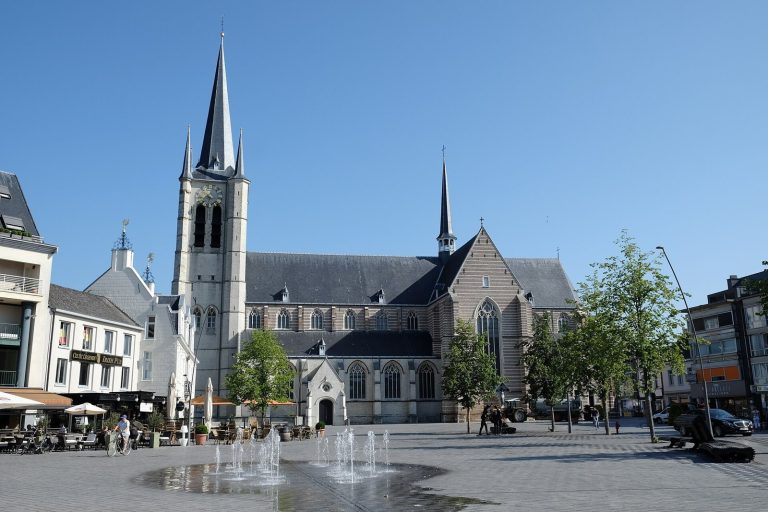
Joseph II suppressed the priory in the 1780s. Its closure became final in 1795 under French Revolutionary rule, when its possessions were confiscated and offered for public sale. Furnishings from the canons’ church went to nearby churches they served, and a number of artworks passed to the Church of St Bavo.
After the canons were expelled, the buildings passed into private ownership. From 1799, the former priory served as a private residence and castle; in the nineteenth century, industrialists from Turnhout used it as an estate. Fernand Nédée bought the priory-castle in 1968 and began restoration intended to return it to an authentic condition. The buildings received protection as historic monuments around 1970-71.
Remains
Surviving buildings and features
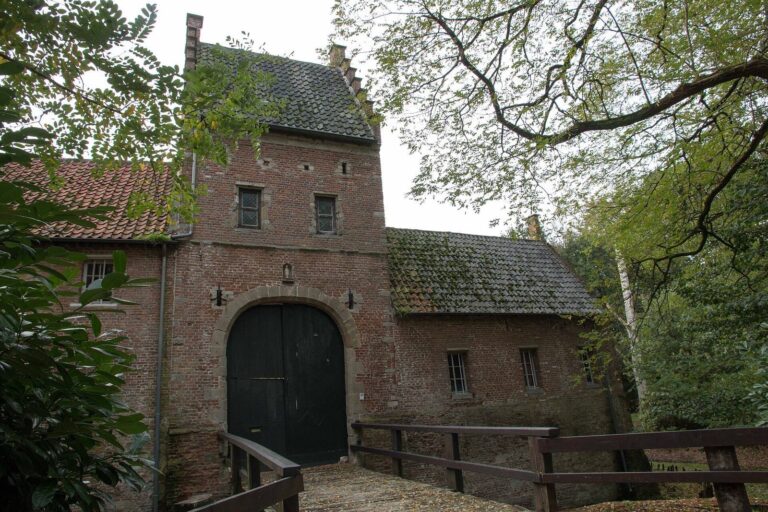
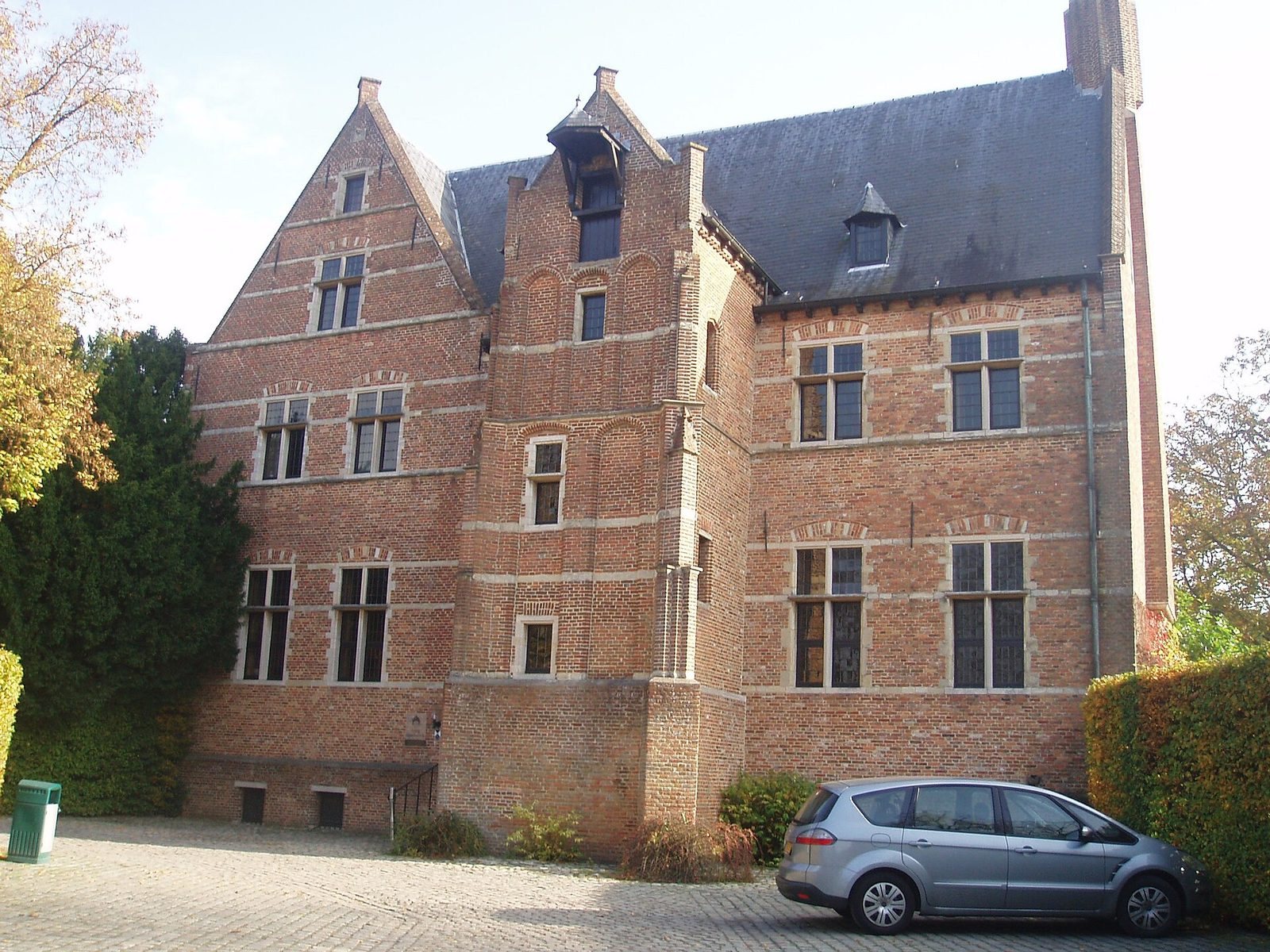
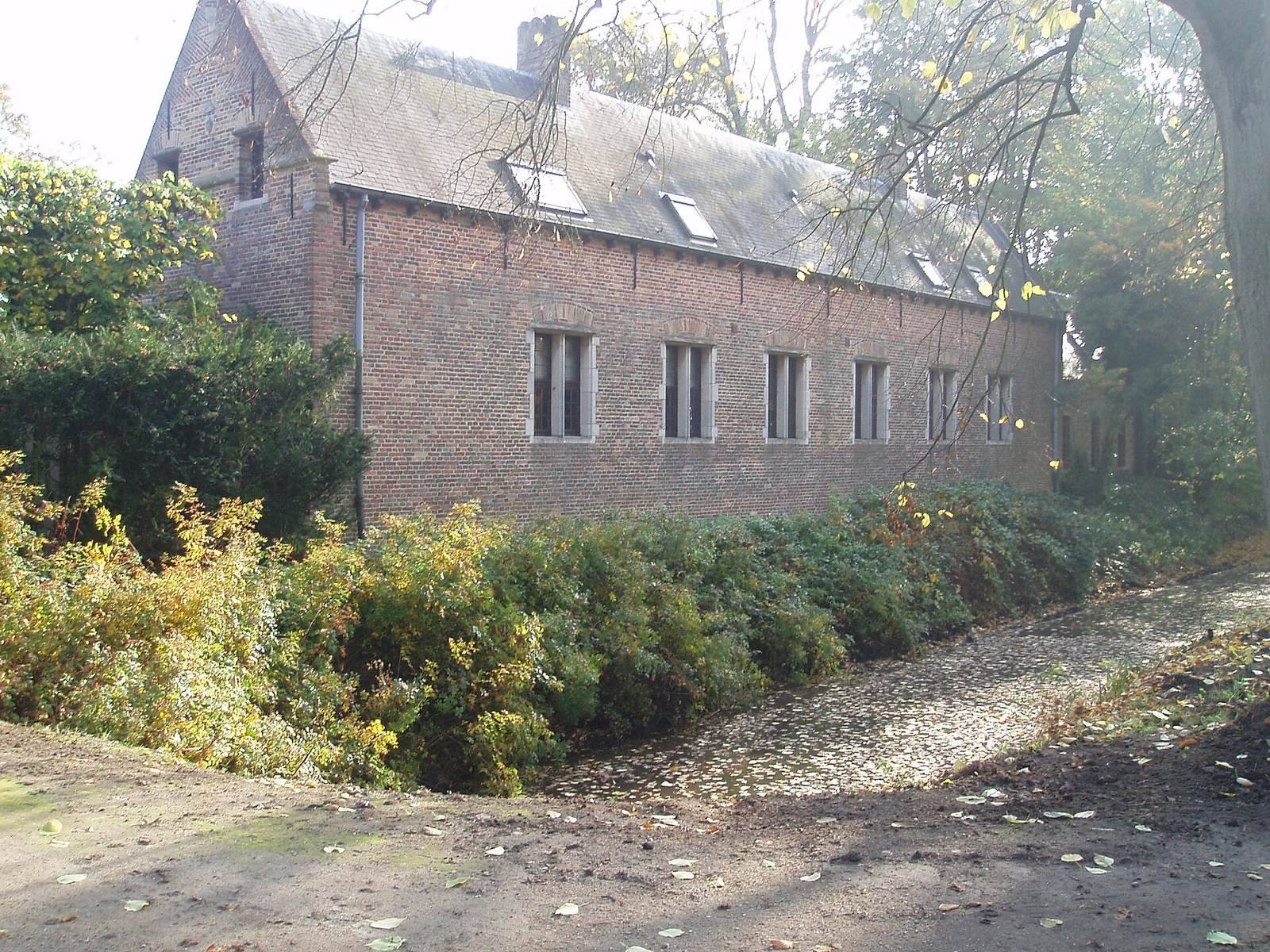
The original northern wing is the surviving part of the monastic complex, while a gravel path traces the outline of the former monastery. On the ground floor, the former chapter hall served as the community’s meeting room, and the scriptorium was a heated space for copying books and manuscripts. Dining halls occupy the upper floors. A large basement room with vaults remains largely intact. The site also includes a Women’s House, a Lay House, and a Guesthouse alongside them; the Guesthouse formerly sheltered travelers who had not found lodging by nightfall. The painting The Last Supper, made by Jan Erasmus Quellinus in 1696, was transferred to the nearby Church of St Bavo, where it remains on view.