Schloss Rosenau: A Castle and Freemason Museum in Austria
Site at a Glance
- Popularity
- High
- Country
- Austria
- Primary era
- Early Modern
- Eras represented
- Early Modern, Modern
- Civilizations
- Austria-Hungary, Duchy of Austria, Habsburg, Holy Roman Empire
- Site type
- Domestic
- Remains
- Castle
On this page11 sections
History
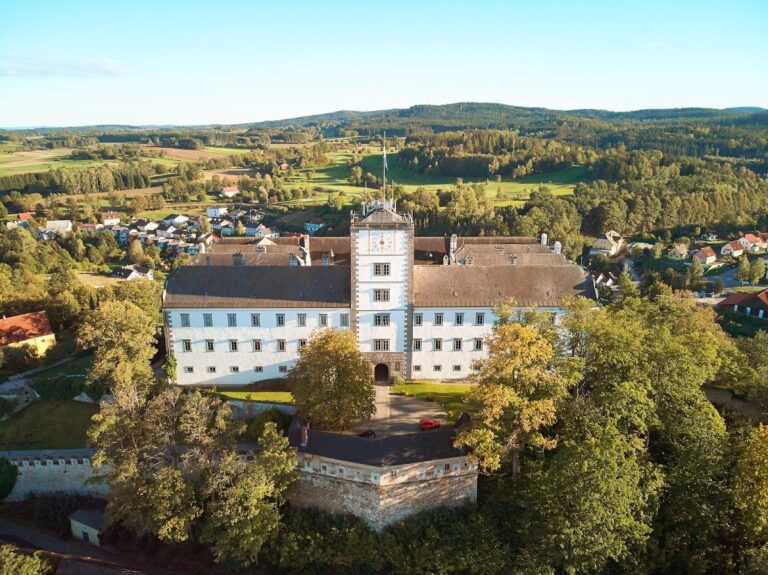
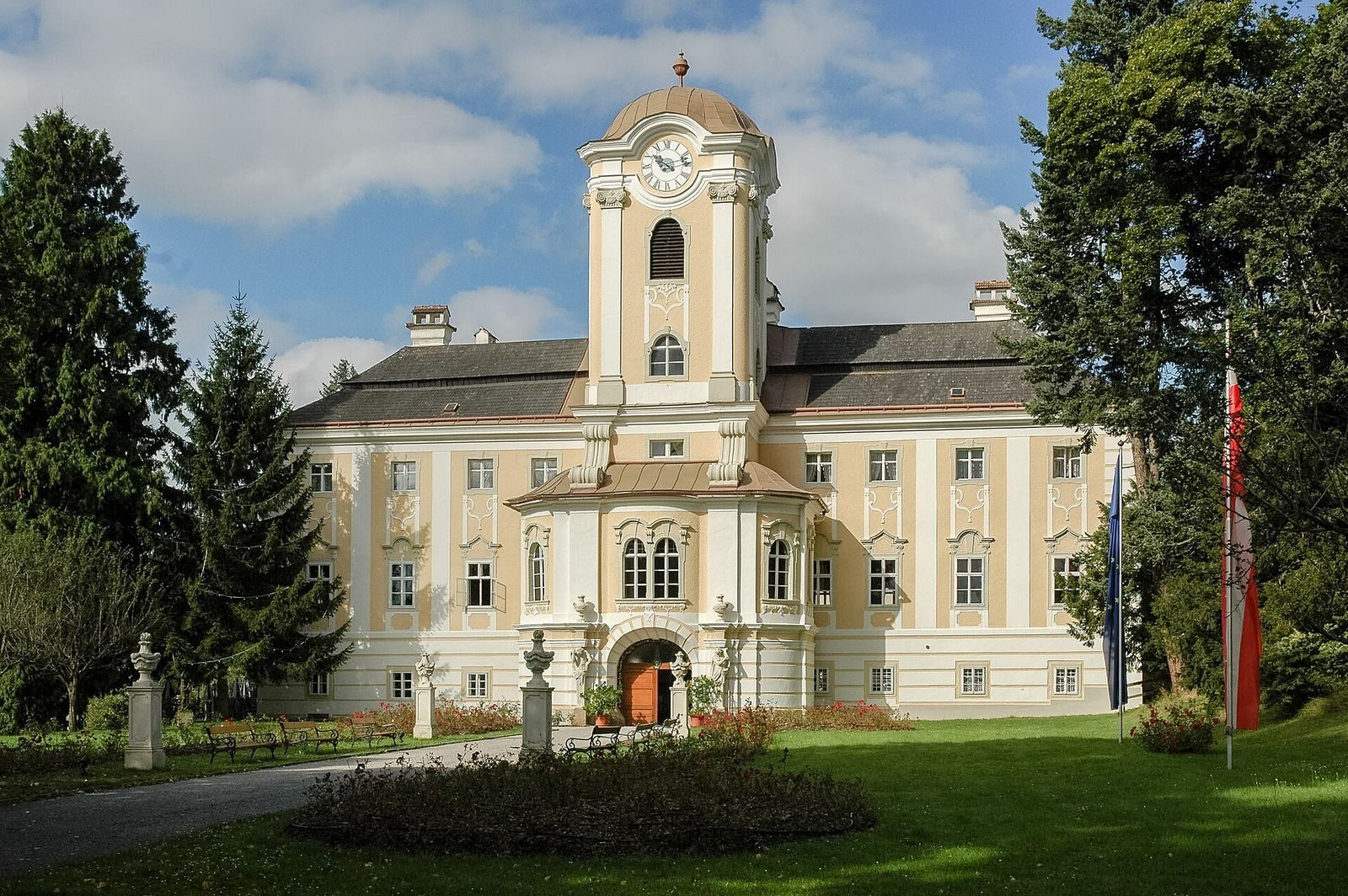
Schloss Rosenau is a castle in the village of Rosenau Schloss, west of Zwettl in Lower Austria, Austria. In 1593, the Lords of Greiß expanded an existing four-sided courtyard farmstead into a Renaissance castle. The Counts of Schallenberg later commissioned a Baroque remodelling, and the castle became a centre for Freemasonry.
Renaissance castle and Schallenberg ownership
Leopold Christoph, Count of Schallenberg, bought the estate in 1720 and commissioned the remodelling from master builder Joseph Munggenast. The Counts of Schallenberg owned Rosenau until 1803. During this period, an almost wholly preserved estate settlement was established alongside the castle.
Schallenberg was a senior official at the court of Maria Theresa, the Habsburg ruler, and encountered the Enlightenment, an intellectual movement associated with reason, social reform, and human welfare. A Freemason himself, he sought to develop the estate for local people, including peasants whose lives and work were governed by the manorial system. He established a Masonic lodge at the castle. Freemasonry is a fraternal organization whose members meet in lodges for ritual and social fellowship, and Rosenau’s lodge served Masons who lived nearby or were travelling through the area.
It is considered highly probable, though not conclusively established, that Wolfgang Amadeus Mozart stopped at Rosenau while travelling from Vienna to Prague. After Schallenberg died in 1800, later owners lost awareness of the castle’s importance as a Masonic centre, and its symbolic paintings were covered or painted over.
Later owners and estate development
In 1803, Josef, Count of Schallenberg, sold the castle to Ernst Christoph Georg August, Count of Hardenberg, a royal Hanoverian envoy in Vienna. Hardenberg’s nephew sold it in 1832 to Baron Andreas von Stift, an economist. After the Stift heirs sold the estate, Creszentia Stummer, the widow of Brno merchant Carl Stummer, acquired it in 1863. Railway engineer Mathias von Schönerer bought the castle and estate five years later.
Georg Heinrich Ritter von Schönerer inherited the property in 1883 and managed it until his death in 1921. His daughter continued to manage the estate until 1928. Schönerer established social and economic facilities for local residents on the estate and in the surrounding area, and had a tower built north of the castle.
War, restoration, and museum
The German Settlement Company took over the castle in 1943. Baron Lazarini-Zobelsperg owned it from 1943 to 1945. After the war, Soviet troops devastated the castle, and it was confiscated during the occupation under the Soviet-controlled USIA administration of property and enterprises. The castle was returned to Lazarini-Zobelsperg in 1955, after the occupation ended. The damage had made the property uneconomic, and he sold it in 1964 to the Lower Austrian state settlement company.
In 1972, nearby municipalities and the Lower Austrian government began a publicly funded effort to prevent the castle and settlement from falling into further decay. After substantial state investment, a hotel and restaurant opened in the castle on 26 September 1974. The Austrian Freemason Museum began operating there on 23 April 1975, after state officials persuaded Austrian Freemasons to establish it.
Remains
The surviving ensemble includes the castle, the largely preserved estate settlement, and the Bismarck Tower north of the castle. Its buildings bring together Renaissance and Baroque work with the settlement’s religious, residential, and working structures.
Castle interiors and paintings
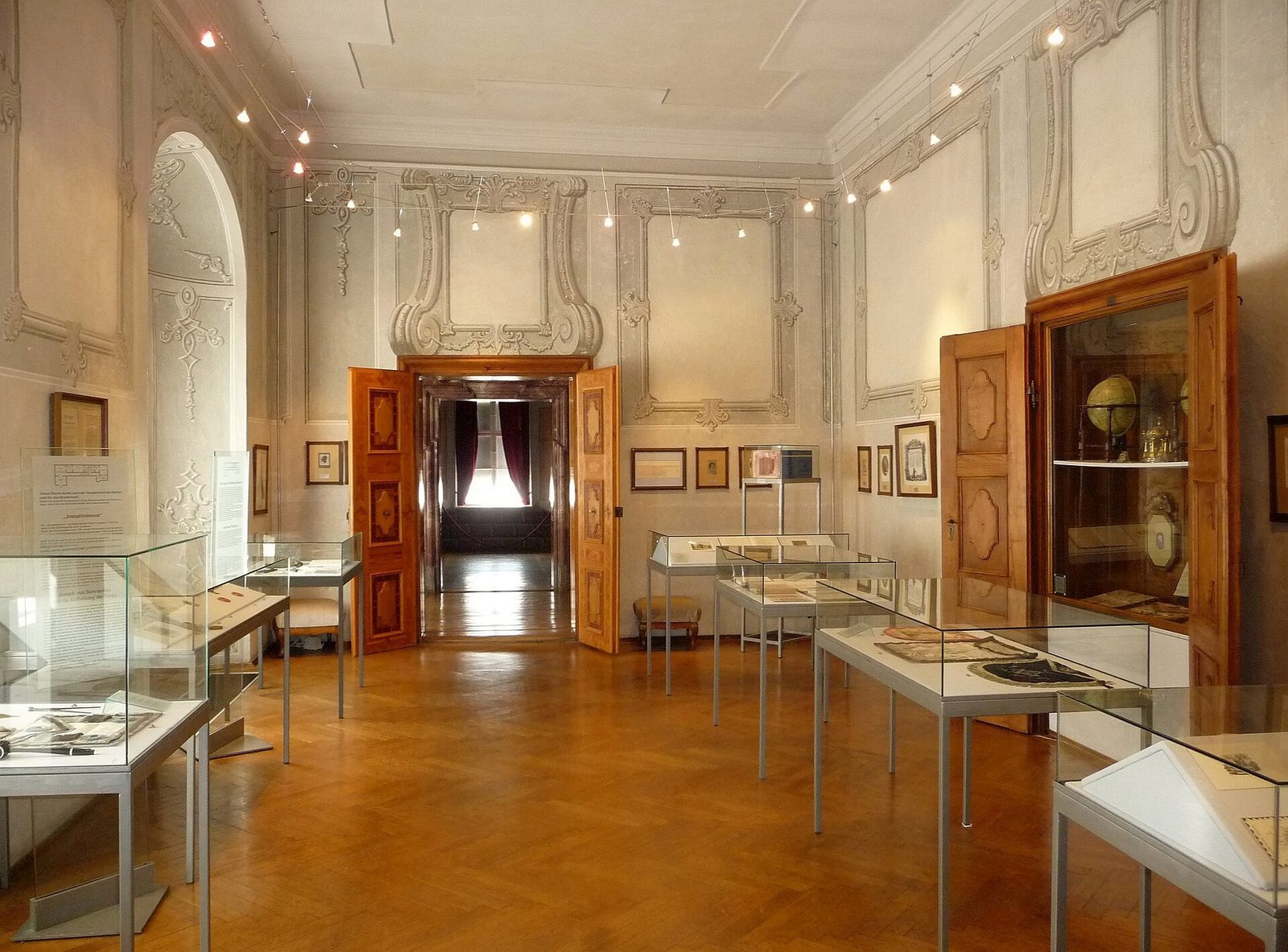
Rooms for a Masonic lodge were fitted within the castle during its Baroque remodelling. The castle’s 18th-century artistic work includes contributions by painters Johann Jakob Zeiller and Daniel Gran, as well as Rincolin, an Italian painter who specialized in perspective and was buried at Rosenau. Renovation work in 1972 uncovered Masonic symbols beneath later covering and overpainting.
Estate settlement
Community and working buildings
The settlement, formed during the Schallenberg period, is almost wholly preserved. Its buildings include an almshouse or hospital, a forester’s house, a former manor farm, a ribbon-weaving workshop, a carriage shed, a rectory, and an elementary school.
Holy Trinity parish church
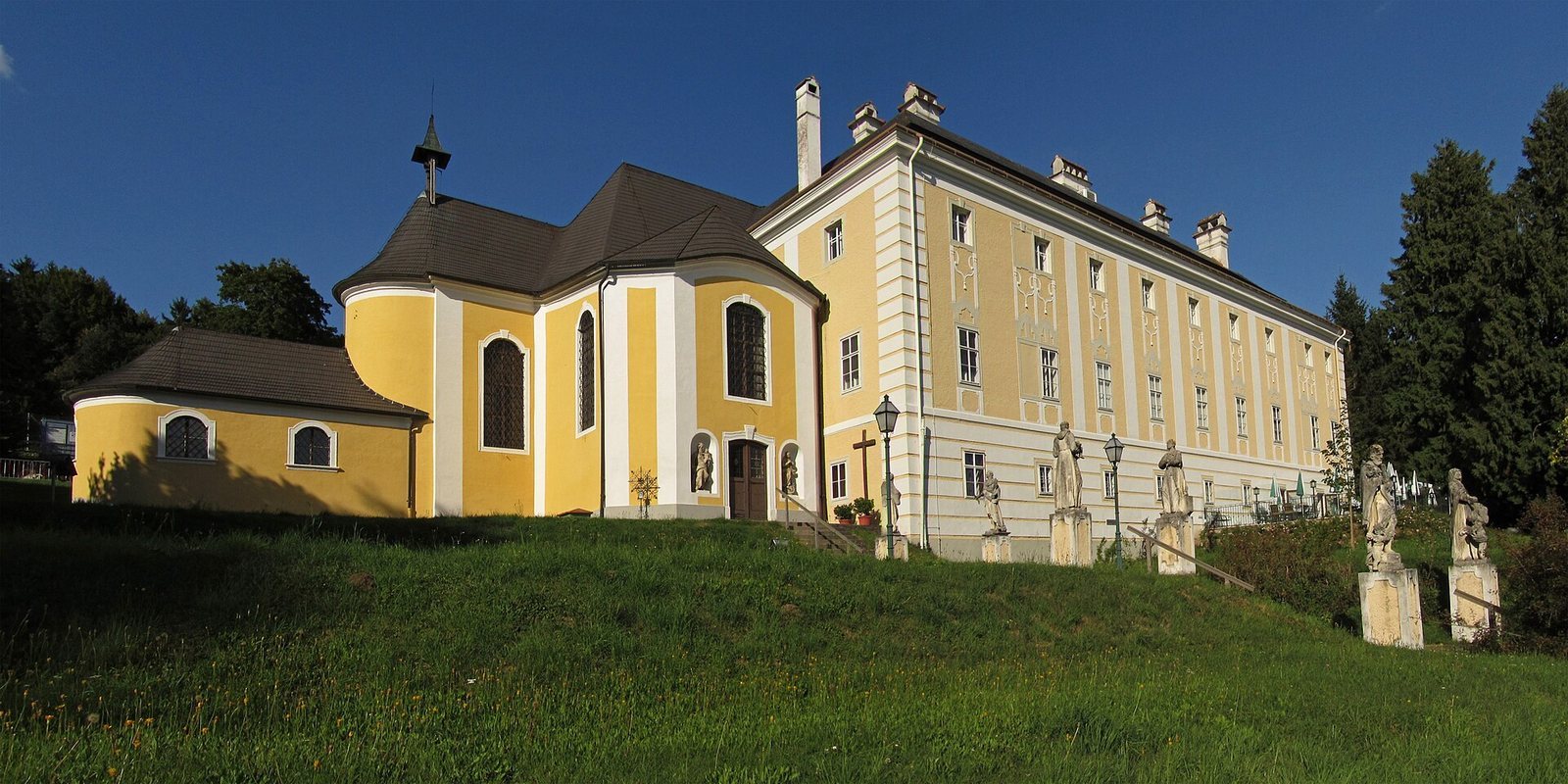
The Holy Trinity parish church contains a ceiling fresco painted by Johann Jakob Zeiller in 1739, depicting the adoration of the Holy Trinity. Galleries for the castle owners’ family and staff were designed to be reached directly from the castle’s first-floor rooms.
Bismarck Tower
Built in 1907 north of the castle, the Bismarck Tower is a monument to German statesman Otto von Bismarck. It is Austria’s only Bismarck tower.
Freemason Museum collection
The museum’s displays include numerous loans from the Grand Lodge of Austria and material from the German Freemason Museum in Bayreuth, the lodge of craftspeople involved in the work of Vienna’s St Stephen’s Cathedral, and the Lower Austrian Provincial Museum. Objects from private collections and the English Grand Lodge also entered the museum. Members of Quatuor Coronati, a Masonic research lodge devoted to the study of Freemasonry, curated most of its exhibitions and helped bring these objects together.