Agios Athanasios Site, Ithaca: A Mycenaean Palace Complex
Site at a Glance
- Popularity
- Medium
- Country
- Greece
- Primary era
- Bronze Age
- Eras represented
- Bronze Age
- Civilizations
- Mycenaean
- Site type
- Domestic
- Remains
- Palace
On this page6 sections
History
The Mycenaean palace and the Odysseus tradition
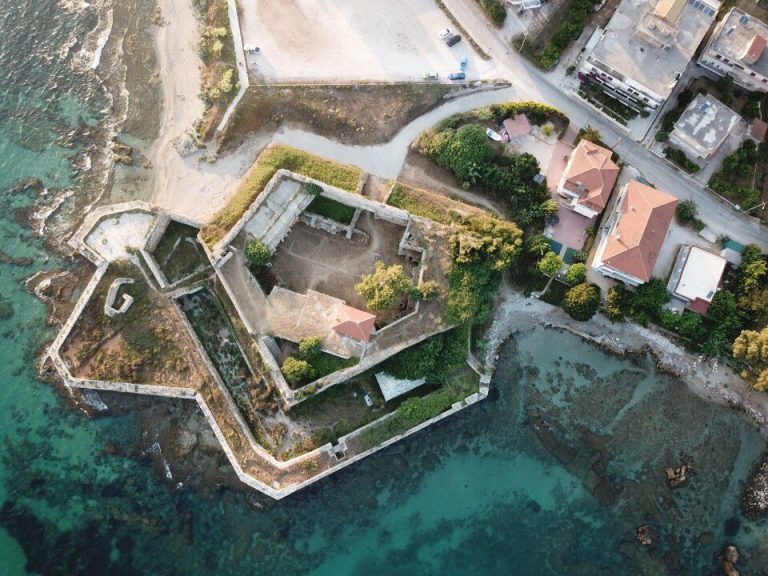
The Agios Athanasios site, also known as Homer’s School and the Palace of Odysseus, is a palace complex built around 1300 BCE by the Mycenaean civilization of the Late Bronze Age, in northern Ithaca, Greece. Its association with Odysseus has made the site central to debate over the location of the island described in Homer’s poems.
The name Palace of Odysseus reflects a tradition linking the ruins to Odysseus, the legendary Greek hero and king of Ithaca known from the Iliad and Odyssey, poems traditionally dated to the eighth century BCE. Archaeologist Thanasis Papadopoulos identified the complex as the palace of Odysseus and his wife Penelope, but whether it belonged to a historical king named Odysseus remains unknown. Inscriptions found at the site may point to local religious worship of Odysseus. Some scholars consider the remains a close match for the palace described in the poems and evidence that Ithaca was an important Mycenaean center of power.
Debate and archaeological investigation
The location of Homer’s Ithaca has long been disputed. Before the palace ruins were discovered, the limited archaeological evidence on Ithaca led some to place the Homeric island elsewhere, including on Lefkada or on Paliki, a peninsula in western Kefalonia. In the nineteenth century, Heinrich Schliemann instead proposed Mount Aetos in southern Ithaca as the site of Odysseus’s palace.
Study of the Agios Athanasios ruins began in the nineteenth century. Excavations directed by Papadopoulos started in 1994 and continued for 16 years; the palace ruins were discovered in 2010.
Remains
Palace layout
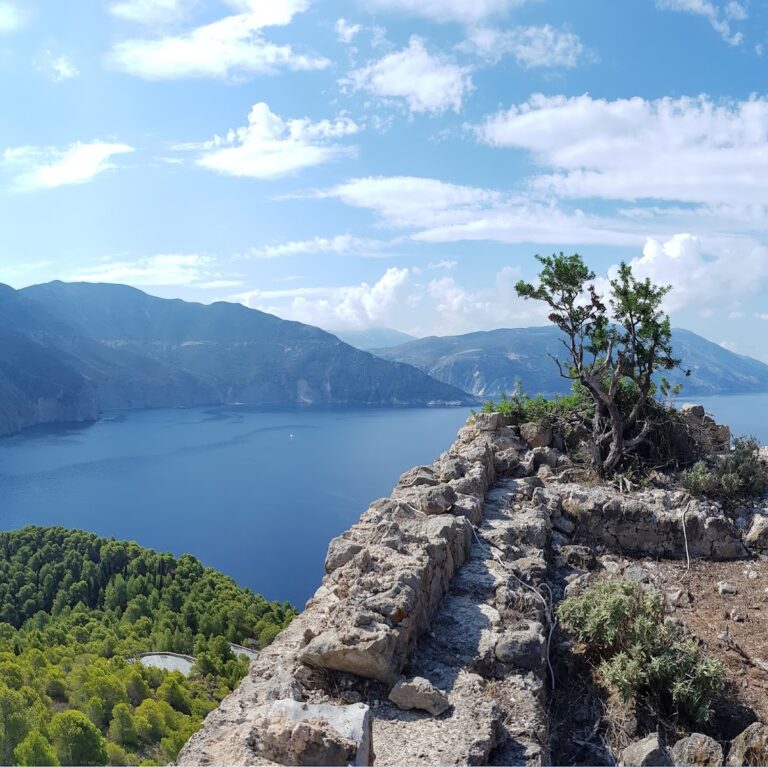
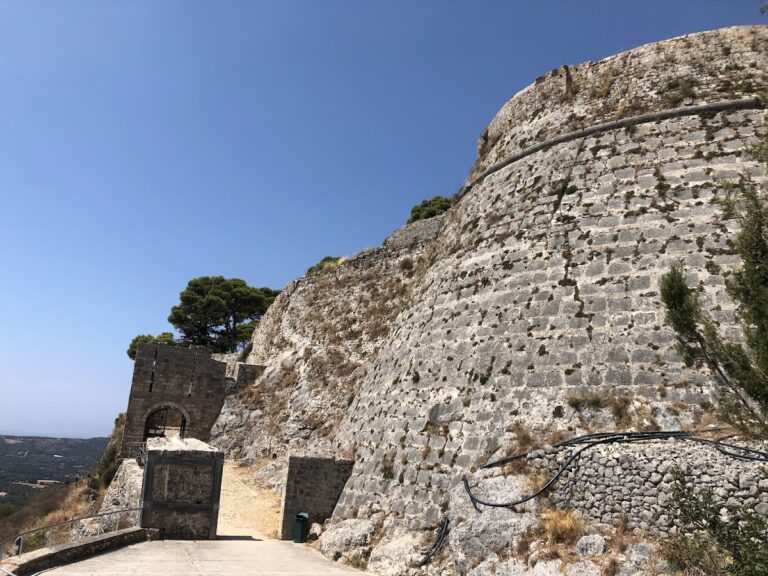
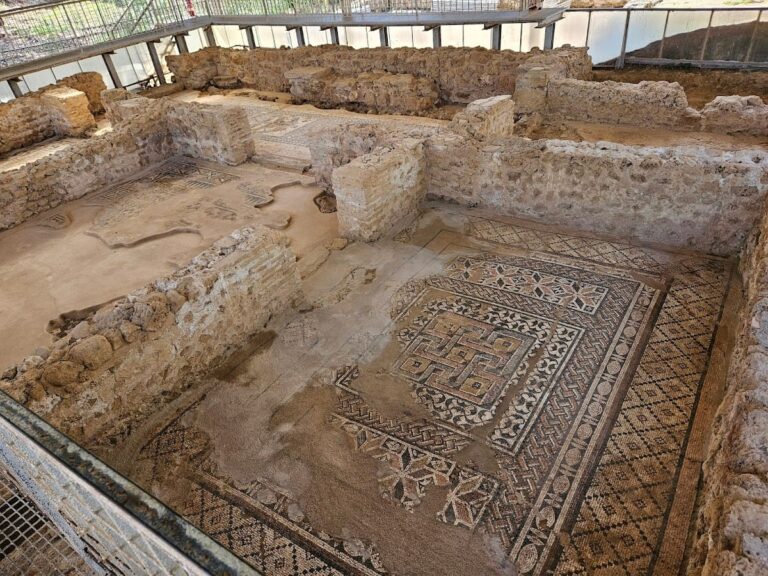
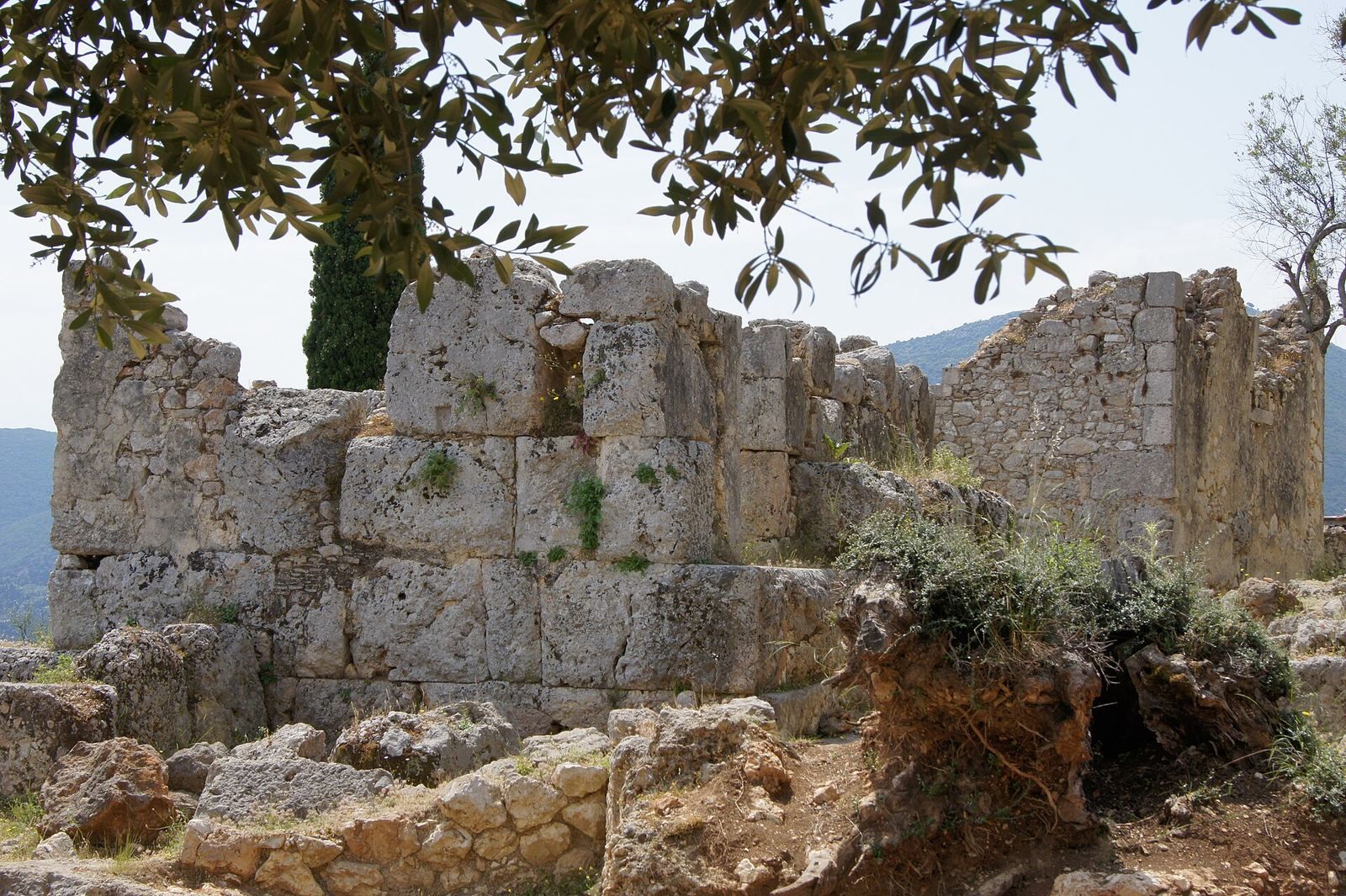
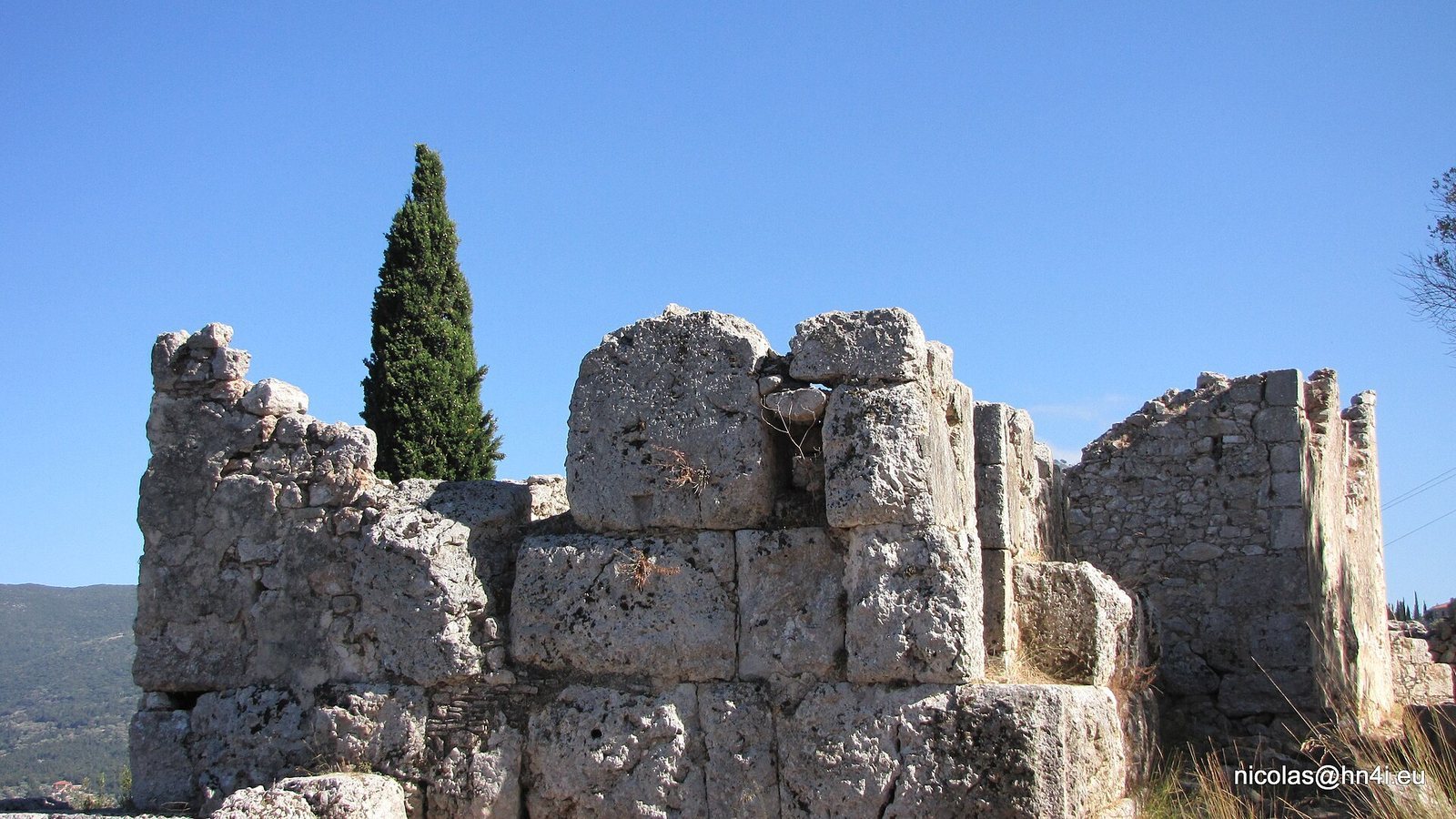
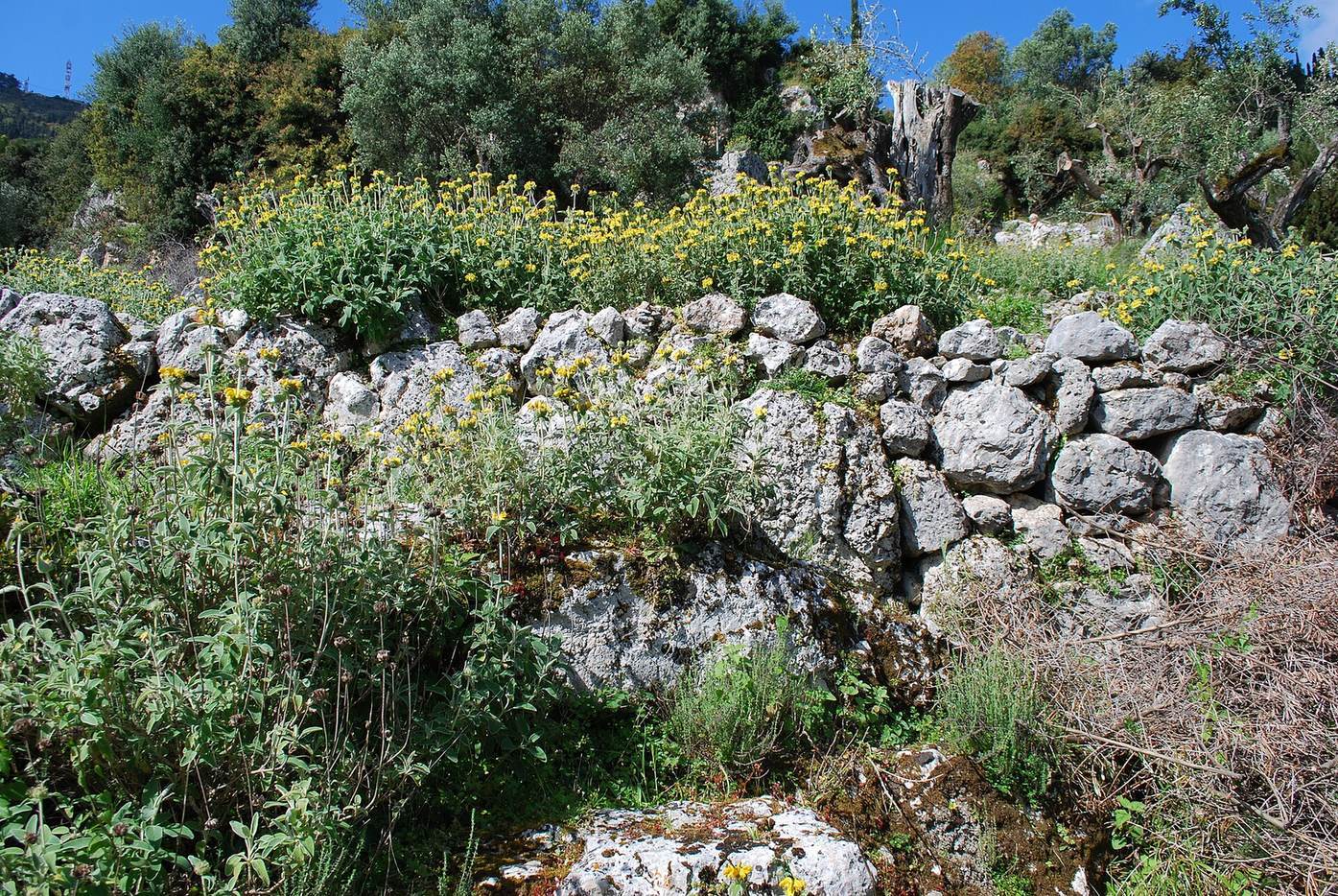
The ruins occupy elevated ground among olive groves in northern Ithaca, with views across Frikes Bay and the Ionian Sea. The palace appears to have had two or three levels. Its surviving features include walls built from exceptionally large stones, stepped terraces, and stairs cut into the rock. The complex also has similarities to other Mycenaean palaces, including those at Mycenae and the Palace of Nestor.
Water systems and other finds
Identified features include fountains, workshops, storerooms, a drainage system, and an underground water reservoir. A funerary monument and a well at the site date to around 1200 BCE, later than the palace’s construction. Fragments of Mycenaean pottery have also been found there.