Haldenberg Castle Site (Mammendorf): Seat of a Medieval Hofmark
Site at a Glance
- Popularity
- Very Low
- Country
- Germany
- Primary era
- Unclassified
- Eras represented
- Unclassified
- Civilizations
- Unclassified
- Site type
- Military
- Remains
- Castle
On this page7 sections
History
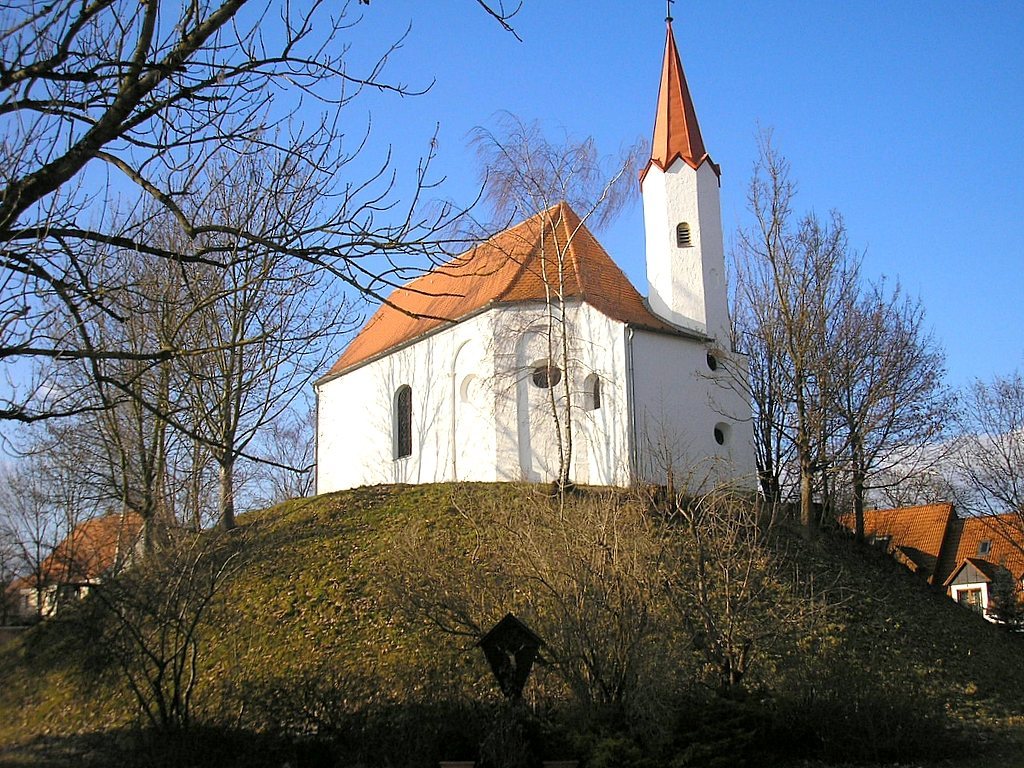
The Haldenberg castle site lies in Mammendorf, Germany, and served as the seat of the local Hofmark, a Bavarian manorial jurisdiction associated with a lord’s local rights. Also known as Iberberg or Biberberg, the hilltop site was connected with Mammendorf’s medieval estate and lordship.
Early records and the estate
A man named David of Mammindorf appears in a document of the Diocese of Freising from around 759. Mammendorf probably had a royal estate in the ninth century, described as an oppidum, meaning a town or fortified settlement. The rampart on the hill may have enclosed the estate’s manor or central residence.
Konrad and the changing frontier
In 1260, Konrad von Haldenberg received the lordship of Haldenberg through a division of inherited property. He belonged to the Hegnenberg family’s service nobility, whose members served a ruler or lord. Around 1268, Konrad built a new castle called Haltenberg on the high bank of the Lech, north of Landsberg, and sold his holdings at Mammendorf.
Konrad’s move probably reflected the transfer of territories along the Lech frontier from the Hohenstaufen, a medieval ruling dynasty he had served, to the Wittelsbachs, a major ruling house in Bavaria. Conradin, the last male heir of the Hohenstaufen, was executed in Naples in 1268. Former Hohenstaufen servants then had to seek new political patrons. The Wittelsbachs established castles and fortifications along their western frontier, including Haltenberg, Kaltenberg, and Hofhegnenberg.
The Hofmark and its destruction
During the High and Late Middle Ages, the Iberberg was the seat of Mammendorf’s Hofmark castle. Although Konrad had moved to the Lech, the Haldenberg family kept part of the Hofmark. The family’s male line ended in the early fifteenth century. Dorothea and Albrecht von Hegnenberg left most of their property to their daughter, Walburga von Welden.
The castle or manor complex was destroyed after the Battle of Alling in 1422, a regional Bavarian conflict. Around 1430, Dorothea, widow of the last Haldenberger, transferred her remaining shares to the community in return for a promise of a perpetual memorial service. The annual observance continued until 1923.
Remains
Earthwork enclosure and manor
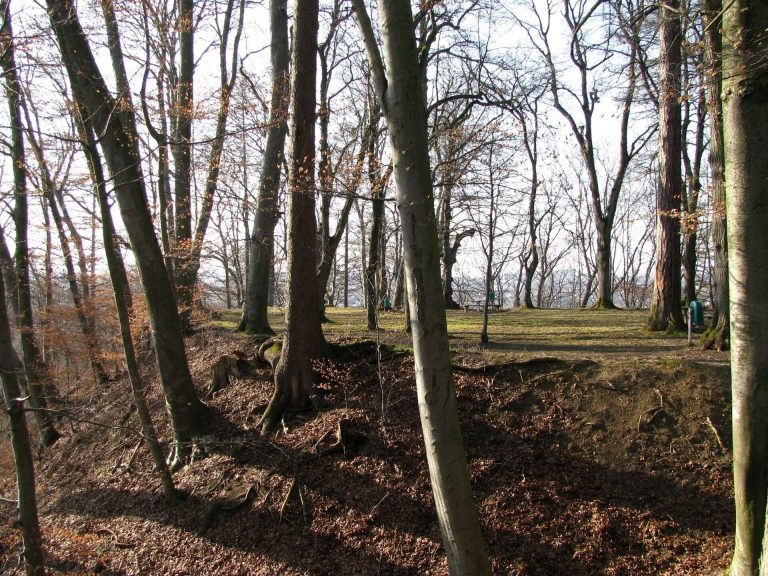
The site stands at about 555 metres above sea level, roughly 750 metres northwest of the Church of St. Nicholas in Mammendorf. Its four-sided earthwork has sides about 90 to 100 metres long. Aerial photographs show a quadrilateral plan shifted toward the east. Parts of the northern and southeastern ramparts remain visible, rising to about two metres; agricultural use has substantially damaged the earthwork. The hamlet of Haldenberg adjoins it to the southeast, and a round water tower stands to the west.
The medieval Hofmark complex appears to have been a fortified manor that reused the older ramparts. The enclosure’s shape resembles a roughly rectangular earthwork form found at some Late Iron Age sites, although its plan alone does not establish its original purpose.
Hallstatt-period settlement
An excavation below the hill in 1996 uncovered a settlement from the Hallstatt period, an early Iron Age cultural period in Central Europe. The settlement is not considered directly connected with the castle site.