Fuglsang Manor: A Historic Estate and Cultural Centre in Denmark
Site at a Glance
- Popularity
- Low
- Country
- Denmark
- Primary era
- Modern
- Eras represented
- Modern
- Civilizations
- Danish
- Site type
- Domestic
- Remains
- Manor House
On this page13 sections
History
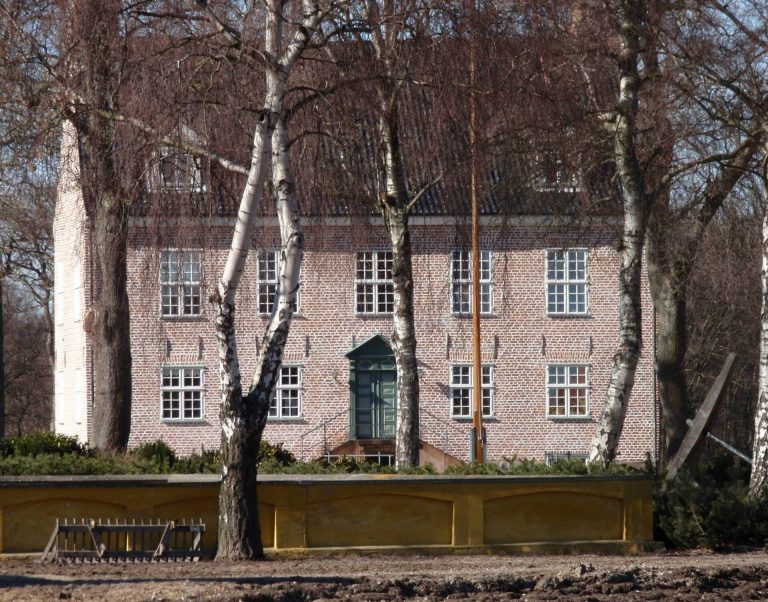
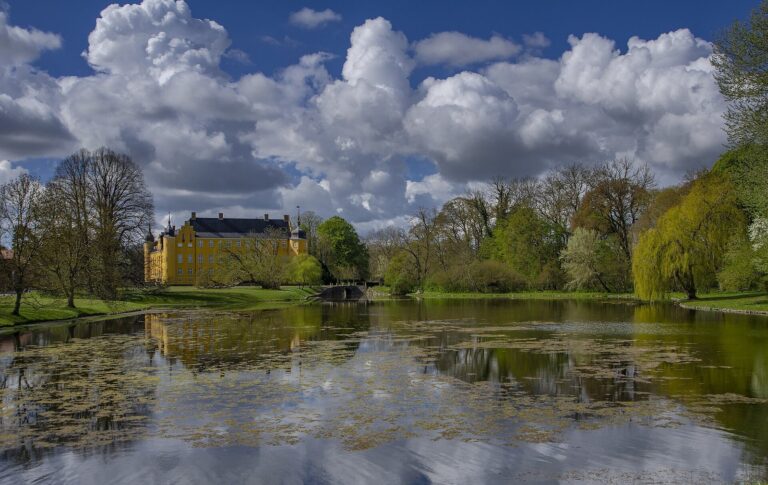
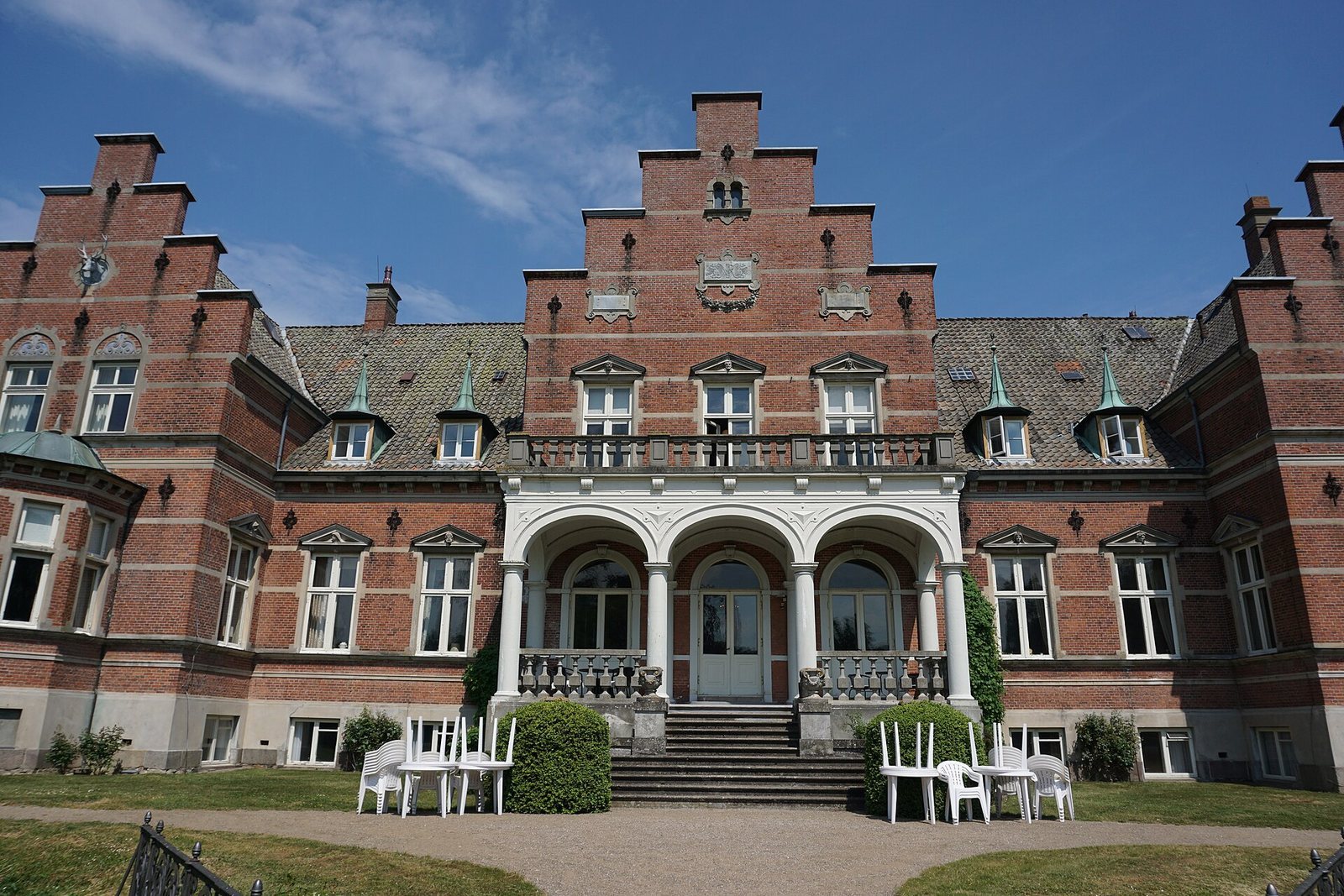
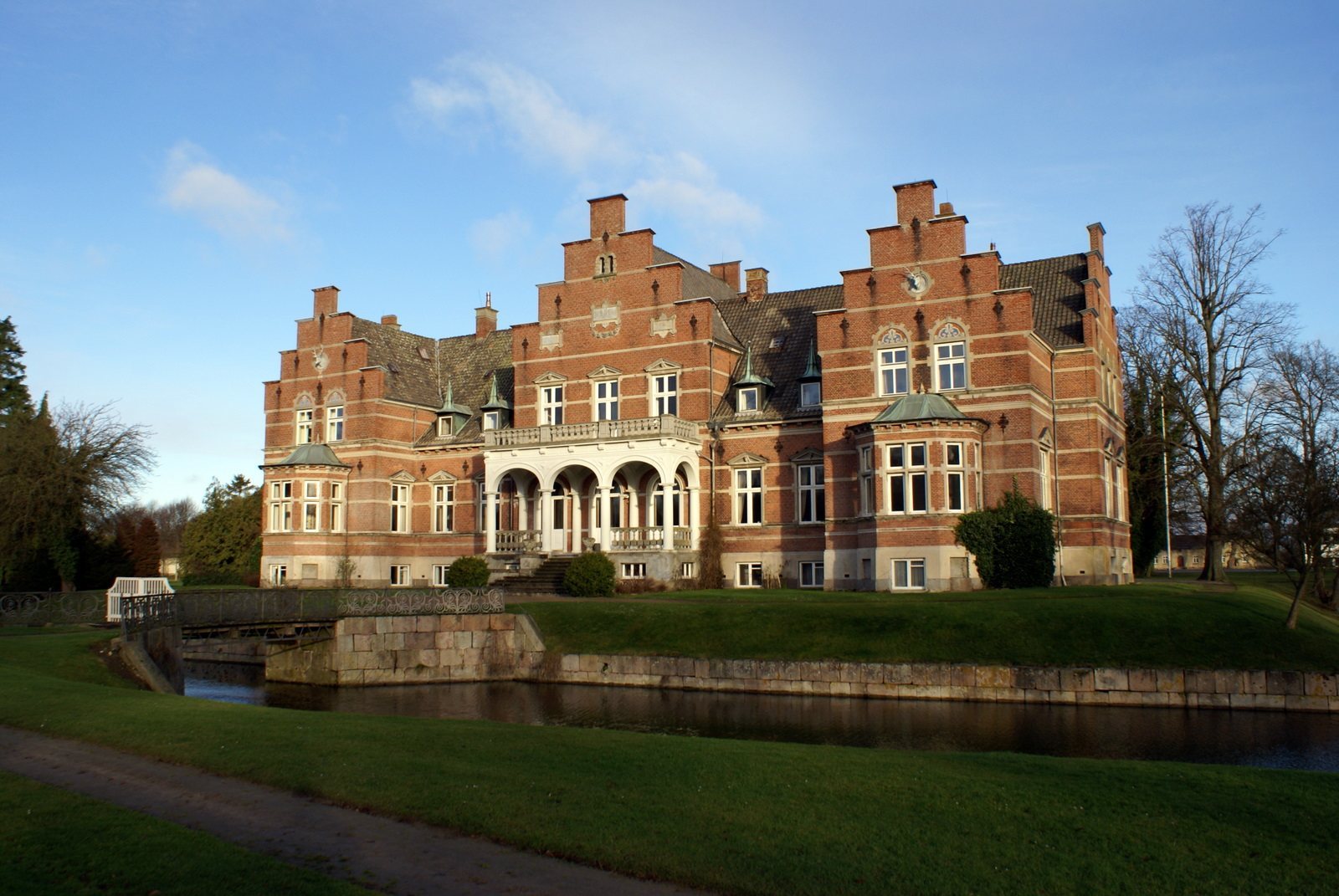
Fuglsang Manor is an estate at Toreby on the island of Lolland in southeastern Denmark, with a history traced to 1368. The present house was built in 1868–69 in the Historicist style, a nineteenth-century approach that drew on earlier architectural forms. The estate later became known for its musical and artistic life.
The medieval castle and later rebuilding
Fuglsang’s original fortified castle stood several hundred metres north of the present manor. Its position beside marshland and near the area’s only ford gave the site strategic value. In the sixteenth century, the estate was rebuilt on a larger islet at the manor’s present location.
In 1849, the building on the islet was demolished and replaced by a Neoclassical main house, a style that revived forms associated with ancient Greek and Roman buildings. A park was laid out at the same time. Members of the de Neergaard family owned the estate from 1819 to 1947. Rolf Viggo de Neergaard took it over from his parents in 1866. Fungal damage to the timber led to the demolition of the earlier main house, and the present manor followed in 1868–69.
The de Neergaard household and the arts
In 1885, Rolf Viggo married his cousin Bodil Neergaard, the daughter of composer Emil Hartmann. The couple welcomed artists and musicians into their home. Edvard Grieg and Carl Nielsen became close friends and frequent guests, and visiting musicians gave private concerts there on summer evenings.
After Rolf Viggo died in 1915, Bodil managed the estate and organized its household and religious life. In 1947, she left Fuglsang to Det Classenske Fideicommis, a legally restricted trust whose property is held under specified conditions. Her bequest required the house and garden to become an artists’ retreat after her death. Bodil died in 1959, and Refugiet Fuglsang opened in 1962, operating until 1995.
Fuglsang as a cultural centre
A local musical society was established in 1996. Since 1997, the professional, nine-member Storstrøm Chamber Ensemble has been based at Fuglsang, where its small group of musicians performs and teaches. The estate is operated as a cultural centre and active agricultural property. Concerts and other cultural activities continue there, and an agreement with the University of Copenhagen supports cultural and academic work.
Remains
The present manor occupies a larger islet surrounded by broad moats. Its main house is in the Historicist style, and the park remains visible. The Fuglsang/Priorskov estate covers 1,731 hectares and is managed for agriculture as well as cultural use.
The former castle site
Remains of the original castle can still be seen several hundred metres north of the manor. The site lies at the edge of marshland, where Flintinge Stream enters the Guldborgsund Strait.
The manor house and interiors
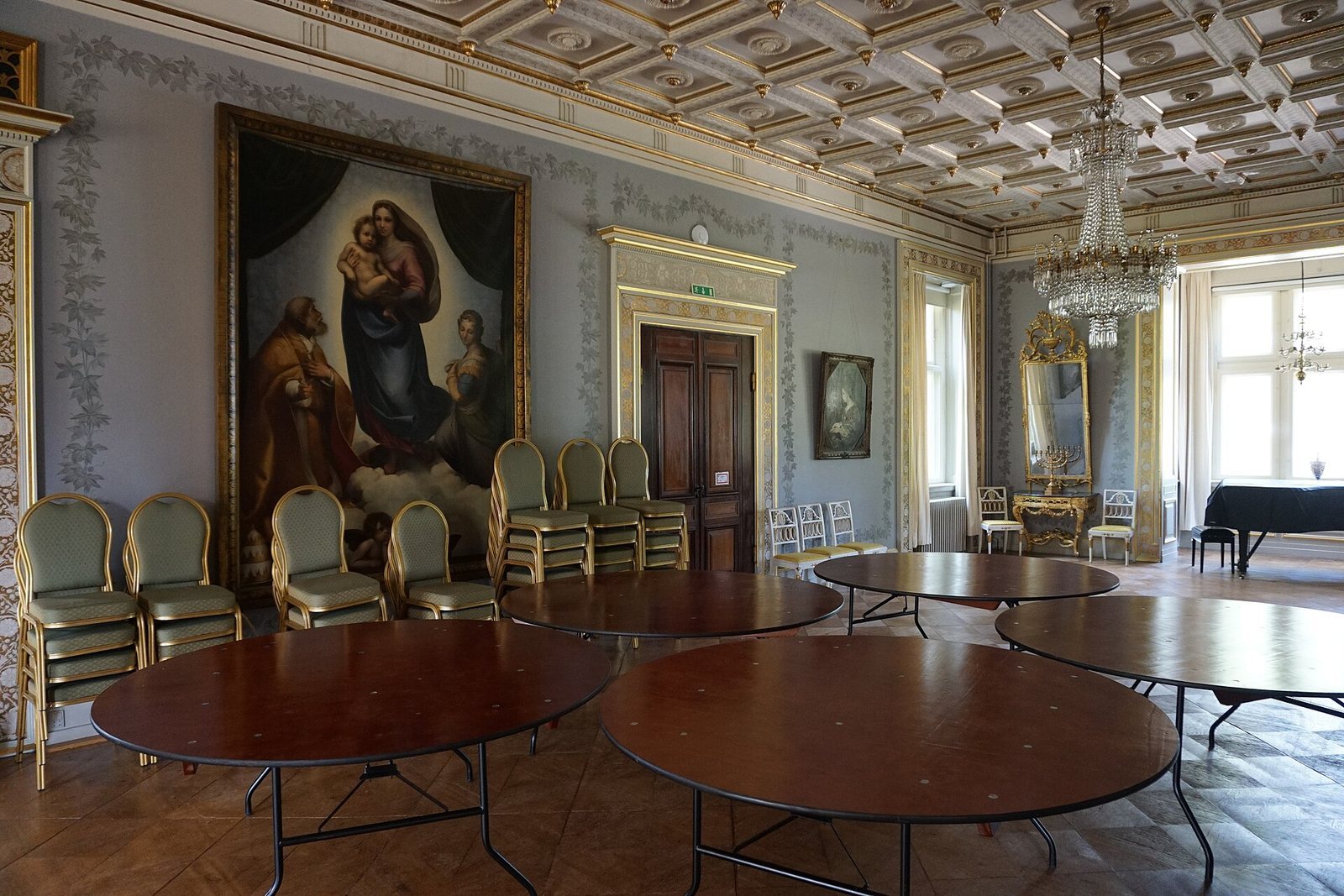
Music room
The manor’s large music room is notable for its exceptional acoustics.
Agnethe Room
Next to the music room, the Agnethe Room has a ceiling fresco, a painting made on wet plaster. Axel Viggo Wørmer painted a scene from the Danish folk tale Agnete and the Merman, which inspired Hans Christian Andersen.
Library
Wørmer also decorated the library in a Pompeian style inspired by Roman wall painting associated with Pompeii. The room formerly served as a billiard room.
Associated cultural buildings
Kumus
The former home of Fuglsang’s head farmer has been converted into a cultural centre. It includes a concert hall called Kumus.
Fuglsang Art Museum
The purpose-built Fuglsang Art Museum stands near the manor’s main house. It opened in January 2008 and presents permanent and temporary exhibitions.