Palace Brühl-Marcolini: A Baroque Garden Palace in Dresden
Site at a Glance
- Popularity
- Medium
- Country
- Germany
- Primary era
- Early Modern
- Eras represented
- Early Modern
- Civilizations
- Electorate of Saxony, Holy Roman Empire
- Site type
- Domestic
- Remains
- Elite Residence
On this page10 sections
History
Estate and first palace
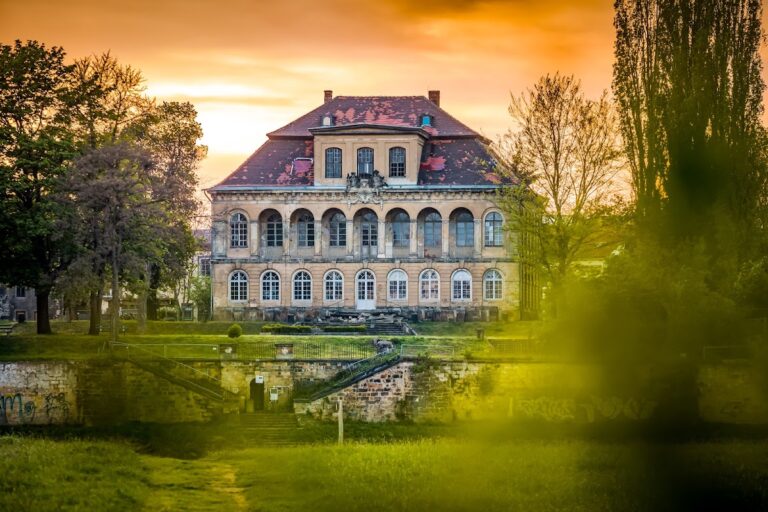
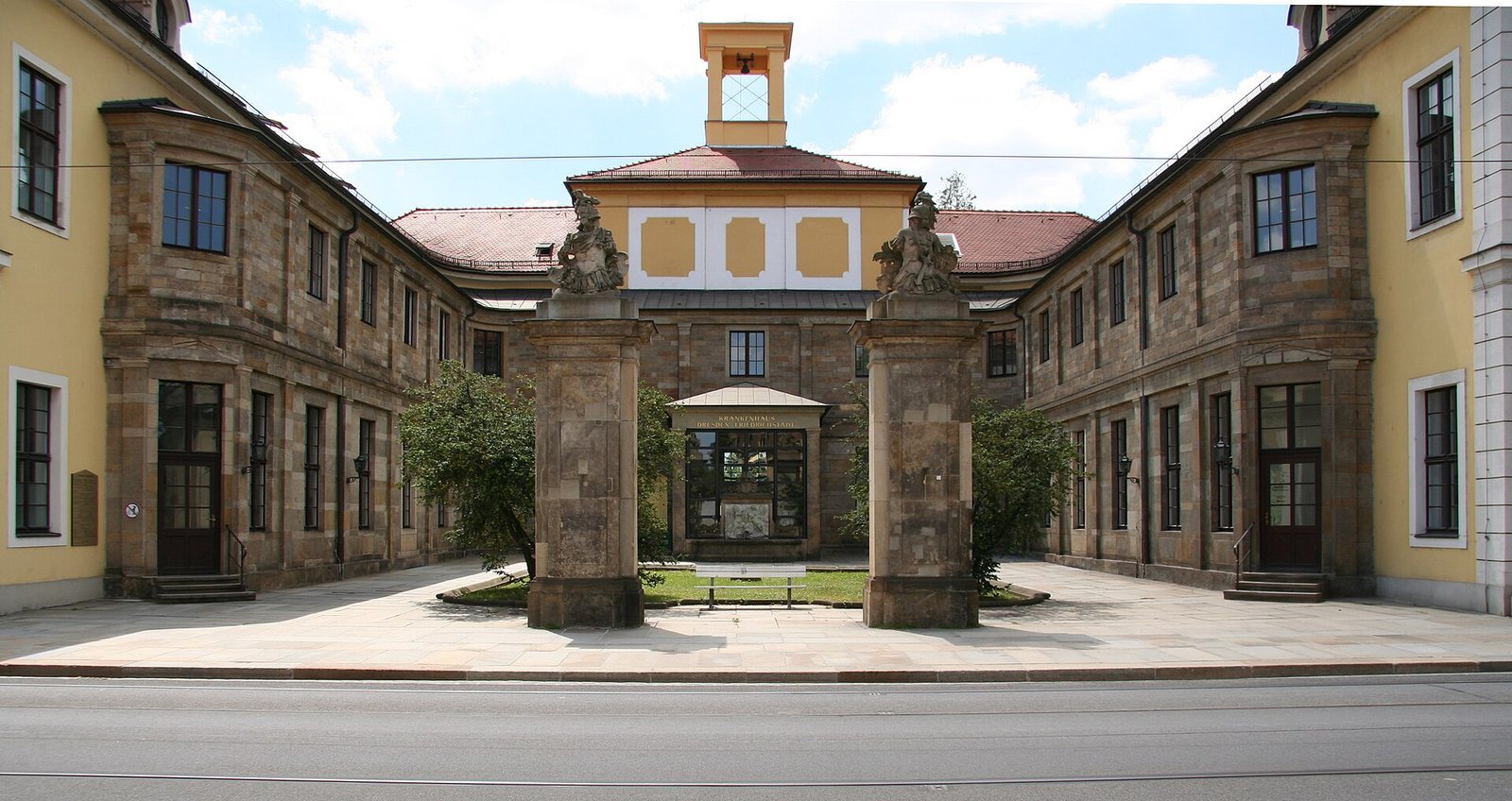
Palace Brühl-Marcolini is a Baroque palace in Friedrichstadt, Dresden, Germany. Baroque was an elaborate European artistic and architectural style. The estate lay in Ostra, a suburb laid out from 1670 on the Elbe’s left bank, and a grand garden occupied the site by the late seventeenth century. Imperial Count von Manteuffel, whose title denoted a noble rank in the Holy Roman Empire, bought the property in 1718. Augustus the Strong, Elector of Saxony and King of Poland as Augustus II, acquired it in 1726 and gave it the following year to Prince Friedrich Ludwig of Württemberg-Winnental. The prince’s wife, Countess Ursula Katharina Lubomirska, born Altenbockum and formerly Augustus’s mistress, probably commissioned a garden palace in 1727–28, designed by Johann Christoph von Naumann.
Brühl and Marcolini
In 1736, Lubomirska sold the estate to Heinrich von Brühl, a minister at the Saxon court. Brühl commissioned Johann Christoph Knöffel to enlarge the palace and its grounds, including with side wings and an orangery. The grounds were arranged as a French garden, a formal design organized around geometric axes.
Count Camillo Marcolini acquired the palace in 1774 and commissioned its renovation by Johann Daniel Schade and Johann Gottfried Kuntsch. Around 1780, architect and painter Johann Ludwig Giesel and architect Christian Traugott Weinlig created the Chinese and Pompeian rooms. Their European decorative styles drew, respectively, on Chinese art and ancient Roman art associated with Pompeii.
Diplomacy and changing uses
Napoleon Bonaparte, the French emperor whose wars reshaped European politics, stayed at the palace from 10 June 1813. On 26 June, he met Austrian diplomat and statesman Klemens von Metternich in the Chinese room. Metternich’s attempt to secure concessions from Napoleon concerning Poland, Prussia, northern Germany, and Illyria failed. Austria entered the war on 11 August. The Treaty of Teplitz, signed on 9 September, made the restoration of the European balance a war aim.
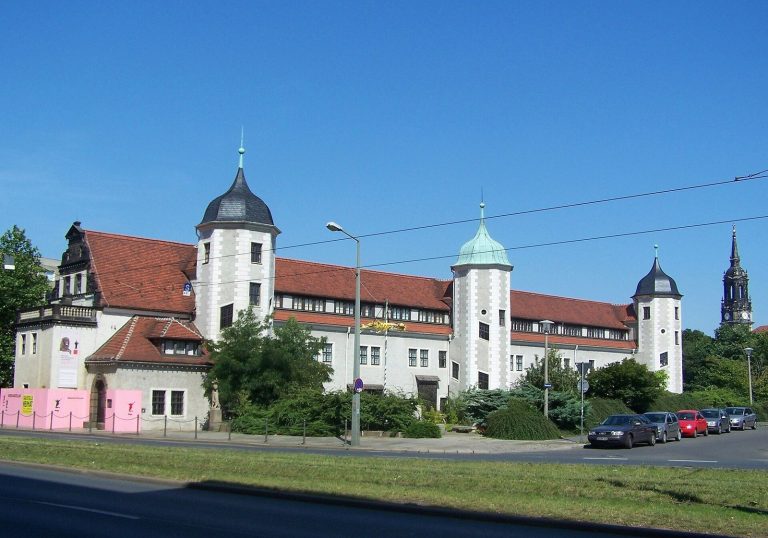
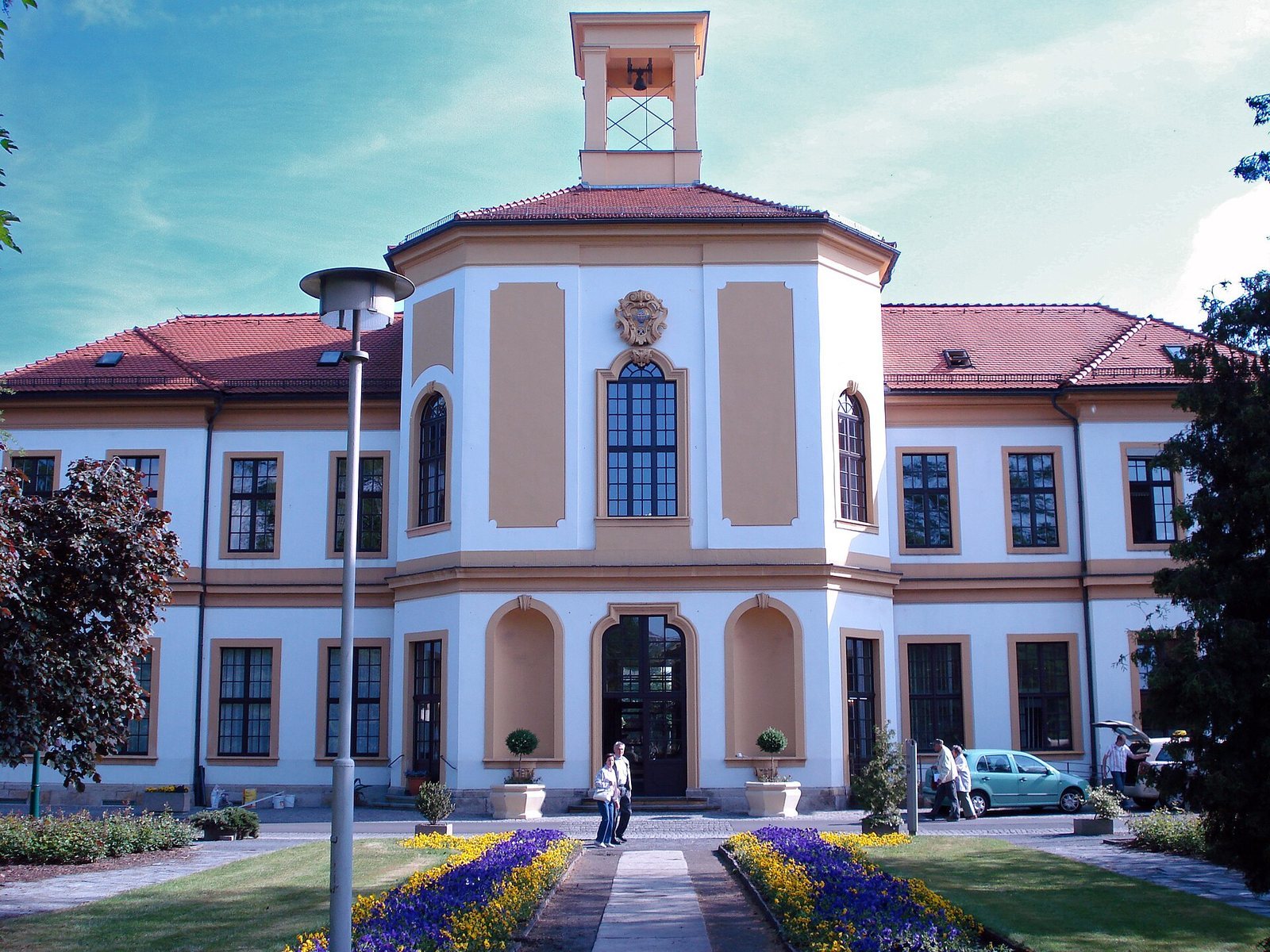
In 1835, Dresden city councilor Carl Ernst Werner converted the palace into rental apartments. Its tenants included sculptor Ernst Julius Hähnel and composer Richard Wagner. Dresden-Friedrichstadt Hospital has occupied the site since 1849. Hospital construction and alterations removed the French garden and its main axis; the palace and later buildings on the grounds now house the hospital. The February 1945 air raids on Dresden damaged palace sculptures.
Remains
The surviving Baroque palace forms the core of the site. Its historic grounds combined a formal entrance courtyard with a landscaped garden, while later hospital buildings developed around the palace.
Palace and interiors
Early plan and wings
The first garden palace had a central octagonal hall with a ballroom above it, as well as short cross wings facing what later became Friedrichstraße. Knöffel’s enlargement added side wings and an orangery, forming a formal entrance courtyard.
Decorative rooms
The Chinese and Pompeian rooms survive within the palace and have both been restored. Giesel painted the Pompeian room.
Main portal and sculpture
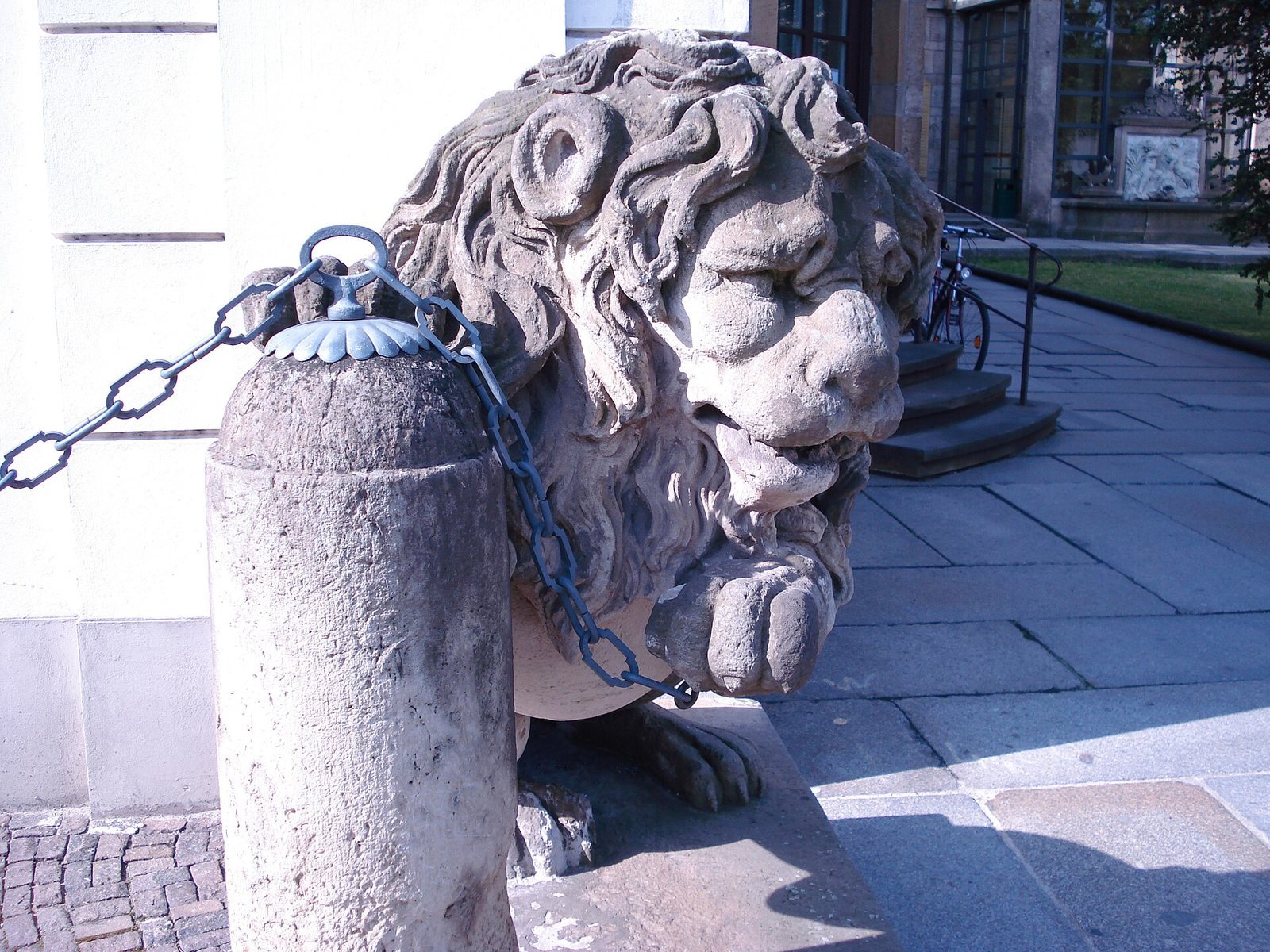
The main portal is decorated with two sandstone lions, two herms, and the coats of arms of Count Camillo Marcolini and his countess, née O’Kelly. Herms are sculpted heads or figures mounted on pillars. Johann Baptist Dorsch made the lions, the two herms, and the coats of arms. Thaddäus Ignatius Wiskotschill produced lanterns, additional herms, and garden figures. The garden figures were later placed in Dresden’s Bürgerwiese, a public park.
Garden and fountain
The garden’s formal design centered on a main axis that ended at the Neptune Fountain, named for Neptune, the Roman god of the sea. Italian sculptor Lorenzo Mattielli made the fountain; work began in 1741 and was completed in 1744. Hospital development later led to the loss of the garden and its main axis.