Jägerhof in Dresden: A Saxon Renaissance Hunting Lodge and Museum


Site at a Glance
- Rating
- 4.8
- Popularity
- Very Low
- Country
- Germany
- Primary era
- Early Modern
- External website
- Open
- Eras represented
- Early Modern, Modern
- Civilizations
- Electorate of Saxony, Holy Roman Empire
- Site type
- Domestic
- Remains
- Palace
On this page13 sections
History
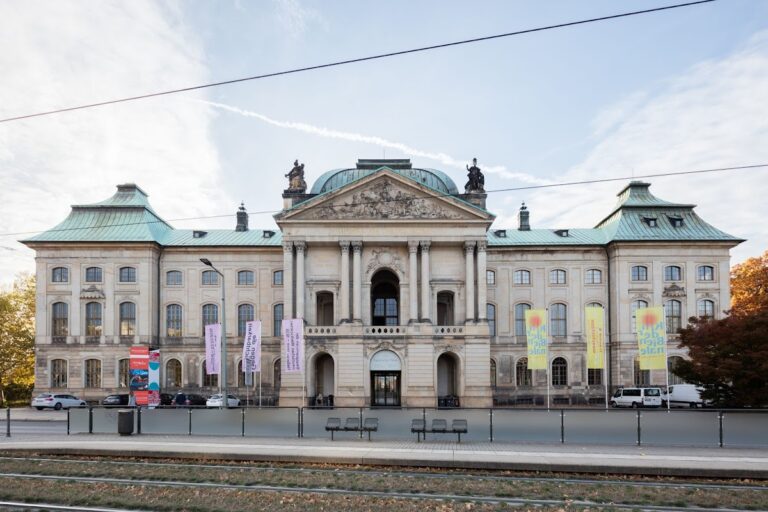
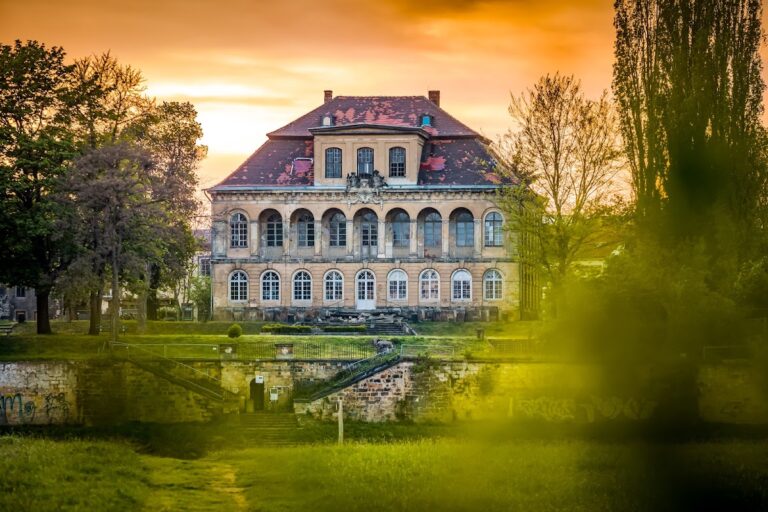
Jägerhof is a Renaissance monument in Dresden, Germany, built in the Saxon Renaissance style for August, Elector of Saxony, during the sixteenth century. As the oldest architectural monument in Dresden’s Neustadt, it stands east of Neustädter Markt on Köpckestraße and reflects changing religious, courtly, military, and museum uses.
From monastery site to electoral residence
An Augustinian monastery, a religious community following the rule and traditions associated with Saint Augustine of Hippo, occupied the site before the Reformation. This sixteenth-century religious movement challenged established Western Church structures and led to the dissolution or transformation of many monasteries in Protestant territories. The Dresden monastery was dissolved in 1539 and demolished by 1546.
Beginning in 1569, August commissioned a four-wing Jägerhof. The building’s new upper storey was added by 1617, completing the complex. Its upper-storey Hunters’ Hall represented the electoral court, the ruler’s household and governing entourage, through paintings and sculptures. The southern gable also acquired its characteristic late-Renaissance form during this period. In 1654, forty bears were kept at the Jägerhof.
Military and urban transformations
From 1830 to 1877, the Jägerhof served the Saxon military as a cavalry barracks. After the barracks at Albertstadt were completed, the military units moved there in stages. A tram depot was built on the site in 1881 and relocated to Mickten in 1897. The former depot area remained an open storage yard until 1901.
Further changes reduced the historic complex to its west wing. Carl Adolph Canzler and Bernhard Hempel directed its remodeling, after which the surviving wing served at different times as a workshop, storehouse, and poorhouse.
Preservation and museum use
Oskar Seyffert prevented the Jägerhof from being demolished by arranging extensive renovation between 1911 and 1913. The work prepared the building for the Museum of Saxon Folk Art, originally called the State Museum of Saxon Folk Art.
The February 1945 air raids on Dresden burned out the building’s two upper storeys. Rooms were provisionally prepared for a first Christmas exhibition in December 1945, and the Museum of Saxon Folk Art reopened in 1950. The other parts of the building were reconstructed later. The Jägerhof now houses the Museum of Saxon Folk Art, while the Puppet Theatre Collection has occupied its upper storey since 2005.
Remains
Surviving west wing
Renaissance structure
The Jägerhof originally had four wings, but the west wing is the surviving part of the complex. Its Renaissance character is expressed by volutes, spiral or scroll-shaped ornaments, on the gable and by three polygonally faceted stair towers. Each tower has several straight sides rather than a circular plan and is topped by a curved hood, a shaped roof covering its upper section.
Ground floor and reconstructed upper storeys
The ground floor retains its simple groin vaulting in original form. A groin vault is a ceiling formed where two barrel vaults intersect, creating curved surfaces that meet along diagonal lines. The fires that followed the 1945 air raids destroyed the original upper storeys, which were later reconstructed along with the other affected sections of the building.
Hunting sculpture and public fountains
Hunter with a dog
A sandstone hunter with a dog stands on a pedestal in front of the Jägerhof. The present statue is a copy made by Hans Thiele between 1979 and 1983. After it was knocked from its pedestal in January 2013, the Dresden Zwinger Building Workshop renewed it, and it was re-erected in May of that year.
Original hunter sculptures
The original hunter sculptures once stood on the sandstone balustrade, a railing formed from supporting members and a top rail, in front of or on the building’s southern gable. They were installed at Grillenburg Hunting Lodge from approximately 1900 to 1952. Today they are displayed in the museum foyer and in the staircase of the Museum of Game and Bird Studies at Augustusburg Hunting Lodge. Their creation has been attributed variously to Conrad Buchau around 1645, to Christoph Walther IV as early as around 1602, and to Christoph Walther IV around 1620.
Blossom Tree
Between the Jägerhof and the residential block at Neustädter Markt stands Eva Peschel’s Blossom Tree, a ceramic fountain made in 1979. Its basin is 4.7 metres wide and 35 centimetres high. The trunk rises approximately 3 metres and measures 80 centimetres in diameter, with flower rosettes arranged on three levels.
Folk Art Fountain
A Folk Art Fountain stands on the opposite side of the Jägerhof and was reconstructed in 1980. Its sandstone column serves as the water inlet and is 215 centimetres high. The basin is 74 centimetres high and measures 193 by 193 centimetres at its base.