Castle of La Brède: A Gothic Feudal Castle in France


Site at a Glance
- Rating
- 4.5
- Popularity
- Medium
- Country
- France
- Primary era
- Medieval
- External website
- Open
- Eras represented
- Medieval
- Civilizations
- Duchy of Aquitaine, English
- Site type
- Military
- Remains
- Castle
On this page9 sections
History
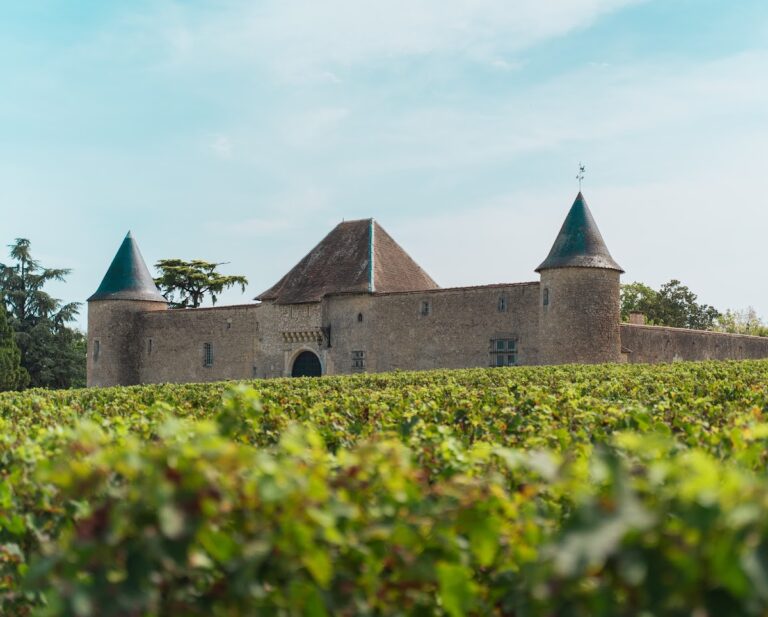
Castle of La Brède is a Gothic feudal castle in La Brède, France, whose construction began in 1306 during the fourteenth century on the site of an earlier castle. It developed as a fortified residence with defensive works and a surrounding moat, while later alterations continued through the nineteenth century. The castle is especially associated with Charles-Louis de Secondat, Baron de Montesquieu, the eighteenth-century French writer and political thinker best known for The Spirit of the Laws.
Medieval origins and changing ownership
The estate belonged to the La Lande family from the eleventh century until 1502. It then passed to the L’Isle family, who held it until 1577, followed by the Du Pesnel family, owners until 1686. The original defensive character remained important even as the castle was altered. During the sixteenth century, the surrounding moat was filled with water, reinforcing the fortress-like setting that continued to define the estate.
In 1686, the castle entered the Montesquieu family’s patrimony through the marriage of Jacques de Secondat to Marie-Françoise Du Pesnel. Their descendant Charles-Louis de Secondat was born at La Brède on 18 January 1689. Known by the name Montesquieu, he lived at the castle regularly throughout his life, wrote much of his work there, and carried out alterations to the estate.
Montesquieu’s legacy and modern preservation
The castle remained with Montesquieu’s descendants until the death of Countess Jacqueline de Chabannes in 2004. She was the last descendant of Denise de Secondat, Montesquieu’s youngest daughter. Ownership then passed to the private Jacqueline de Chabannes Foundation.
The surviving portion of the original library was donated by Jacqueline de Chabannes to the Bordeaux municipal library in 1994. Much of the library had been sold during the 1920s, while Montesquieu’s manuscripts formerly kept at La Brède were sold at the Hôtel Drouot in 1939. The castle was classified as a French historic monument in 1951. Part of its furnishings, including the so-called “President’s Bed,” entered the movable heritage register in 2006, and the entire estate, known as the Domaine de Montesquieu, received historic-monument classification on 7 May 2008. The estate joined the Maisons d’écrivain en Nouvelle-Aquitaine network in 2015.
Beginning in 2008, the Jacqueline de Chabannes Foundation undertook a major restoration campaign covering the castle, the park, and part of the furnishings. The Nouvelle-Aquitaine Regional Directorate of Cultural Affairs assisted with the work from 2016 to 2019.
Remains
Castle of La Brède survives as a Gothic fortified complex within a wooded estate of approximately 150 hectares in the Graves de Bordeaux vineyard region. Water surrounds the castle in a moat crossed by three wooden bridges. The final bridge reaches the castle courtyard, while the wider estate combines defensive remains, formal gardens, more naturalistic landscape design, avenues, and woodland.
Fortified complex and approaches
The castle retains the character of a fortress despite successive modifications. The first entrance gate opens onto a planted garden, and the castle courtyard and approaches include pink roses. The eastern facade is decorated with white climbing roses. From the first floor, views extend across the natural grounds and the designed landscape perspectives of the estate.
Gardens and wooded estate
Formal and English-style gardens
A French formal garden, created during Montesquieu’s lifetime, forms part of the estate and is undergoing restoration. Its design belongs to a tradition based on symmetry, controlled planting, and planned views. The estate also contains an English-style garden inspired by eighteenth-century English parks, where planting and landscape views follow a more naturalistic approach.
Avenues, planting, and woodland
A broad avenue crosses the park and passes through large gardens containing ornamental trees and shrubs. An avenue of plane trees leads to a country house and a small orchard. The grounds include magnolias, roses, daffodils, Lagerstroemia indica, American oaks, hornbeams, acacias, and chestnuts. Deer and pheasants live among the woodland and undergrowth, while abundant carp inhabit the moat.
Historic interiors
Montesquieu’s bedroom is preserved in the condition associated with the eighteenth century. His library remains identifiable as part of the castle’s historic interior, although its books are held by the Bordeaux municipal library. The preserved “President’s Bed” is a four-poster bed reputed to have belonged to Montesquieu. Its upholstery remains in place and has been repaired repeatedly over time.
Nearby sites