Château de Rochemorin: A Historic Wine Estate in Martillac, France


Site at a Glance
- Rating
- 4.6
- Popularity
- Very Low
- Country
- France
- Primary era
- Early Modern
- External website
- Open
- Eras represented
- Medieval, Early Modern, Modern
- Civilizations
- French
- Site type
- Domestic
- Remains
- Castle
On this page11 sections
History
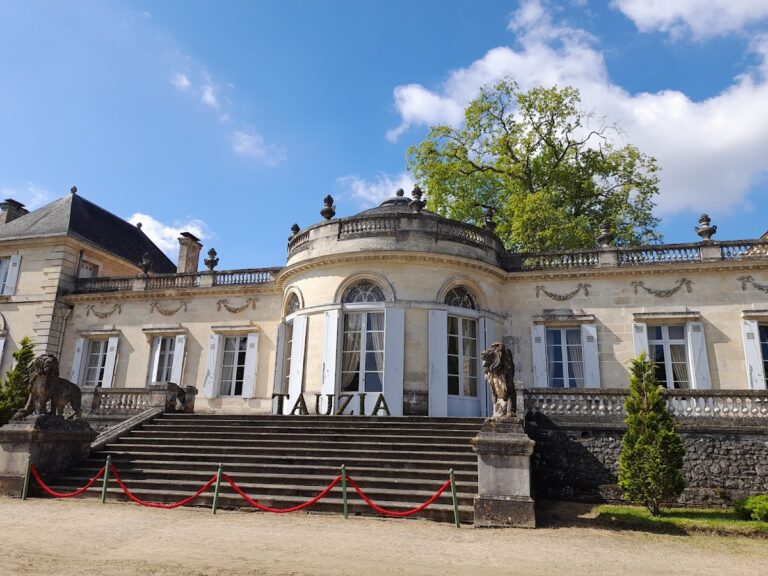
Château de Rochemorin is a historic wine estate in Martillac, France, producing red and white wines in the Pessac-Léognan appellation. Construction of its château began in the fifteenth century, and the estate stands at approximately 50 to 55 metres above sea level. Its surviving residence, later associated with the Montesquieu family, forms the historical centre of a property that continues to produce Bordeaux wine.
Origins and early ownership
The estate is traditionally said to have been held by the La Lande family from 1079 until 1502. In the seventeenth century it belonged to the Pesnel family. In 1686, Françoise Marie de Pesnel, the family’s last heiress, married Jacques de Secondat de Montesquieu, baron of La Brède and Montesquieu. Through this marriage and subsequent descent, Rochemorin became associated with the Montesquieu family.
Two traditions explain the name Rochemorin. One links it to a fortification that resisted the Moors, who had occupied the region before being driven toward Spain around 732. In this version, the earlier place-name was La Roche Morine. The other tradition attributes the estate’s development to Jean de Amelin, lord of Rochemorin. He is said to have acquired a small noble house called Beaubois and united neighbouring parcels for the production of quality wine.
The estate appears as Rochemorin on eighteenth-century Cassini maps. An 1820 to 1866 military map calls it Nochemorin, while a map from 1950 uses the form Roche Morin. These changing forms preserve the name’s continuing association with the property across several centuries.
The Montesquieu estate
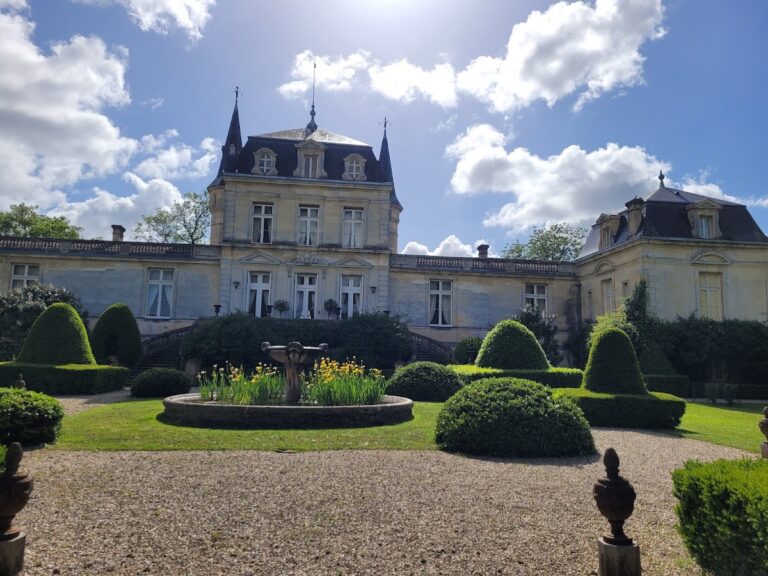
The original residence, known as Château de Rochemorin, was purchased by the Montesquieu family in 1609. It is the building represented on the estate’s wine labels. Rochemorin was ravaged during the disturbances of the Fronde in 1653. The Fronde was a series of rebellions and civil conflicts in France from 1648 to 1653, so the damage occurred during the final phase of that period. The château was subsequently restored.
Rochemorin was later connected with Charles Louis de Secondat, baron of La Brède and Montesquieu, the eighteenth-century French political philosopher and writer commonly known as Montesquieu. He exploited the estate for both red and white wine. Around 1755, the white wine continued to be produced alongside a red wine that Montesquieu called clairet in his correspondence. These wines were particularly appreciated by English buyers.
The estate’s commercial activity extended back into the seventeenth century. A wine-sale contract records deliveries of white wine by subscription between Jacques de Secondat and Pierre Testas from April 1696 to December 1700, including wine stored in new barrels. During her husband’s travels, Jeanne de Lartigue managed the everyday affairs of Rochemorin. After his death in 1755, she took charge of vinification and sales.
Jean-Baptiste, born at Martillac on 12 February 1716, is said to have been born in the noble part of Rochemorin. A plan copied from an earlier period records the château and stable associated with Joseph Cirile Secondat de Montesquieu, a later descendant of Montesquieu. The family continued to exploit and maintain the estate until 1919.
Twentieth-century ownership and modern production
In 1919, the Montesquieu descendants sold the 280-hectare estate to the Beaumartin establishments. Beaumartin operated Rochemorin until 1940. In 1941, ownership passed to the Billiard company and subsequently to Ch. Cante.
André Lurton acquired Rochemorin in 1973 and began its modern exploitation. Around 2003 to 2005, the estate’s production facilities were modernized with the construction of a contemporary winery 550 metres west of Montesquieu’s former winery. The project accommodated harvests from older vineyards and from new vineyards replanted after land had been converted to forestry under the Armand Beaumartin establishments.
Rochemorin continues to produce red and white Pessac-Léognan wines. Its red vineyards covered 45 hectares in 1991, 56 hectares in 2015, and 51 hectares in 2024. The white vineyards covered 12 hectares in 1991, 21.5 hectares in 2016, and 17 hectares in 2024. The château was listed as a historic monument by an order dated 6 August 1990.
Remains
The historic residence and courtyard
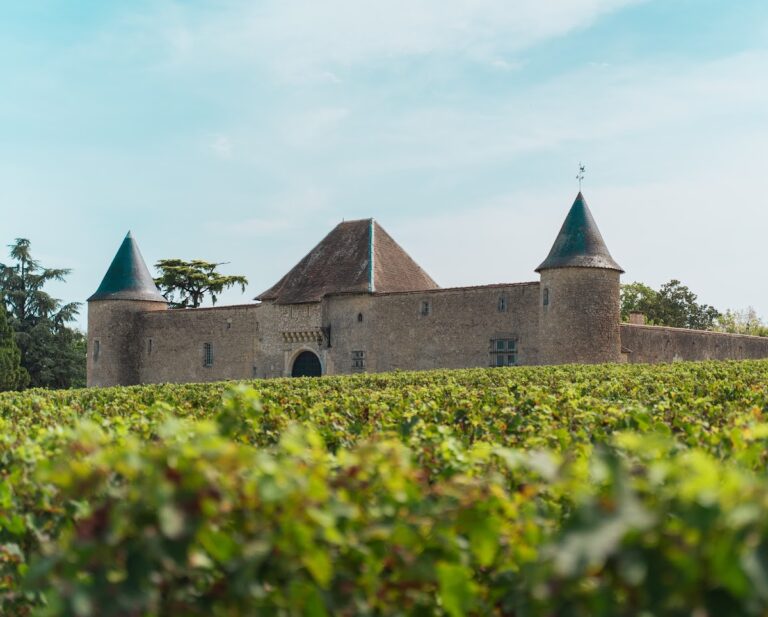
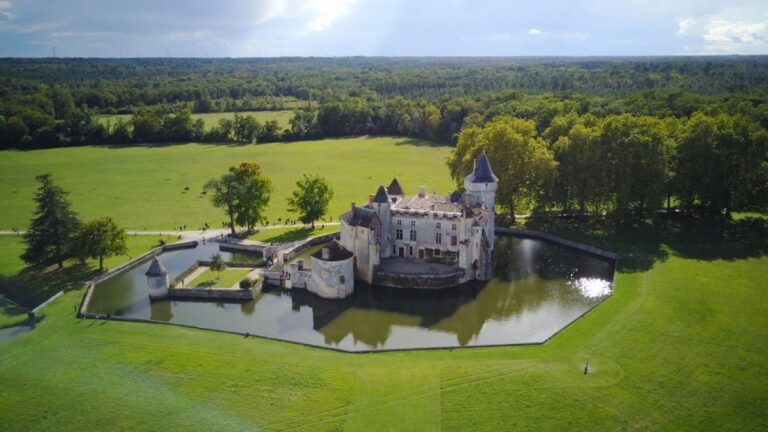
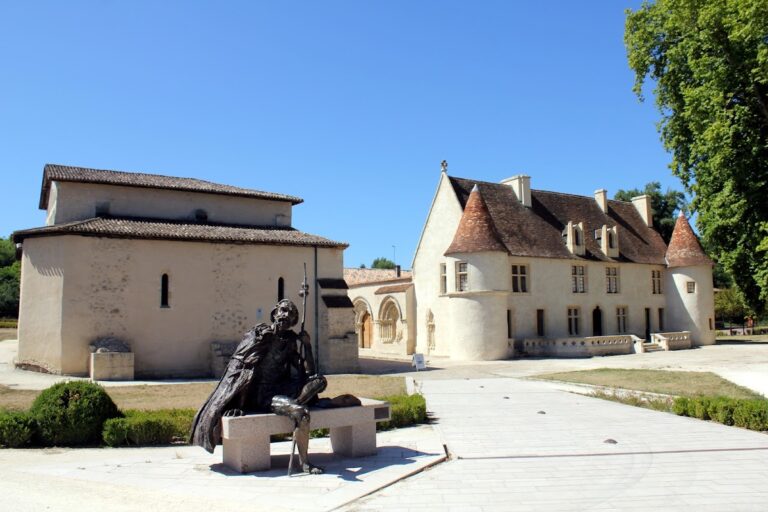
The historic residence occupies cadastral parcel 394 within the Rochemorin estate. Its buildings and dependencies were set out on a geometric plan. At the northern entrance, an eighteenth-century wrought-iron gate and adjoining walls lead into an enclosed inner courtyard surrounded by buildings. The walls on both sides of the gate are topped with crenellations.
Medieval and early modern buildings
The northwestern pavilion, the adjoining western residential building, and a surviving wall from a southwestern pavilion date from the fifteenth or sixteenth century. Together, these elements preserve parts of the earliest building phases associated with the château.
Northeastern pavilion
The two-storey northeastern pavilion appears to date from the late sixteenth or seventeenth century. It has an exterior staircase, and the mantel of its fireplace bears the date 1756. An adjoining dependency belongs to the late seventeenth or eighteenth century.
Agricultural and wine buildings
Other sides of the courtyard contain a southern cuvier, a building used for fermenting wine, rebuilt around 1900. Wine cellars, a grain and fodder loft, and a dovecote also form part of the complex. Vineyards, uncultivated land, and coppiced woodland lie near the historic residence.
Modern winery and vineyards
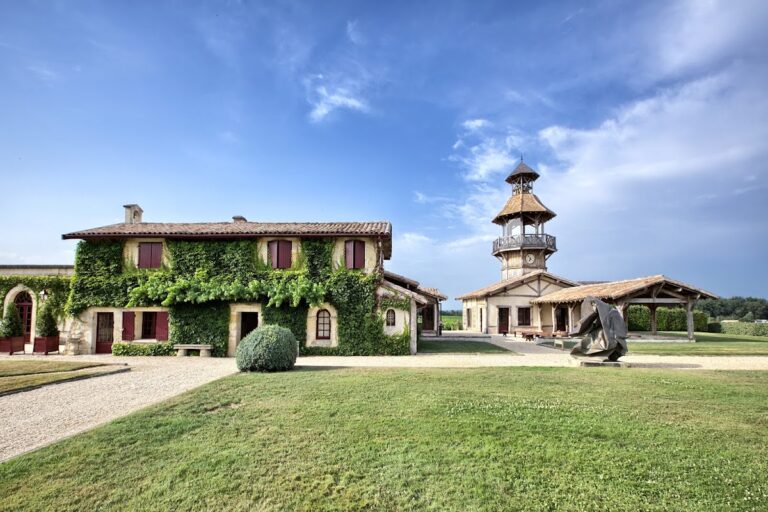
The contemporary winery built around 2003 to 2005 stands 550 metres west of the former winery. It is a functional structure designed to receive grapes from both older and replanted vineyards. The estate also has a white-wine cellar.
Red-wine production uses mechanical harvesting, automated sorting, temperature-controlled stainless-steel vats, and approximately three weeks of maceration, with the exact duration depending on tannin maturity and the vintage. The wine is aged for one year in barrels, 30 to 40 percent of them new, with racking every quarter. Its blend comprises Merlot, Cabernet Sauvignon, Petit Verdot, Cabernet Franc, and Malbec.
White grapes are harvested manually or mechanically according to the year. The white wine is aged for ten months in oak barrels, 35 percent of them new, on lees with regular stirring. Its blend comprises Sauvignon and Sémillon.
Vineyard soils and cultivation
The white vineyards grow on gravel over falun and on gravel over clay subsoil. Falun is a marine-derived, limestone-rich sediment. The red vineyards occupy deep gravel and gravel over clay subsoil. Red vines are trained using double Guyot pruning with shoot thinning, while the white vines use double Guyot pruning, a system that retains fruiting canes on both sides of the plant.
Nearby sites