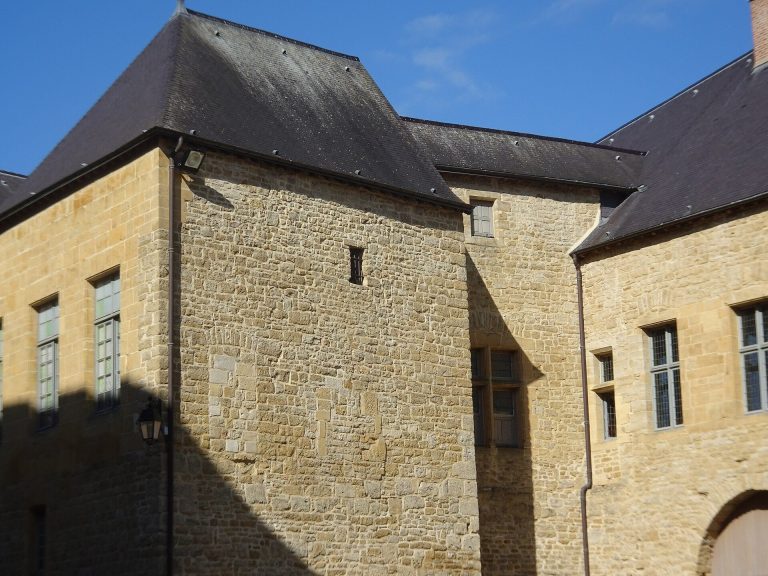
Rocan Castle: A 16th-Century Noble Residence in France
Site at a Glance
- Popularity
- Medium
- Country
- France
- Primary era
- Early Modern
- Eras represented
- Early Modern, Modern
- Civilizations
- French
- Site type
- Domestic
- Remains
- Castle
On this page5 sections
History
Sixteenth-century foundation and seventeenth-century conflict
Rocan Castle stands in Chémery-Chéhéry, France. Raoul de Coucy built it in the 16th century; he died in 1561. Ownership passed first to the House of Lys and then to the House of Escannevelle.
In 1641, following the Battle of Marfée, Imperial forces allied with Sedan attacked the castle. Protestant troops occupied it for several days.
From the Escannevelles to the revolutionary crisis
Charles d’Escannevelle, lord of Rocan, died at the castle on 18 December 1739. In his will, he left his property at Chéhéry to his cousin François IV de Régnier. François, a provincial nobleman, retired from the army in March 1789 after 43 years of service and settled at the castle. That month, parishioners compiled complaint registers, or cahiers de doléances, protesting taxes, church tithes, the taille (a direct tax) and other levies. They also objected to a lawsuit against their lord that had lasted 20 years and called for six prominent residents to be armed against rabid animals and wrongdoers.
Residents followed events in Paris, including the storming of the Bastille, the abolition of privileges, the sale of church property and the oath required of priests. They also learned of Louis XVI’s attempted flight and arrest at Varennes. Tensions rose in early 1792 as Sedan received reinforcements and volunteers from across France, including men from Marseille and Brittany who belonged to provincial National Guard units.
On 1 June 1792, gunshots rang out as the Régnier family dined at the castle. Some local residents, joined by radical popular activists known as sans-culottes from Mouzon, threw stones and broke windows. No one was injured, but the family decided to leave.
Exile, sale and restoration
François IV set out on foot with his wife and five children, carrying no luggage. Their children were between three and ten years old. Travelling east on dirt roads, they joined monks from the Carthusian order, whose members traditionally lived in relative solitude. The monks were also heading toward the border and avoiding villages. The family reached Luxembourg and then Germany. François continued to Koblenz, where he joined the Army of the Princes, a royalist force of opponents of the Revolution living abroad. After its campaign in Lorraine and Argonne and its dissolution at Arlon, he went to Austria. The family lived in poverty there: François made and sold clogs door to door, while his wife took in laundry.
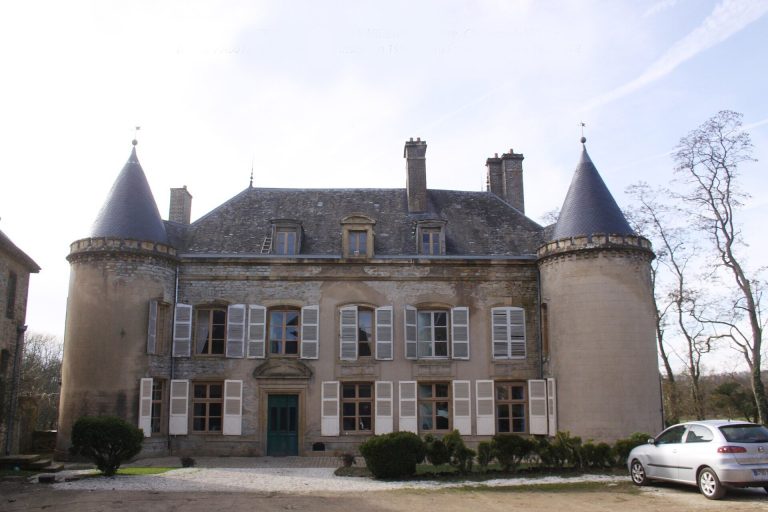
Chéhéry formally registered François IV’s emigration, and the castle was sold as national property, meaning property taken into public ownership and sold by the state. It passed through subsequent owners. Work in 1838 altered the exterior by adding numerous windows; a more faithful restoration began in 1973. The castle was listed as a French historic monument in 1981.
Remains
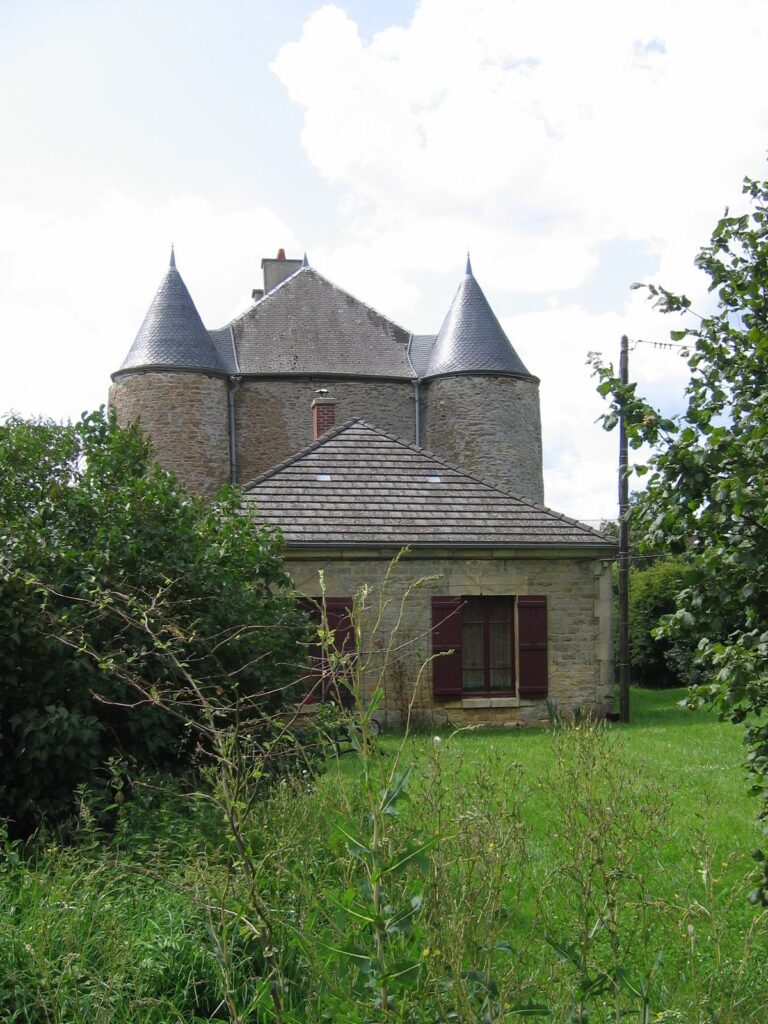
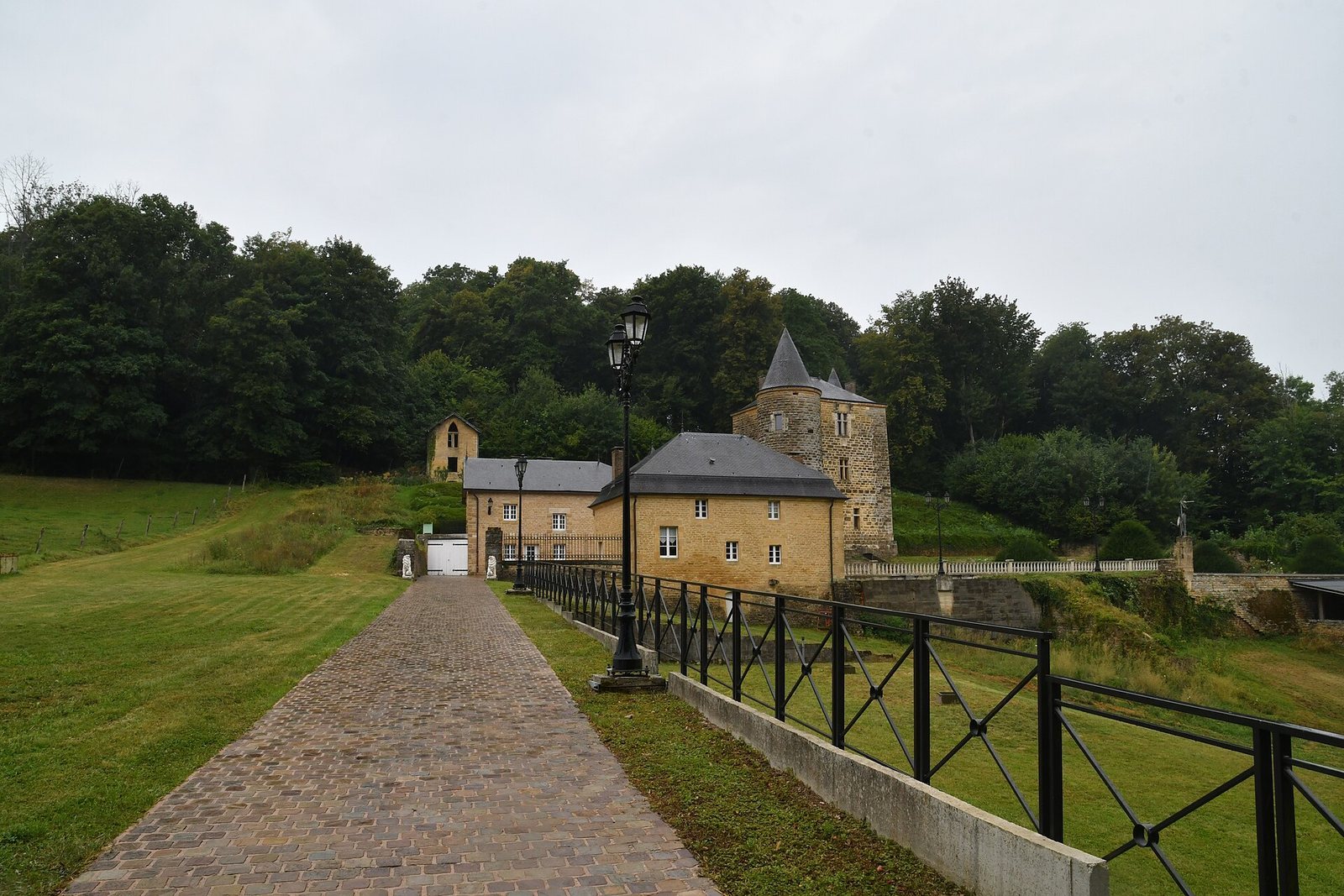
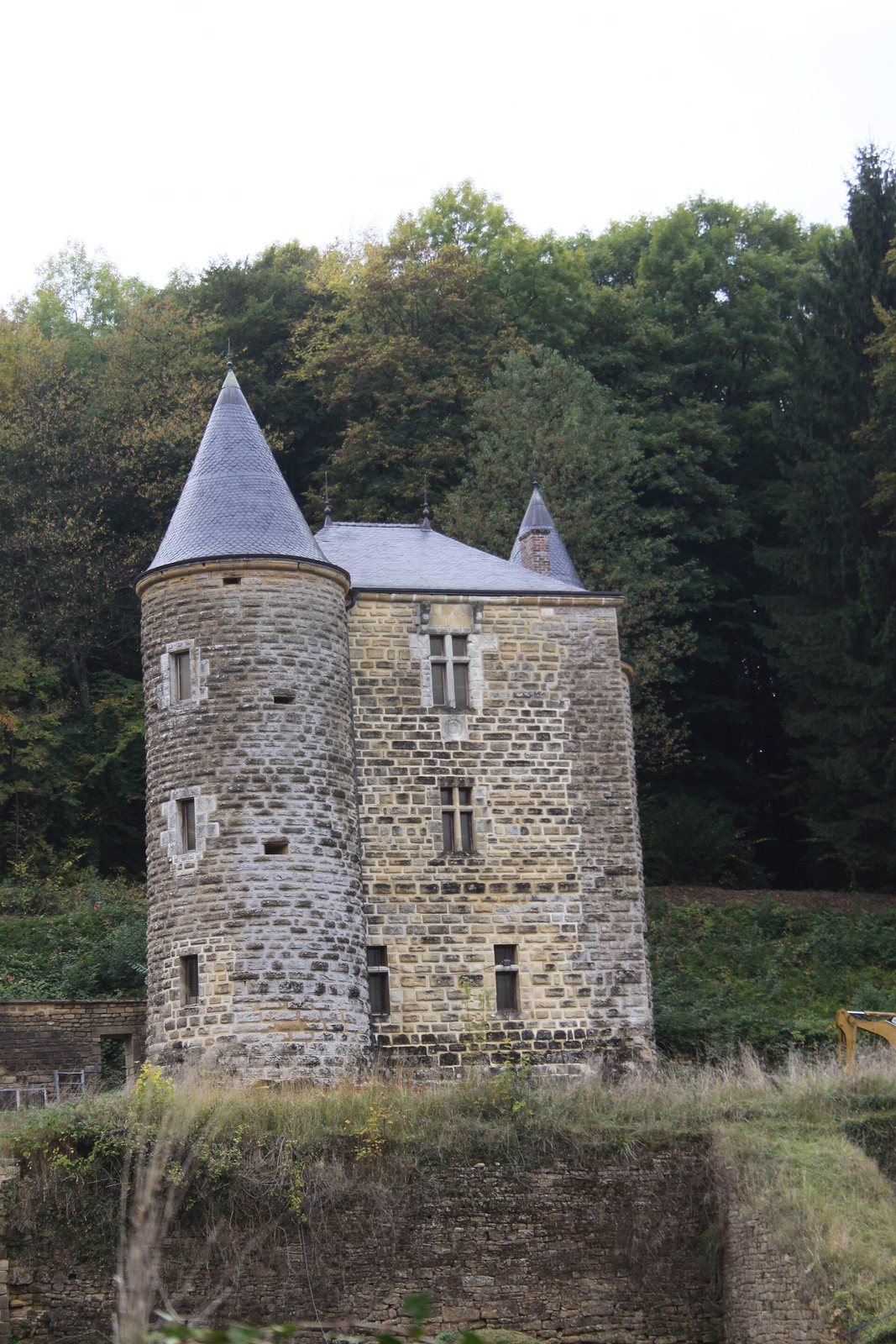
Rocan Castle stands on a rocky plateau beside a wooded hollow, facing the Bar valley. It overlooks the plain of Marfée, where several battles took place, while the village of Chéhéry lies below and the Bar runs through it. The main residential block is square, with each side measuring 10 metres. Two cylindrical towers are attached at opposite corners; the block and towers are equal in height and have three levels. A staircase in the tower at the rear when viewed from the valley serves all three floors.
The thick walls are faced with courses of large rectangular blocks whose rough surfaces project outward. Stone supports at cornice level survive from a defensive projection that has since disappeared. The towers retain rectangular openings for firing guns, shaped to widen toward one side. Later restoration work returned some window openings toward their original forms.