Žiar nad Hronom Castle: A Renaissance-Baroque Episcopal Residence in Slovakia
Site at a Glance
- Popularity
- Low
- Country
- Slovakia
- Primary era
- Early Modern
- Eras represented
- Early Modern
- Civilizations
- Habsburg, Hungarian
- Site type
- Religious
- Remains
- Palace
On this page9 sections
History
Medieval predecessors and the seventeenth-century castle
Žiar nad Hronom Castle, in Slovakia, is a standing Renaissance-Baroque residence built in 1631 under Archbishop and Cardinal Péter Pázmány. It later served as a residence for bishops of Banská Bystrica and, under Bishop Štefan Moyses, became a center of the Slovak national movement.
The Archdiocese of Esztergom owned several buildings on the site during the Middle Ages and early modern period, including an archbishop’s pleasure house. In 1605, forces of Stephen Bocskai, a prince of Transylvania, occupied the town and devastated the earlier castle. Renovation began after the Long Turkish War, the late-sixteenth- and early-seventeenth-century conflict between the Habsburg monarchy and the Ottoman Empire, under Archbishop Ferenc Forgách.
Gabriel Bethlen, another Transylvanian prince, occupied the town and castle in 1619. Fighting continued until German mercenaries left the town in 1626. The present castle was built five years later and remained the property of the Archdiocese of Esztergom until 1776. It withstood an Ottoman campaign in 1647. After the Battle of Žarnovica in 1664, it was used as a field hospital.
Uprisings and episcopal residence
In 1684, the anti-Habsburg uprising led by Emmerich Thököly brought plunder to both the town and the castle. The building was restored after the uprising was suppressed, but fighting returned during Francis II Rákóczi’s later anti-Habsburg uprising. In 1708, Habsburg field marshal Sigbert Heister used the castle as his headquarters.
In 1776, Pope Pius VI’s formal decree, Romanus pontifex, established the dioceses of Banská Bystrica, Spiš, and Rožňava as suffragan dioceses, meaning they belonged to the ecclesiastical province led by an archdiocese. The castle passed to the Diocese of Banská Bystrica. Although the diocese’s official seat was in Banská Bystrica, its bishops lived at the castle, beginning with its first bishop, Franz von Berchtold.
A record from 1780 lists households at the castle belonging to an official, a locksmith, a gamekeeper, a gardener, a goldsmith, and two bailiff families. Major renovation and alteration followed from 1782 to 1794.
Bishop Štefan Moyses undertook a comprehensive renovation when the castle had fallen into disrepair. His support for Slovak culture and presidency of Matica slovenská, a Slovak cultural institution, helped make the residence a center of the Slovak national movement. This activity ended soon after his death in 1869, during the episcopate of his successor, Arnold Ipolyi. After nearly 150 years as an episcopal residence, the seat moved back to Banská Bystrica under Bishop Andrej Škrábik.
Twentieth-century damage and changing uses
A fire in the attic in February 1939 threatened the castle’s shingle roof, but several fire brigades responded quickly and prevented more serious damage. During the Slovak National Uprising, the 1944 revolt against Nazi German control and its Slovak collaborators, the castle first served as a partisan brigade headquarters and then as a German military command. An Allied air attack on 6 March 1945 killed the German staff and damaged the building. It suffered further damage as the front passed through the area on 30 and 31 March, and Soviet soldiers occupied it briefly.
After the Second World War, the diocese handed the castle to the Salesians, a Catholic congregation known for educational work, who ran a boarding school there. The communist takeover in 1950 made it state property, and artworks, the library, the archive, and decorative objects were lost. The Žiar nad Hronom District National Committee used the castle from 1960 to 1967. A secondary school of services and economics then occupied it until 2005, followed by a private Academy of Economics from 2005 to 2018. In 2018, the city acquired the castle and grounds and began using the complex for museum purposes.
Remains
Layout and surviving features
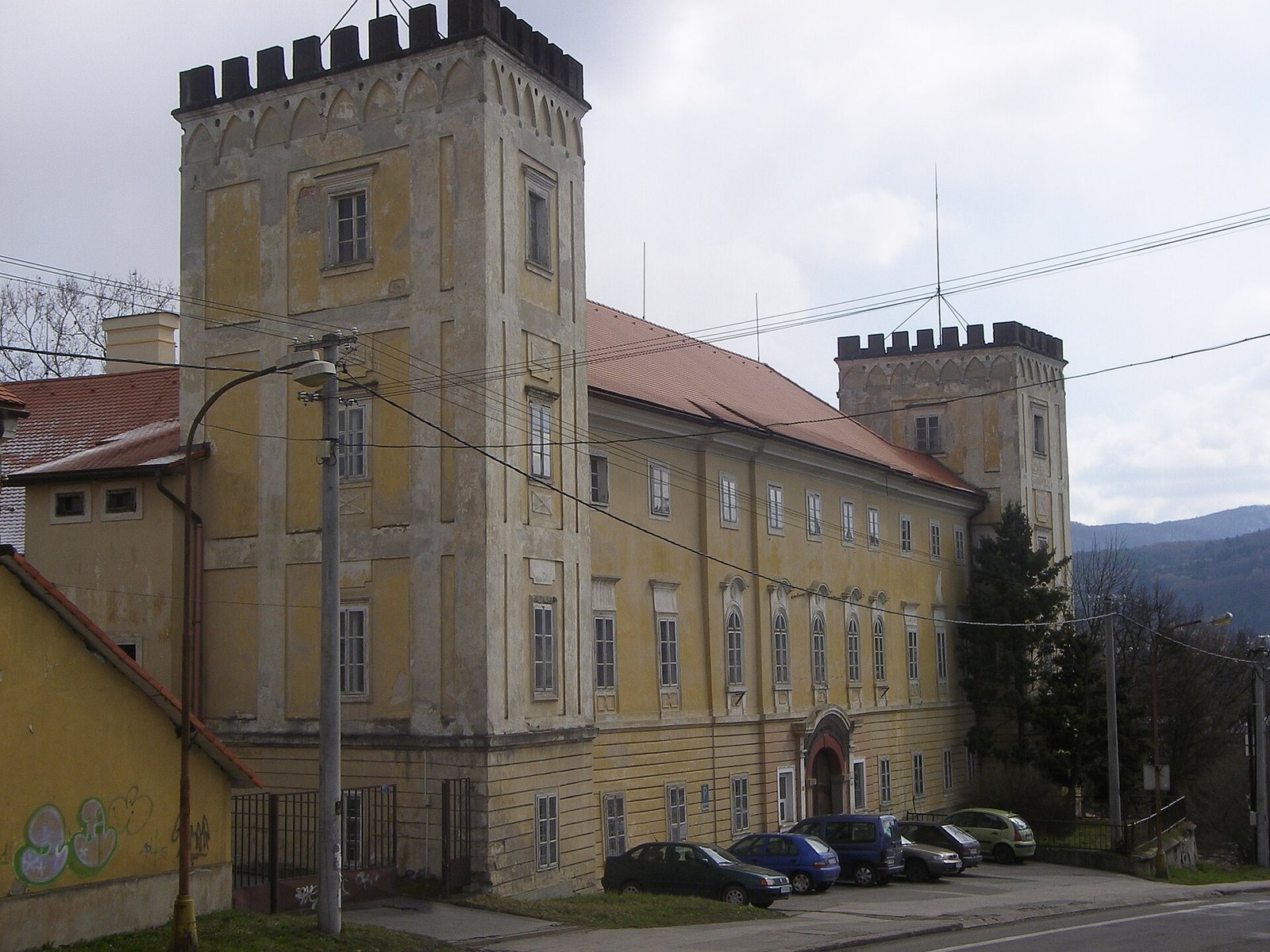
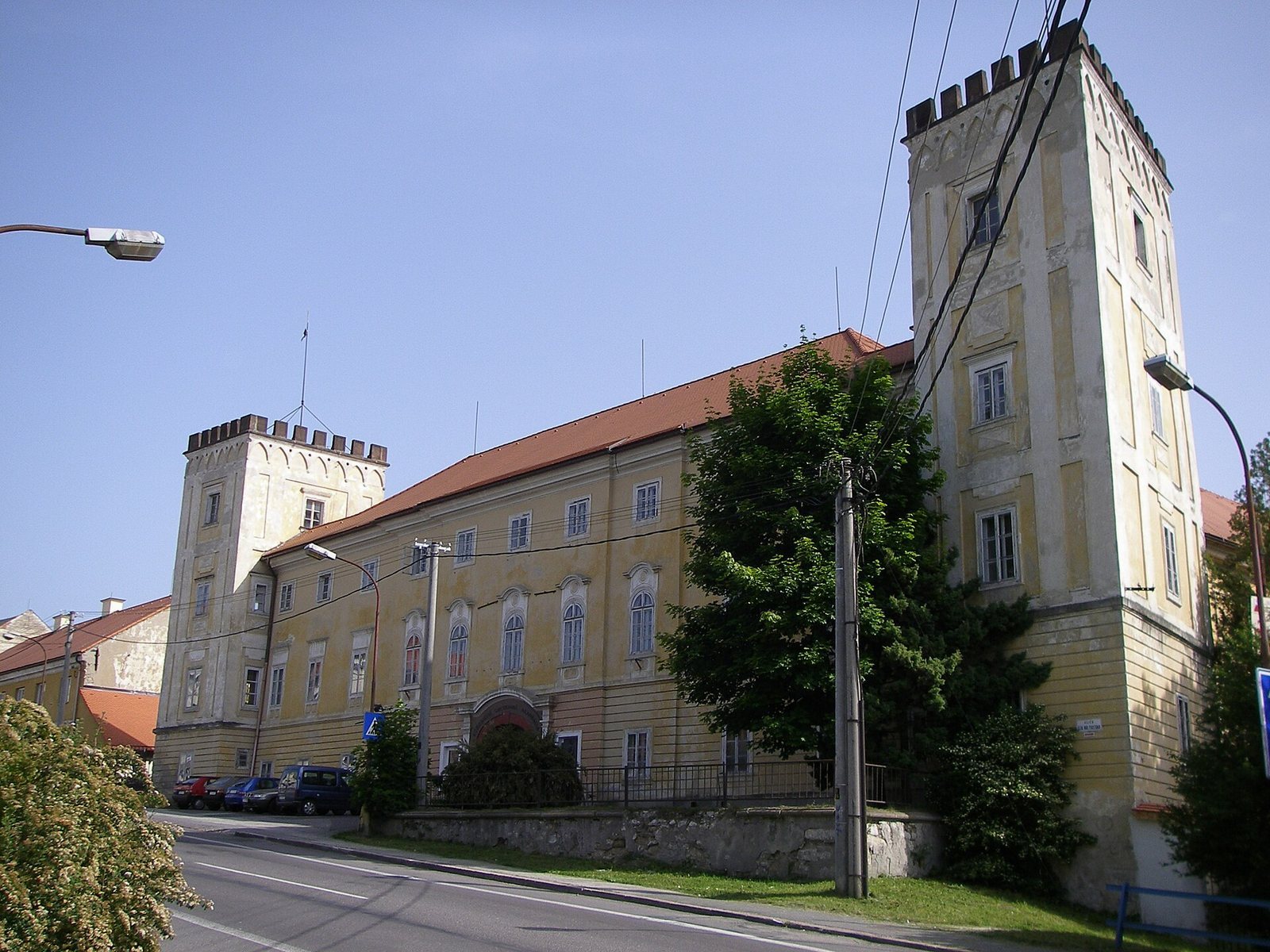
The standing castle combines Renaissance and Baroque forms. It lies at the edge of Žiar nad Hronom’s built-up area, southeast of the city center, on the city’s main street. A large park and several cultural spaces form part of the wider complex.
Castle and bastions
Two bastions, projecting fortifications built to strengthen a defensive wall and help defenders cover its approaches, form part of the castle’s defenses. They were built in 1644 amid the Rákóczi uprising and the threat of Ottoman forces.
Park
A large park lies beside the castle. It was laid out around the period of the major renovation and alteration of 1782 to 1794.
Museum and cultural spaces
The complex includes the city museum, a memorial room dedicated to Štefan Moyses, and a gallery associated with Slovak visual artist Július Považan.