Castle Roggwil: A Baroque Country Residence in Switzerland
Site at a Glance
- Popularity
- Very Low
- Country
- Switzerland
- Primary era
- Early Modern
- Eras represented
- Medieval, Early Modern
- Civilizations
- Holy Roman Empire, Swiss
- Site type
- Domestic
- Remains
- Castle
On this page9 sections
History
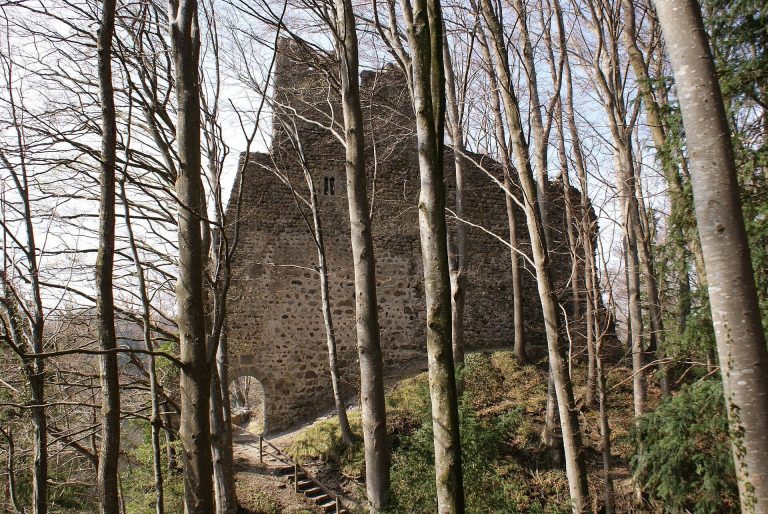
Castle Roggwil stands in the canton of Thurgau, Switzerland. Around 1200, the Bishop of Constance had a tower built here to counter the territorial power of the Abbey of St. Gall, a major monastic institution and political authority in eastern Switzerland. The tower became the ancestral seat of the von Roggwil, a noble family from Constance. A settlement grew around it, took the family’s name and coat of arms, and came to be called Roggwil. By the 17th century, the castle had become a country residence in the Baroque style, a European artistic and architectural tradition that flourished in the 17th and 18th centuries.
Feudal tenure and changing ownership
In 1410, the castle became a fief of the abbot of St. Gall, meaning property held under a feudal relationship, and the Mötteli von Rappenstein family took possession. Through marriage and inheritance, the Studer von Winkelbach family later acquired the fief. The property subsequently passed by marriage to the Bernhausen family of Hagenwil.
Monastic retreat and commercial use
Captain Gallus Soller (1699–1755) bought the estate in 1736, but protests from the landed nobility led him to return it to the abbot of St. Gall. The abbot used the castle as a retreat for monks. Building work in 1746 renewed and repaired the property; in the years that followed, it was put to commercial use and received little maintenance.
After the Abbey of St. Gall was dissolved in 1806, property dealers bought the castle. It later housed a silk-spinning mill and a warehouse. The Gonzenbach family established a cheese dairy there in 1863, and a cheese-making cooperative took over its operation in 1942.
From industrial use to preservation
By 1965, the dairy no longer met hygiene requirements, and demolition was considered to make way for a replacement. The neglected castle was instead sold to the Dubelli family of Freihof. In 1971, the family transferred it to Thurgau’s heritage-preservation organization, which works to protect the region’s built heritage, for the symbolic price of one Swiss franc.
A restoration group led by Peter Keller formed in 1976. With donations and extensive volunteer work by local residents, and with participation from the municipality and heritage authorities, it renovated the castle over nine years, completing the work in 1985. That year, the group received the Swiss Heritage Society Award from the national heritage-conservation organization. The Roggwil Castle Foundation has owned the property since 1979 and operates it as a cultural meeting place.
Remains
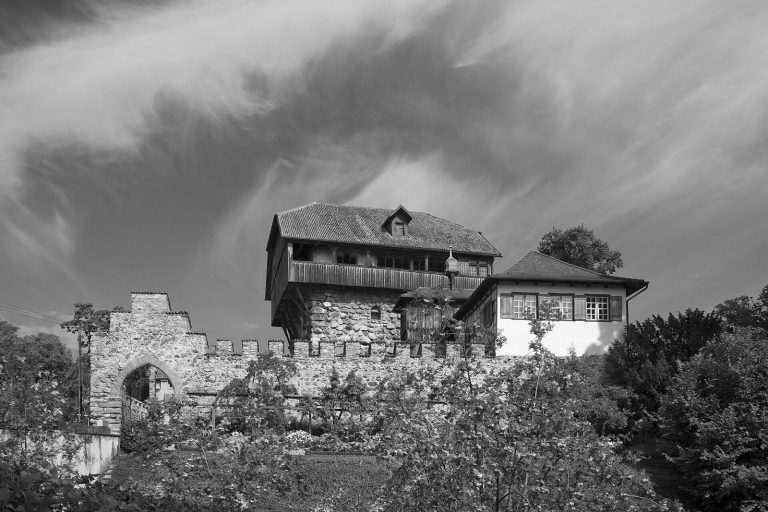
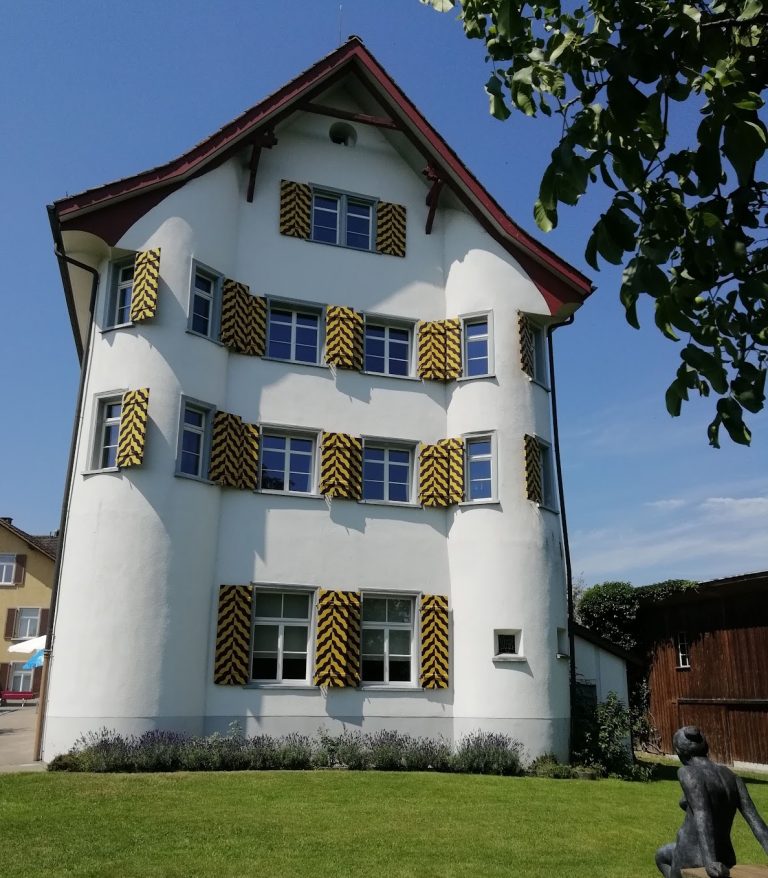
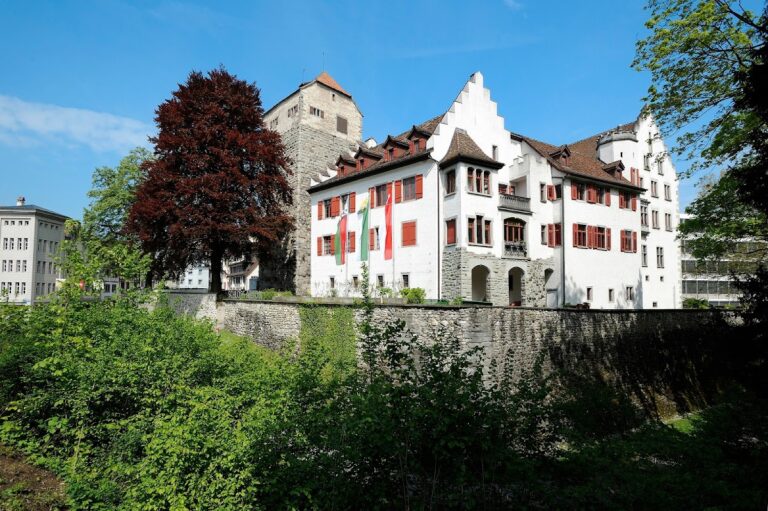
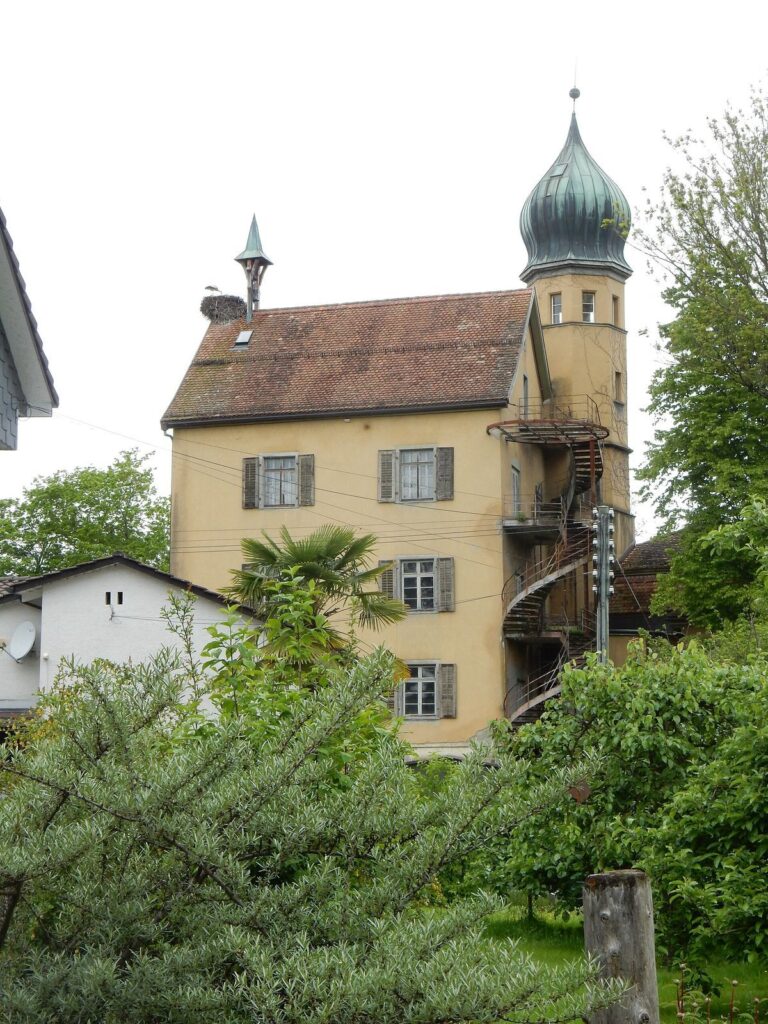
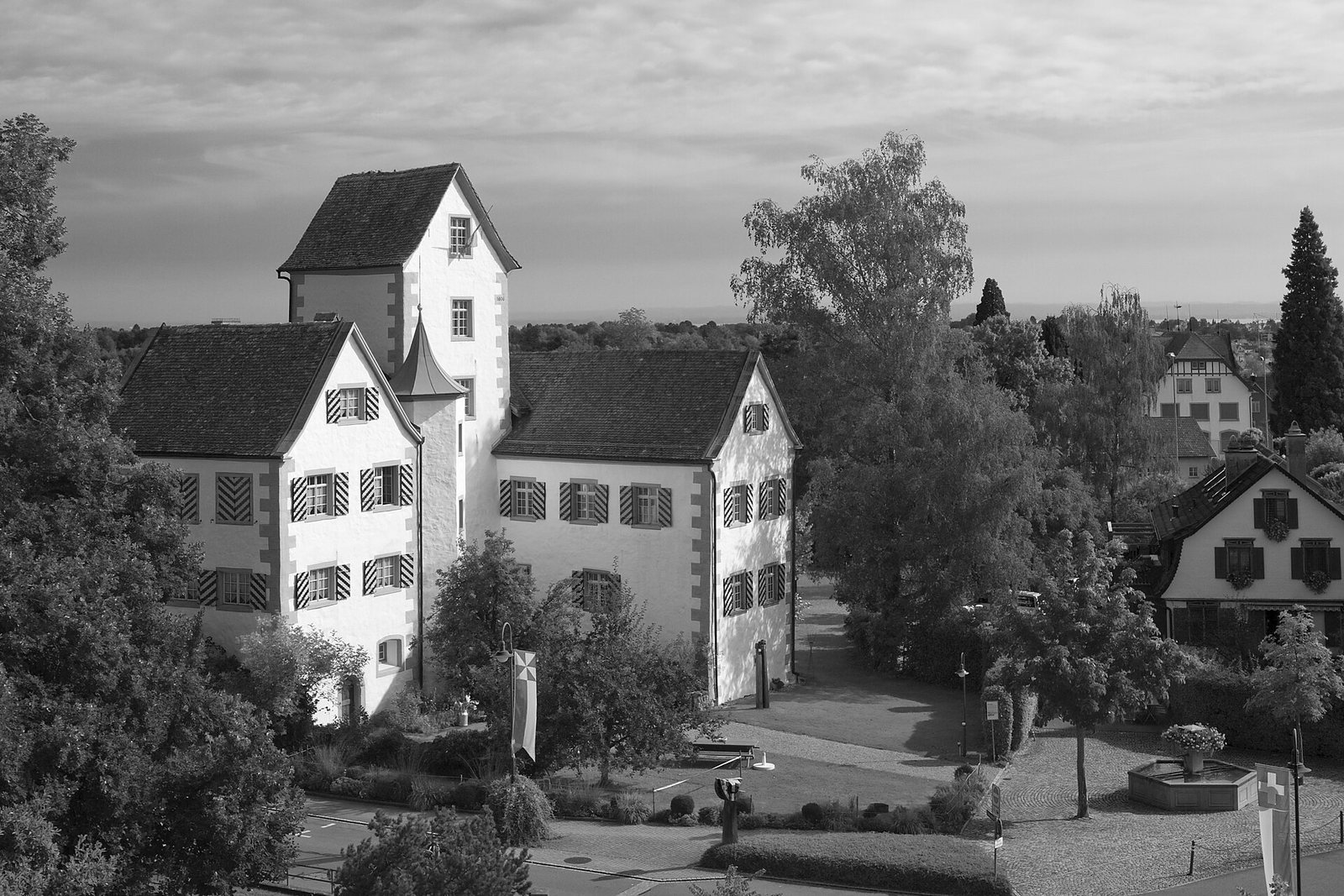
Situated between Arbon on Lake Constance and St. Gallen, the complex has the character of a Baroque country manor. Its layout combines a tower with residential buildings on both sides, alongside a castle chapel and a large common room.
Medieval buildings
Tower and flanking residences
Residential buildings were added on both sides of the tower in the 15th century. They are probably associated with the Mötteli von Rappenstein family, who took possession of the castle after it became a fief of the abbot of St. Gall.
Castle chapel
The castle chapel was built in 1463.
Common room
A large common room retains a stucco ceiling from the building work of 1746. Stucco is decorative plasterwork used on buildings.