Campagne Rubigen: An 18th-Century Country Estate in Switzerland
Site at a Glance
- Popularity
- Low
- Country
- Switzerland
- Primary era
- Early Modern
- Eras represented
- Early Modern, Modern
- Civilizations
- Swiss
- Site type
- Domestic
- Remains
- Manor House
On this page8 sections
History
Campagne Rubigen is an 18th-century country estate in the Canton of Bern, Switzerland. Anton Rodt-Kirchberger commissioned its manor house in 1728 after inheriting the estate from his father, Emanuel von Rodt-Willading. The property became associated with Bernese landed-gentry life, farming, and military service, themes later recalled by the writer Rudolf von Tavel.
Ownership from 1728 to 1844
Anton Rodt-Kirchberger, director of the salt administration, owned the estate until it passed to Samuel Fischer von Hunziken in 1753. In 1762, Samuel’s eldest son, Samuel Fischer von Graffenried, inherited it. He was treasurer for Bern’s French-speaking territories and later served as bailiff, an administrator, of Lenzburg. The manor was taken from his widow in 1791. By 1795, it had passed through the heirs of Johann Rudolf Fischer, a militia major and steward at Hettiswil, to Hans Stettler, a local bailiff who also owned the Zaunacker estate. Christian Viktor von Graffenried bought the manor house from Stettler’s heirs at auction in 1801.
In 1817, military paymaster Abraham Karl Ludwig von Wattenwyl acquired the estate. A major general in British service and a citizen and councillor of Bern, he rented it to Johann Ludwig Wurstemberger and his wife, Sophie de Larrey. After Abraham died in 1836 and his widow died the following year, the estate was divided equally among their four sons: Ludwig Friedrich, Ludwig Heinrich, Albert Rudolf Eduard, and Emanuel Rudolf Ludwig. Their distant cousin, Captain Ludwig Emanuel von Wattenwyl-Ougspurger, bought Campagne Rubigen in 1844.
Wattenwyl and von Tavel family connections
In 1862, Ludwig Emanuel transferred local properties to his daughter, Johanna Catharina Charlotte Julie von Wattenwyl-von Wattenwyl, who was married to Emanuel Rudolf Ludwig von Wattenwyl, a former co-owner. After she had been widowed for 22 years, the estate passed to her heirs in 1902. They sold it to their widowed sister-in-law, Cécile Mathilde Margaretha von Wattenwyl. Four months later, she married Emanuel Rudolf Alexander von Tavel, brother of the Swiss writer Rudolf von Tavel, and brought the estate into their marriage.
Rudolf von Tavel remembered Aunt Jenny as a warm and welcoming presence in his childhood, and the household as a window onto the farming and military associations of Bernese landed families. His brother Albert recalled holiday visits to Uncle Ludi, whom he described as capable and respected, knowledgeable about farming, a member of the Grand Council and State Economic Commission, and commander of the Konolfingen battalion.
A separate enclosed farm property was sold in 1903 by Cäcilia Margaretha von Wattenwyl-von Steiger and her daughter Maria Johanna Margaretha to its tenant, Christian Wüthrich. The sale contract barred industrial or commercial businesses that might spread livestock disease or otherwise harm nearby livestock owners. The property passed by inheritance to Ernst Karl Hess in 1943, then to his son, Professor Hans Hess, in 1968. Margarita von Fellenberg-von Wattenwyl acquired Campagne Rubigen in 1924. After her husband, Karl Gottfried Edmund von Fellenberg, died in 1949, she sold it to the Canton of Bern in 1953. Herbert Ottfried Kohlund bought the estate less than four months later.
Twentieth-century owners
Herbert Kohlund and his father, Ekkehard, both painted and held exhibitions for guests at the estate. Ekkehard, an actor and director of Bern’s city theatre, lived at Rubigen until his death in 1974. The property passed by inheritance to his widow, Katharina Kohlund-Elsässer, in 1983. The Kohlund-Elsässer heirs sold Campagne Rubigen to Housi and Barbara Knecht in 2013.
Remains
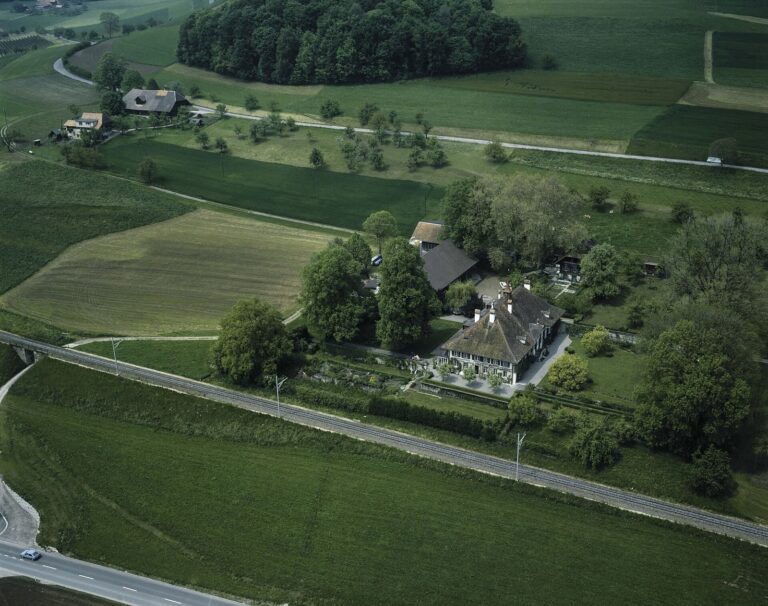
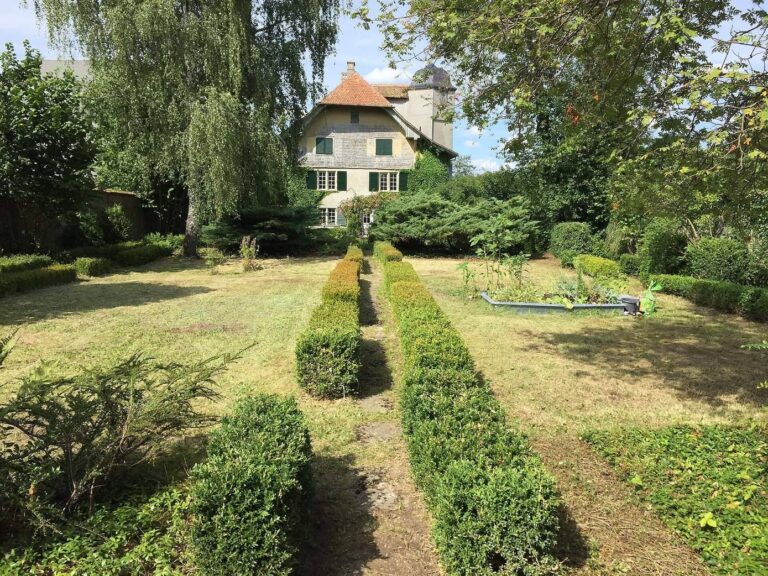
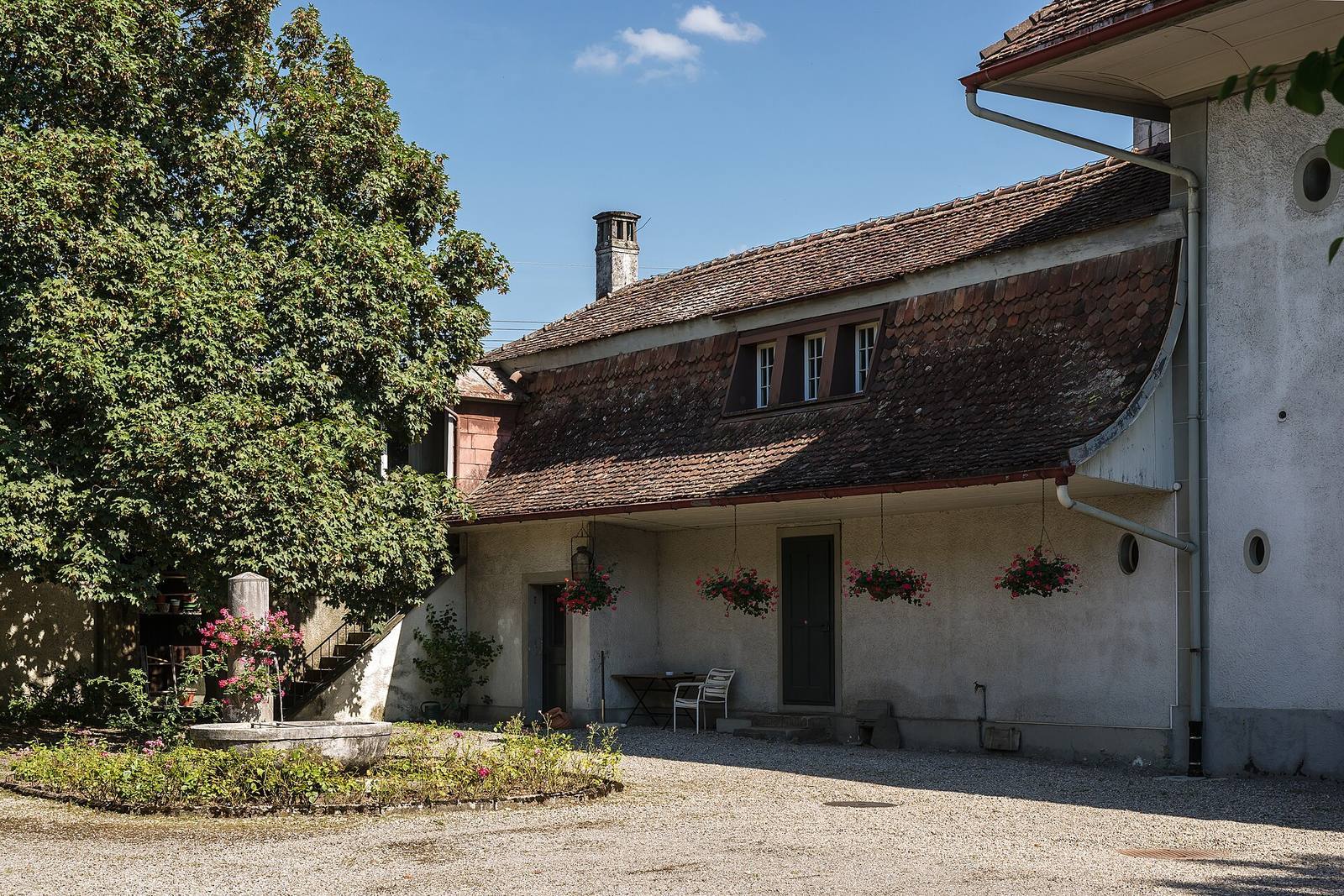
The estate comprises a manor house, associated farm buildings, and enclosed land. Its surviving features reflect both its use as a country residence and its agricultural setting.
Manor house
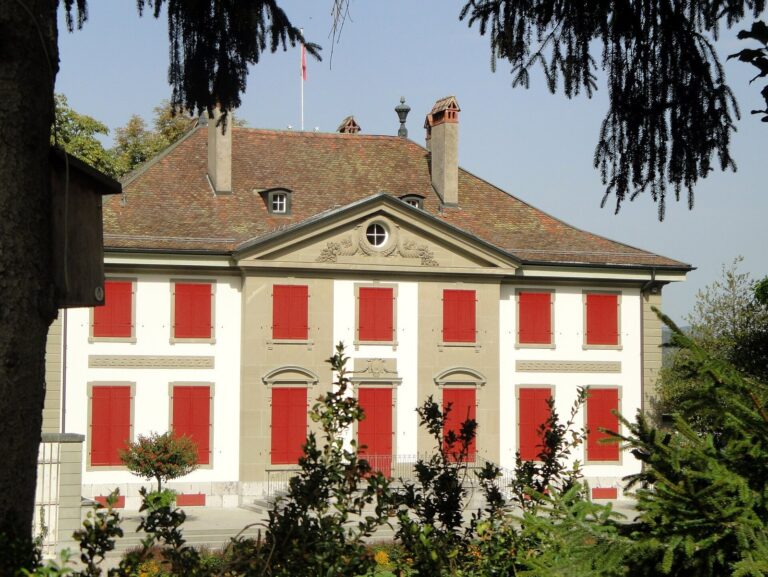
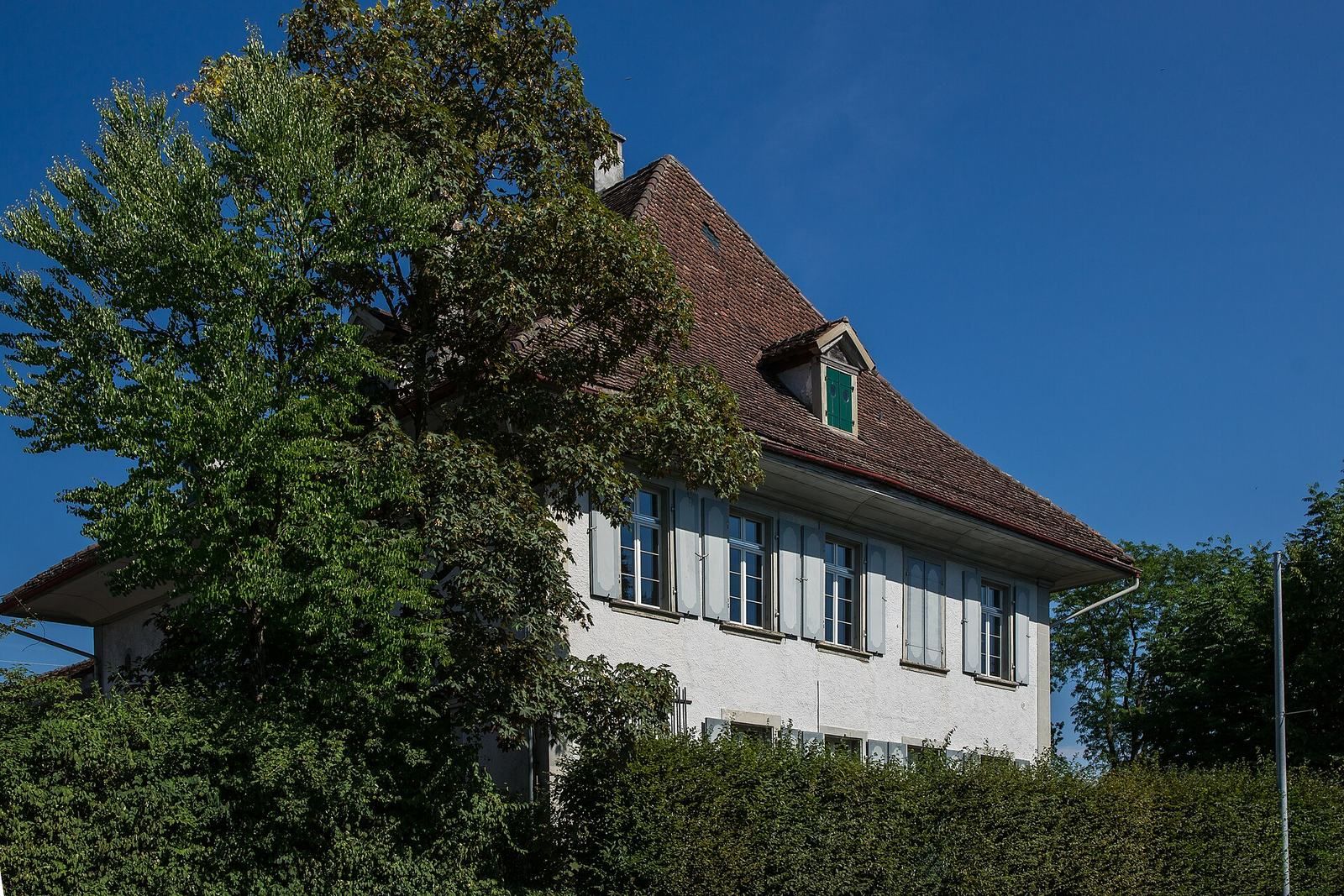
Built in 1728, the manor house has a hipped roof and two symmetrical wing pavilions. Its entrance portico rests on square stone pillars.
Farm buildings and water supply
By 1801, the property included a barn, a woodshed, and a granary alongside the manor house. A farm building within the enclosed land burned in 1902 and was rebuilt as a gable-ended multipurpose house, with a curved gable roof and a structural frame filled with masonry. In 1894, a water-collection structure was built near the enclosure’s northwest corner. A pipeline fitted with hydrants ran from it to the manor house, while water from a turbine supplied the village firefighting pond.
Grounds and later changes
Construction of a new cantonal road in 1953 altered the grounds: trees near the manor house were felled, a garden hall between the road and the house was removed, and an old retaining wall was replaced. A sculpture park was laid out during a six-month redevelopment and opened on 28 June 2014.