Harzillemont Castle: A Sixteenth-Century Fortified Residence
Site at a Glance
- Popularity
- Low
- Country
- France
- Primary era
- Early Modern
- Eras represented
- Early Modern, Modern
- Civilizations
- French
- Site type
- Domestic
- Remains
- Castle
On this page8 sections
History
Construction and early ownership
Harzillemont Castle is a fortified residence in Hagnicourt, France, built in the sixteenth century. It stood near a separate military building that Charles V, a Habsburg ruler and Holy Roman Emperor, burned in 1521 while returning from the unsuccessful siege of Mézières.
Around 1620, the castle passed from the Harzillemont family to the Saint-Quentin family. During the French Revolution, the revolutionary upheaval that began in France in 1789, the Saint-Quentins remained in the country and avoided the confiscation of their property.
The Saint-Quentin and Bruce families
After the Peace of Amiens, the 1802 treaty that temporarily ended hostilities between Britain and France, Charles-Hector, Count de Bruce, returned from exile and joined the Saint-Quentin family by marriage. His family traced its descent from the kings of Scotland and had accompanied the Stuart king James II, who ruled England and Ireland before going into exile in France.
Charles-Hector served as a colonel in Napoleon’s army during the Napoleonic Wars, the European conflicts fought under Napoleon’s rule. He died on 7 February 1866, aged 94, and his descendants continued to live at the castle.
Later ownership and protection
The Ardennes departmental council later acquired the castle from one of Charles-Hector de Bruce’s descendants. Harzillemont Castle was listed as a historic monument in 1987.
Remains
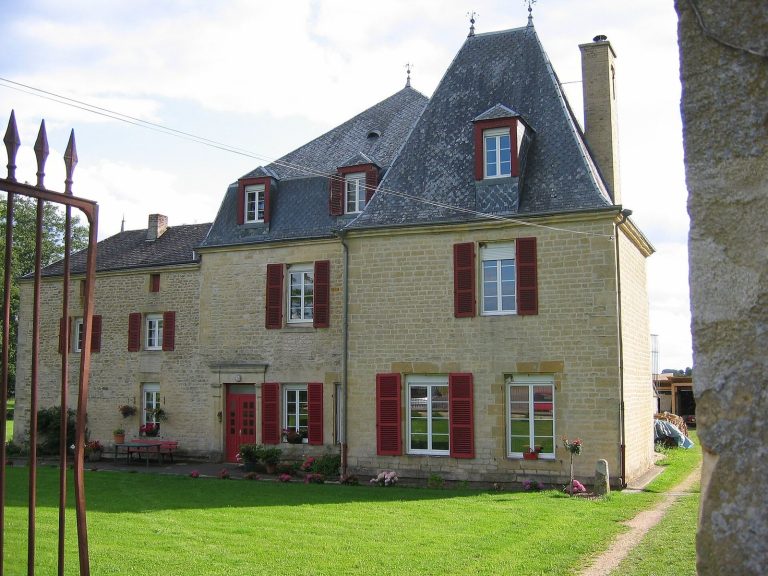
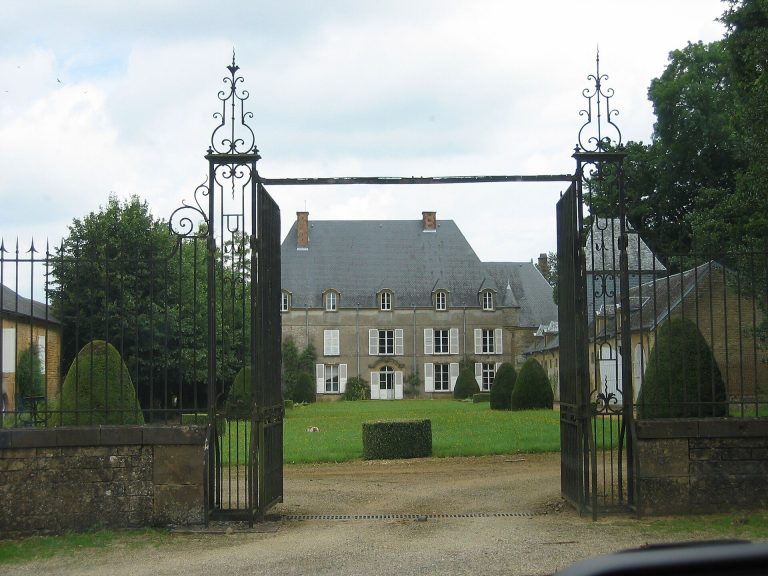
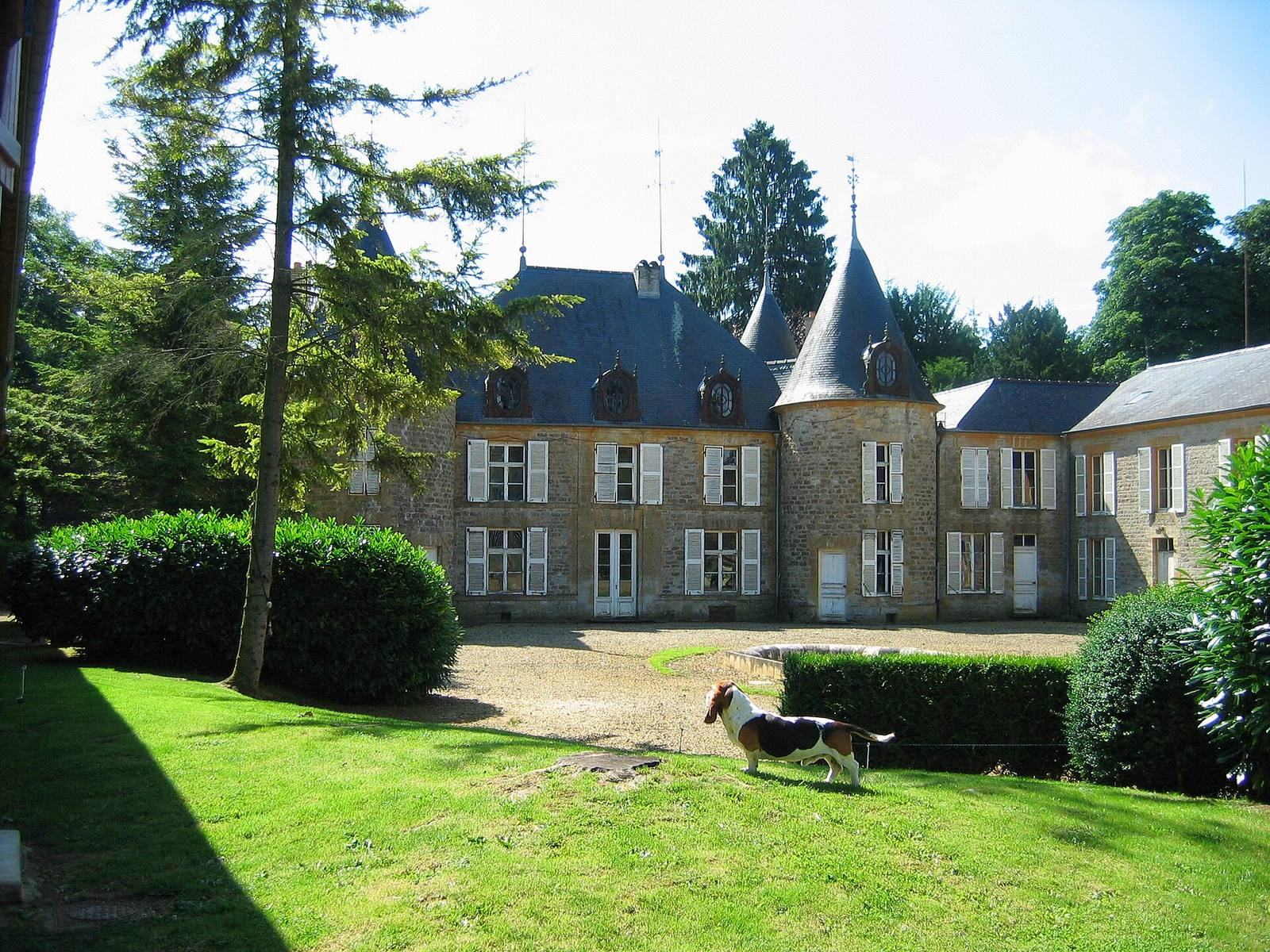
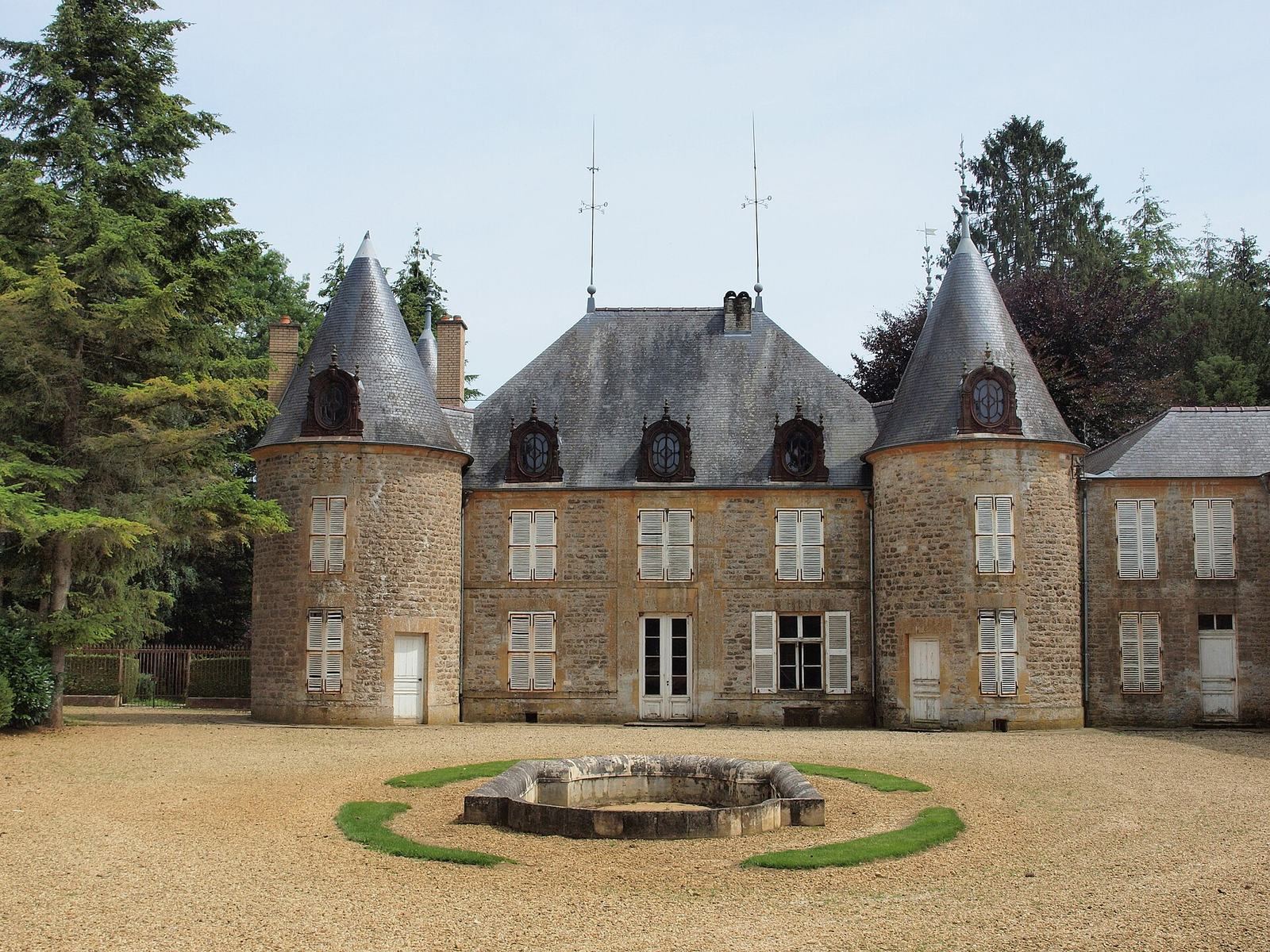
The castle’s main residential block has a rectangular plan, with a large round tower at each corner. Its thick walls are made of rubble laid in courses and bonded with mortar.
Architectural changes and setting
Alterations and additions
Changes made over the centuries improved comfort and habitability while reducing the building’s military character. The moats were filled in, and the openings were enlarged and arranged more regularly. In the second half of the nineteenth century, Neo-Renaissance roof dormers, windows projecting from a sloping roof, were added. This revival style drew on Renaissance forms. The dormers are decorated with pilasters, shallow rectangular columns attached to a wall, and candelabra motifs. A wing was also built to the right of the main block.
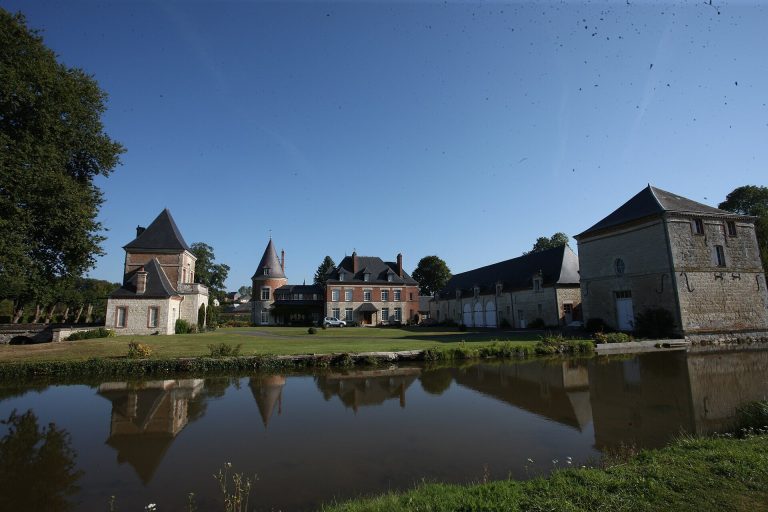
Grounds and water
The castle stands somewhat apart from Hagnicourt village on slightly higher ground, on Rue d’Harzillemont. It is not on Rue du Château, a street referring to a different castle that no longer survives. The Foivre stream supplied the castle’s moats and still feeds a pond behind the building.