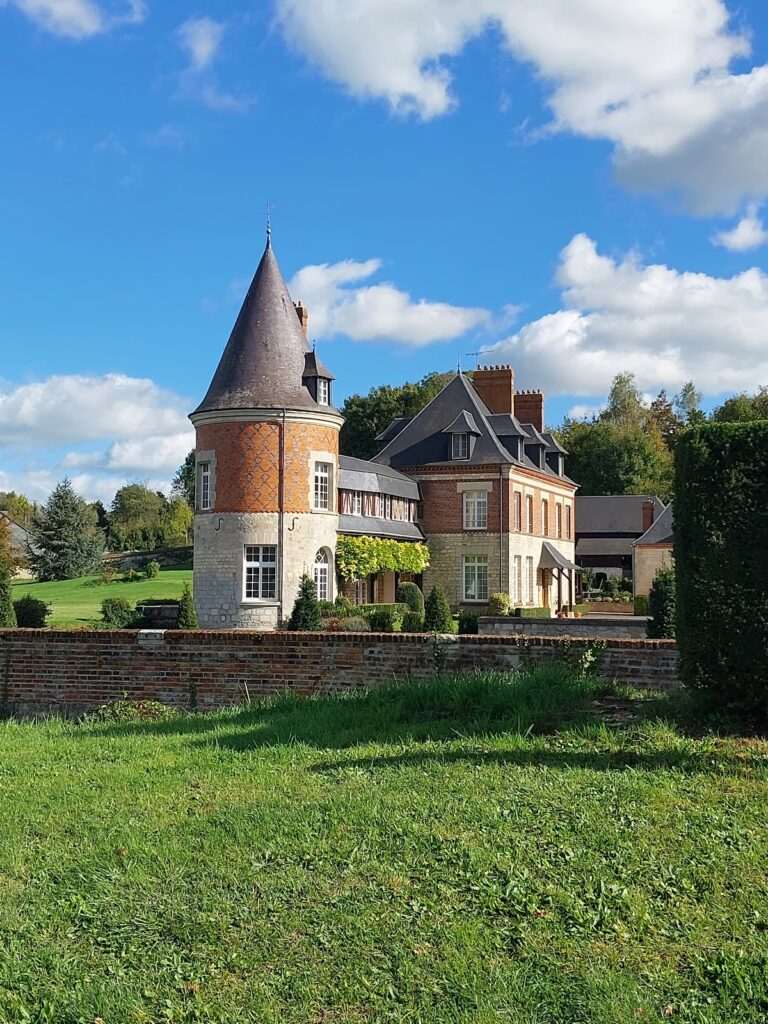
Château de Lametz: A Historic Manor in France


Site at a Glance
- Rating
- 4.8
- Popularity
- Very Low
- Country
- France
- Primary era
- Early Modern
- External website
- Open
- Eras represented
- Early Modern
- Civilizations
- French
- Site type
- Domestic
- Remains
- Manor House
On this page6 sections
History
Château de Lametz is a private manor in Lametz, France, constructed in the late sixteenth century by Pierre Dubois d’Ecordal and described as a seventeenth-century manor. Its history connects the local lordship with successive noble families and, after 1803, with Colonel Antoine Rouyer and his stepdaughter Caroline Gibert de Lametz.
The Lordship and Early Ownership
During the seventeenth and eighteenth centuries, the lordship passed from the d’Ivory family to the Wignacourt family, then to the Lardenois family and finally to the Villelongue family. The Villelongues, who were lords of Saint-Morel, sold the property in 1764. Further sales followed in 1784 and 1803, marking a succession of ownership before the château entered the orbit of a military family.
Antoine Rouyer and the Revolutionary Era
Colonel Antoine Rouyer purchased Château de Lametz in 1803. He had entered military service in 1779 and fought during the French Revolutionary Wars, including the 1792 Battle of Valmy, which halted the allied invasion of revolutionary France. He later served during the First French Empire, Napoleon Bonaparte’s imperial regime in France, and administered the Saint-Cyr military school, an institution for training army officers.
Known also as Rouyer de Lametz, Antoine Rouyer lived at the château with his wife, Françoise Henriette Legras de Vaubercey, and the children from her first two marriages. Among them was Caroline Gibert, who adopted the name Gibert de Lametz. Rouyer died at Lametz in 1836.
Caroline Gibert de Lametz and Monaco
After the fall of the First French Empire, Château de Lametz became associated with the relationship between Caroline Gibert de Lametz and Florestan Grimaldi, a member of Monaco’s ruling dynasty and heir presumptive to the principality. One tradition says that Florestan, ill in the Ardennes, was treated at the château and fell in love with one of the young women caring for him. A more substantiated account connects their meeting with the marriage held at Lametz in May 1814 between Amélie d’Aumont and Louis Pierre Musnier de Mauroy, Caroline’s half-brother.
Despite opposition from the Grimaldi family, Florestan and Caroline married in Paris on 27 November 1816. They lived partly at the Lametz estate and partly in Paris. Florestan became Prince Florestan I of Monaco in 1841, and Caroline consequently became Princess of Monaco. She exercised considerable influence over the principality’s government and helped restore its finances.
Later Use and Restoration
After later changes of ownership, the château was used as a holiday camp. The Lautar family subsequently restored and rearranged the building, giving the surviving manor its present form.
Remains
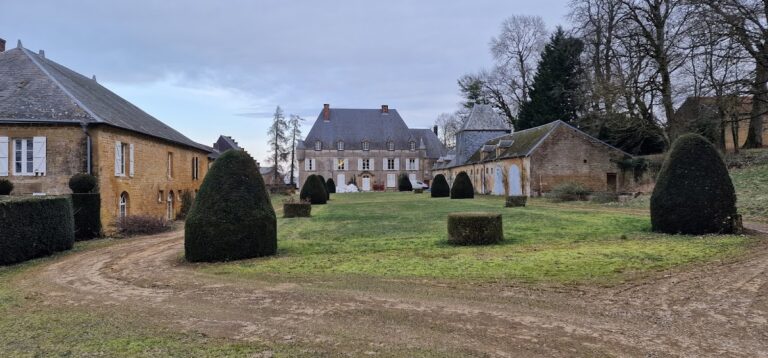
The surviving building represents only part of the original château. It has an L-shaped plan, with a later section extending at the rear, and includes substantially sized attic spaces. These elements preserve the form of a large manor house rather than a major royal or military fortress.
Château de Lametz stands within a 1.5-hectare park at the edge of Lametz, on the road toward Neuville-Day. The property remains privately owned, and the grounds include holiday accommodation, a children’s play area, and a tennis court.
Nearby sites