Pietersheim Castle: A Medieval Lordship Seat in Lanaken, Belgium
Site at a Glance
- Popularity
- Medium
- Country
- Belgium
- Primary era
- Modern
- Eras represented
- Medieval, Modern
- Civilizations
- Belgian, Holy Roman Empire
- Site type
- Domestic
- Remains
- Manor House
On this page10 sections
History
Medieval stronghold and lordship
Pietersheim Castle in Lanaken, Belgium, began as a medieval stronghold and served as the seat of the lordship of Pietersheim. The earliest archaeological evidence for a castle on the site dates to the last quarter of the 11th century and the first quarter of the 12th century.
The lordship is first mentioned in 1227. In 1292, the castle was described as the lord’s house at Pietersheim, with a tower and inner and outer defenses.
Wars, expansion, and decline
In 1378, troops from the Prince-Bishopric of Liège and Tongeren destroyed the stronghold during the final phase of the Liège-Brabant Wars, medieval conflicts involving the Duchy of Brabant and Liège’s ecclesiastical territory, ruled by a prince-bishop with both religious and secular authority. The noble Van Merode family acquired the castle and lordship in 1449, enlarging the complex with a main residential and reception building and a kitchen wing. Although the medieval section had become a ruin, the castle retained a military role, and two casemates, protected chambers within fortifications, were added.
Gerard van Groesbeek, prince-bishop of Liège, besieged the castle in 1569. In 1579, Alexander Farnese, Duke of Parma and a Habsburg military commander and governor of the Netherlands, captured it and established his headquarters there during the Siege of Maastricht. In 1670, the Prince-Bishop of Liège ordered the defenses dismantled. The castle then declined; part of its main residential block collapsed in 1721, killing the painter Philippe Coclers.
Later castles and modern history
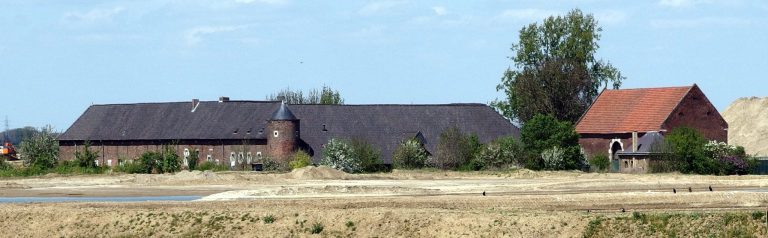
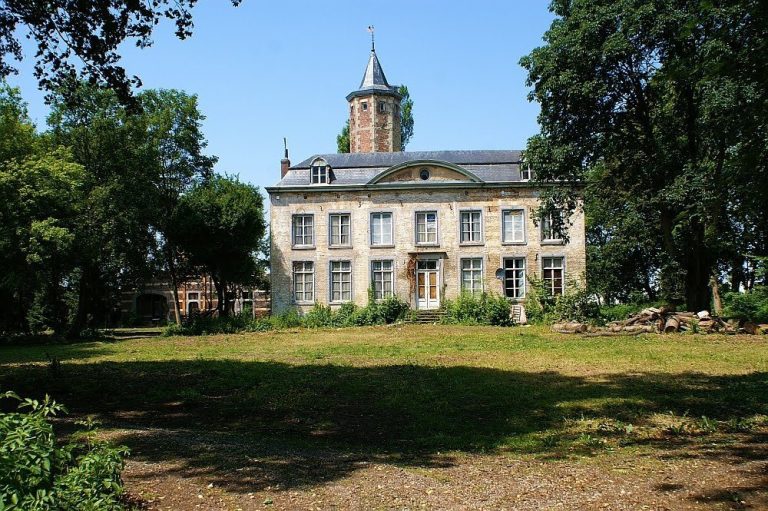
A new castle was built in 1792 on the site of the old castle farm. The old castle burned in 1836 and was later demolished, with its chapel surviving. The 1792 castle burned in 1909, and a replacement was built in 1910 using the remains. That building burned in 1920 and was restored by 1926.
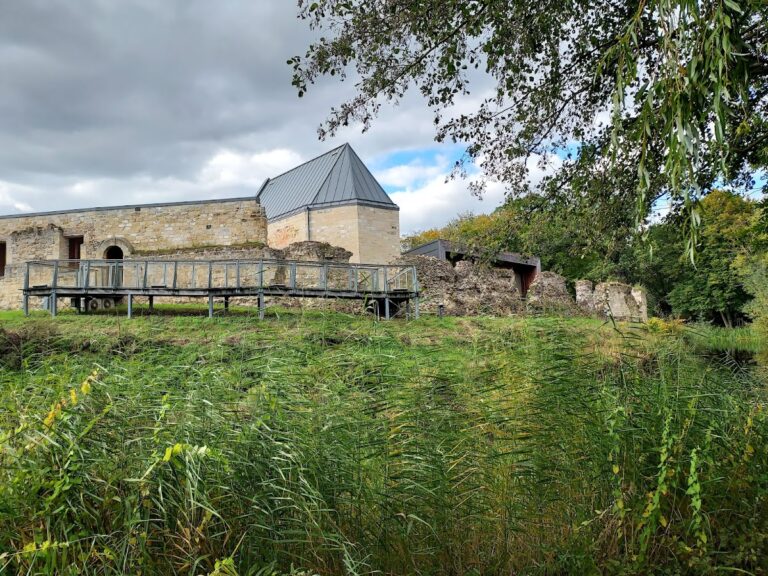
The municipality of Lanaken acquired the castle and adjoining estate in 1971, then sold the castle to Gelderburg Estates BVBA in 2017. Today, the ruins serve as an entrance to Hoge Kempen National Park, with information about the park and the history of Pietersheim’s knights and nobles.
Remains
Medieval enclosure
The medieval complex was a ring-wall castle, a fortified group of buildings arranged along an enclosing wall. Its buildings stood against the inside of a polygonal wall, and the wider layout eventually included three concentric moats, a forecourt, a chapel, and fortified entrances.
Wall and defenses
A section of the enclosing wall survives as a ruin. The raised defensive earthwork and the inner moat remain clearly recognizable, and the moated castle was restored in 2010.
Gatehouse, stables, and casemates
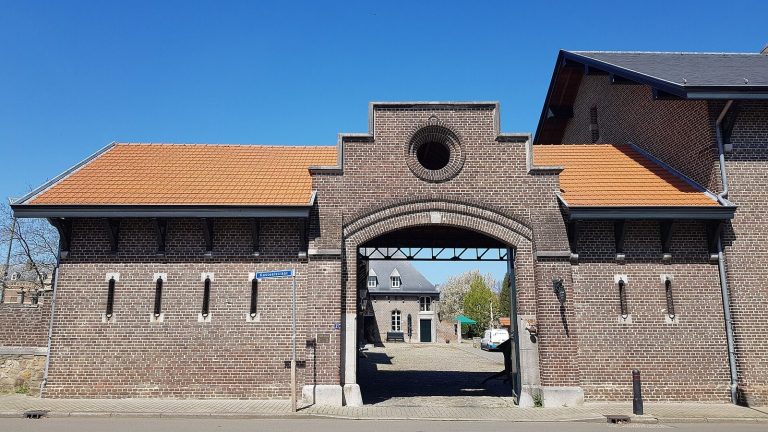
The central part of the old gatehouse survives beside stables built of marlstone, a type of building stone. The stables reused material from demolished castle-farm buildings. Two rectangular casemates stand beside the castle ruin.
Chapel
The chapel dates to the last quarter of the 14th century. After the old castle was demolished in 1836, the chapel was used as a hay barn.
Present manor and grounds
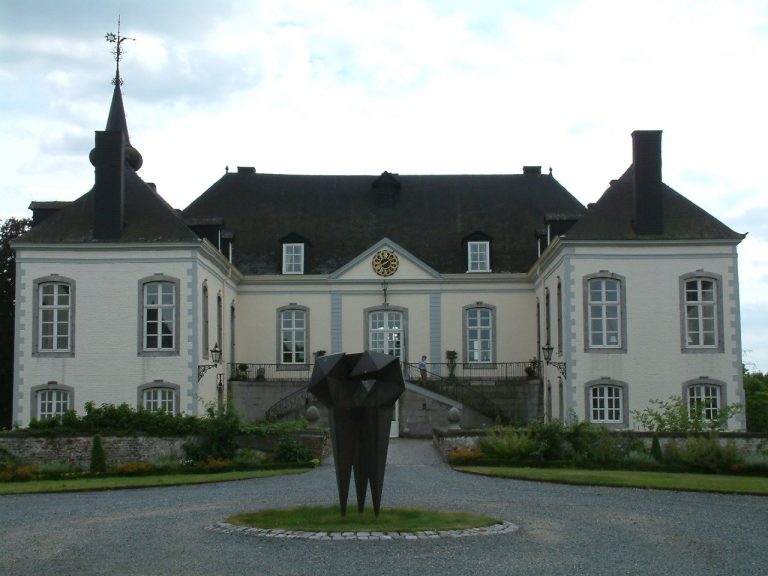
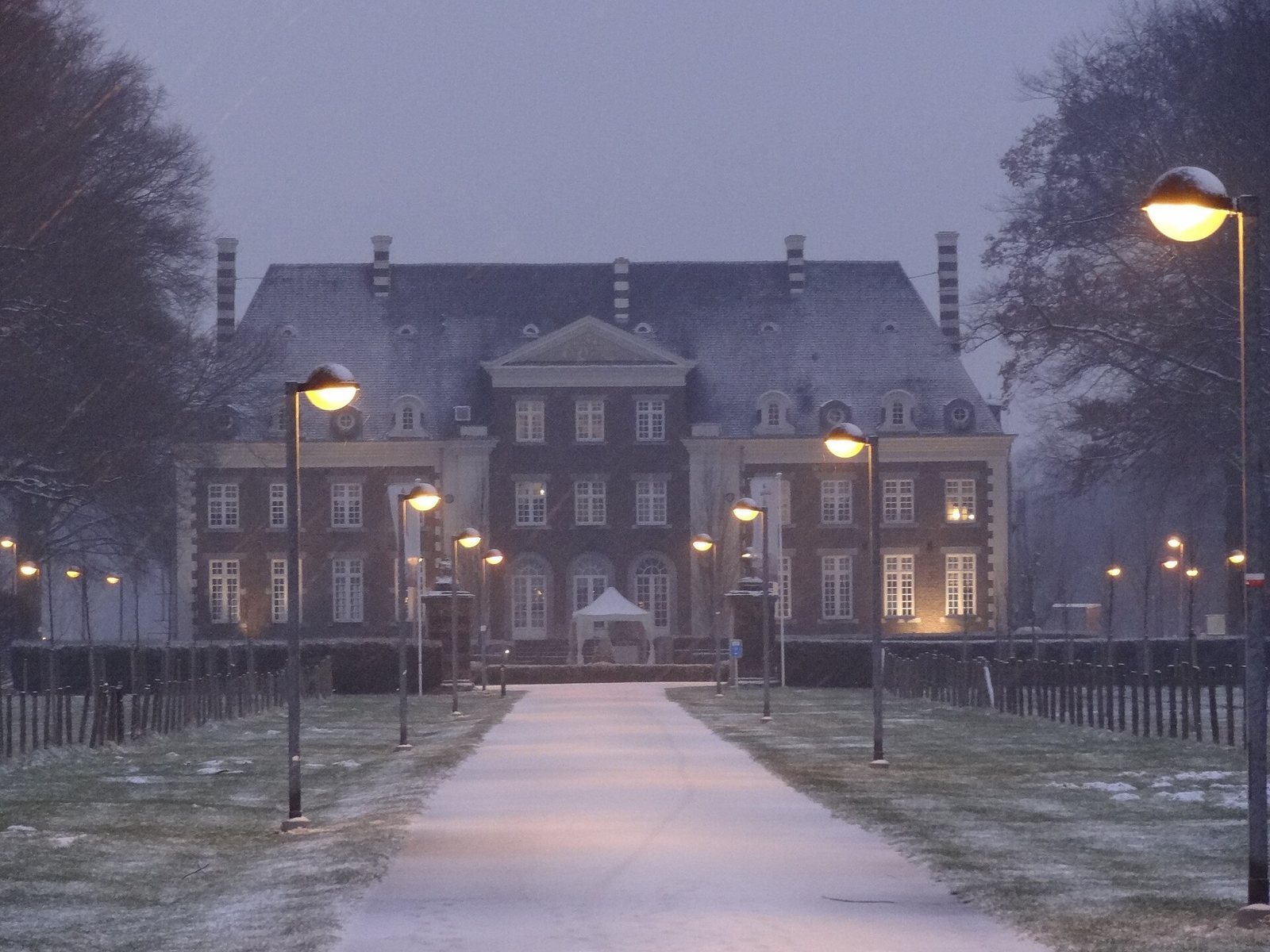
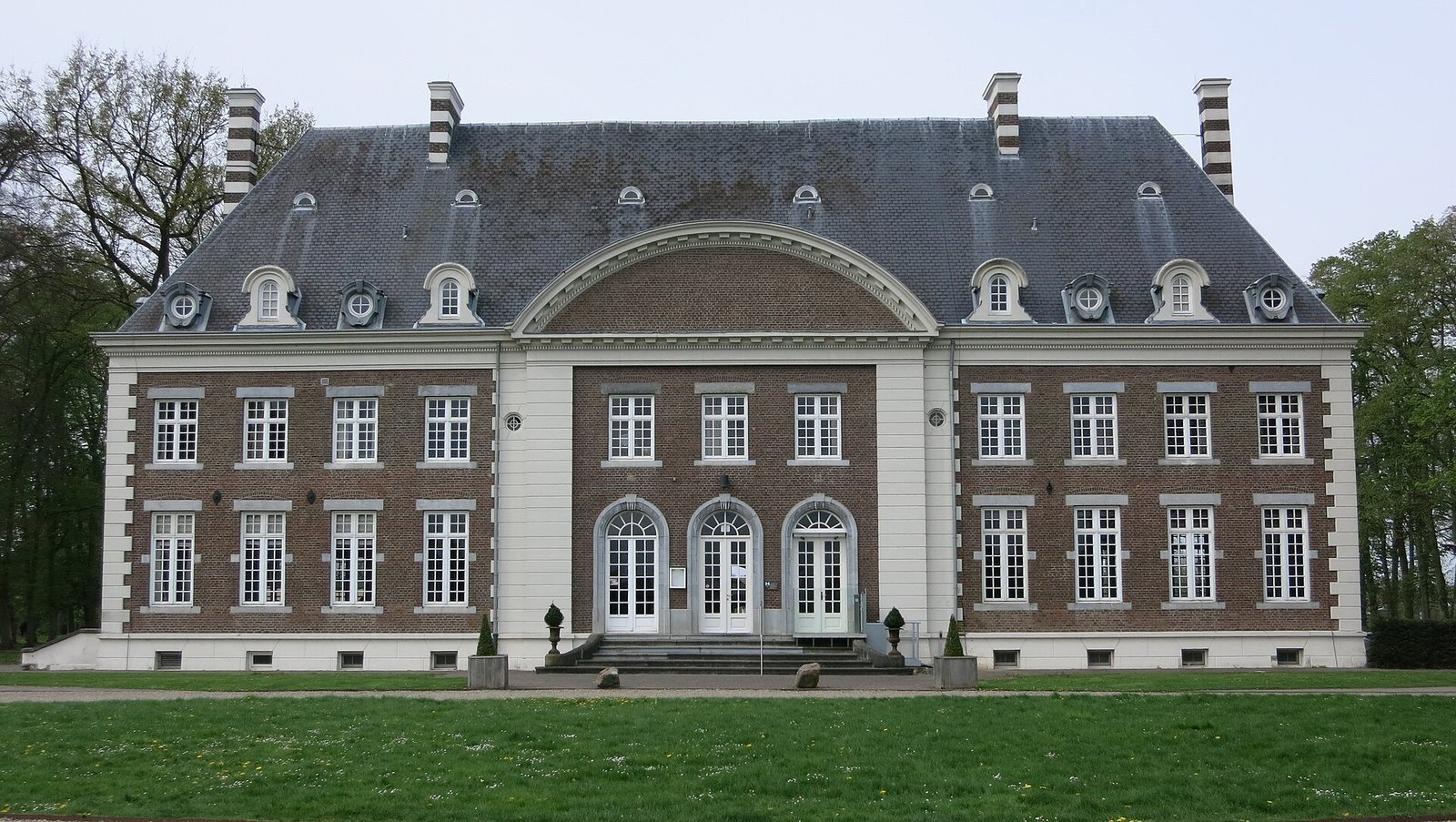
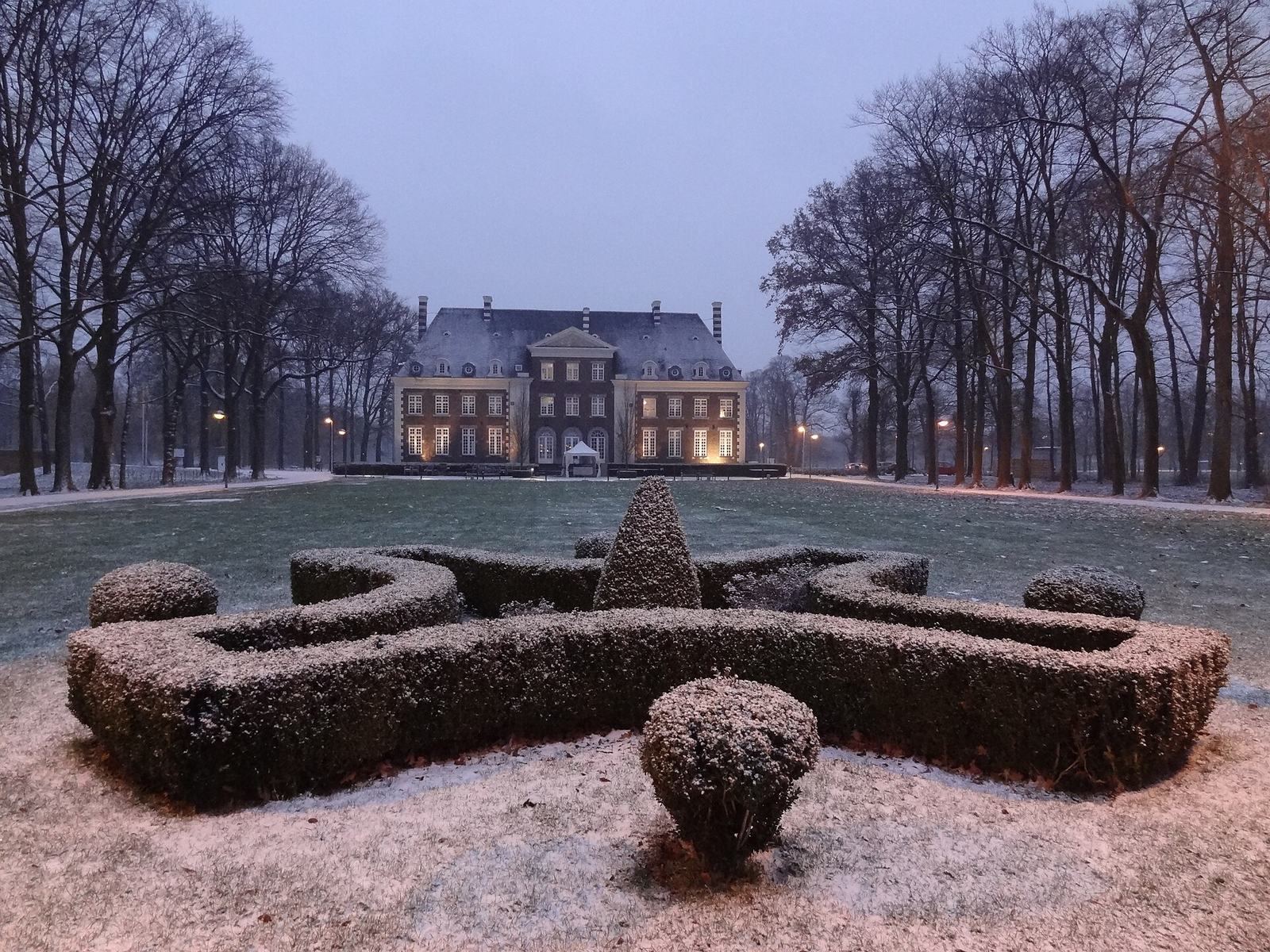
The present castle stands just outside the medieval moated enclosure, on the former outer bailey, the enclosed area beyond the castle’s central enclosure. It is a stately manor house in neoclassical style, with a prominent triangular pediment, the shaped upper section of its facade. An English landscape-style park surrounds it.