Castle of Máré: A Medieval Fortress in Hungary
Site at a Glance
- Country
- Hungary
- Primary era
- Medieval
- Eras represented
- Medieval, Early Modern
- Civilizations
- Hungarian, Ottoman
- Site type
- Military
- Remains
- Castle
On this page7 sections
History
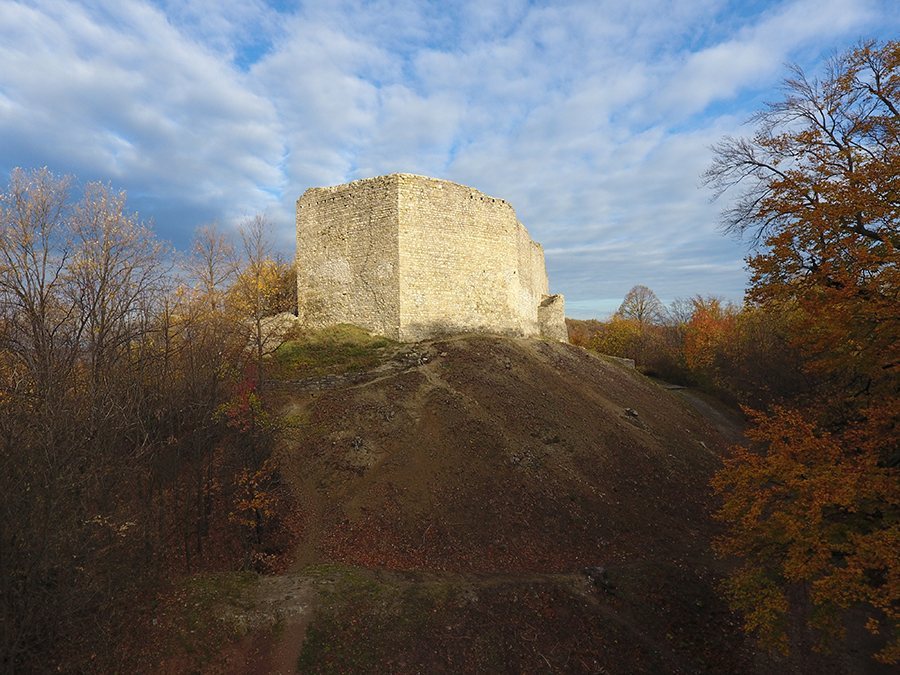
Castle of Máré is a medieval stone castle in Hungary, on a steep, wooded summit in the northern East Mecsek, south of Magyaregregy. Built before 1316 during a major wave of castle construction following the Mongol invasion, it later passed through noble and military hands.
Roman Watchtower and Medieval Castle
When Rome organized Transdanubia as the province of Pannonia, it placed a watchtower at the site for its strategic value. The tower was destroyed during the Migration Period, an era of large-scale population movements across Europe in late antiquity and the early Middle Ages.
The castle arose amid the wave of construction that followed the Mongol invasion. Its first written mention dates to 1316, when Charles Robert, also known as Charles I, King of Hungary from 1308 to 1342, granted it to István Bogár. The record refers to the castle as Castrum Mare, or “Castle of Mare.” In 1468, an inheritance agreement transferred it from the last member of a noble family, whose name had passed through Mareus and Máréi to Máriássy, to the Várday family.
Renaissance and Ottoman Control
During the civil war between supporters of John Szapolyai and Ferdinand I of Habsburg, rival claimants to the Hungarian crown, Pál Bakith took possession of the castle. Bakith, a Serbian-born supporter of Ferdinand, made limited improvements to its defenses in the 1530s. He could not fund a comprehensive strategic modernization, though the garrison could fire cannon down the steep slope at attackers.
After the Ottomans captured nearby Pécs in 1543, the castle surrendered without resistance. A reduced garrison of 72 soldiers remained there. As the boundary of Ottoman-held territory later moved north, the castle lost its military importance.
Ruin, Siege, and Conservation
By the early seventeenth century, the ruined castle belonged to the bishop of Pécs. It was still described as a ruin in the nineteenth century. In 1956, Soviet forces besieged it after a group of revolutionaries took shelter there. The episode gave the castle its other name, the “last besieged castle.”
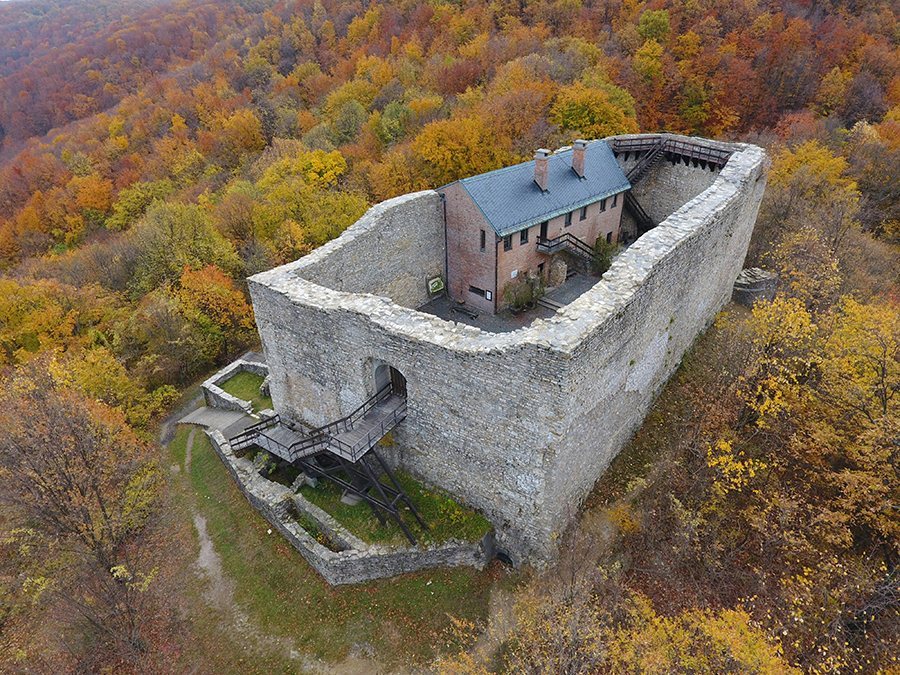
The ruin entered the monument register in 1958. Following archaeological excavation, restoration work from 1960 to 1966 stabilized walls at risk of collapse and restored a building in the inner courtyard.
Remains
The stone castle stands at an elevation of 340 metres on a steep, wooded summit. A small number of surviving walls enclose a courtyard, defining the remains’ basic layout.
Residence and Defenses
The residential buildings were adapted in Renaissance style in the 1530s. The defenses included a small rondel, a circular artillery fortification. Under Ottoman rule, they were supplemented by a palisade fort, a defensive enclosure commonly made of timber, with three towers.
Restored Courtyard Building
The restored building in the courtyard contained a ground-floor exhibition on the castle’s history, with finds recovered at the site.