Episcopal Palace (Püspökszentlászló): A Historic Episcopal Summer Residence in Hungary
Site at a Glance
- Rating
- 4.7
- Popularity
- Low
- Country
- Hungary
- Primary era
- Early Modern
- External website
- Open
- Eras represented
- Early Modern, Modern
- Civilizations
- Habsburg, Hungarian
- Site type
- Religious
- Remains
- Palace
On this page13 sections
History
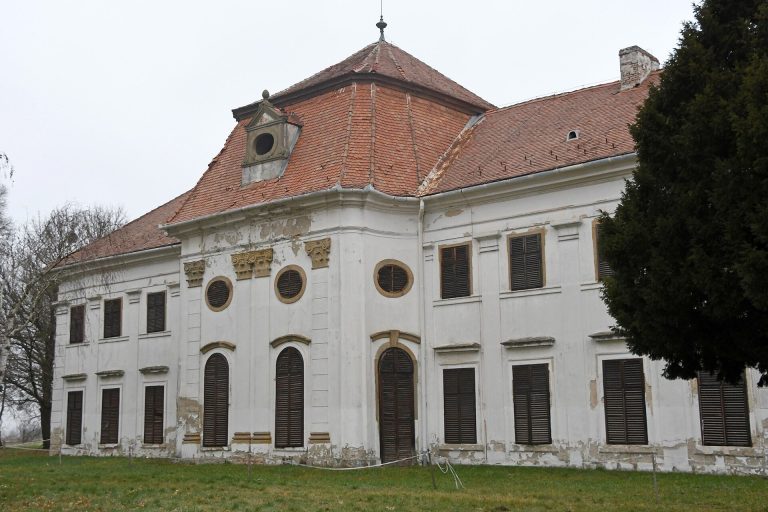
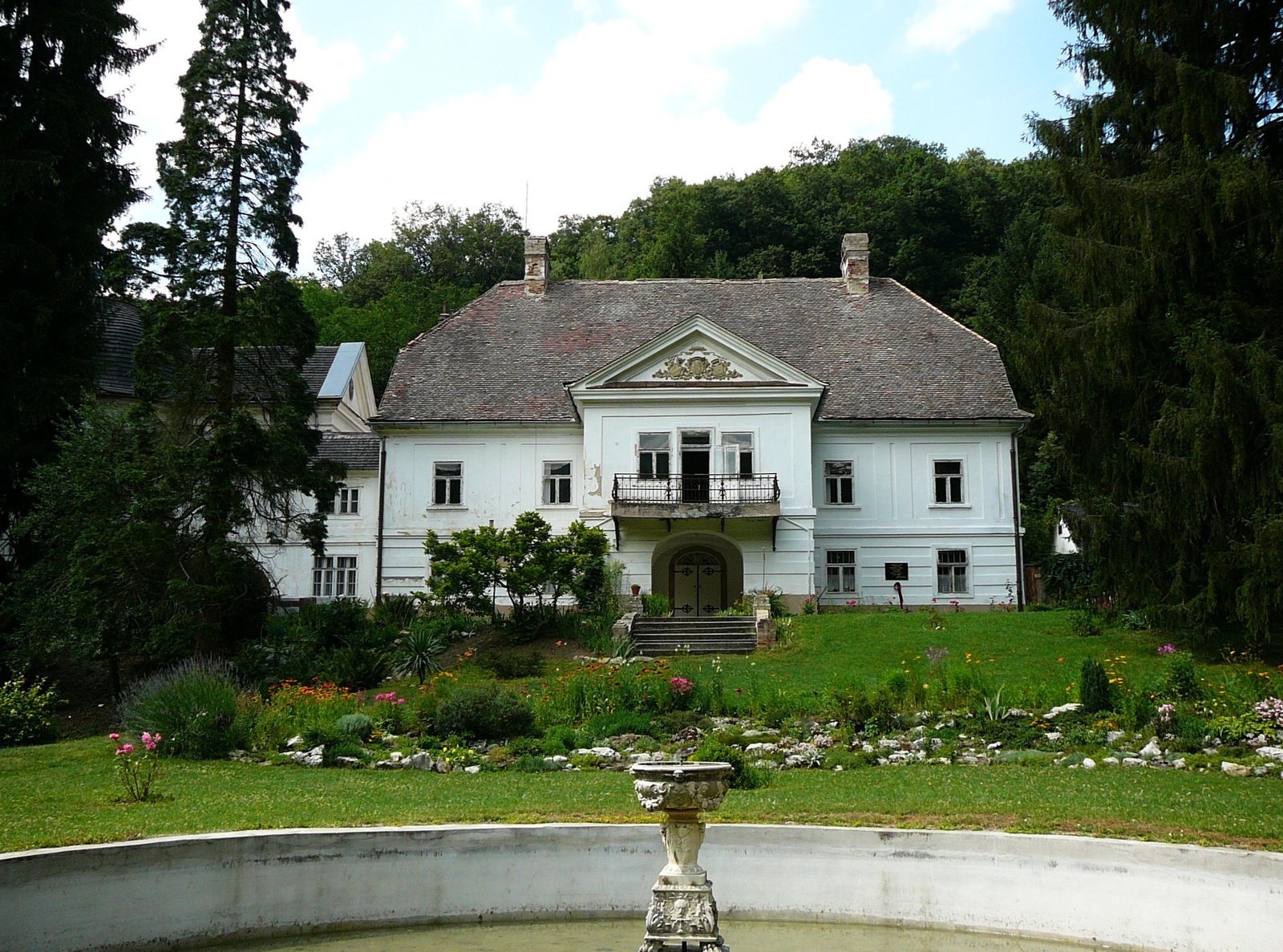
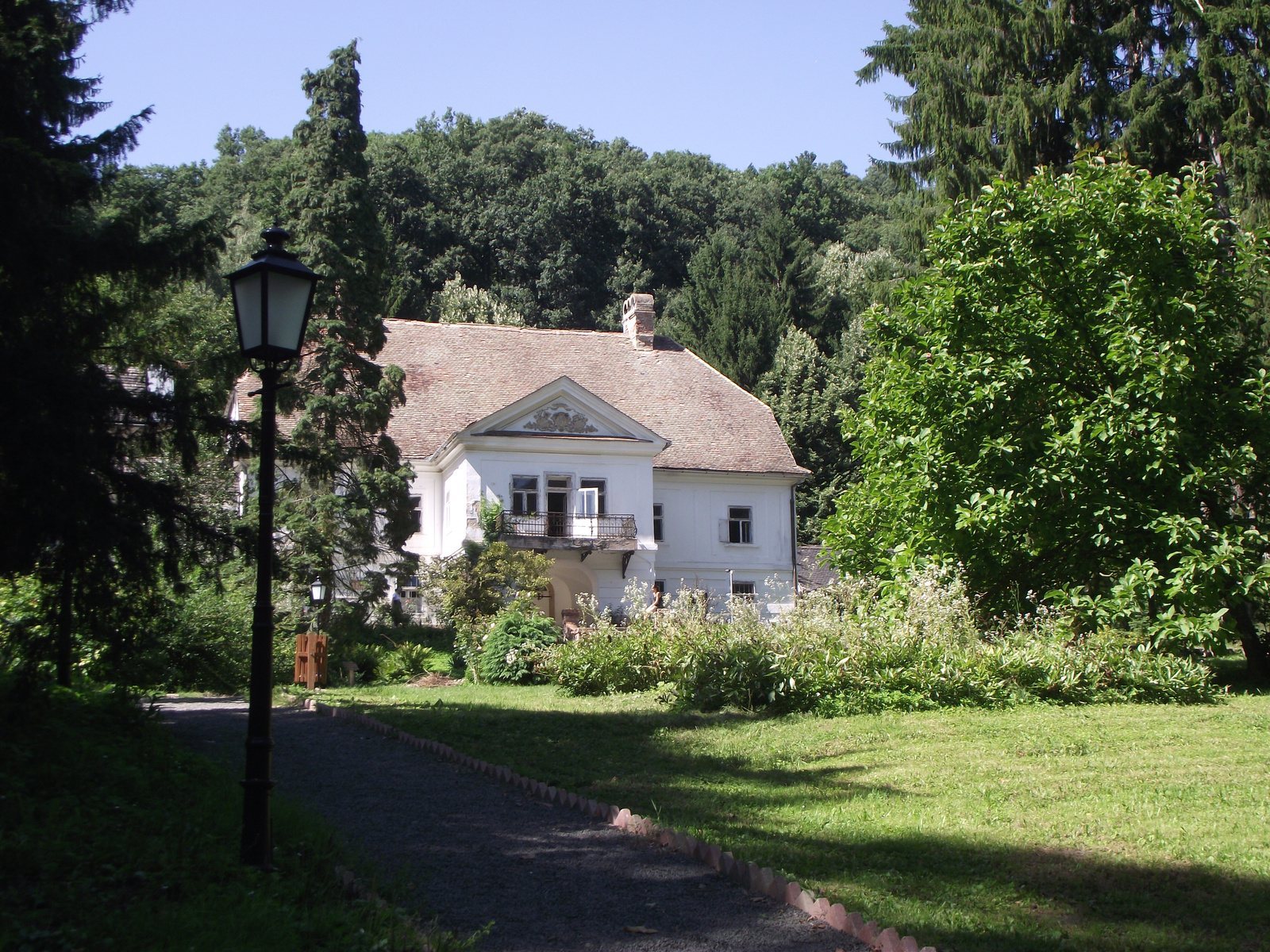
Episcopal Palace (Püspökszentlászló) is an eighteenth-century church and episcopal summer residence in Hosszúhetény, Hungary, built within a late-Baroque, classicizing architectural ensemble. The present church and palace were completed in 1797 for Count Pál László Esterházy, Bishop of Pécs, continuing a religious history associated with an earlier church and hermitage.
Early religious history
In 1721, the site contained a ruined church and a wooden hermitage. Local tradition attributed the original church to King Ladislaus I of Hungary, a medieval ruler later canonized as an important Hungarian royal saint. According to the tradition, he built it after taking refuge in a hermit’s cave during a storm while hunting aurochs.
A new church was raised on the earlier ruins in 1725 under the direction of Joannes Reinhard Uhl, a Minorite friar who had moved from Pécs. The Minorites are the Friars Minor Conventual, a branch of the Franciscan order. The present church and the adjoining episcopal summer palace followed in 1797 under Bishop Esterházy.
Nineteenth-century development
Bishop Sámuel Hetyey renovated the palace between March and June 1898 and acquired approximately six holds of land on its southern side. During the episcopate of Bishop Gyula Zichy, three episcopal coats of arms made from Zsolnay pyrogranite were installed in the tympanum of the main façade. Esterházy’s arms occupy the center, Hetyey’s are on the left, and Zichy’s are on the right. Zsolnay pyrogranite is a durable, high-fired ceramic developed by the Zsolnay factory in Pécs.
War, religious care, and imprisonment
During the Serbian occupation of Baranya after the First World War, the church was seriously damaged and the deer park was destroyed. Villagers protected the church’s furniture and carpets. After the Second World War, Ursuline sisters who taught at the village school lived in the palace. The Ursulines are a Catholic women’s religious order traditionally associated with education.
On January 17, 1954, Bishop Ferenc Virág formally assigned the palace for use as a home operated by the charitable service for ecclesiastical pensioners and sick people. Three days later, the Committee for the Placement of Public Institutions decided that the building should be transferred to the ecclesiastical charitable service as a social-care home. From the 1950s, the complex served for decades as an ecclesiastical home for elderly people.
The palace also became a place of detention for Hungary’s two archbishops during the 1950s, József Mindszenty and József Grősz. Mindszenty, a Hungarian Catholic cardinal and archbishop who opposed the communist regime, was secretly brought there on July 17, 1955. The State Protection Authority had ordered the 35 elderly sisters living in the palace to leave within 24 hours, and they were transferred to the already overcrowded Migazzi Palace at Verőce.
Before Mindszenty arrived, a plank fence was erected around the palace to prevent people from looking inside. Two rooms on the upper floor were assigned to him, while officers sent from Pécs occupied the ground floor. He had already spent years in prison, endured torture, and fallen to a weight of 44 kilograms. In the early 1960s, the former stable sheltered Jenő Kerkai, founder of the KALOT movement, who hid there while working as the palace’s second gardener. KALOT was a Hungarian Catholic rural youth movement of the twentieth century.
Restoration and memory
After the complex stood empty, the Diocese of Pécs renovated it with grant funding during the mid-2010s and adapted it for visitors. The restored complex was technically handed over and blessed on October 29, 2015. The work received an ICOMOS award in 2018. ICOMOS, the International Council on Monuments and Sites, is an international organization concerned with conserving cultural heritage.
A memorial room dedicated to József Mindszenty was established in the palace to commemorate his imprisonment there in 1955. A chapel inaugurated in 2002 at the nearby House of Life Arrangement also bears his name. The church’s annual patronal feast is held on June 27, the feast day of Saint Ladislaus, and many of the sisters who lived in the complex are buried in the cemetery above it.
Remains
Church and palace ensemble
Church
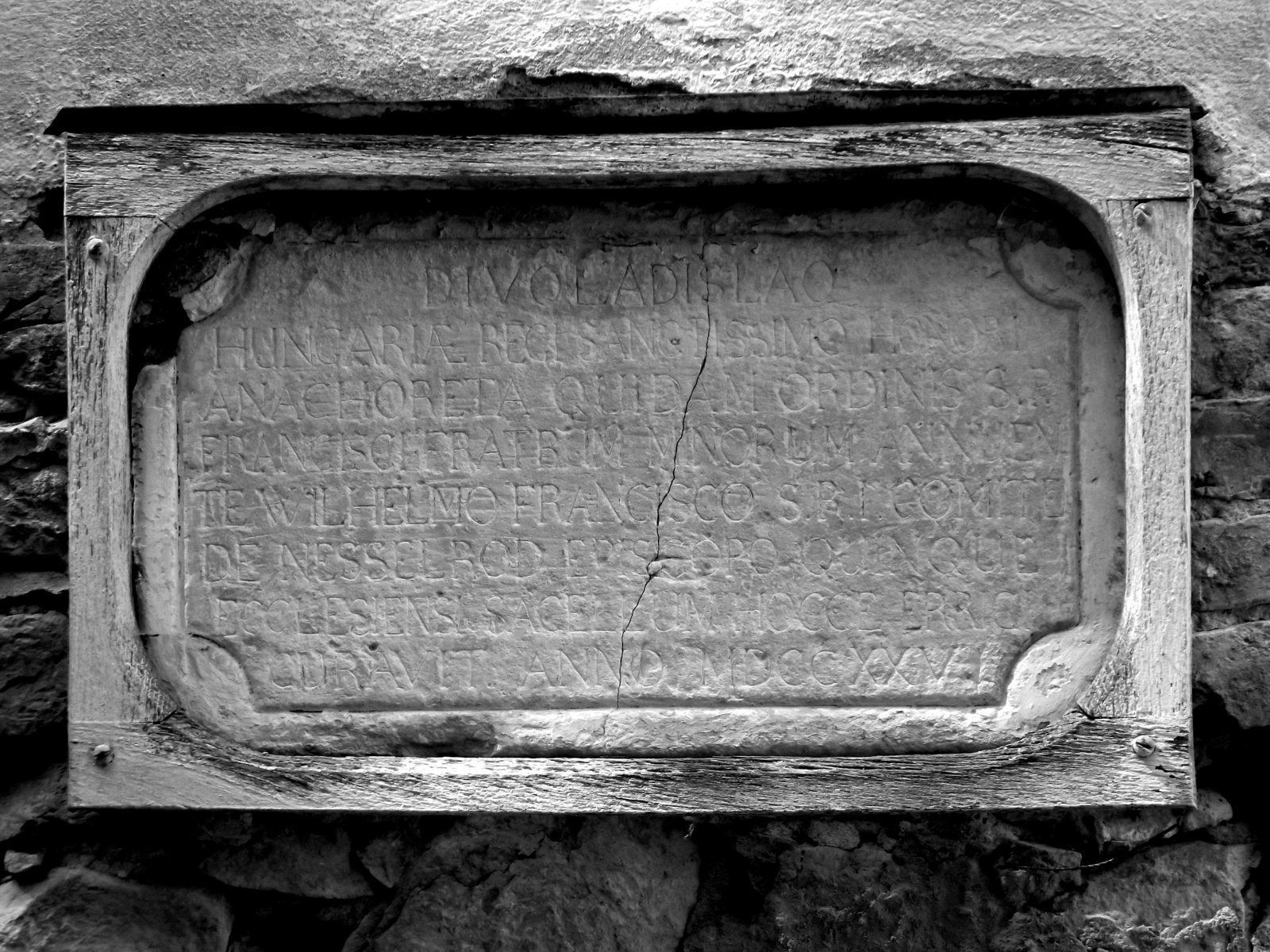
The church has an oval ground plan and forms part of the late-Baroque, classicizing ensemble beside the palace. Its interior is approximately 13 metres long, while the pine-shingle-covered dome rises to an interior height of 11.75 metres. A sandstone plaque set into the south wall carries a Latin inscription commemorating the church erected in 1725.
The main altar, made in 1903, shows Saint Ladislaus worshipping before the Virgin Mary. Earlier side altars dedicated to Saint Ladislaus and Saint Emeric were replaced by altars dedicated to the Sacred Heart of Jesus and the Immaculate Heart of Mary. The church organ began operating in 1907 and was built by the Angster factory of Pécs. Of the three bells, two were removed for military purposes during the First World War.
Episcopal palace
The adjoining palace was built as an episcopal summer residence in 1797. Its main façade carries the three episcopal coats of arms installed during Bishop Zichy’s episcopate, with Esterházy’s arms in the center, Hetyey’s on the left, and Zichy’s on the right. The palace now contains the memorial room dedicated to József Mindszenty.
Gardens and associated structures
Arboretum and water features
The surroundings were landscaped when the complex was built in 1797. The arboretum took its present form about a century later during Bishop Hetyey’s episcopate. Episcopal head gardener Ferenc Hrban laid it out and installed the Zsolnay fountain in front of the palace. A second water feature, a fishpond in the meadow, also dates in tradition to Esterházy’s period. Hetyey’s additional land was fitted with underground irrigation piping and supplied with a cistern.
Former stable and game park
The renovated former stable is part of the surviving building ensemble. It later served as the hiding place of Jenő Kerkai in the early 1960s. Bishop Zichy established a game park where deer were kept, followed by fallow deer from 1913. The park was destroyed during the Serbian occupation of Baranya after the First World War.
Hillside statue and cemetery
A statue of Saint Ladislaus holding a sword overlooks the palace from the same hillside. The associated cemetery lies above the building ensemble and contains the graves of many sisters who lived there.