Prasat Ta Muen Thom: An 11th-Century Khmer Hindu Temple at the Thai-Cambodian Border
Site at a Glance
- Country
- Thailand
- Primary era
- Medieval
- Eras represented
- Medieval
- Civilizations
- Khmer
- Site type
- Religious
- Remains
- Temple
On this page8 sections
History
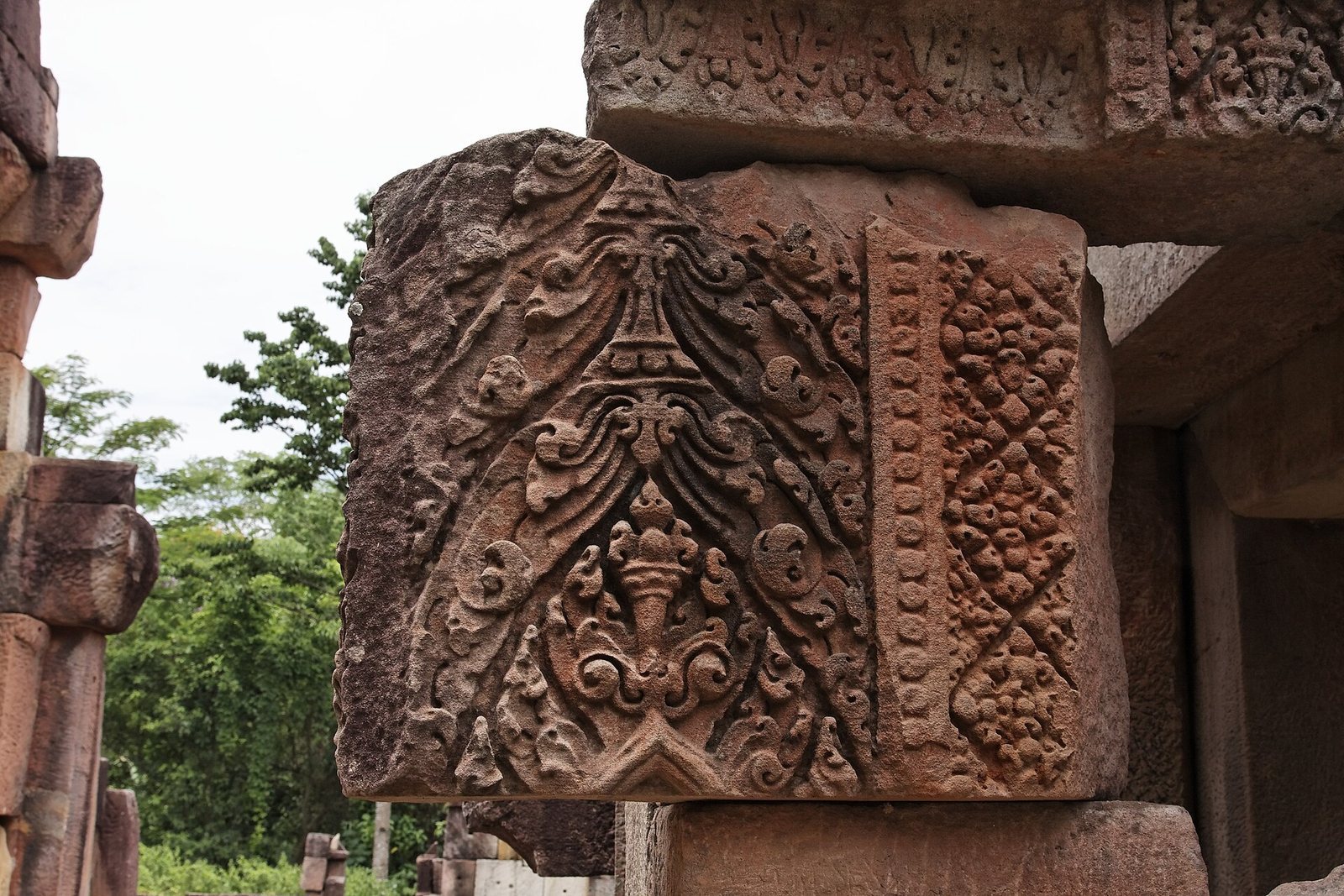
Prasat Ta Muen Thom is an 11th-century Khmer Hindu temple dedicated to Shiva, a major Hindu deity, at Ta Muen Pass in the Dangrek Mountains on the Thailand-Cambodia border. It was the largest of three temples at the pass. Its galleries and pediments are associated with the Khleang style of the late 10th to early 11th centuries and the Baphuon style of the mid-11th century.
Earlier religious use and 11th-century construction
Before the temple was built, the site served as an ashram, or religious retreat. An inscription from the reign of Suryavarman I links the earlier retreat to his rule.
Construction of the temple is attributed to Udayadityavarman II and is also associated with Suryavarman I’s reign. The site’s religious importance continued through belief in its natural sacred focus, which remains an object of devotion among Cambodians.
The Angkor-Phimai highway
Prasat Ta Muen Thom formed part of a group of three temples serving the major Khmer highway between Angkor, the center of the Khmer Empire, and Phimai, an important administrative center in its northwest. Nearby Prasat Ta Muen Toch functioned as a hospital chapel, while Prasat Ta Muen was associated with a travelers’ rest-house chapel.
Jayavarman VII, a Khmer king known for public works such as roads, hospitals, and rest houses, added a highway rest house and hospital to the temple complex. Pilgrims and other travelers could stay overnight or recover before continuing their journeys.
Looting and border conflict
During the 1980s and 1990s, Khmer Rouge forces controlling the area looted temples across the region to finance their guerrilla campaign. The Khmer Rouge was a Cambodian communist movement. Architectural pieces and original sculptures were stolen; some were detached with dynamite, then smuggled out of Cambodia or sold on the black market.
In the late 2000s and early 2010s, border clashes in the Cambodian-Thai crisis, which had spread from the dispute over Preah Vihear, reached Ta Muen and temporarily closed access to the temple. In late July 2025, Cambodian troops entered the area seeking to take the temple. Thai troops drove them out, and Cambodian artillery damaged the temple.
Confusion among the names and locations of the three similarly named temples led to the smallest, northern temple being labeled as Prasat Ta Muen Thom for a time, while the actual temple received another label. Later corrections, an inaccurately displayed boundary line, and a shifted map marker helped create the mistaken impression that Prasat Ta Muen Thom lay far inside Cambodia.
Remains
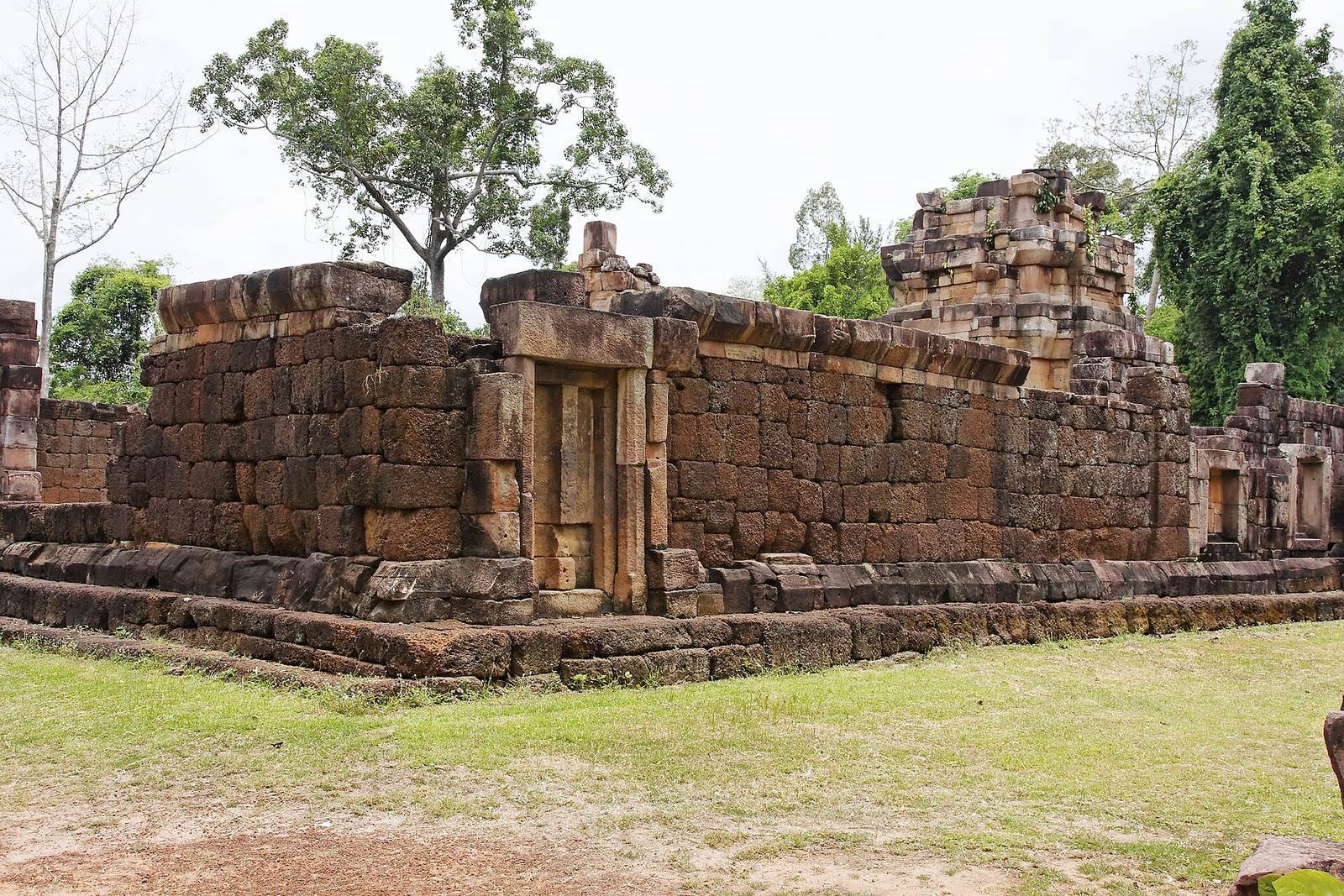
The complex occupies a rocky ridge at Ta Muen Pass. The Khorat Plateau, an upland region of northeastern Thailand, lies to the north; steep cliffs descend south toward the Cambodian plains. The complex measures 60 by 60 metres, and its rectangular enclosure measures 46 by 38 metres. Builders worked around the ridge’s rock rather than levelling the ground, cutting it only roughly. Local stone may also have been used in construction.
The sanctuary and natural rock formation
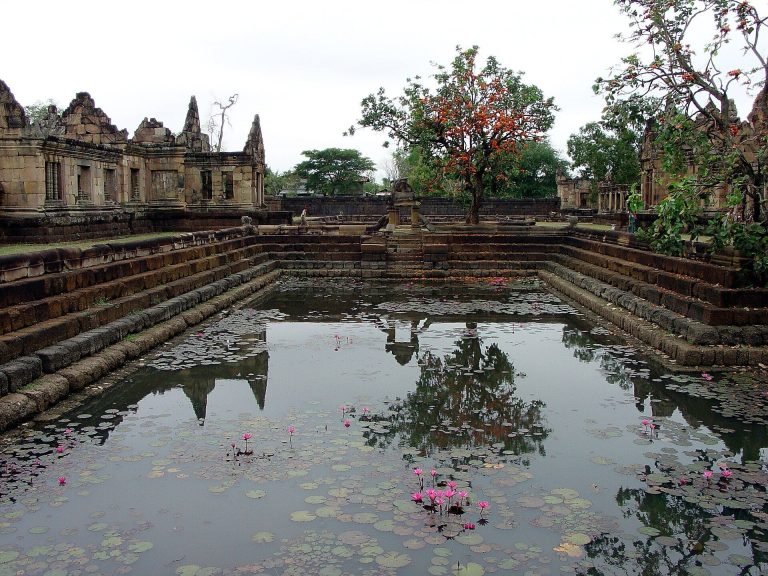
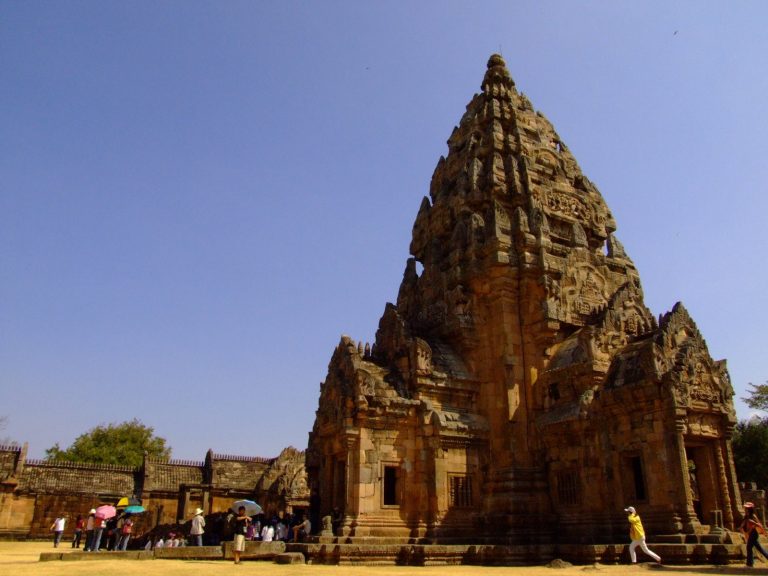
The main sanctuary is built of pinkish-grey sandstone and stands around a natural bedrock formation revealed by excavation inside the main tower. The formation is understood as a self-manifested linga, a symbol associated with Shiva that is natural rather than carved and installed by people. A hall before the sanctuary and a connecting passage lead to it. A natural groove in the bedrock carries water from the sanctuary outward; during rituals, sacred water poured over the linga flowed through this channel for worshippers to collect.
Southern gateway and stairways
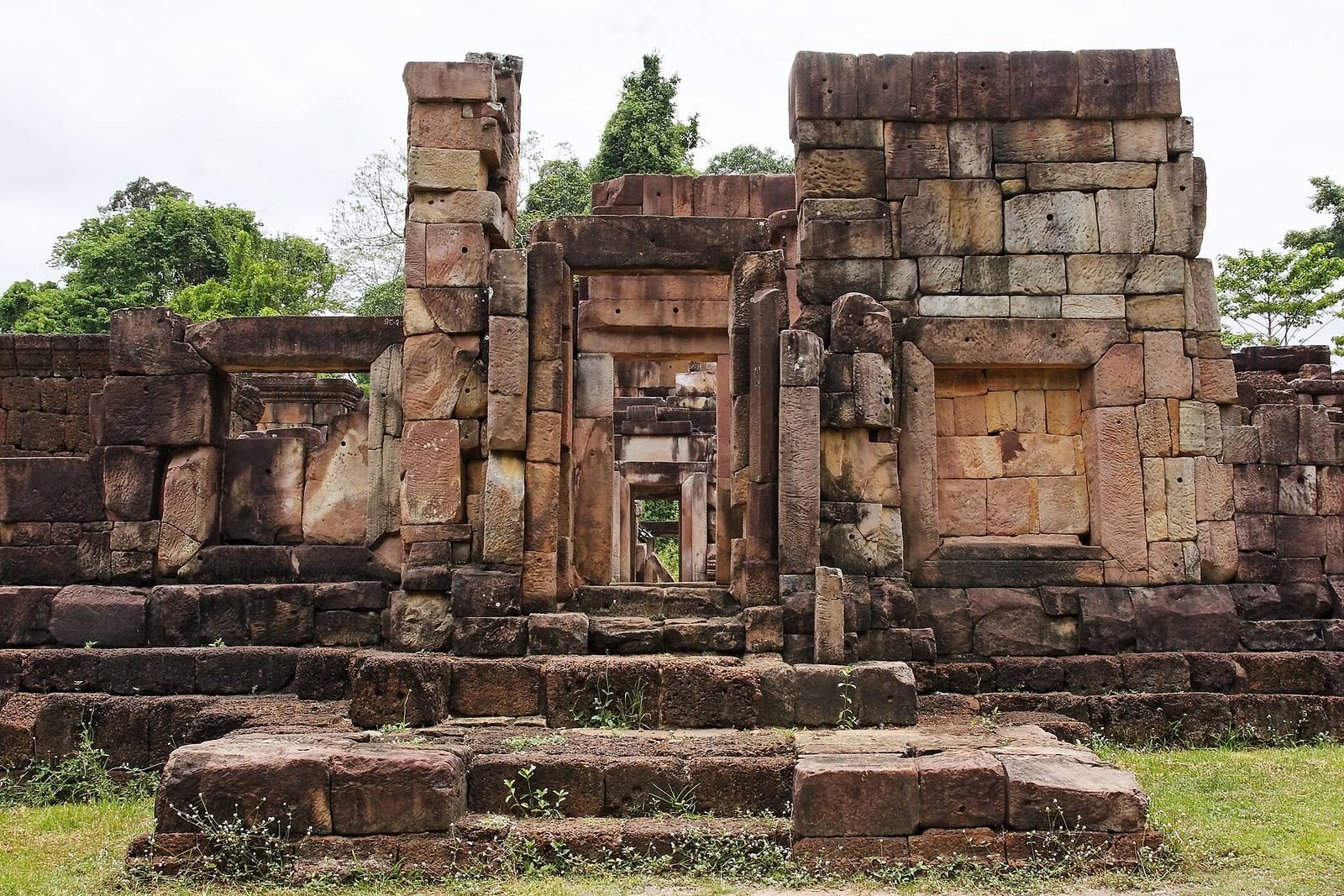
The temple faces south, unlike the usual east-facing Khmer temple. This alignment is thought to reflect the pass’s terrain: the entrance faced travelers climbing from the plains and provided a strategic view south along the mountains. The main gateway on the south façade is larger than the other gateways. A broad, steep laterite staircase descends from it into Cambodian territory. A second laterite staircase leads down to a stream on the Cambodian side, where the watercourse curves around the temple.
Northern buildings and pools
Two subsidiary sandstone towers stand northeast and northwest of the sanctuary, and the complex also includes two laterite library buildings. On the north side are two standing towers, two other laterite buildings, and foundations of three structures that no longer stand. These northern buildings are identified with the remains of the highway rest house and hospital. Two small pools lie north of the enclosure, outside its surrounding gallery. Much of the temple’s surface remains uncarved.