Modinakhe Fortress: A Georgian Hilltop Stronghold
Site at a Glance
- Country
- Georgia
- Primary era
- Early Modern
- Eras represented
- Early Modern
- Civilizations
- Ottoman
- Site type
- Military
- Remains
- Castle
On this page10 sections
History
Modinakhe Fortress is a hilltop stronghold in Georgia, about one kilometre north of Sachkhere. Imeretian noble Papuna Tsereteli built it in the 1730s, although the precise year is unknown. The fortress served as a residence for Tsereteli princes and as a refuge during conflicts in Imereti, a historic region and kingdom in western Georgia.
Early settlement
The site was occupied long before the fortress was built. Excavations led by Georgian archaeologists Shalva Amiranashvili and Jurkha Nadiradze between 1967 and 1975 identified settlement phases from the later Early Bronze Age, the Late Bronze to Early Iron Age, and the Early Antique period. The settlement grew during the middle of the first millennium BCE. Its earliest occupation is attributed to the ridge’s strategic position.
Construction and political use
A foundation tradition connects the fortress’s name, meaning “Come and see,” with Papuna’s marriage. His father-in-law, David Abashidze, is said to have refused the marriage because Papuna had no fortress. After building one, Papuna sent him the invitation “Come and see.” The name is also associated with the site’s difficult approach. The fortress belonged at different times to the Palavandishvili family and the Sachkhere branch of the Tsereteli family.
In 1735, Papuna took refuge at Modinakhe after rebelling against Alexander V, king of Imereti. Alexander made several unsuccessful attempts to seize it. During an Ottoman campaign in Imereti in 1766, King Solomon I also sought refuge there. The following year, the Tsereteli family ceded the fortress to him.
Capture and abandonment
During the Imeretian rebellion of 1810, rebels occupied the fortress. Russian troops captured it in March and installed a garrison. This was the only time an enemy took Modinakhe: its defenders had run out of provisions, and an informer was among those inside. The fortress later lost its strategic value and was abandoned.
Remains
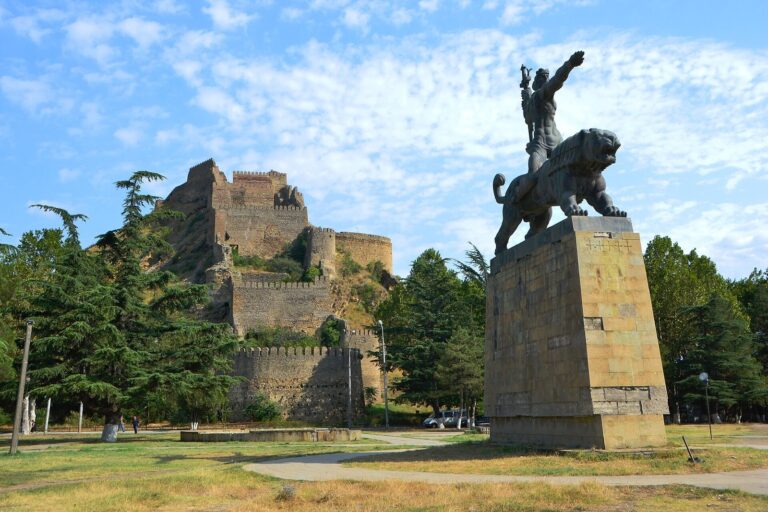
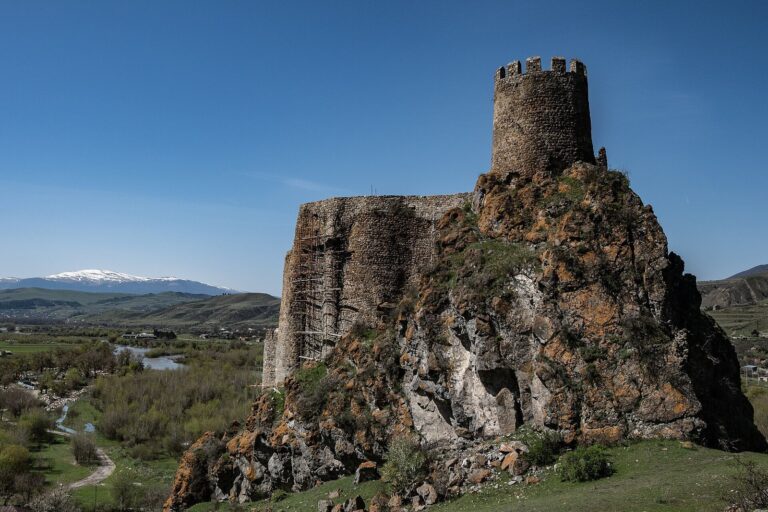
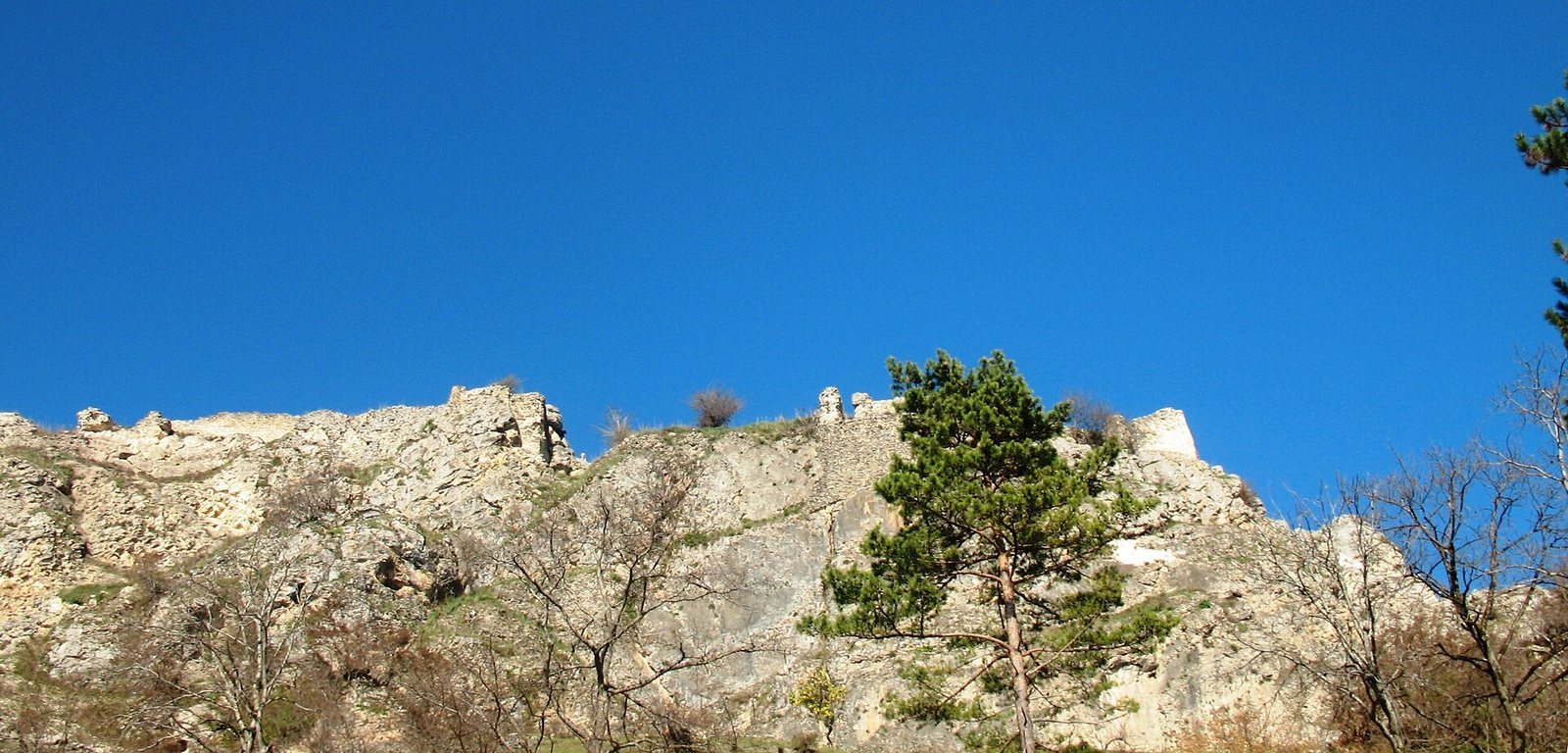
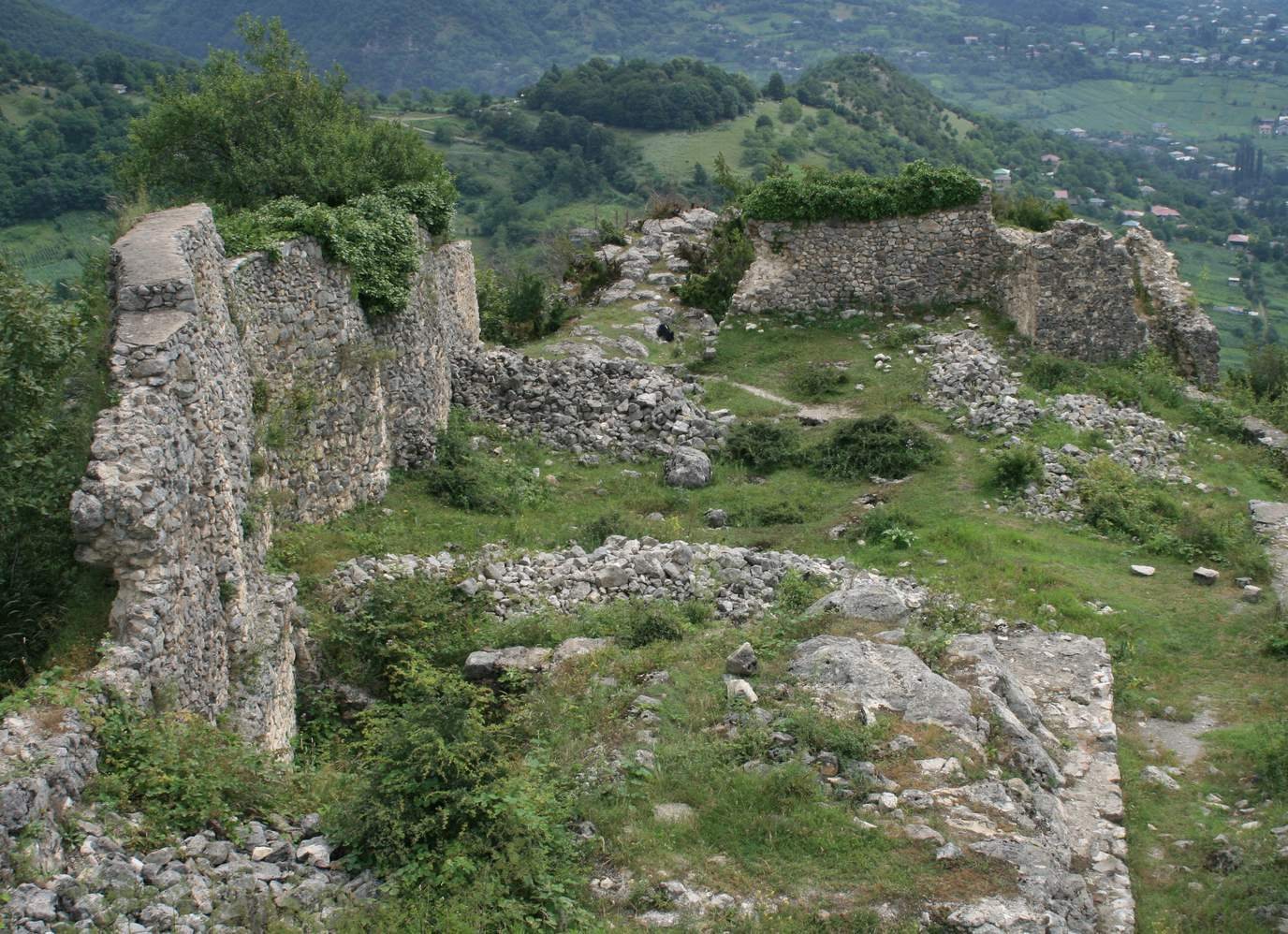
The fortress occupies a steep, high chalk-limestone ridge about 700 metres above sea level. Routes climbed to it from two sides. Its plan included two long walls: one was closed by a tall tower, while two towers stood at the end of the other. A house, chapel, and prison occupied the central area, where large qvevri (earthenware wine vessels) were buried in the courtyard.
Surviving fortress fabric
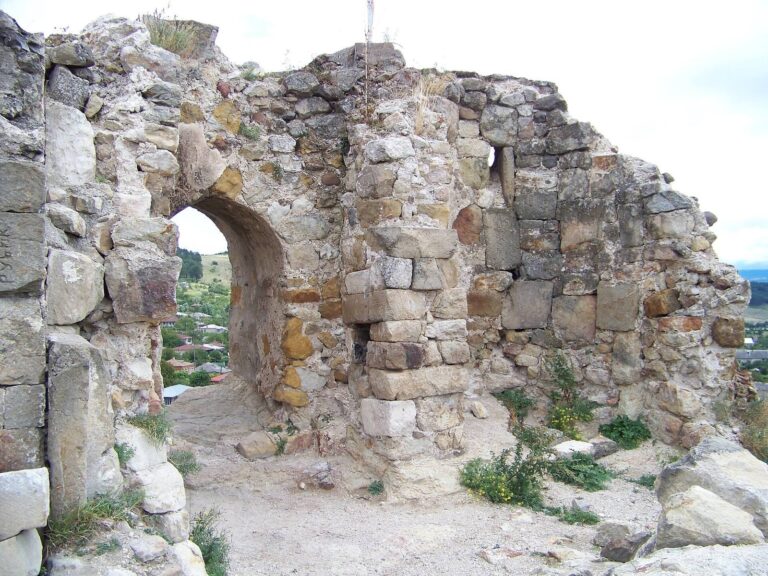
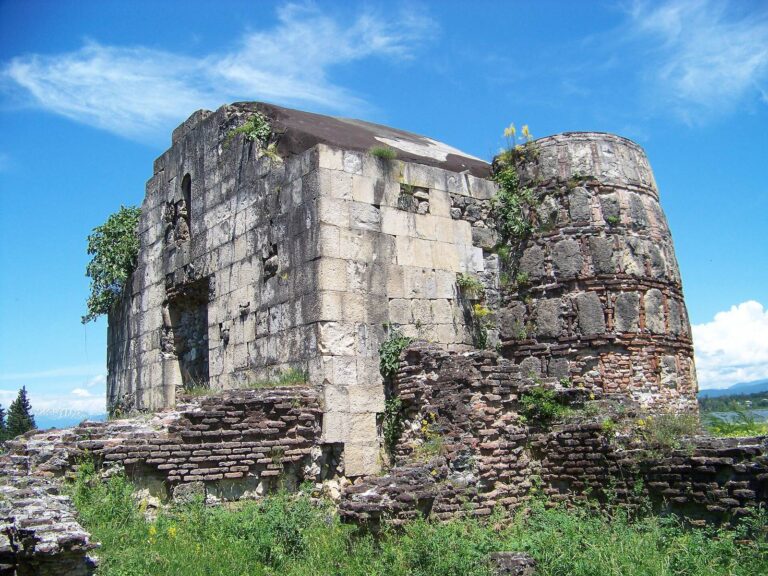
By the 1830s, the fortress was half ruined, although sections of wall and seven towers remained, along with two old culverins, an early type of cannon. The 1991 earthquake severely damaged the walls and erased the visible traces of the towers. Large pieces of wall lie below the mountain.
Archaeological evidence
Settlement traces
Ancient worked stone blocks and both local and foreign pottery were found in the inner courtyard, adding material evidence of the site’s earlier settlement.
Burial grounds
Burial grounds date to the transition between the Middle and Late Bronze Age, the Late Bronze Age, the Early Antique period, and the Late Antique period. Stone-mound graves from the 16th–15th centuries BCE were mostly collective. The dead were laid on either side with their limbs bent. Burial customs changed in the Early Antique and Hellenistic periods. In Late Antique graves from the 4th century CE, men were placed on their backs; this change is thought to reflect the spread of Christianity in the region.
Excavated objects
Finds from the settlement and graves include pottery of varied forms, bronze weapons, and ornaments. Graves from the Early Antique and Hellenistic periods also yielded gold and silver jewelry, vessels, and weapons. Colchian coins, associated with Colchis, an ancient kingdom on the eastern Black Sea coast in present-day western Georgia, and Roman coins were also found.