Fort Henry: A British Military Fortification in Kingston, Canada
Site at a Glance
- Country
- Canada
- Primary era
- Modern
- Eras represented
- Modern
- Civilizations
- British
- Site type
- Military
- Remains
- Fort
On this page9 sections
History
Fort Henry is a British fortification on Point Henry in Kingston, Canada, rebuilt during the 1830s to protect the naval dockyard and harbour and secure the southern entrance to the Rideau Canal. Fort Henry and its associated defenses were described as the strongest in Canada west of Quebec City, and the fort was also known as the Citadel of Upper Canada.
Plans and the War of 1812
In 1783, British officers considered Point Henry as a possible defensive position. The British post at what is now Kingston occupied the partly repaired ruins of French Fort Frontenac, but the garrison and growing settlement were considered difficult to defend. Captain John Ross, who was responsible for settling Loyalist refugees in the area, proposed moving both the stronghold and the town to Point Henry. The proposal was not carried out.
In 1794, Lord Dorchester, the title held by British officer and colonial administrator Guy Carleton, ordered a survey of Point Henry, Point Frederick, and nearby waters to assess a possible naval base. Lieutenant Alexander Bryce of the Royal Engineers, the British Army’s military engineering corps, recommended Haldimand Cove, now Navy Bay, for the base and a fort on Point Henry to protect it.
The first fort was built from 1812 to 1814, during the War of 1812, a conflict between the United States and Britain and its colonies, including what is now Canada. Its purpose was to defend the naval dockyard on Point Frederick and monitor shipping on Lake Ontario and the St. Lawrence River. Losing that water route could have cut supplies to Kingston and the rest of Upper Canada, the British colony that covered much of present-day Ontario.
At the beginning of the war, local militia built a blockhouse and battery on Point Henry. On November 10, 1812, the battery helped repel American warships attacking the Provincial Marine sloop Royal George as it took shelter in Kingston Harbour. The action reinforced calls for stronger defenses, and militia and regular army troops began building batteries and barracks in 1813.
Rebuilding and garrison
Distrust between Britain and the United States continued after the war. The original fort was demolished, and construction of a larger fort began in 1832. The new defenses protected the dockyard and harbour and secured the southern entrance to the Rideau Canal, a nineteenth-century waterway linking Lake Ontario with the Ottawa River as an alternative to the St. Lawrence route. The second fort was built during the 1830s.
The advanced battery overlooking the lake to the south was completed in 1843, alongside protected stores and ammunition magazines. Cost overruns on the Rideau Canal limited the wider defensive scheme to the fort and four Martello towers. Neither Fort Henry was attacked.
British troops were stationed at the fort from 1813 to 1870. Units included the Royal Regiment of Artillery, 24th Regiment of Foot, Black Watch, Argyll and Sutherland Highlanders, Royal Welch Fusiliers, and Royal Canadian Rifle Regiment. Canadian units associated with the fort included the A and B Batteries of Garrison Artillery and the 14th Battalion, Princess of Wales’ Own Rifles. B Battery of Garrison Artillery was stationed there.
Prisoners, disuse, and restoration
Fort Henry temporarily held prisoners during the 1837–1838 Rebellions, uprisings against colonial government in Upper and Lower Canada. During Canada’s first national internment operations, from 1914 to 1920, it held German, Austrian, and Turkish prisoners of war, as well as civilians. Among them were Ukrainian immigrants classified as “enemy aliens.” In the Second World War, the fort served as a prisoner-of-war camp for German air force and navy personnel.
As relations with the United States improved, the perceived need for border defenses declined. The Canadian Militia garrisoned Fort Henry until 1891; after its military use ended, the fort fell into disrepair. A restoration led by Ronald L. Way in the 1930s formed part of a government work program during the Great Depression. The restored fort opened as a living museum on August 1, 1938. The Fort Henry Guard interprets British military life and helps preserve the site.
Fort Henry was recognized as a National Historic Site of Canada with the Kingston fortifications in 1989. It was included in the Rideau Canal UNESCO World Heritage Site in 2007.
Remains
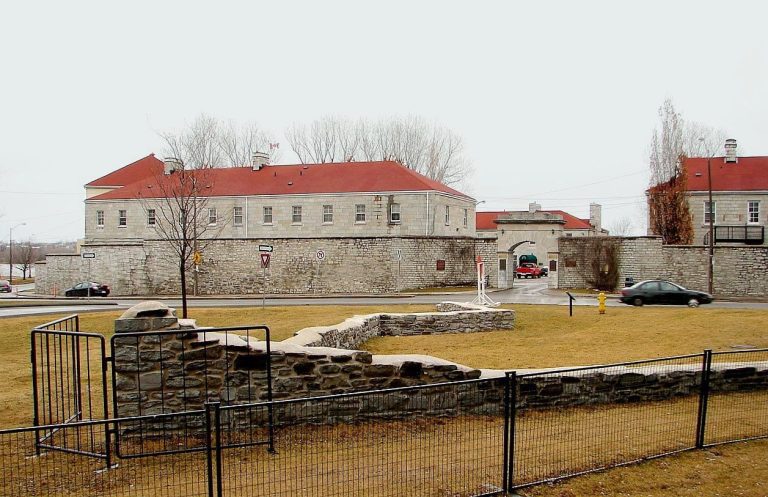
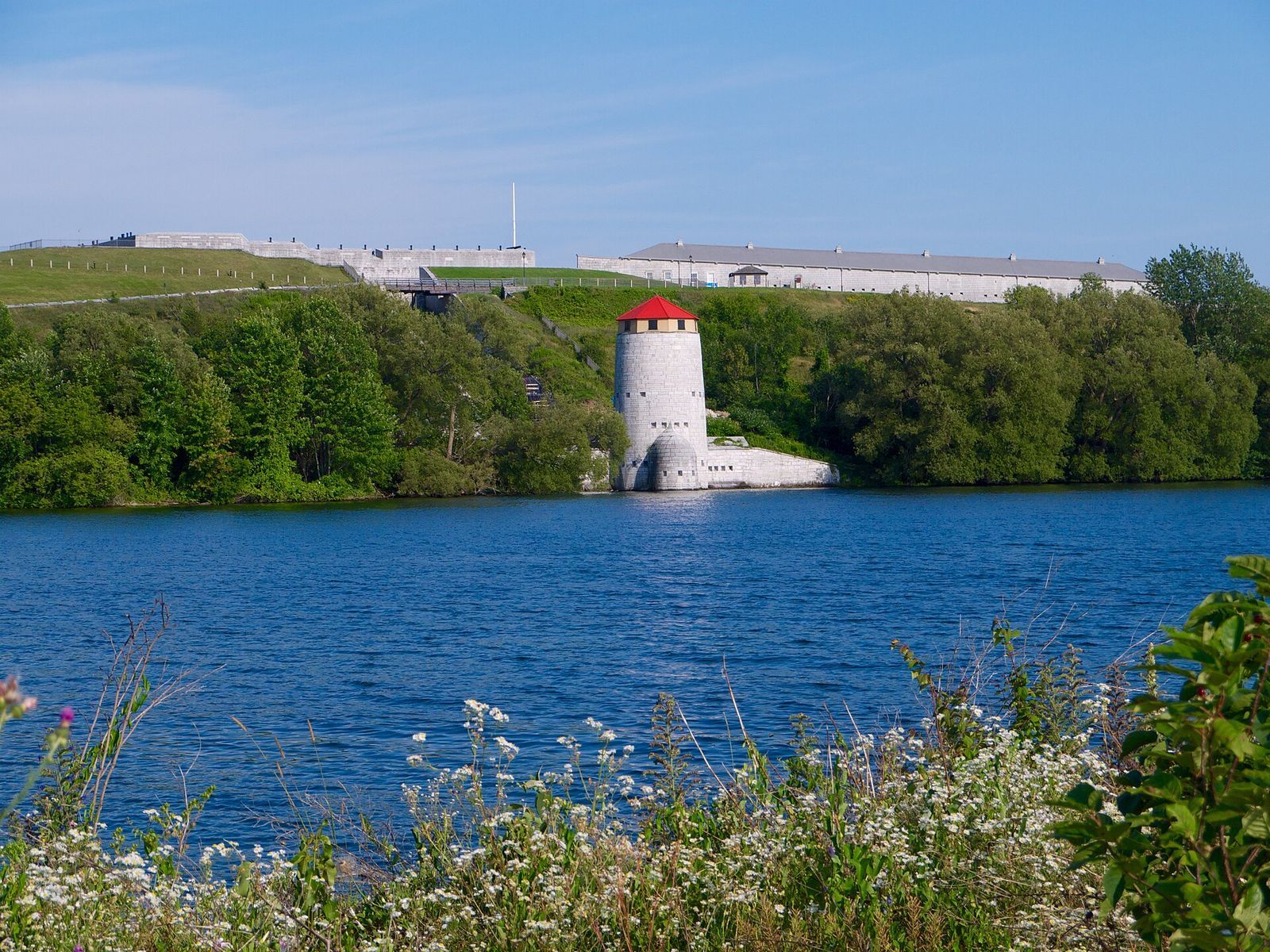
Fort Henry occupies elevated Point Henry near the mouth of the Cataraqui River, where it meets the St. Lawrence River at the eastern end of Lake Ontario. The fort’s main enclosed strongpoint is linked to a forward gun position to the south by stone buildings for military supplies and ammunition. Across Haldimand Cove to the west, Point Frederick held the naval dockyard defended by the fort; the site is now occupied by the Royal Military College of Canada.
Fort layout
Main redoubt
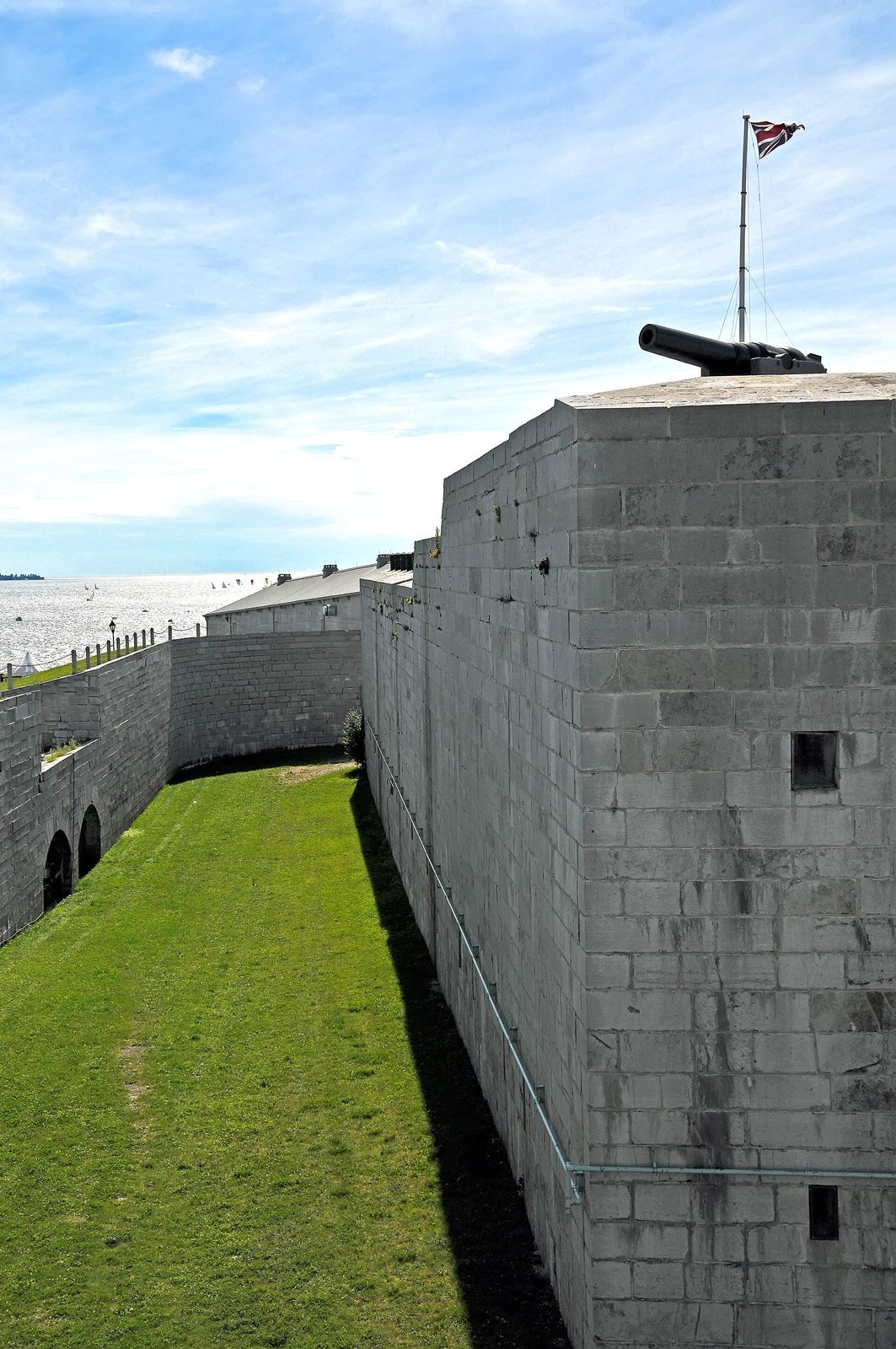
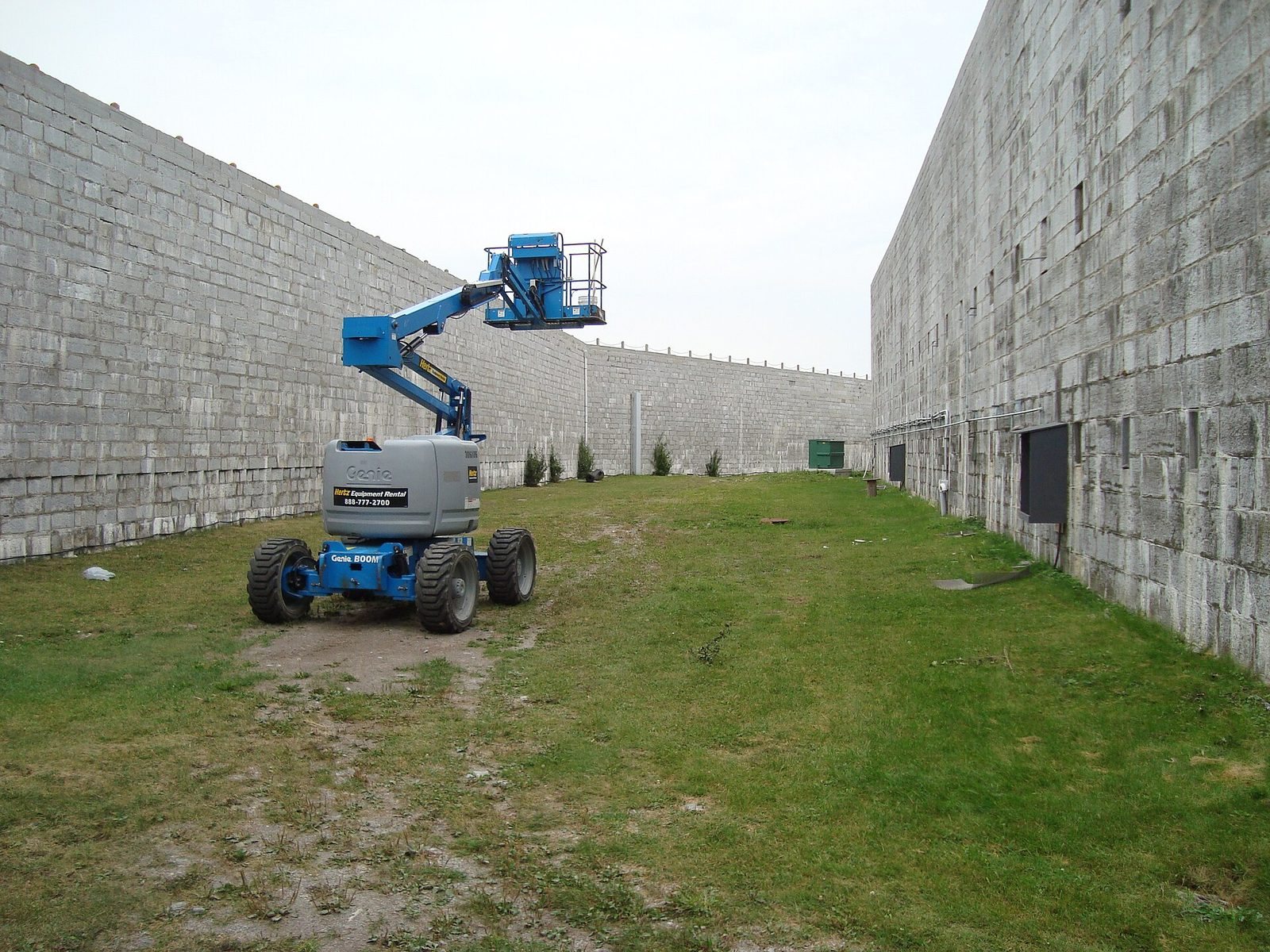
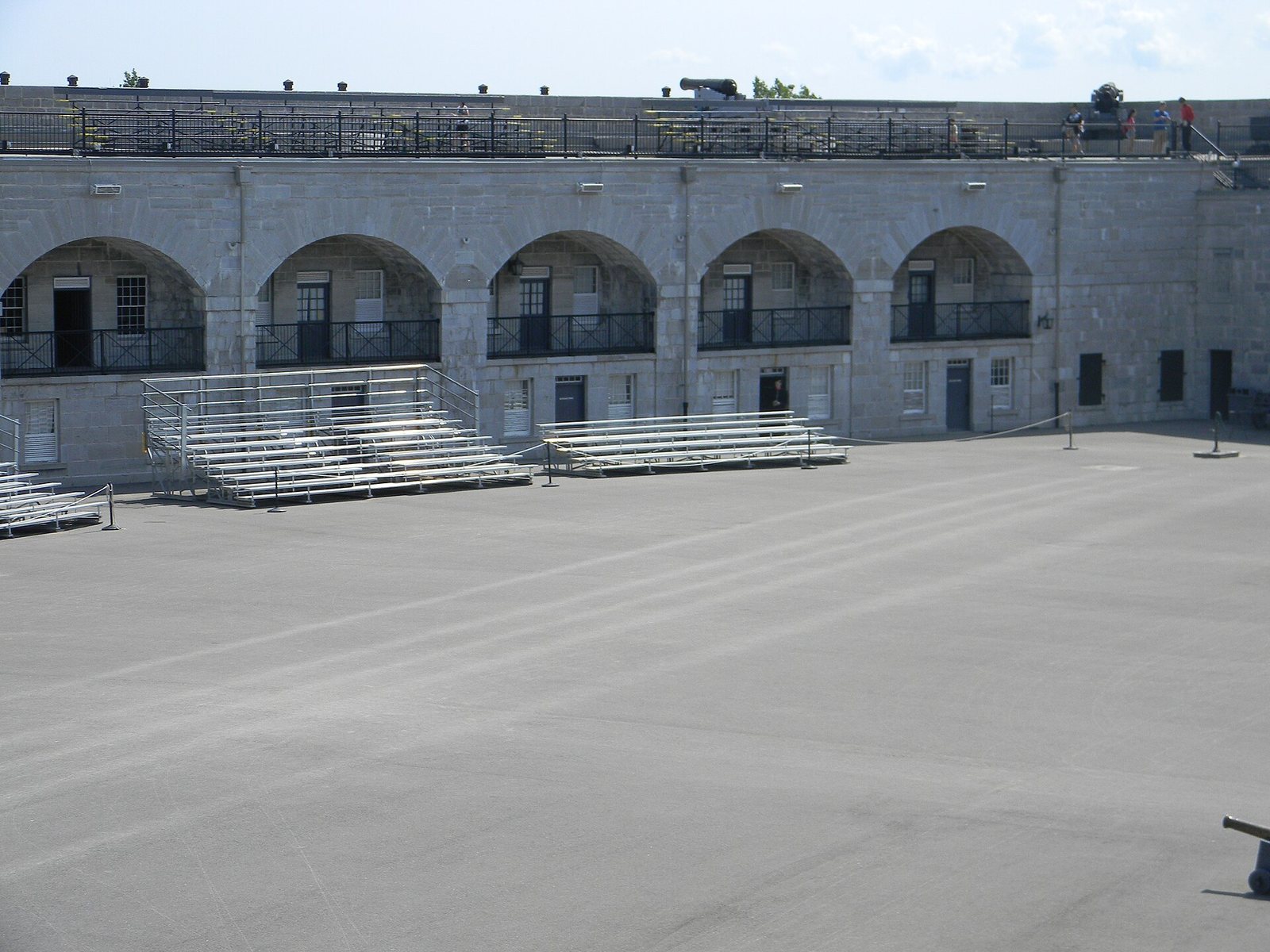
The main redoubt, an enclosed defensive strongpoint, includes east and west division towers, a caponier (a protected position for defending the ditch), and a connecting defensive wall with projecting demi-bastions, or partial bastions. East and west reverse-fire galleries, protected passages from which defenders could fire along the defensive works, form part of the fort’s defenses.
Southern battery and stores
The advanced battery, a forward gun position, overlooks the lake to the south. Stone buildings containing military supply stores and ammunition magazines connect it to the main redoubt. The east and west supply stores each include a reverse-fire chamber, a protected space arranged for firing along a defensive work.
Wider defensive system
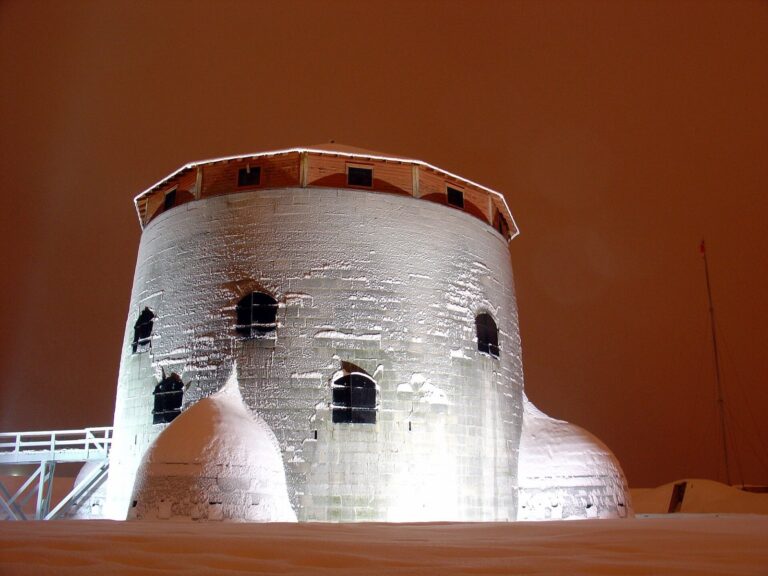
Four Martello towers formed part of the wider defensive system. These are small, round masonry fortifications built alongside Fort Henry.