Saint-Thierry Abbey on Mont d’Hor: A Monastic Foundation near Reims
Site at a Glance
- Country
- France
- Primary era
- Medieval
- Eras represented
- Medieval
- Civilizations
- French
- Site type
- Religious
- Remains
- Monastery
On this page10 sections
History
Saint-Thierry Abbey on Mont d’Hor was a Christian monastery founded around 500 outside Reims, France, by the priest Thierry. It began as a community of men dedicated to Saint Bartholomew and belonged to the Archdiocese of Reims. Bishop Remigius of Reims and Theuderic I, a king of the early Frankish Merovingian dynasty, supported the foundation.
Foundation and early disruptions
The monks fled in 716 during the plundering of the Reims region by Charles Martel, a Frankish political and military leader. They left again in 941, when Hungarian forces entered the region from Bavaria.
Benedictine expansion and medieval fortunes
Benedictines, members of a monastic order guided by the Rule of Saint Benedict, took over around 972–974 and enlarged the monastery. Its dedication and name changed from Saint Bartholomew to Saint Thierry after Archbishop Adalbero of Reims transferred Thierry’s relics, objects associated with the venerated founder. Thierry’s cult gradually displaced the earlier dedication.
The abbey’s agricultural lands expanded, accompanied by the clearing of woodland in the Reims region. A royal custom allowed French kings to eat and lodge at the abbey after their coronations at Reims Cathedral. Louis IX, Louis XI, and Louis XIII followed this practice, and the community eventually reached 40 monks.
Repeated plundering during the Hundred Years’ War, a prolonged series of conflicts between the English and French crowns, reduced the community to a small number of monks.
Suppression and later use
The abbey joined the Congregation of Saint-Maur, a Benedictine reform group, in 1627 or 1628. This period brought renewed activity and the enlargement of several service buildings. Louis XIV suppressed the abbey on 2 April 1695 to compensate the Church of Reims for losses connected with the creation of the Archdiocese of Cambrai. Pope Innocent XII confirmed the decision in a formal decree dated 13 September 1696. The property then served as a secondary residence for the archbishops of Reims.
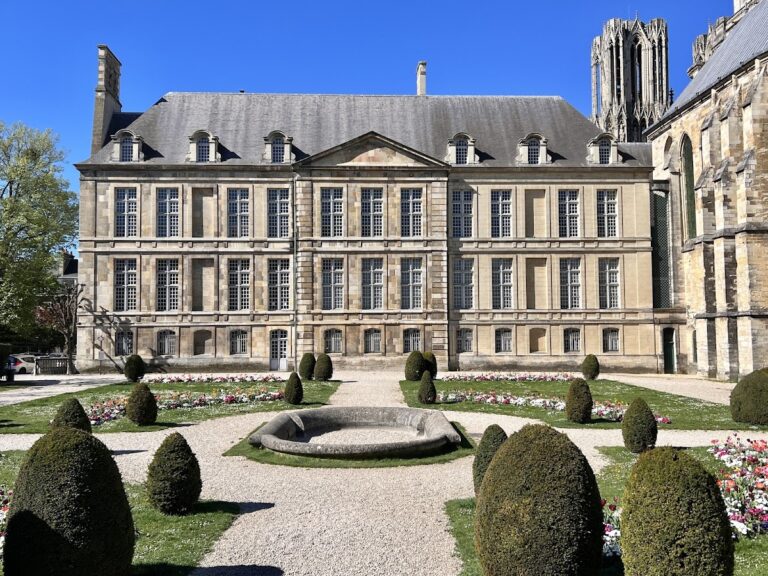
Archbishop Alexandre-Angélique de Talleyrand-Périgord had a palace built on the site, with 130 rooms. In 1739, the Benedictine scholar Bernard de Montfaucon inventoried the abbey’s books. Nearly 150 volumes from the collection survive, mostly in the Municipal Library of Reims, with others in the Vatican Library and the Bibliothèque nationale de France.
In 1777, the community was expelled and the abbey buildings were razed. After the French Revolution, the estate was sold publicly and divided into lots.
War, restoration, and renewed monastic life
During the First World War, French and German forces used the property for military quarters and a hospital. The buildings suffered heavy damage, followed by repairs between 1920 and 1930. The abbey received French Historic Monument classification in 1926 and 1932.
After about two centuries without monastic life, Benedictine nuns from the Vanves congregation arrived in 1968 and resumed the community on the hill. They occupy part of the historic property.
Remains
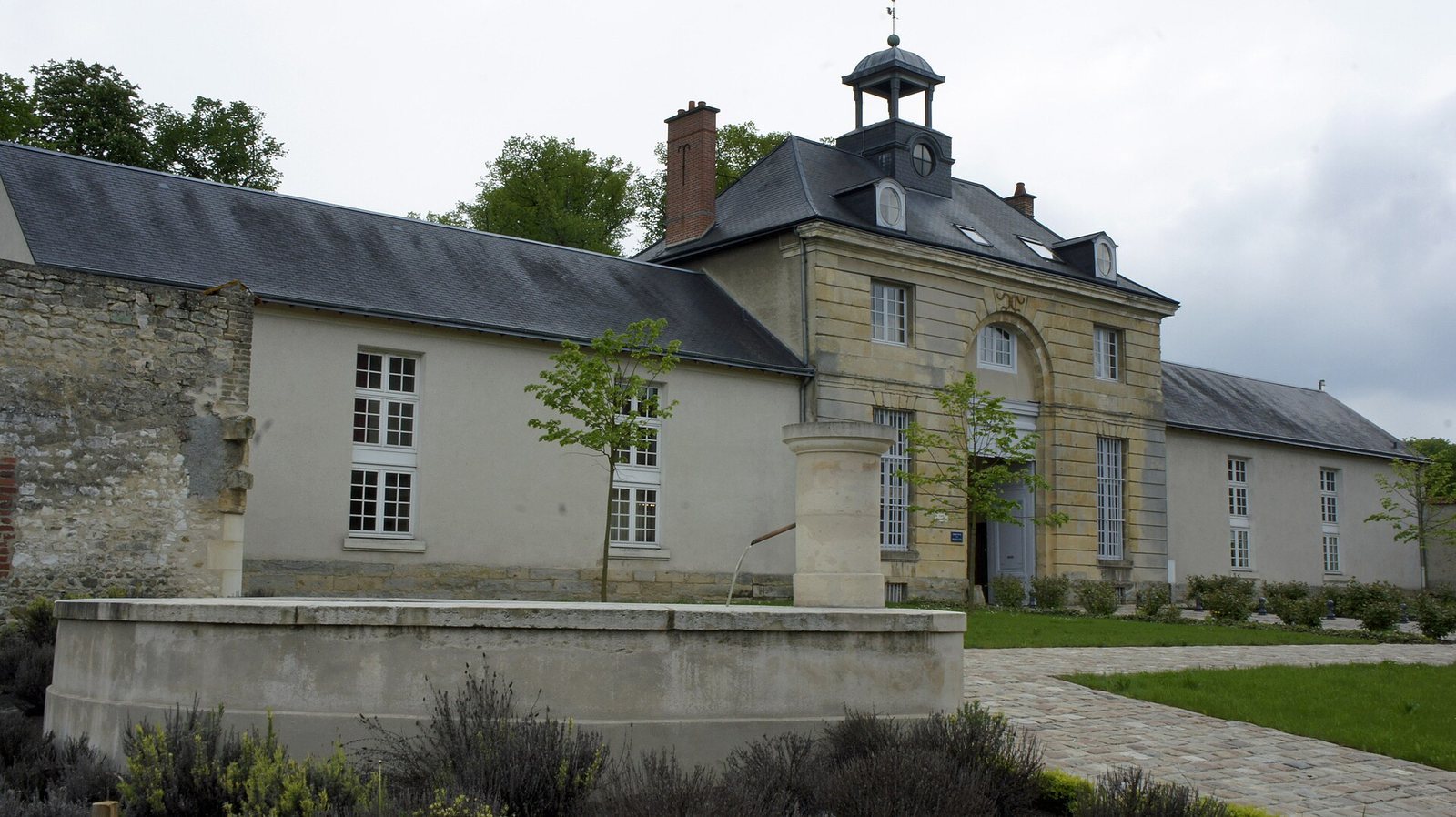
The abbey stood on Mont d’Hor, a hill outside Reims associated with the biblical Mount Hor. Its architectural features include a medieval meeting room, a later archiepiscopal palace, a garden, and a carved column capital.
Buildings and grounds
Chapter house
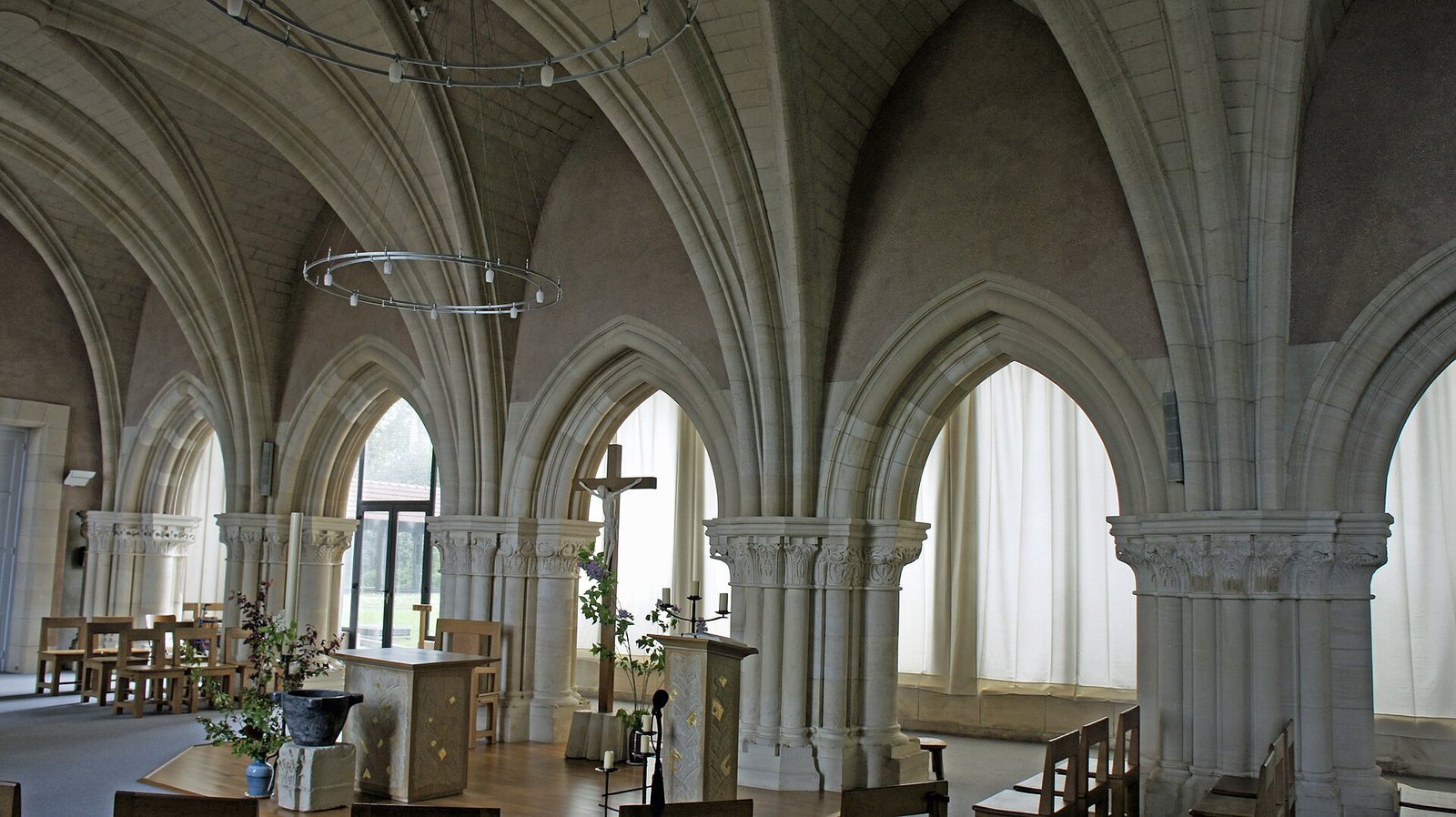
The 12th-century chapter house, a monastery’s communal meeting room, is Gothic in style. It was the only abbey building left standing after the demolition of 1777.
Archiepiscopal palace
Archbishop Alexandre-Angélique de Talleyrand-Périgord had a 130-room palace built on the former abbey site. The palace reflects the property’s later use as an archiepiscopal residence.
Garden and carved capital
A garden and a carved capital, the sculpted upper part of a column or pier, are also features associated with the abbey.