Qal’at al-Bahrain: Ancient Harbour and Capital of Dilmun
Site at a Glance
- Country
- Bahrain
- Primary era
- Bronze Age
- Eras represented
- Bronze Age, Classical, Medieval
- Civilizations
- Ancient Greek, Dilmun, Sassanid
- Site type
- City
On this page17 sections
History
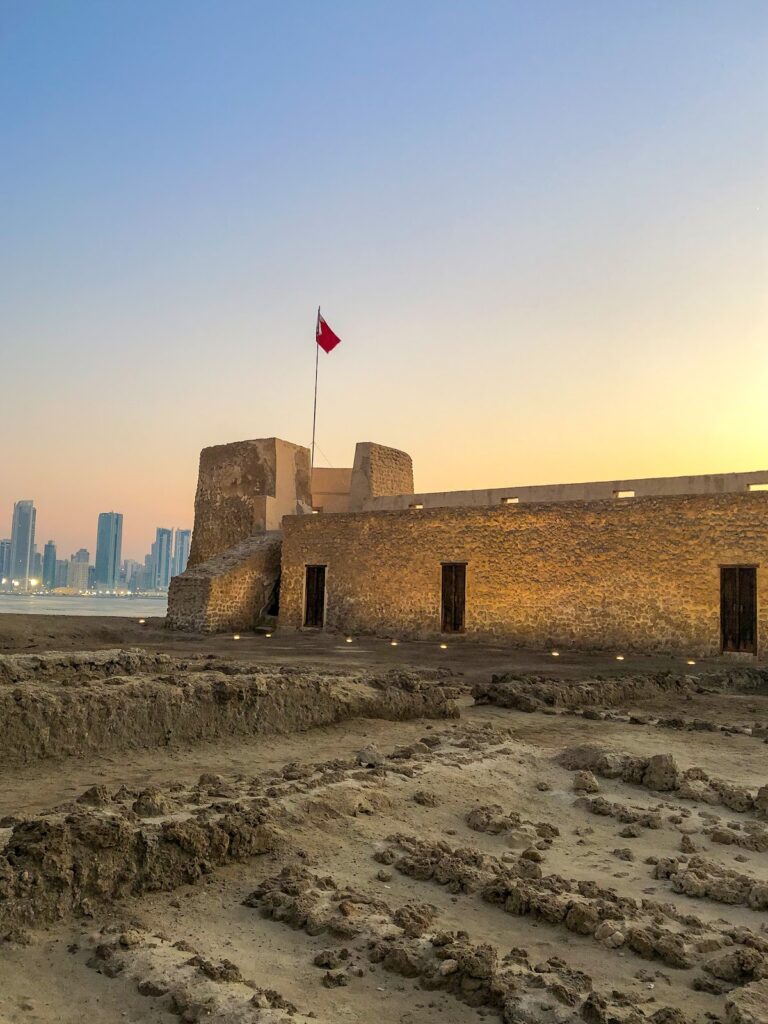
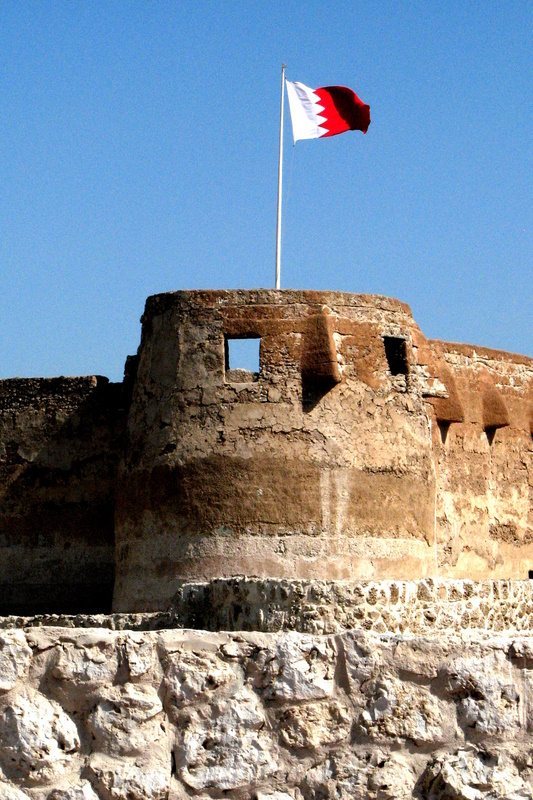
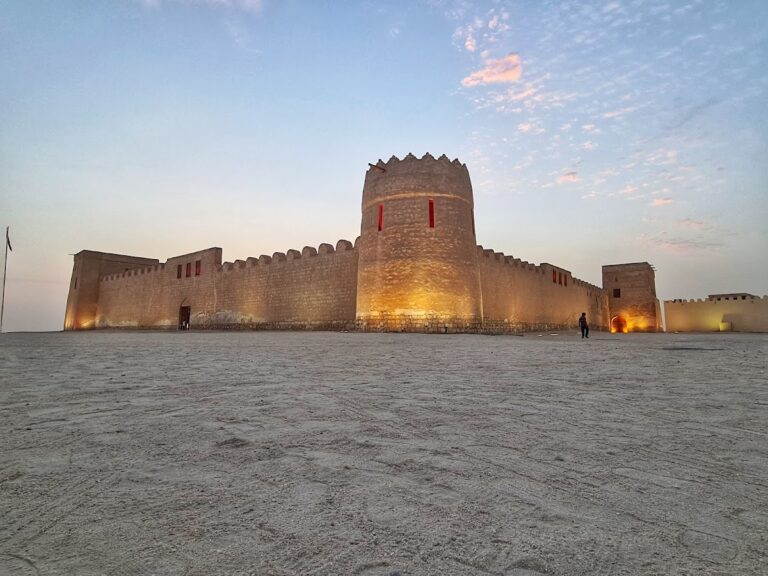
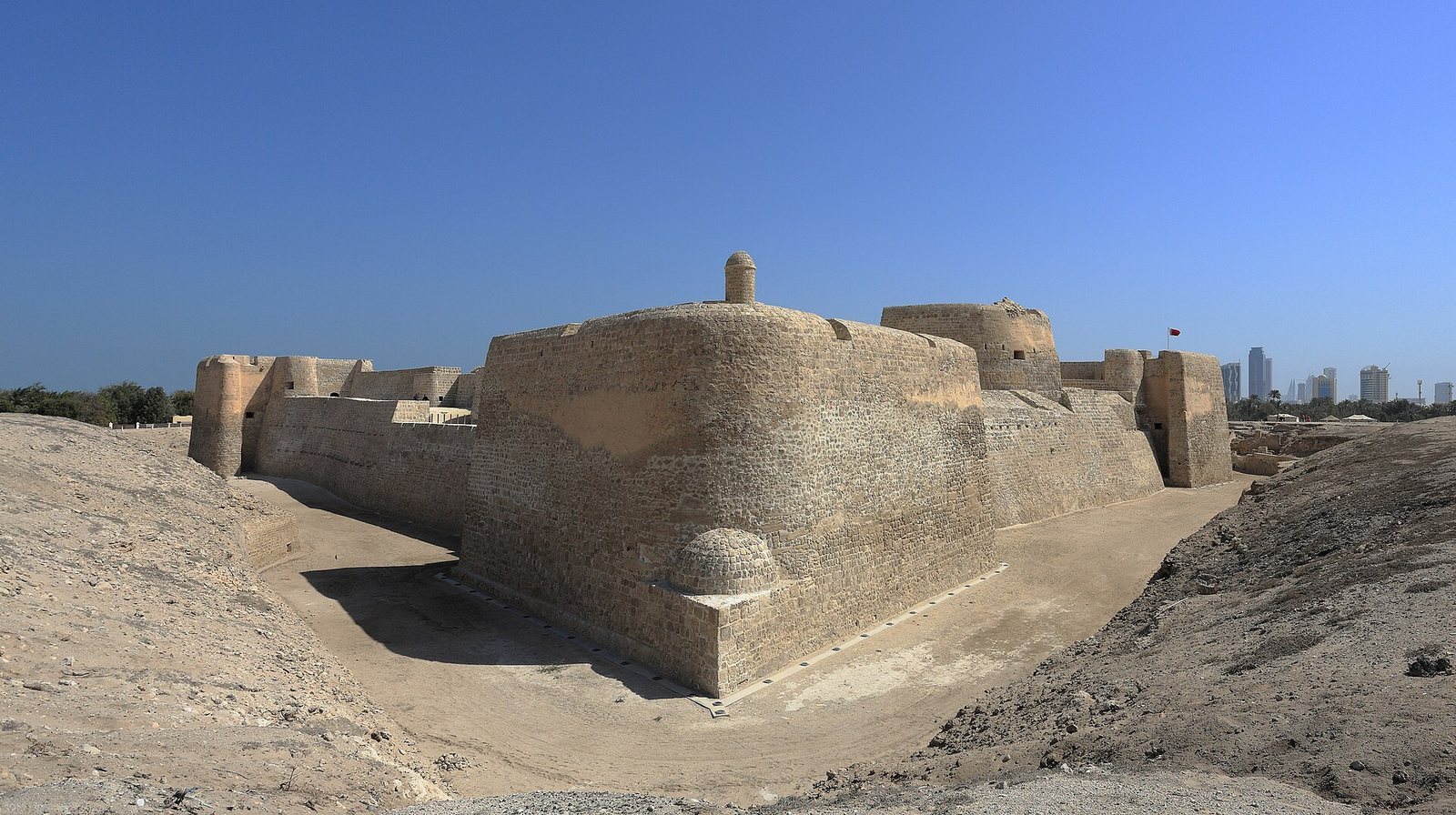
Qal’at al-Bahrain is an archaeological site on Bahrain Island’s northern shore, in Bahrain, about 6 km from Manama. It was once the capital of Dilmun, an ancient civilization and trading society associated with Bahrain and the Gulf. The island’s first fort was built about 3,000 years ago, while the present fort dates to the 6th century AD. Qal’at al-Bahrain is the oldest fortification in the Persian Gulf region.
Dilmun and the early town
Human presence in the area may reach back about 5,000 years. The site’s settlement sequence begins around 2300 BC and records continuous occupation through the 16th century. Layers also contain traces of people as late as the 18th century. An early town flourished until about 1800 BC, when it was deserted and eventually buried by sand carried from the sea. The settlement later served as an important trading port over many centuries.
The Mesopotamian poem known as the Epic of Gilgamesh portrays Dilmun as a realm linked with eternal life, the origins of the Sumerians, and meetings among the gods. The Sumerians were an ancient people of southern Mesopotamia. These are literary and religious traditions associated with Dilmun, distinct from the site’s archaeological history.
Later occupations and fortification
Urban remains represent seven successive cultures, beginning with Dilmun and including Kassite, Greek, Portuguese, and Persian occupations. The Kassites were an ancient people whose dynasty ruled Babylonia during part of the second millennium BC. Qal’at al-Bahrain was also a notable Hellenistic site, belonging to the era of Greek cultural influence that followed Alexander the Great.
French excavations recovered about 50 tablets bearing cuneiform, a writing system made with wedge-shaped marks. Three tablets date to the reign of a Kassite king named Agum, who may have been Agum III.
Excavation and heritage recognition
A Danish expedition led by Geoffrey Bibby excavated the site from 1954 to 1972 on behalf of the Prehistoric Museum of Moesgaard. A French expedition began work in 1977, and Danish and Bahraini archaeologists have worked at the site since 1987. These excavations established its long sequence of urban occupation and its place as a Hellenistic site. In 2005, Qal’at al-Bahrain was inscribed on the UNESCO World Heritage List as Qal’at al-Bahrain, Ancient Harbour and Capital of Dilmun.
Remains
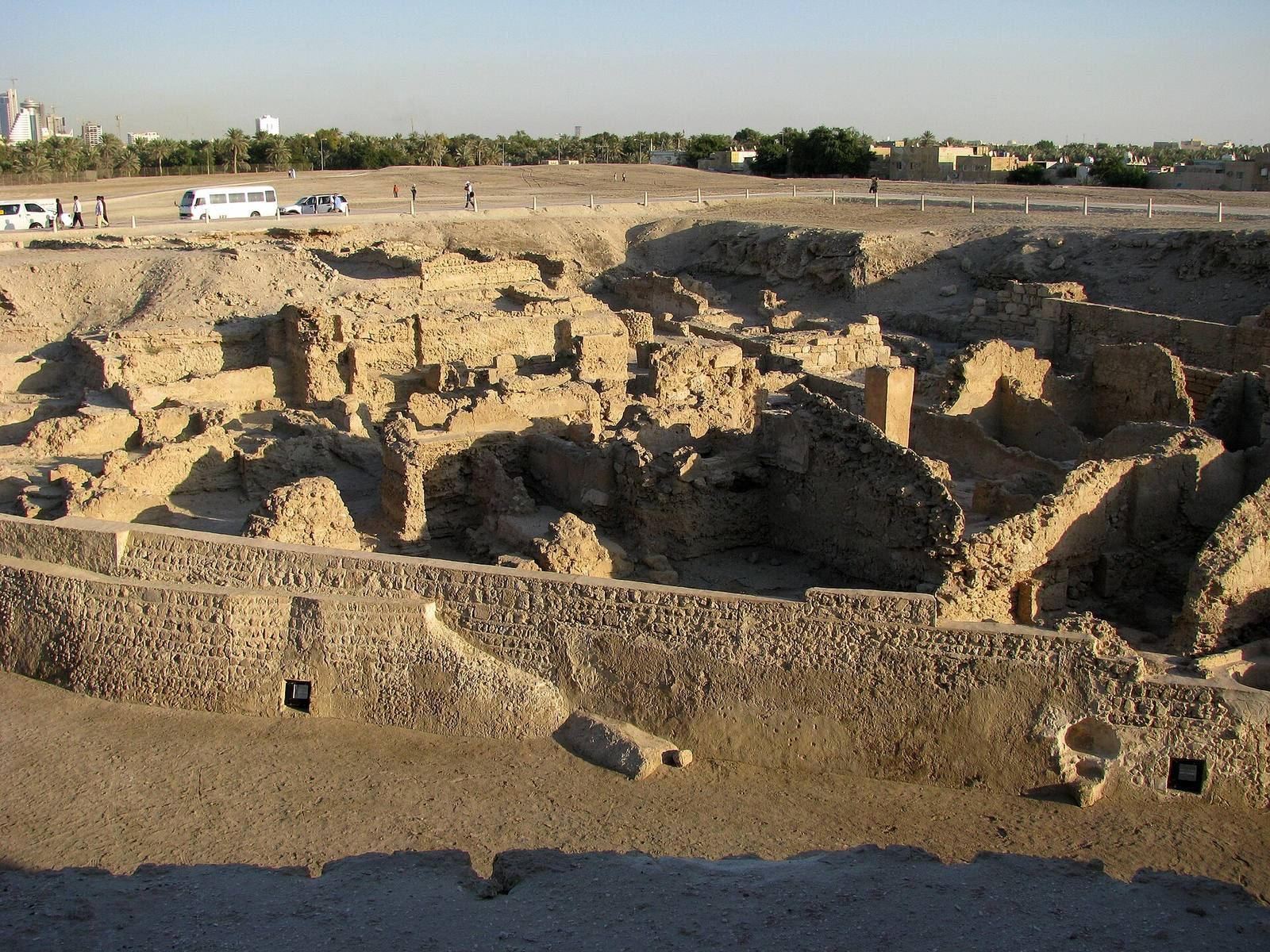
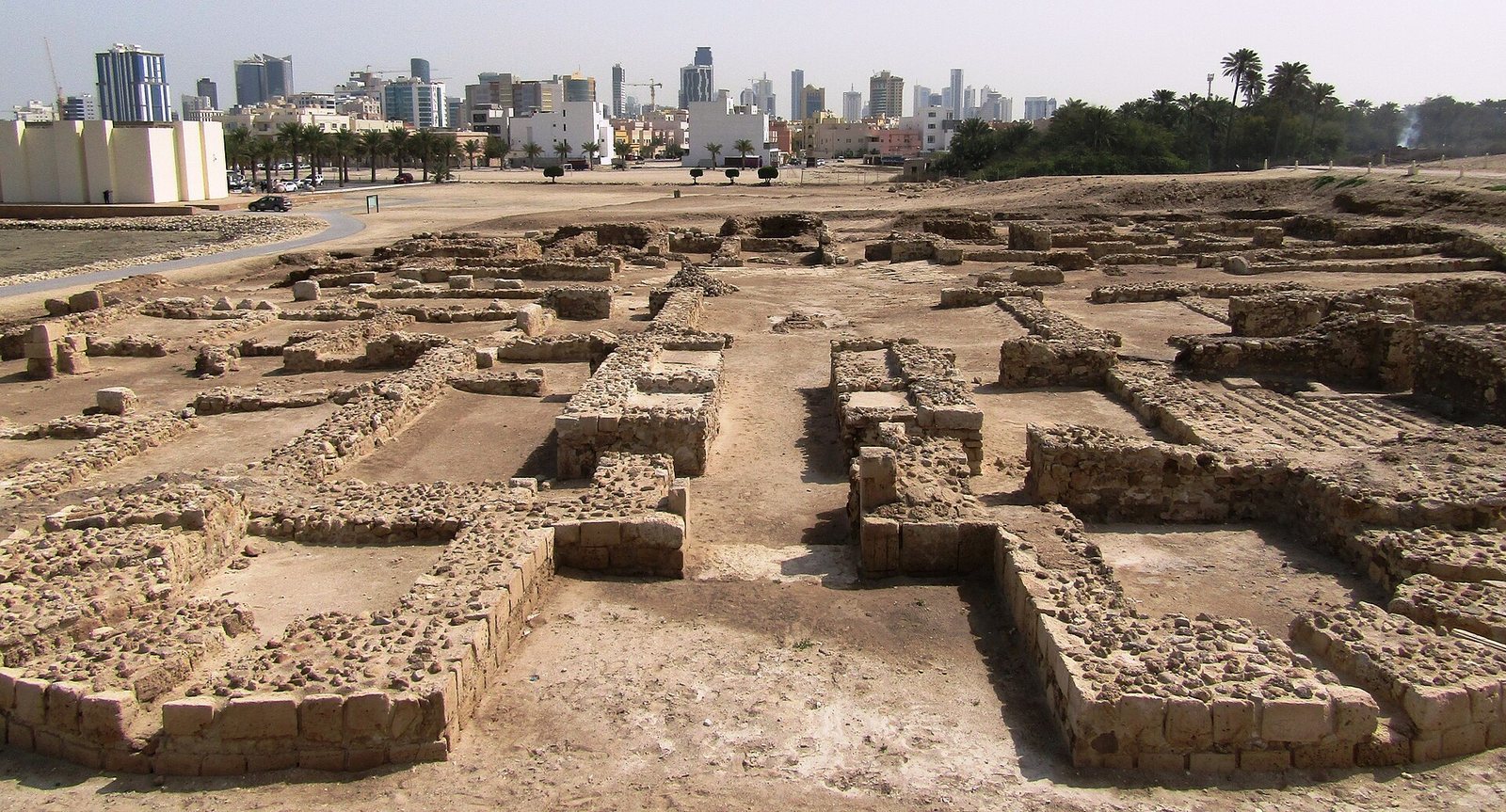
The site covers 17.5 hectares on Bahrain’s northern shore, near a port on reclaimed coastal land. Its tell, a mound formed by successive settlement layers, rises about 12 metres and has a layered area of 16,723 square metres. It is the largest tell in the Persian Gulf region. About one-quarter of the site has been excavated, revealing residential, public, commercial, religious, and military structures. The named archaeological features also include the Kassite Palace and Northern city wall.
Settlement and layout
Northern settlement
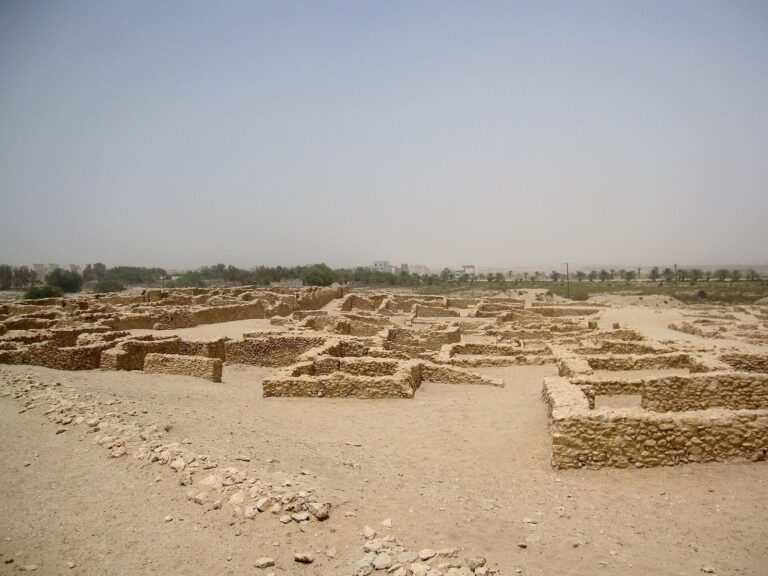
Excavations on the north side of the mound revealed a small settlement described as the only settlement of its period in eastern Arabia. Its houses were built from rough stone held together with clay or mortar, and had plastered floors that may have been spacious. Streets divided housing compounds, while other modest houses of similar size and construction followed a network of roads.
Streets and central district
Streets ran north to south and measured 12 metres across. At the centre of the mound, a palace stood within an administrative area that included several warehouses. A street led north from this district to a large gate thought to have served as the entrance to the palace grounds.
Walls and summit fort
Early defensive walls
Two surviving sections of an early defensive wall enclosed streets and houses. In the centre of the site, a large building stood beside the moat of the summit fort. Pottery found around its walls belongs to the period associated with Bahrain’s Barbar Temples. Other pottery and finds indicate an earlier phase, before the temples.
Settlement fortifications and gates
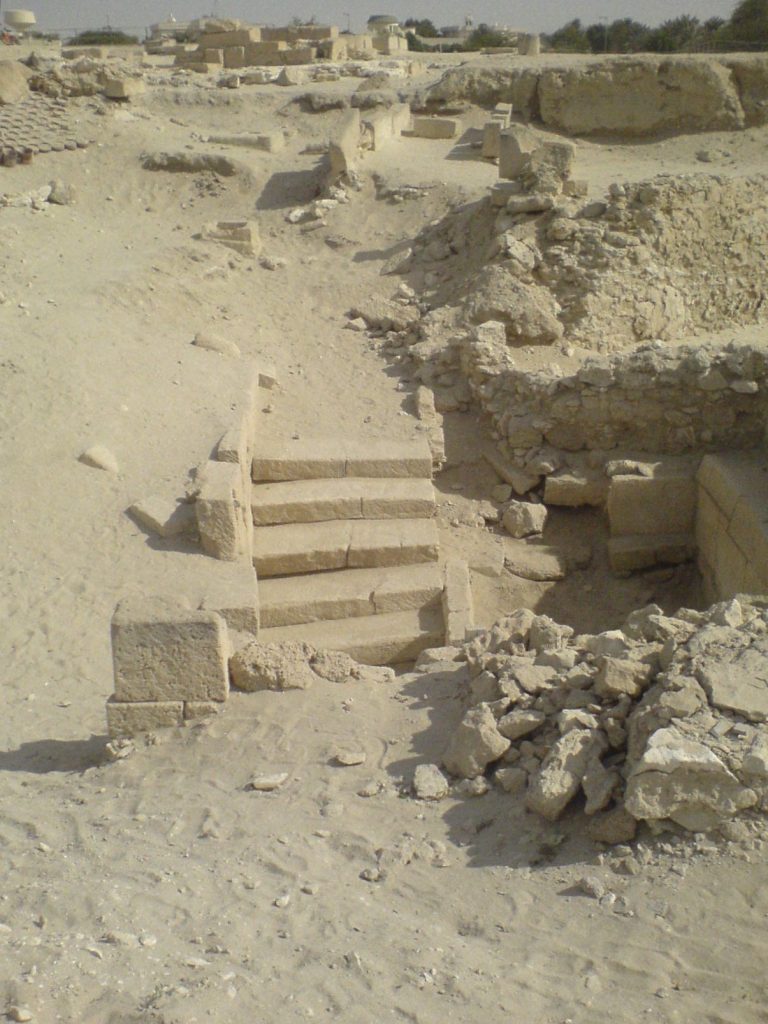
The settlement’s fortifications enclosed about 15 hectares. Their stone walls varied in thickness and followed the cardinal directions. Surviving sections extend along the northern, western, and southern slopes. Repeated rebuilding raised the defenses, with gates at four levels. The gates allowed people and goods, including donkey caravans, to pass through. The latest gate had two polished, fine-grained stone pivots that supported a double-leaf gate. A 9-metre stretch of the western wall remains well preserved.
Portuguese Fort
The fort at the top of the mound is known as the Portuguese Fort. Its name gave the wider site its name.
Central buildings and metalworking
Palace of Uperi
Excavations at the Palace of Uperi yielded bowls known as snake bowls, sarcophagi (stone coffins), seals, and a mirror. The finds provide evidence of objects associated with the palace area.
Metalworking workshop
A workshop yielded two-piece moulds for casting copper and wax moulds. Large and small crucibles, heat-resistant vessels used for melting metal, were also recovered in substantial quantities. Together, these finds indicate large-scale metal production by professional craftspeople.
Burial grounds
Named burial grounds, or necropolises, include Saar, Al-Hajjar, Madimat Hermand, Madimat Isa, Al-Maqsha, and Shakhura.
Artifacts and exchange
Other finds include copper and ivory remains, copper objects, fishing tools, a spearhead with a hollow socket for attachment to a shaft, Dilmun stamp seals (carved objects used to impress a design or mark), and pottery vessels. Cooking pots were used for food preparation, while larger vessels brought food from Oman and Mesopotamia. A cuneiform inscription and hematite objects, made from an iron-bearing mineral, are associated with Mesopotamia; steatite, or soapstone, bowls are associated with Oman. Carnelian beads, a stone weight, and pottery fragments are linked with the Indus Civilization, an ancient urban society of South Asia.