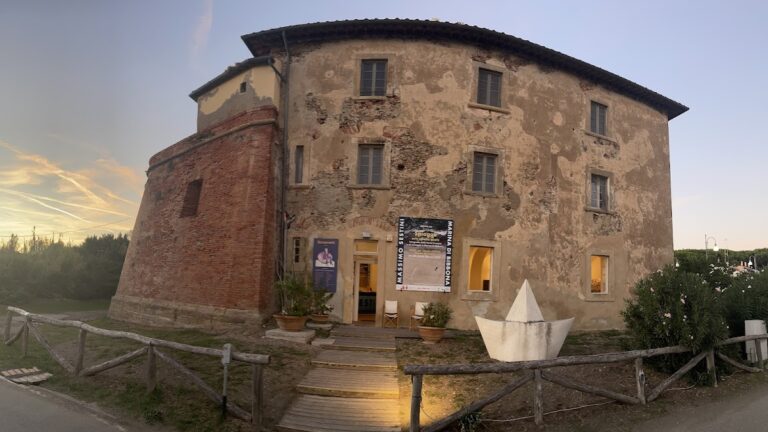
Campiglia Marittima Castle: A Medieval Fortress and Archaeological Park
Site at a Glance
- Country
- Italy
- Primary era
- Medieval
- Eras represented
- Medieval, Modern
- Civilizations
- Italian, Republic of Pisa
- Site type
- Military
- Remains
- Castle
On this page11 sections
History
Origins and development
Campiglia Marittima Castle, also known as Rocca di Campiglia, is a medieval fortress in Italy. The complex developed between the 11th and 15th centuries, in close connection with the village of Campiglia Marittima, which appears in a document from 1004. After the Della Gherardesca counts, a Tuscan aristocratic family, established their authority, they chose the site for a new residence.
Military occupation
From the late 13th to the early 15th century, a military garrison occupied the buildings during disputes between the counts of Campiglia and Pisa. Florence later conquered the territory, but a military contingent remained at the fortress into the 16th century. During this period, the Rocca formed the village’s principal area, while the settlement extended across terraces on the hillside.
Excavation and restoration
Between 1994 and 1999, the University of Siena excavated the site. Finds and evidence from the buildings helped clarify its complex sequence of development. The excavations took place before the archaeological park was restored.
Remains
Layout and setting
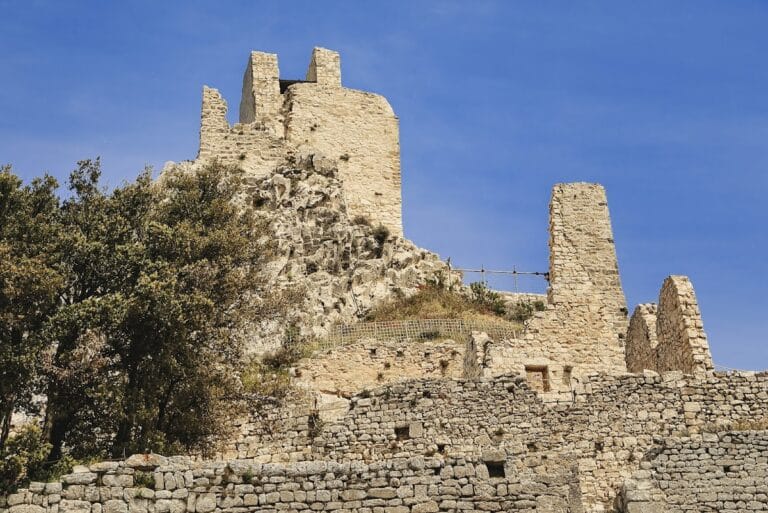
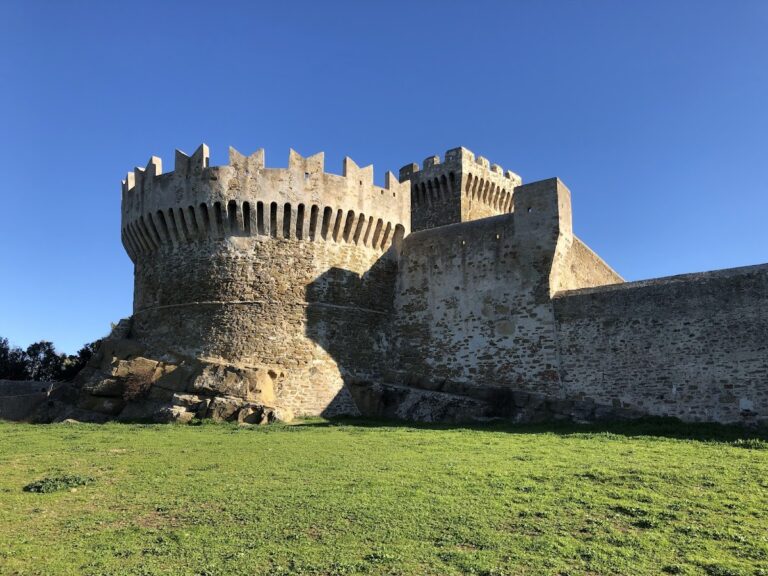
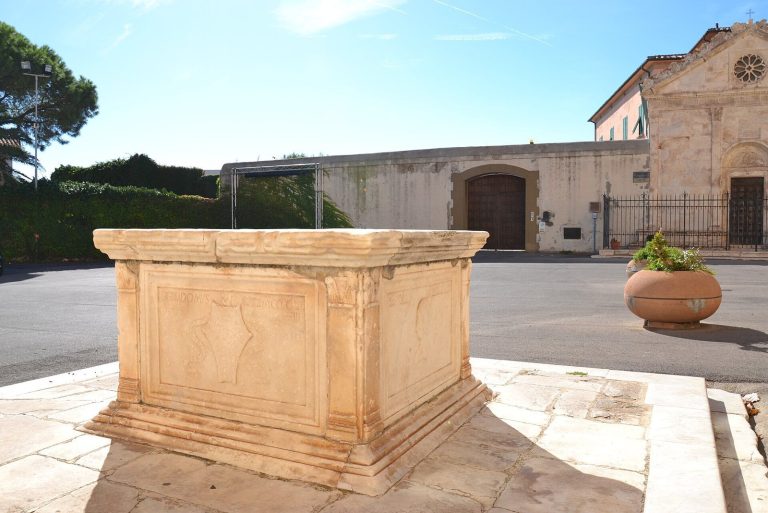
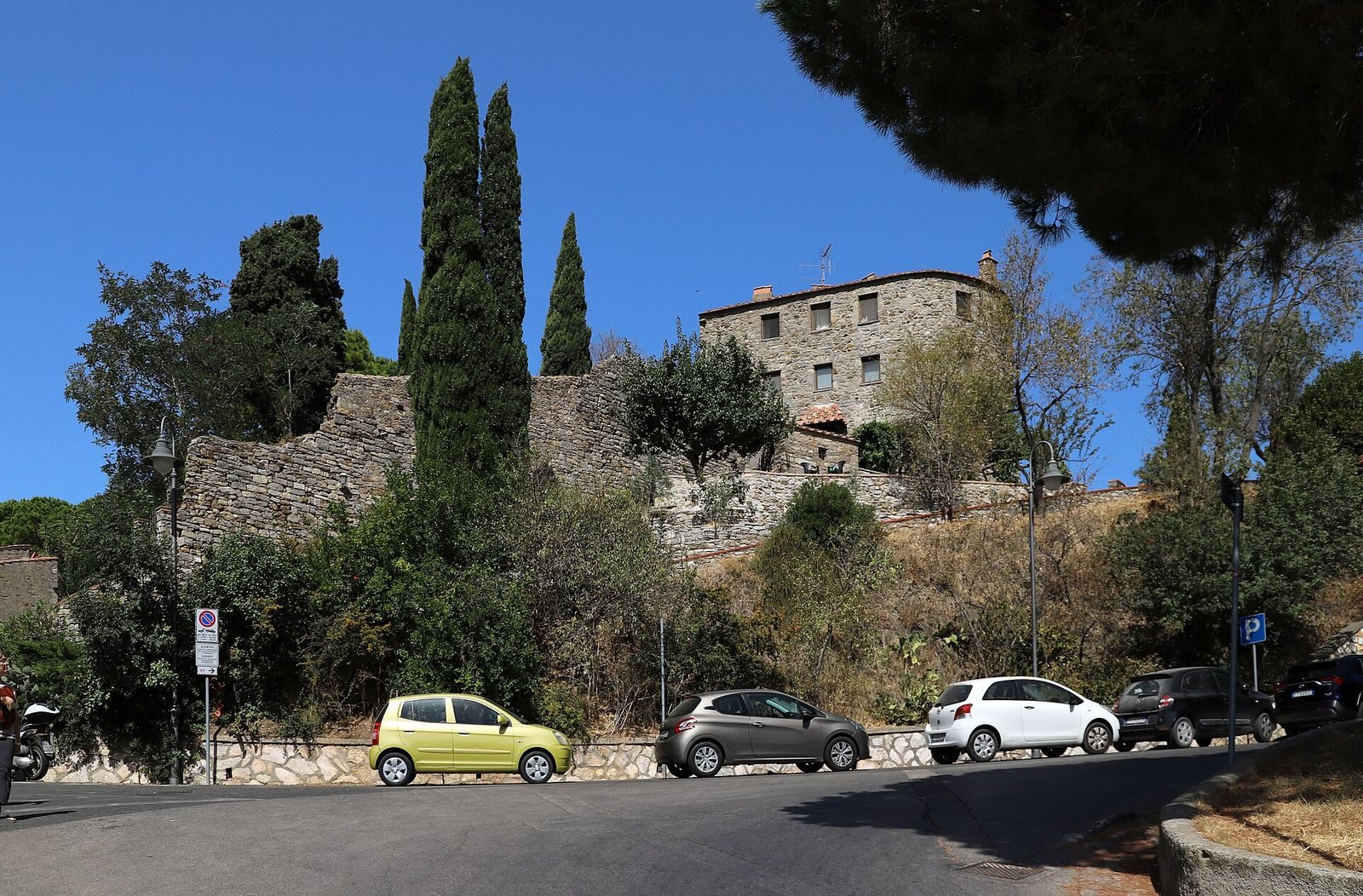
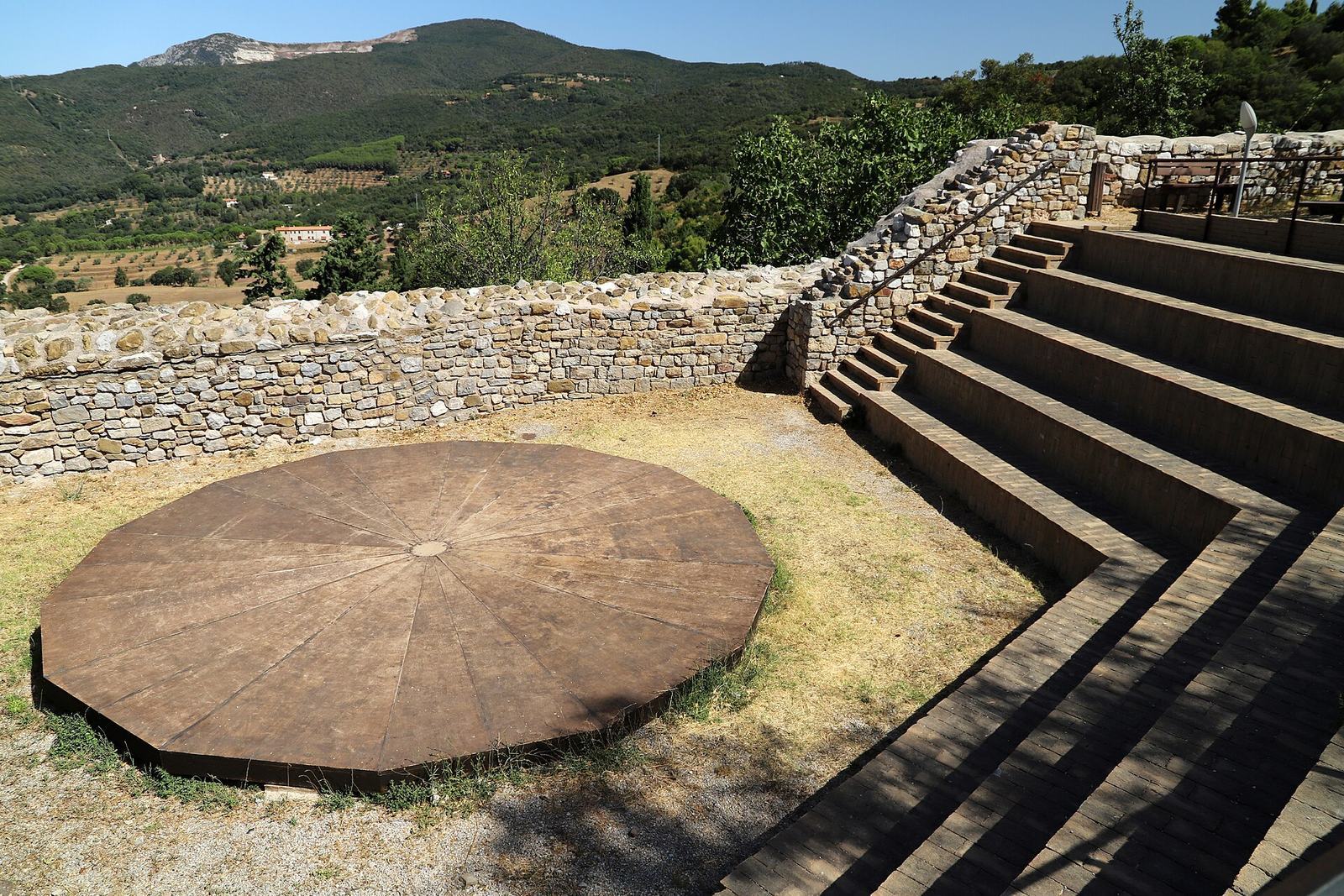
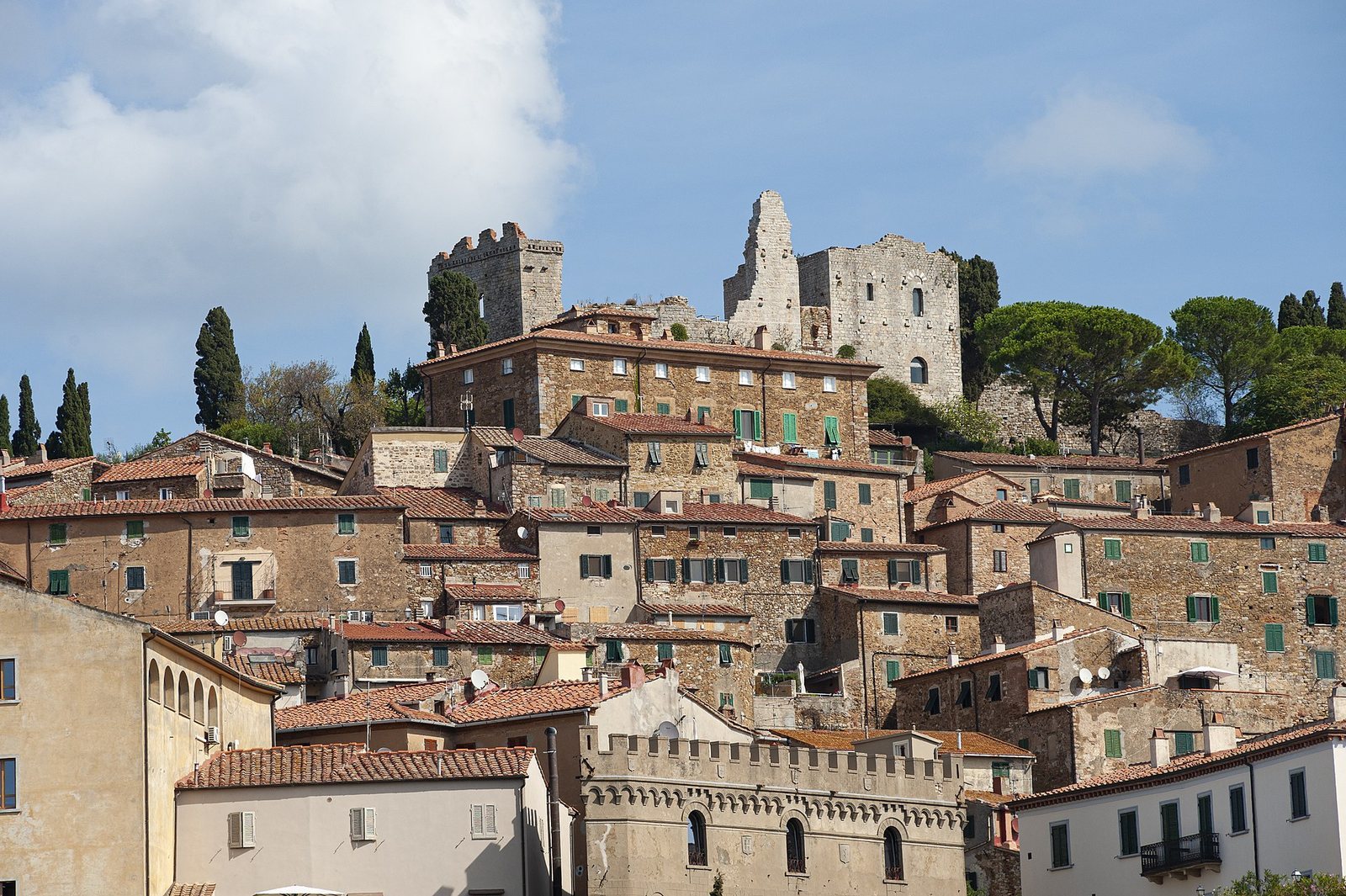
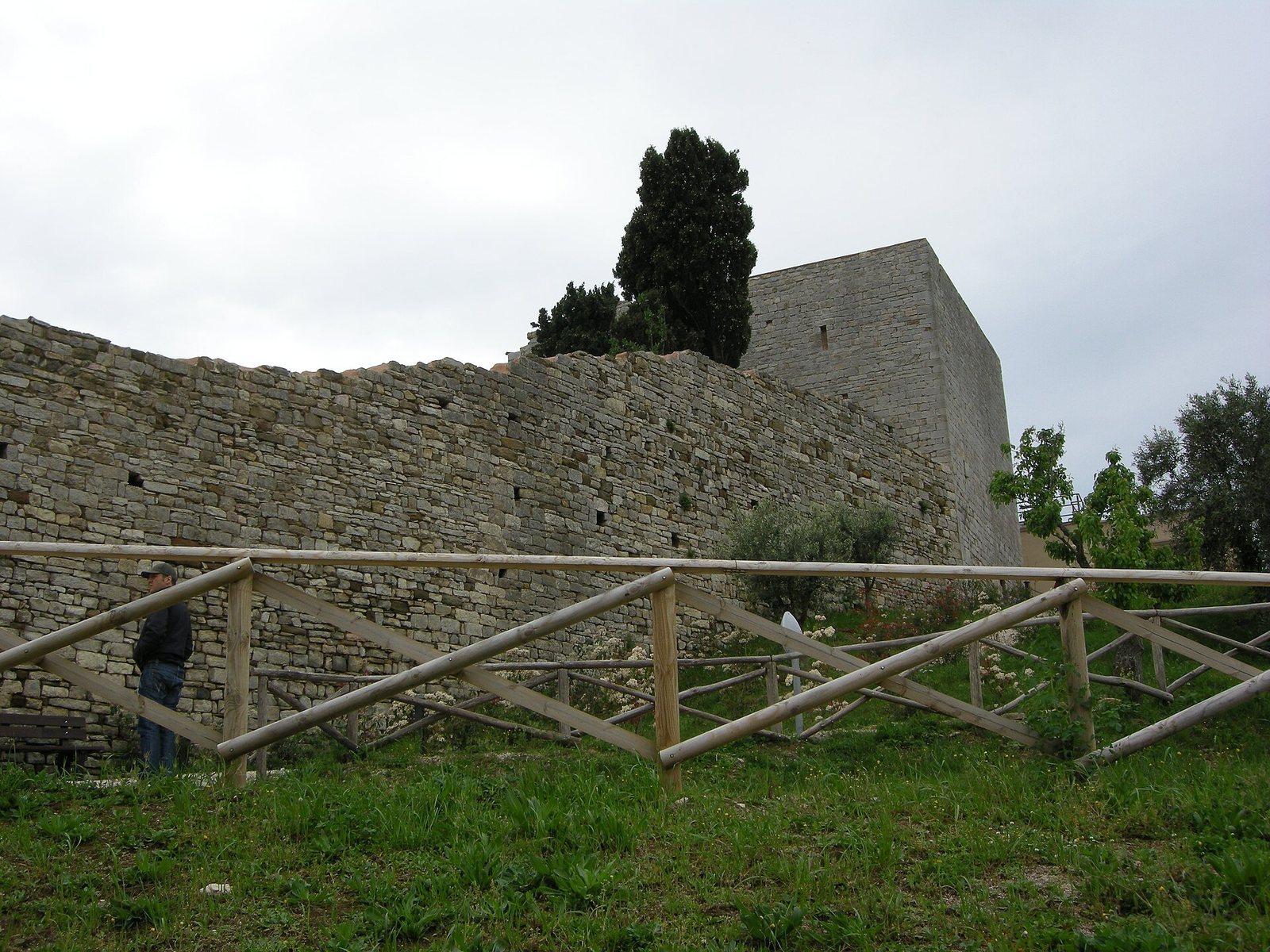
The Rocca occupies a semicircular area 281 metres above sea level, overlooking Campiglia Marittima and the Cornia Valley. Perimeter walls, punctuated by bastions, or projecting defensive structures, enclose the archaeological park. Its features include the keep, an ancient cistern, part of a crenellated wall from the lords’ building, and an aqueduct dating to the 1930s. The surviving wall section has a window with two openings divided by a central support. Buildings in the park house a museum of finds from the Rocca and another devoted to the history of the medieval village. Medieval tower houses associated with Pisa also remain visible in the village.
Medieval buildings
Twelfth-century residence buildings
A tower-like building and a structure known as the palace were built above the village in the 12th century. Both are substantial stone buildings. Their refined details point to the work of skilled craftsmen, probably from Pisa. The tower-like building now houses a museum.
Southwestern tower
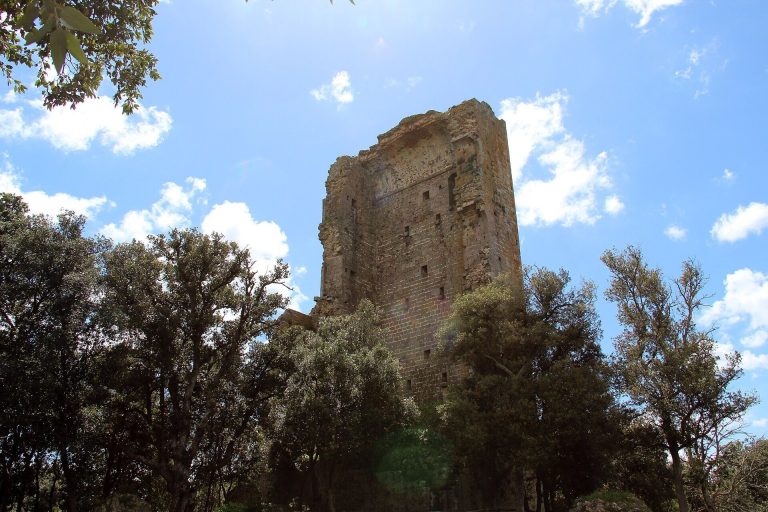
In the 13th century, a high tower with a large cistern was added on the southwest side of the complex.
Northwestern tower-form building
A tower-like building was also added on the northwest side during the 13th century. Its original form is now difficult to make out.
Keep and finds
The keep, the castle’s principal fortified building, contains archaeological finds that include a nearly intact piece of body armor, a helmet, and a small group of weapons. Educational panels accompany the exhibits.