Basing House: A Tudor Palace and Civil War Stronghold
Site at a Glance
- Rating
- 5
- Popularity
- Very Low
- Country
- United Kingdom
- Primary era
- Early Modern
- Eras represented
- Early Modern
- Civilizations
- English
- Site type
- Domestic
- Remains
- Elite Residence
On this page10 sections
History
Basing House was a Tudor palace in Old Basing, England, United Kingdom, begun in 1531 for William Paulet. A courtier and statesman, Paulet served as Lord High Treasurer, the senior royal officer responsible for the Crown’s finances, and held the hereditary title of Marquess of Winchester, a noble rank below duke and above earl. Its scale and opulence rivalled Hampton Court Palace, and contemporaries regarded it as one of the country’s grandest private houses.
Paulet and the royal court
Paulet held office under Edward VI, Mary I, and Elizabeth I. A nearby Great Barn was completed in 1534, shortly before Henry VIII and Anne Boleyn visited. Edward VI came to Basing House on 7 September 1552 and departed for Donnington Castle three days later.
Elizabeth I visited in August 1560, enjoyed the house and its entertainment, and reportedly said she would have married Paulet if he had been younger. She returned in August 1569. In September 1601, she entertained the French ambassador, the Duke de Biron, at the Marquess’s expense. During a hunt with visiting French nobles, she killed 20 deer and knighted 11 men.
Royal visits and financial decline
James I visited in August 1603, and his queen, Anne of Denmark, stayed the following month. The celebrations included dancing and the betrothal of the elderly Earl of Nottingham to the much younger Margaret Stewart.
The entertainments held by the 4th Marquess brought the family close to financial ruin, while the house’s upkeep deteriorated. After taking the title in February 1629, the 5th Marquess, John Paulet, cut the size of the household and moved his family elsewhere, hoping income from his estates would pay for repairs. During the first half of the 1630s, the house was closed and its windows boarded. By then, rot, broken windows, leaking roofs, and the difficulty of heating its many wings had become serious problems.
Civil War and destruction
When the English Civil War began in 1642, a conflict between supporters of Charles I and Parliament, John Paulet backed the king. Parliamentary forces besieged Basing House three times, but the Royalist garrison, loyal to Charles I, broke the first two sieges.
The last siege began in August 1645, when Colonel John Dalbier brought 800 troops around the walls. The defenders held out as the besieging force received reinforcements. Oliver Cromwell, a leading Parliamentarian commander, then arrived with a large force of artillery and siege equipment. By mid-October, the New House had been taken and the Old House’s defences breached. The final attack crossed the link between the two buildings.
Many valuable goods were carried away, and fire destroyed the house. Several priests sheltering in the cellar died. The assault ended within 45 minutes of the first gunfire, although fires continued for as long as nine hours.
After the siege
After the siege, Cromwell returned to London intending to make an example of the Royalist stronghold. Parliamentary authorities allowed building materials to be removed and encouraged local villagers to reuse the bricks in nearby homes. The material was sorted by type for systematic recovery.
John Paulet’s estates were confiscated, and he was imprisoned in the Tower of London on a charge of high treason. The charge was later dropped, and Charles II restored the estate to him. Paulet’s son, Charles Paulet, 1st Duke of Bolton, regained wealth through his support for William of Orange during the Glorious Revolution of 1688–89, which brought William and Mary II to the throne. He used that wealth to demolish the remaining ruins and build a new house at nearby Hackwood. Hackwood became the seat of the Marquesses of Winchester and later the Dukes of Bolton until 1794. Basing House’s ruins are protected as a Grade II listed building, a category for buildings of special architectural or historic interest, and as a scheduled monument, which gives legal protection to nationally important archaeological remains.
Remains
Layout and setting
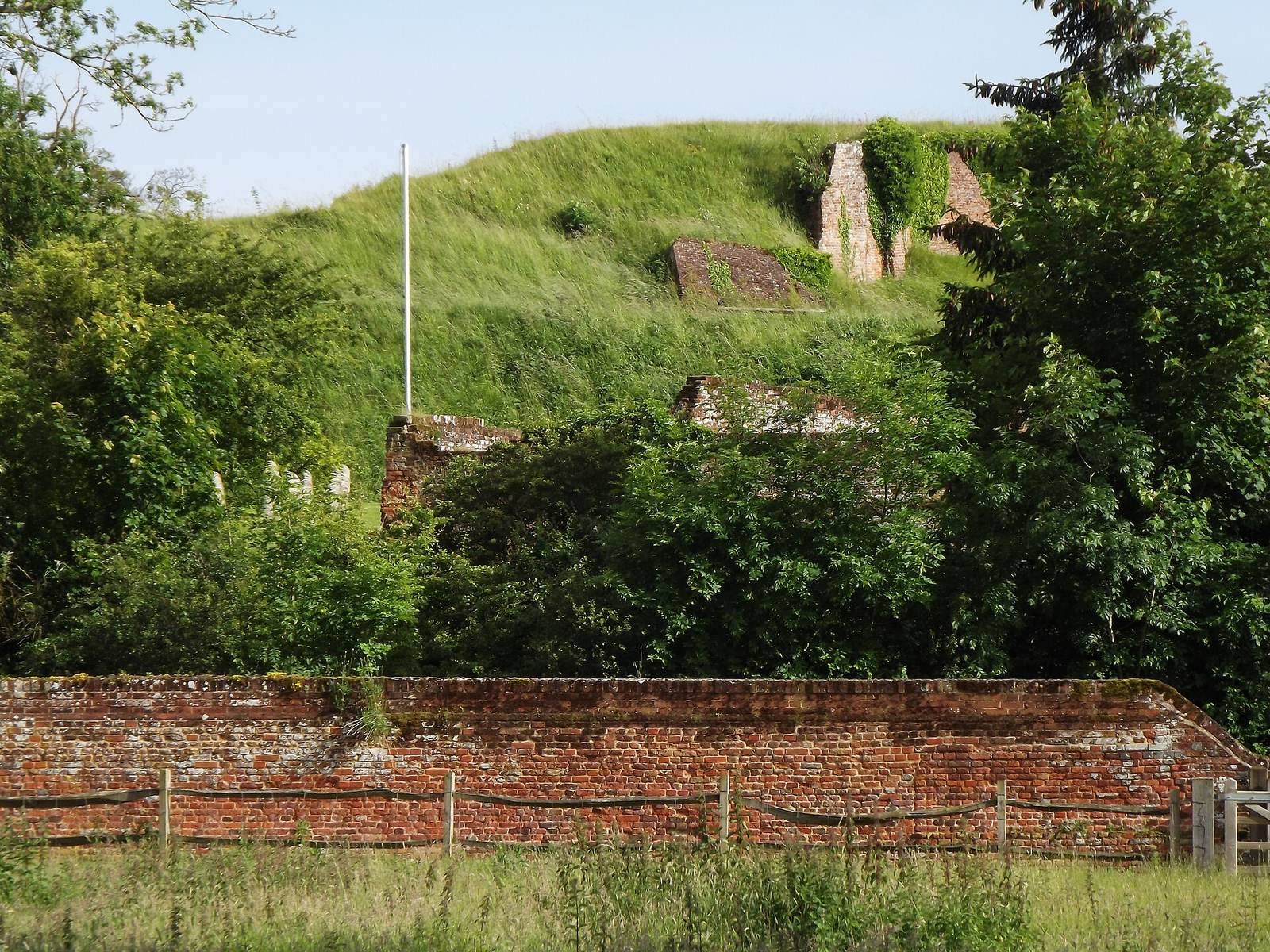
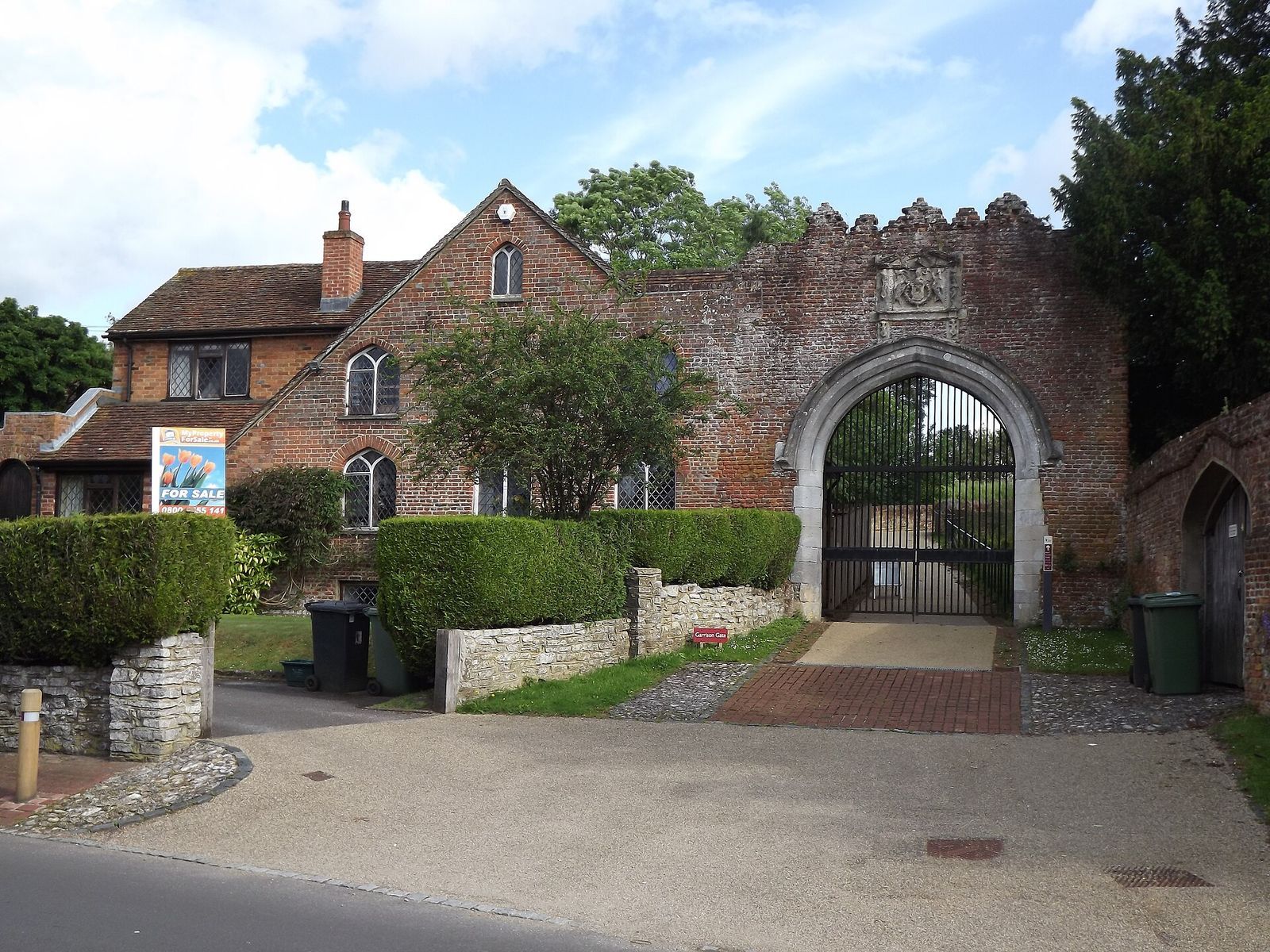
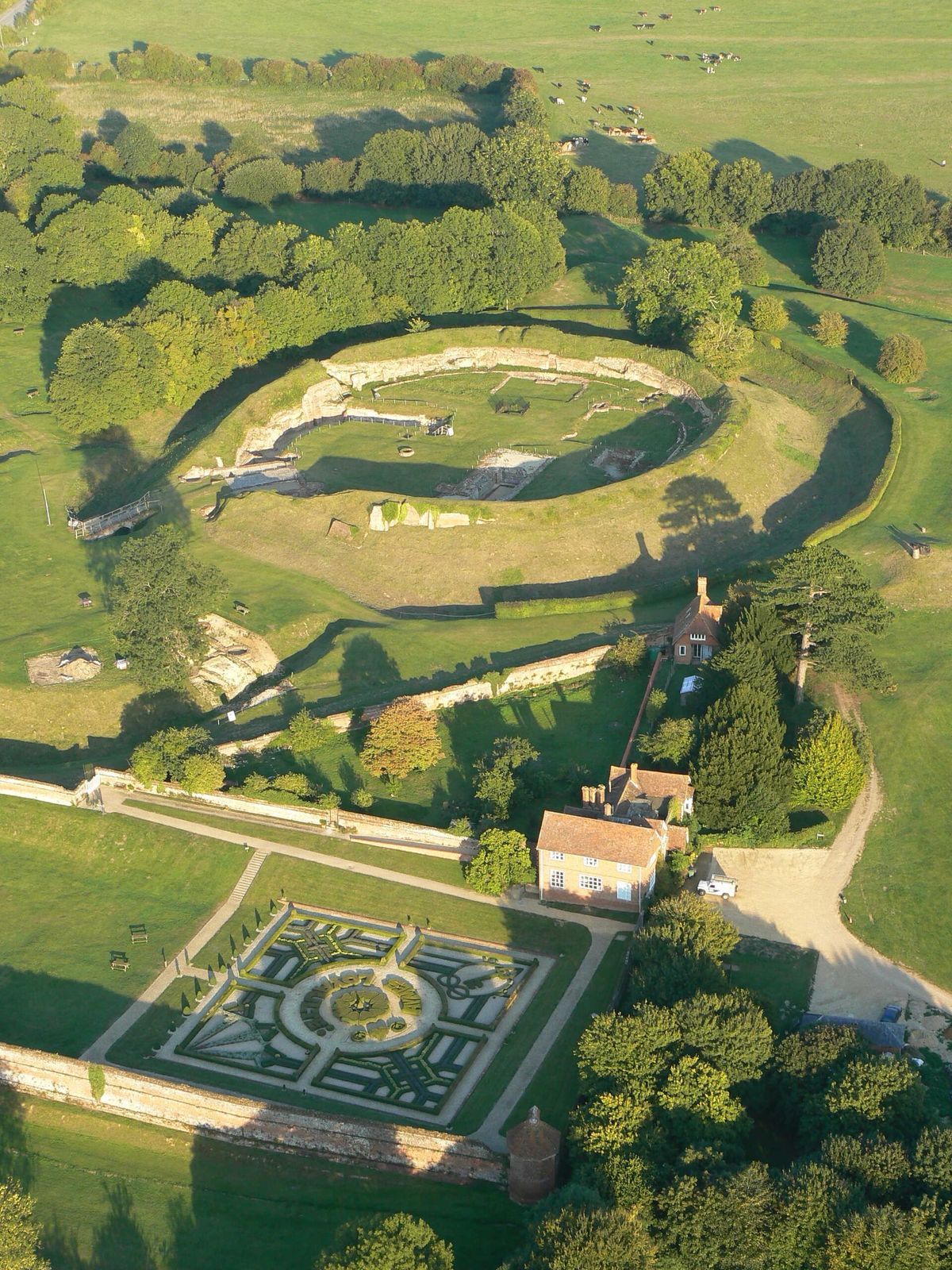
In its final form, Basing House comprised two linked buildings, each five storeys high. The Old House replaced the keep of an earlier ringwork castle, a fortification enclosed by defensive earthworks, and stood within its ring of earthworks and walls. The slightly later New House stood beyond those defences. A bridge and gateway joined the buildings across and through the defensive ring. The New House alone contained about 360 rooms and was built partly to accommodate the large numbers of people who accompanied royalty on visits. The ruins and gardens occupy 14 acres in Old Basing, close to the upper reaches of the River Loddon. The former Basingstoke Canal, in use from 1788 to 1910, ran around Basing House and through other parts of the village.
Surviving palace fabric
Basement and service rooms
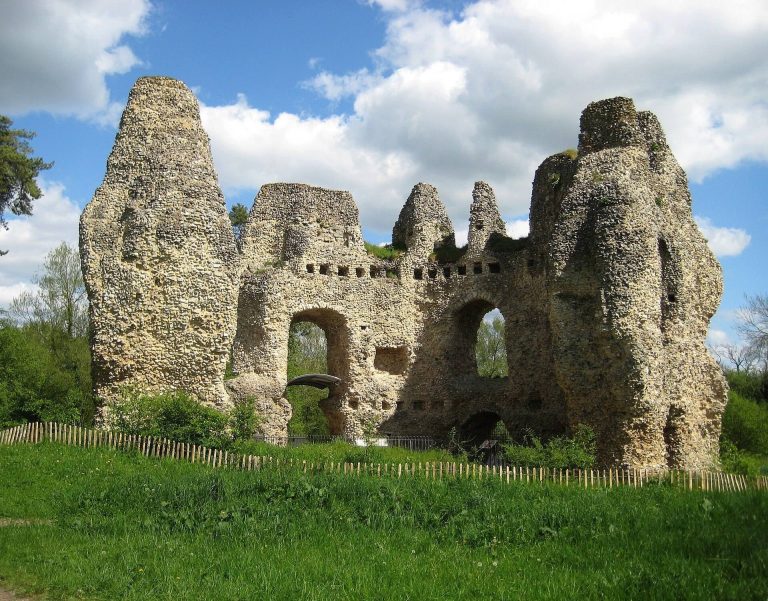
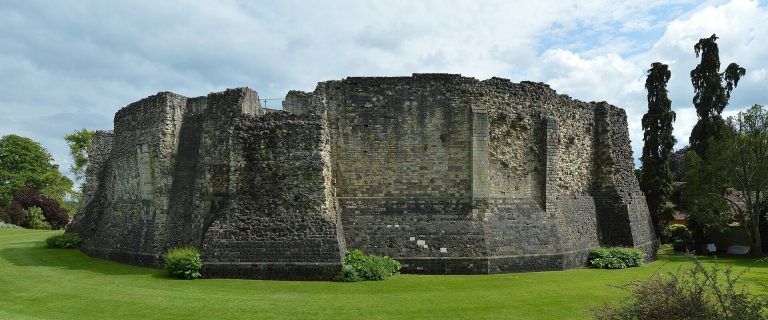
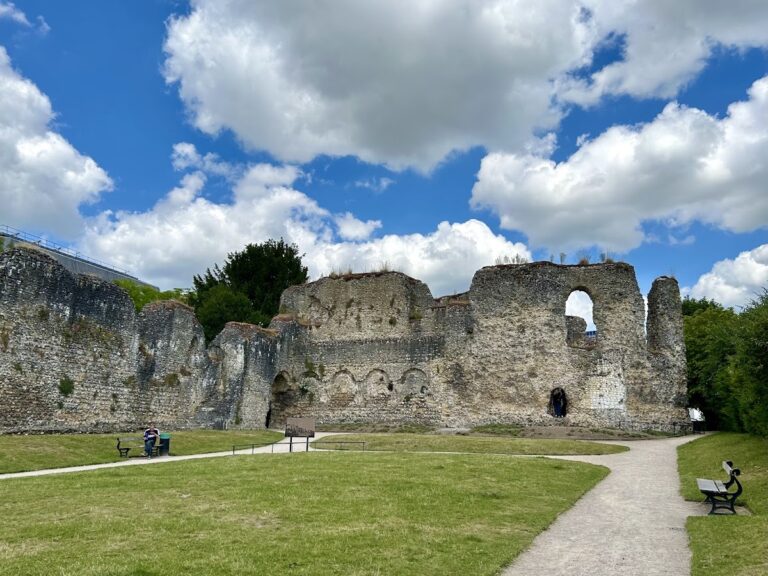
Parts of the palace’s basement, or lower ground floor, survive. They include a wine cellar, brick doorways and arches, bread ovens, salt alcoves, and side rooms with vaulted roofs. A vaulted tunnel also remains, along with sections of original plaster and mortar.
Foundations and earthworks
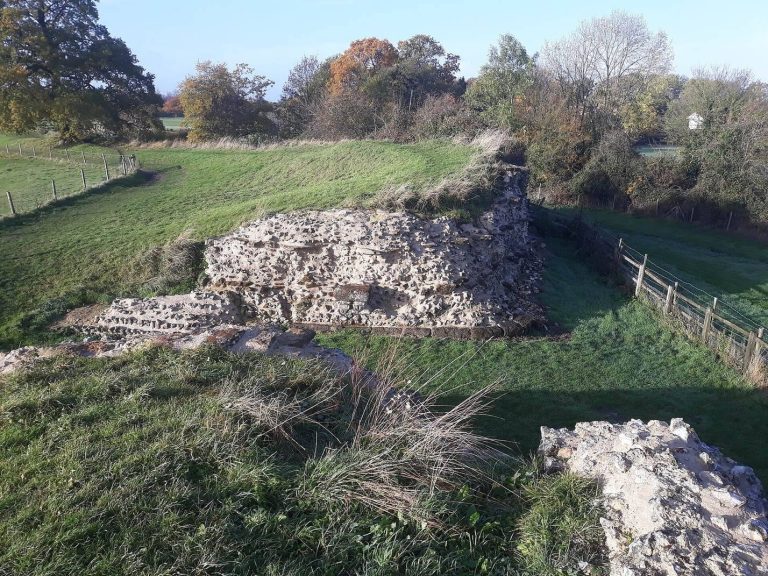
Foundations and sections of the defensive earthworks form part of the surviving site. Together with the lower-floor remains, they preserve traces of the palace and the ring of defences that enclosed the Old House.