Casa Vasari: Giorgio Vasari’s Mannerist Home and Museum in Arezzo
Site at a Glance
- Country
- Italy
- Primary era
- Early Modern
- Eras represented
- Early Modern, Modern
- Civilizations
- Grand Duchy of Tuscany, Italian
- Site type
- Domestic
- Remains
- Elite Residence
On this page14 sections
History
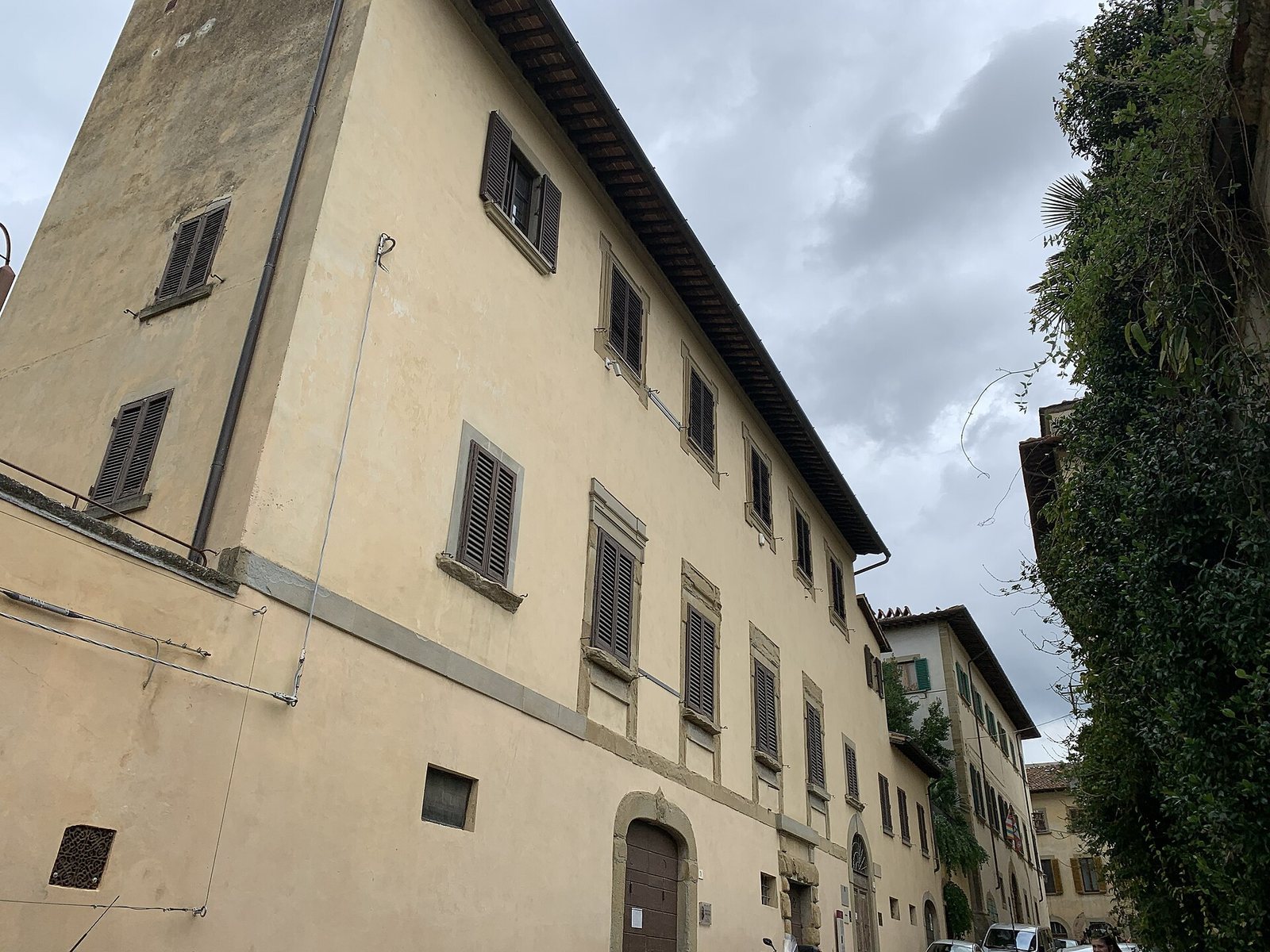
Casa Vasari is the former home of painter, architect, and art historian Giorgio Vasari in Arezzo, Italy. He acquired the plot and a house already under construction on 7 September 1541. The residence is among the region’s best-preserved examples of an artist’s home and a Mannerist residence. Mannerism is a sixteenth-century artistic style often marked by deliberate artifice and complex compositions.
Vasari’s House
Vasari began decorating the house in 1542. After marrying Niccolosa Bacci in 1550, he moved in with her, though his work in Florence and Rome and his travels meant that he stayed there only for short periods. He took a direct role in completing and decorating the residence, including its original furnishings, which were later dispersed. His pupils helped with the fresco decoration, a project interrupted several times and completed in 1568.
Ownership and Museum
The house remained with Vasari’s heirs until their family line ended in 1687. It then passed to the Fraternita dei Laici, a historic lay confraternity of Arezzo, before later owners included the Brozzi family and, from 1871, the Paglicci family. The Paglicci family sold it to the Italian state in 1911 for use as a public museum. The museum was first furnished in period style and displayed works belonging to the Municipality of Arezzo and the confraternity.
In the 1950s, the period furnishings were removed and a gallery of about 60 paintings was formed from works held in the Florentine Galleries’ collections. The gallery focused on Mannerism, particularly artists who worked with Vasari around 1570 on the private study of Francesco I de’ Medici, grand duke of Tuscany, in the Palazzo Vecchio. The artists included Jacopo Zucchi, Carlo Portelli da Loro, Mirabello Cavalori, Francesco Morandini, Alessandro Allori, Perin del Vaga, Jan van der Straet, Maso da San Friano, and Santi di Tito, alongside other artists from Arezzo and Florence. The gallery was rearranged in 2011. Since December 2014, the Italian Ministry of Culture has managed the museum through its Tuscan museum administration, renamed the Regional Directorate of Museums in December 2019.
The Vasari Archive
The house also holds the Vasari Archive, a major private collection valued for the study of sixteenth-century art and Renaissance history, literature, and culture. Its papers include contracts, records concerning Vasari’s properties, work notes, memoirs, and correspondence. The Florentine Rasponi-Spinelli family placed the archive on permanent deposit with the Municipality of Arezzo in 1921 for preservation and enhancement. It passed by inheritance to the Festari family in 1985. Legal disputes beginning in the 1980s involved the municipality, which held the deposit, and the family that owned the archive. The Italian state acquired it by expropriation in 2017.
Remains
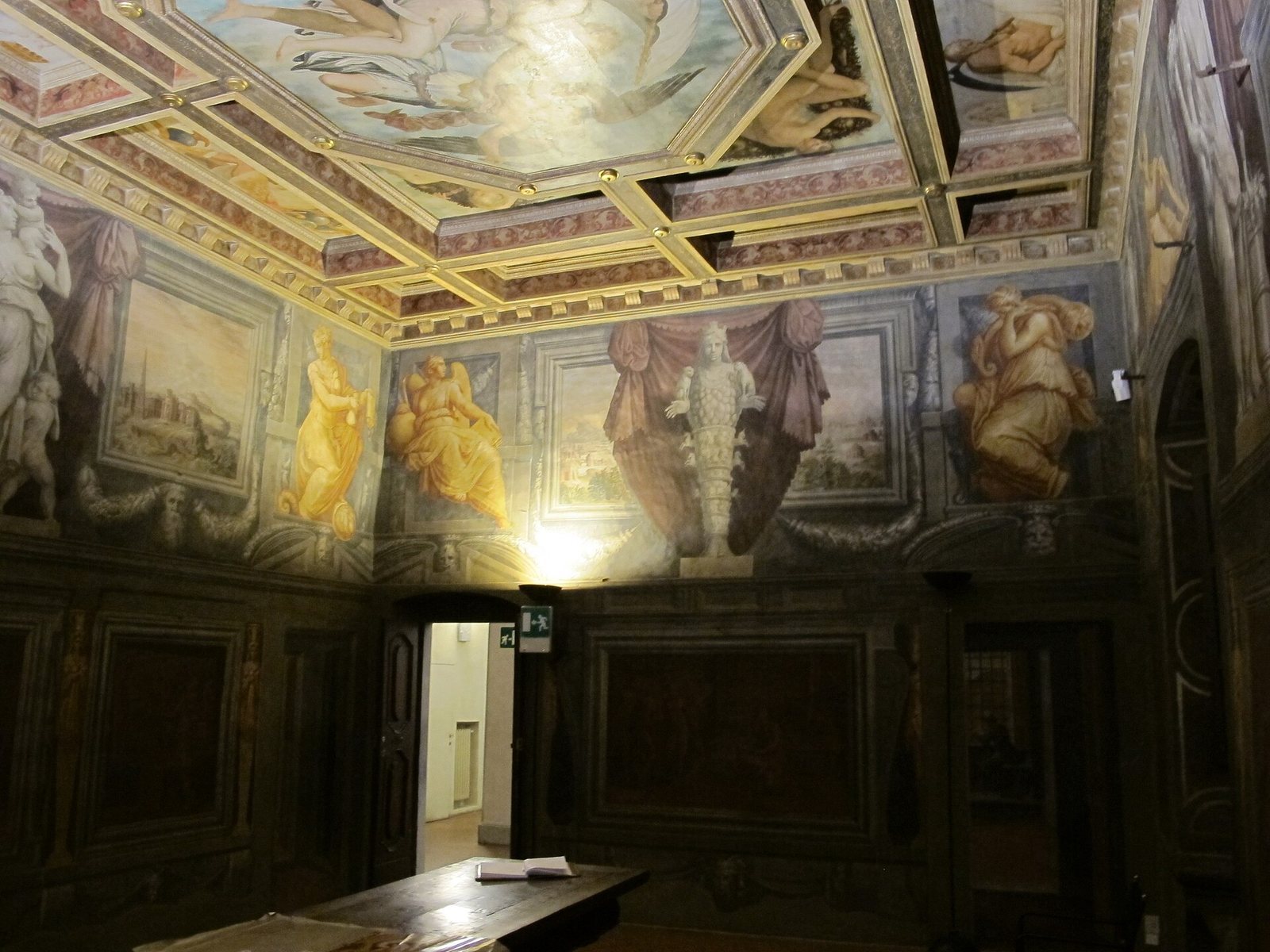
The surviving house includes painted rooms and a garden raised above street level. Vasari conceived the decoration as an ideal, symbolic portrait of his artistic life, with the Muses as its dominant theme. A staircase leads to the principal floor and is topped by a bust of Vasari, made by an unidentified Tuscan artist in the sixteenth or seventeenth century.
Interior Rooms
Room of the Fireplace
Vasari painted this room in 1548. Its ceiling shows Virtue expelling Envy and Fortune, while the walls contain allegorical figures representing ideas, landscapes, and scenes from the lives of ancient painters.
Chapel
The small chapel to the right contains a Madonna by Fra Paolino and an original sixteenth-century floor made of majolica, decorated glazed earthenware.
Corridor of Ceres and Former Kitchen
The Corridor of Ceres, also known as the Corridor of the Dragons, contains late Mannerist paintings, including Circumcision, attributed to Mirabello Cavalori, and Jacopo Zucchi’s The Death of Adonis. The corridor provides access to the former kitchen, where Raimondo Zaballi painted wall decorations in 1827. Portraits, mainly of sixteenth-century Tuscan subjects, also adorn the kitchen.
Bridal Chamber
A ceiling painting by Vasari shows Abraham among figures representing Peace, Concord, Virtue, and Modesty. The room’s paintings include Jan van der Straet’s The Almsgiving of Saint Nicholas, Christ Carried to the Tomb by the young Vasari, and a painting of Judas by Vasari.
Room of Apollo
Vasari painted Apollo and the nine Muses and an Allegory of Conjugal Love in this room; the latter includes a portrait of his wife, Niccolosa Bacci. Other works include Alessandro Allori’s Saint Francis and a mirror case showing Prudence, attributed to Allori; Francesco Morandini’s House of the Sun; and Jacopo Ligozzi’s Saint Jerome and Fortune.
Room of Fame and Adjoining Room
Vasari painted Fame on the ceiling of the Room of Fame. Its much-repainted corbels, projecting supports, and lunettes, crescent-shaped panels, show the four Arts, Vasari’s self-portrait, and portraits of artists from Arezzo and its surrounding area: Lazzaro Vasari, Luca Signorelli, Spinello Aretino, Bartolomeo della Gatta, Michelangelo, and Andrea del Sarto. Other works include Jan van der Straet’s 1581 Crucifixion, a multicolored glazed terracotta figure of the Roman emperor Galba by Andrea Sansovino, and a panel painting of Charity by Carlo Portelli.
A small adjoining room contains a wooden model of Vasari’s Loggia, a structure built in Arezzo, as well as Santi di Tito’s The Madonna and Child with Saint Elizabeth and Saint John the Baptist. Three predella panels by Maso da San Friano are also kept there. A predella is the lower part of an altarpiece, often divided into small painted panels.
Garden
The garden stands above street level and was probably planted when the house was built. In a note about buying the land, Vasari referred to making fine kitchen gardens; the garden was used mainly to grow vegetables. An orangery indicates that an Italian-style garden was established early on. The geometric flower beds reflect a layout dating approximately to the early twentieth century and were restored between 1975 and 1981. Medicinal plants have also been added, and an ancient stone basin stands in the center of the largest beds.
Archive Holdings
Among the archive’s papers are 17 letters written by Michelangelo to Vasari, whom he addressed as a dear friend. The collection also includes three handwritten sonnets and three original drawings by Michelangelo.